Richard Wright’s legacy, especially through “Native Son,” remains essential in discussions about race and identity in America. His portrayal of systemic oppression and its impact on marginalized communities sparked significant conversations that resonate today. By blending realism with deep emotional insights, Wright revolutionized literary expression of African American experiences. The themes of racism and violence he explored continue to influence contemporary writers and reflect ongoing societal issues. You might find further insights into his profound impact on literature and society.
Richard Wright’s Early Life and Literary Development
Richard Wright’s early life was a crucible that shaped his literary voice. Born on a Mississippi plantation, he faced extreme poverty, racial prejudice, and familial instability, including his father’s abandonment.
At 15, you’d find him writing, and in 1927, he moved to Chicago, immersing himself in literary circles and joining the Communist Party. This experience profoundly influenced his early work.
His first major piece, “Uncle Tom’s Children,” published in 1938, garnered acclaim but left him seeking a more authentic portrayal of African American experiences.
Wright’s “Uncle Tom’s Children” achieved acclaim, yet ignited his quest for a deeper, authentic representation of African American life.
His groundbreaking novel, “Native Son,” released in 1940, marked a turning point, making him the first black writer to achieve significant commercial success and shifting his focus toward provoking discomfort about racial oppression. Systemic racism and its effects on identity became central themes in his writing.
The Impact of “Native Son” on American Literature
“Native Son” changed the landscape of American literature by bringing racial representation to the forefront. You’ll see how Wright’s powerful critiques of systemic oppression sparked conversations and controversies that still resonate today. This novel not only influenced future writers but also remains relevant in today’s discussions about race and identity. Additionally, it echoes themes of systemic racism that continue to shape the experiences of marginalized communities in America.
Racial Representation in Literature
In the landscape of American literature, few works have had as profound an impact on racial representation as *Native Son*. Richard Wright‘s groundbreaking novel shattered literary norms by depicting the grim realities of systemic racism faced by African Americans.
Through the character of Bigger Thomas, you witness the frustrations and entrapments that Black individuals endure in a racially segregated society. This raw portrayal sparked significant conversations about race, identity, and the violent dehumanization prevalent at that time.
While *Native Son* has faced criticism for reinforcing negative stereotypes, its legacy lies in opening pathways for deeper, more honest dialogues about race.
Wright’s influence resonates in the works of subsequent writers, shaping the evolution of African American literature and its exploration of racial representation.
Critiques and Controversies Addressed
While *Native Son* sparked essential conversations about race, it also ignited significant critiques that continue to shape discussions around its impact. Critics, including James Baldwin, argued that Wright’s portrayal of Black Americans reinforced negative stereotypes and lacked depth, leading to controversies about its representation.
Some perceived the novel as harmful, claiming it focused too heavily on victimization, overshadowing other voices in Black literature.
Despite these critiques, *Native Son* undeniably challenged the notion of ignoring racial history, highlighting the systemic oppression that affects both Black and white Americans. Its themes resonate today, reminding us of the lasting scars of racial dehumanization and prompting ongoing dialogue about identity and race in contemporary society.
Lasting Cultural Relevance Today
As *Native Son* continues to resonate in today’s cultural landscape, it serves as a powerful reminder of the complexities surrounding race and identity in America.
Richard Wright’s portrayal of Bigger Thomas embodies the frustrations of African Americans facing systemic oppression, highlighting the psychological toll of racism. The novel’s themes remain relevant, echoing contemporary discussions about racial inequality and police violence, which reflect ongoing societal anxieties.
Critics, including James Baldwin, have debated its impact on stereotypes, yet they recognize its role in exposing the harsh realities of racial violence.
Wright’s work paved the way for future Black American writers, influencing the civil rights movement and shaping American culture, ensuring *Native Son* maintains its lasting cultural relevance today.
Themes of Racism and Identity in Wright’s Work
In Richard Wright’s work, you see a powerful portrayal of racial oppression that shapes identity and self-perception. Characters like Bigger Thomas confront systemic violence while grappling with their place in a hostile society. This struggle not only highlights their resistance but also sheds light on the broader issues of race and identity that continue to resonate today. The legacy of courage displayed by individuals in resistance movements serves as a reminder of the importance of collective action in the fight against injustice.
Racial Oppression Depicted Vividly
Richard Wright’s “Native Son” sharply illustrates the brutal realities of racial oppression, forcing you to confront the psychological scars it leaves on individuals and communities.
Through the character of Bigger Thomas, you witness the harrowing effects of systemic racism under Jim Crow laws. The novel paints a vivid picture of:
- Despair in cramped tenements
- The suffocating grip of poverty
- The explosive rage from constant dehumanization
- The haunting silence of unfulfilled dreams
- The struggle for identity in a hostile world
Wright’s exploration of these themes serves as a powerful reflection of the struggles within Black American literature, emphasizing how racial oppression shapes personal identity and agency, and resonates deeply in today’s discussions about systemic injustice.
Identity and Self-Perception
While maneuvering through the harsh realities of systemic racism, Bigger Thomas grapples with his identity and self-perception in “Native Son.” The weight of societal expectations and dehumanization forces him into a constant struggle for self-definition.
This internal conflict highlights how systemic racism distorts identity, leaving psychological scars that resonate deeply within marginalized communities. Bigger’s feelings of alienation reflect the broader anger and despair faced by many African Americans, showcasing the impact of a society that undermines their agency.
Wright’s work challenges you to confront these uncomfortable truths, illustrating how the struggle for identity amid oppression can lead to profound disillusionment. Ultimately, Bigger’s journey compels you to examine the complexities of race and self-perception in a racially charged world.
Systemic Violence and Resistance
Systemic violence permeates Richard Wright’s *Native Son*, shaping the lives of characters like Bigger Thomas who find themselves trapped in a cycle of oppression.
Through Bigger’s journey, Wright sheds light on the psychological effects of racial prejudice and societal oppression, revealing the haunting realities faced by African Americans.
You see:
- The suffocating grip of Jim Crow laws
- The echoes of collective trauma in urban environments
- The relentless dehumanization within a biased legal system
- The desperate acts of resistance born from despair
- The struggle for identity amidst overwhelming violence
Wright’s narrative not only critiques injustice but also speaks to the enduring fight against systemic violence, making it painfully relevant in today’s discussions about race and justice.
The Role of Violence and Trauma in His Narratives
In exploring the narratives of violence and trauma, Richard Wright captures the raw emotions and harsh realities faced by marginalized individuals.
In *Native Son*, you witness Bigger Thomas, a Black man whose violent actions stem from systemic oppression and deep-seated trauma. Wright illustrates how racism and societal injustices dehumanize individuals, leading to internalized rage and an unending cycle of violence.
His unflinching portrayal of Bigger’s life serves as a critique of the brutal effects of racial segregation under Jim Crow laws. The trial of Bigger not only highlights the consequences of his actions but also exposes how systemic racism conditions Black individuals toward acts of desperation.
Wright’s themes resonate today, emphasizing the ongoing relevance of these issues in American society. Furthermore, his commitment to social justice is evident in his literary activism, which continues to inspire discussions about race and equality.
Innovations in Literary Style and Form

Richard Wright’s innovative literary style revolutionized how African American experiences were depicted in literature. By blending realism and naturalism, he authentically captured the stark realities of African American life. His narratives, marked by an unflinching attitude, brought to light the complexities of race and systemic racism.
You can visualize his work through:
- Vivid street scenes drenched in despair
- Individuals grappling with societal oppression
- Tension-filled moments of violence and confrontation
- The weight of poverty pressing down on families
- Striking imagery that challenges cultural norms
Wright’s bold experimentation with language not only documented lived experiences but also provided a powerful counter-narrative to prevailing stereotypes. This influence extended to future generations of writers, encouraging them to embrace similar themes and styles. His work resonates with the themes of hope and perseverance found in Louis Zamperini’s survival story in “Unbroken,” reflecting the resilience of the human spirit against adversity.
Richard Wright’s Influence on Contemporary Writers
Wright’s literary innovations haven’t just shaped his time; they continue to resonate deeply with contemporary writers grappling with themes of race and identity.
Writers like Ta-Nehisi Coates and Angela Flournoy draw from Richard Wright’s exploration of systemic racism and identity struggles, echoing the complex characters found in “Native Son.”
His influence also extends to literary giants such as James Baldwin and Toni Morrison, who address similar societal issues in their works.
The Black Arts Movement of the 1960s and 1970s stands as a demonstration of Wright’s impact, showcasing his innovative use of language.
Today, scholars and writers reference Wright’s themes of trauma and violence, ensuring his legacy remains essential in discussions about racial oppression and social justice. His work parallels the emphasis on marginalized individuals’ contributions to society, highlighting the importance of their stories in shaping cultural narratives.
The Relevance of Wright’s Themes in Today’s Society
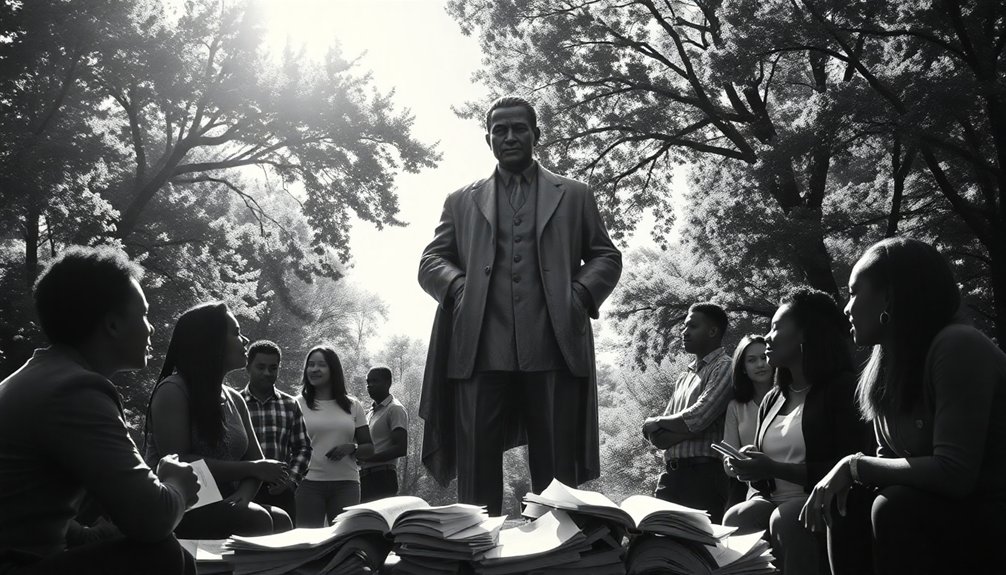
As systemic racism and oppression continue to plague society, the themes explored in “Native Son” feel more relevant than ever. You can see this in the struggles faced by many today, reflecting the character of Bigger Thomas.
Richard Wright’s work offers profound insights into the current landscape:
Richard Wright’s insights resonate deeply, illuminating the ongoing struggles against systemic oppression and the quest for racial justice today.
- The ongoing impact of police violence on marginalized communities.
- The frustration and entrapment that echo today’s socio-economic struggles.
- The identity crises many Black individuals experience in a discriminatory society.
- The anger and despair fueling modern movements for racial justice.
- A critical need to affirm Black humanity amid systemic dehumanization.
Wright’s exploration of violence as a response to oppression remains an essential lens through which to understand the realities of today. Additionally, the ongoing fight for education equity emphasizes the importance of addressing systemic injustices that hinder progress.
Reevaluation of Wright’s Legacy Through Unpublished Works
While many consider Richard Wright a cornerstone of American literature, the recent publication of *The Man Who Lived Underground* reveals just how much more there’s to explore in his vast oeuvre.
This previously unpublished work shines a light on Wright’s enduring legacy, highlighting his intricate narratives on race and identity alongside themes of systemic violence.
As you investigate these unpublished works, you’ll see how they enrich discussions on social justice, much like *Native Son* did upon its release.
Literary scholars emphasize that recognizing these overlooked narratives is vital for understanding Wright’s literary contributions and the broader societal implications of his work.
Julia Wright’s advocacy guarantees her father’s impact on literature and social issues remains relevant today. Moreover, exploring Wright’s themes of generational poverty can deepen our understanding of the struggles faced by marginalized communities.
Conclusion
In reflecting on Richard Wright’s enduring legacy, it’s clear his work continues to resonate. Did you know that “Native Son” has sold over 1.5 million copies since its publication? This statistic highlights not just its popularity, but its lasting impact on discussions around racism and identity. As you explore contemporary literature, remember that Wright’s themes remain relevant, challenging us to confront societal issues and inspiring new generations of writers to address the complexities of the human experience.