

In “The Dinner” by Herman Koch, you experience a chilling exploration of the dark secrets that lie beneath the polished surface of polite society. Set in an upscale Amsterdam restaurant, two families confront their sons’ horrific actions through tense yet seemingly innocent conversation. You’ll feel the tension build as moral dilemmas emerge, revealing the fragility of social facades. The unlikable characters’ complex dynamics force you to question ethics and loyalty within family relationships. Discover more layers of this gripping narrative.
The Intriguing Setting: Amsterdam’s Upscale Restaurant

As you step into the upscale restaurant in Amsterdam where “The Dinner” unfolds, you’re immediately struck by the air of sophistication that surrounds you. The fashionable ambiance creates an illusion of civility, contrasting sharply with the horrific act committed by the teenage sons of the two couples. This sophisticated backdrop emphasizes the societal pretensions that permeate polite society, as the characters grapple with their moral dilemmas while trying to maintain appearances. The intimate setting forces them into close proximity, intensifying the underlying tensions and secrets that simmer beneath the surface. Each course served becomes a reminder of the darkness lurking within, making you question the true cost of their carefully curated lives amidst the glamour of this upscale dining experience. The contrast of this sophisticated backdrop with the characters’ moral challenges echoes the complex themes found in works like “The Help.”
Unraveling Secrets: The Dinner Conversation

At the dinner table, two families engage in a polite discourse that gradually reveals horrific secrets about their children. As the evening progresses, the conversation shifts from trivial matters to darker subjects, exposing the moral dilemmas the parents face regarding their sons’ involvement in a chilling act.
The tension builds, showcasing the fragility of civility as the characters mask their inner turmoil with a facade of politeness. Paul, the sardonic narrator, highlights the psychological complexities, illustrating how the relationships strain under the weight of accountability. This psychological thriller critiques societal norms, emphasizing the lengths families will go to protect their children and maintain appearances amidst chaos, mirroring the theme of redemption and dignity found in other literary works.
Themes of Morality: Family Loyalty vs. Legal Responsibility
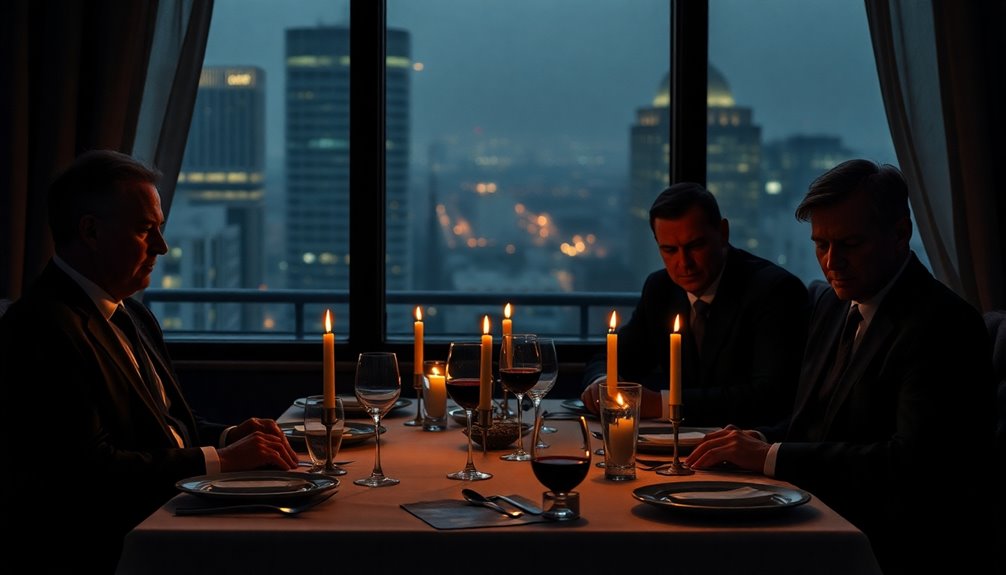
Morality often stands at a crossroads where family loyalty clashes with legal responsibility in “The Dinner.”
When Paul and his fellow diners confront the horrific actions of their sons, their instincts to protect their children collide with the harsh realities of justice.
The narrative explores moral ambiguity, forcing you to question the limits of parental loyalty.
As the characters grapple with ethical conflicts, societal norms of civility mask uncomfortable truths about their choices.
They appear as model citizens but reveal the fragility of their social facades.
The tension escalates, highlighting how family loyalty complicates their legal responsibilities, leaving you to ponder the moral implications of shielding loved ones from the consequences of their actions. This unsettling journey into the depths of moral ambiguity reveals how the characters’ choices challenge the very foundation of their perceived civility.
Character Dynamics: Exploring the Unlikable Protagonists
In “The Dinner,” the character dynamics create an unsettling atmosphere where unlikable protagonists force you to confront uncomfortable truths about human nature.
Herman Koch expertly illustrates the moral complexities faced by Paul and Claire Lohman and Serge and Babette Lohman, highlighting their disturbing behaviors.
Paul, with his sardonic narration, embodies psychological depth and dark humor, revealing his inner turmoil and cynicism. In contrast, Serge’s pretentious ambition as a politician intensifies the tensions between the brothers.
Paul’s sardonic wit and Serge’s political ambition create a cauldron of tension, illuminating their complex brotherly rivalry.
Babette’s ambiguous motivations add another layer, complicating the interactions. As you witness their interactions, you grapple with the unlikability of these characters, ultimately reflecting on the darker sides of humanity that Koch exposes through their flawed personas. This exploration of emotional depth resonates with audiences, much like the impactful storytelling seen in films such as The Help.
Critical Reception: How The Dinner Reflects Modern Society
While delving into “The Dinner,” you’ll quickly notice how Herman Koch reflects modern society’s complexities through his gripping narrative. Critics hail it as a chilling psychological thriller that exposes the facades families maintain.
The Wall Street Journal notes its sly approach to moral dilemmas, emphasizing how parents go to extreme lengths to protect their children from societal judgment.
Publishers Weekly highlights the tension generated through polite conversation, which conceals deeper issues of accountability.
Kirkus points out the ugliness behind keeping up appearances, revealing the darker sides of human nature.
Furthermore, The Economist showcases how a single horrific act can unravel fragile family dynamics, making “The Dinner” a compelling study of contemporary society’s moral landscape. In this context, the narrative resonates with themes of systemic racism that also emerge in literature like “A Lesson Before Dying,” underscoring the complexities of human interactions amidst societal pressures.
Conclusion
In the dim light of the restaurant, you feel the weight of unspoken truths hanging like smoke in the air. As the characters’ facades crumble, their moral compasses spin wildly, revealing dark undercurrents beneath a polished surface. You’re left questioning the very fabric of familial loyalty and societal expectations, as the meal becomes a battleground for secrets. Herman Koch’s chilling tale lingers in your mind, a haunting reminder of the shadows lurking in polite society.