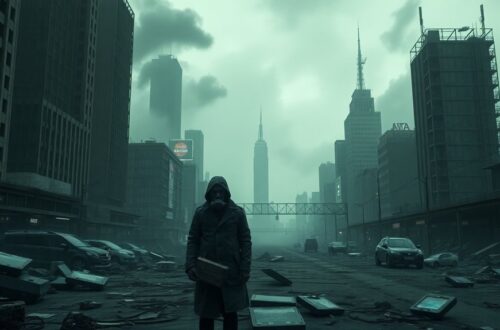
Dystopian masterpieces like *The Children of Men* and *Parable of the Sower* reveal unsettling truths about our world. They highlight societal collapse driven by environmental degradation, ethical dilemmas, and human resilience. Characters face moral complexities and fight against oppressive regimes or natural disasters. These narratives challenge you to confront harsh realities while offering glimmers of hope. As you explore these themes, you’ll uncover deeper insights into humanity’s struggle against its own dark tendencies.
The Children of Men by P.D. James
In a world teetering on the brink of collapse, *The Children of Men* by P.D. James paints a chilling picture of a dystopian future where humanity faces extinction due to widespread infertility.
You follow Theo Faron, a disillusioned bureaucrat who, after discovering a miraculous pregnancy, finds hope amid societal chaos and totalitarianism.
The story explores the fragility of human life as immigration issues arise, highlighting the despair that grips a world devoid of future generations.
Alfonso Cuarón’s film adaptation captures these themes with striking visuals, reinforcing the narrative’s urgency.
As you investigate this haunting tale, you’re reminded that even in the darkest times, hope can emerge, urging humanity to fight for its survival against overwhelming odds. The resilience demonstrated by characters reflects the indomitable spirit seen in historical resistance movements, reminding us that collective action can spark change even in dire circumstances.
Parable of the Sower by Octavia Butler
*Parable of the Sower* by Octavia Butler shifts the focus from the struggle for survival in *The Children of Men* to a harrowing journey through a dystopian America ravaged by climate change and societal breakdown.
You meet Lauren Olamina, a young woman maneuvering a world marked by economic collapse and systemic violence. Her unique ability of hyper-empathy shapes her interactions and survival strategies, highlighting the fragility of societal structures.
As Lauren endeavors to build community and resilience, she formulates a belief system called “Earthseed,” emphasizing that “God is Change.”
Butler’s narrative resonates deeply today, reflecting pressing social issues and the urgent need for adaptability in a world facing uncertainty and upheaval. The story echoes the challenges of global education and empowerment, advocating for resilience in the face of adversity.
The Windup Girl by Paolo Bacigalupi
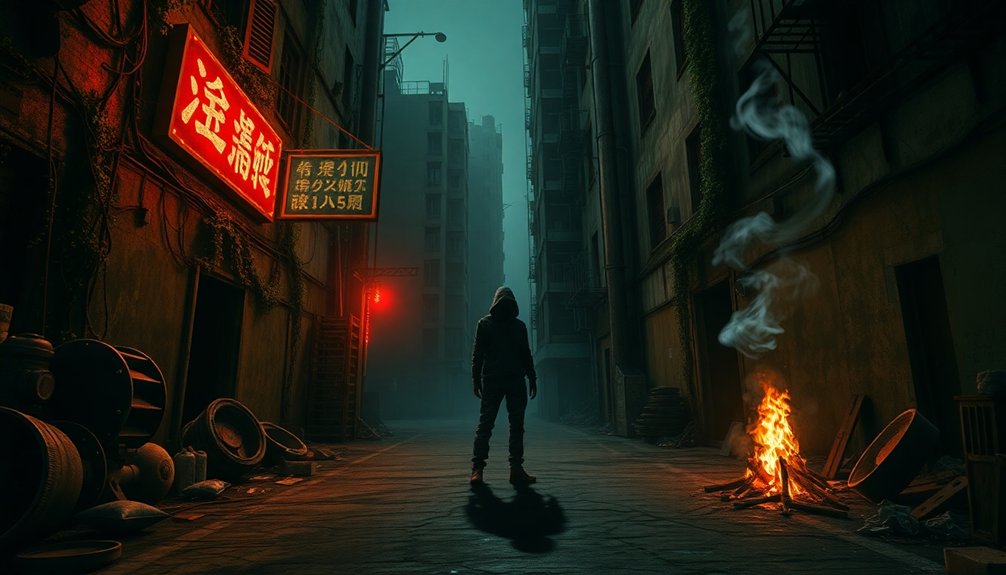
In *The Windup Girl*, you witness a chilling vision of a future where biotechnology spirals out of control, raising ethical questions about life itself.
As corporate greed fuels power dynamics, the societal consequences of environmental collapse become starkly clear.
Bacigalupi’s narrative forces you to confront the dark side of scientific advancement and its impact on humanity. Moreover, it echoes the ethical dilemmas surrounding the commercialization of biological materials faced in historical medical research, prompting reflection on our current trajectory.
Biotechnology and Ethical Concerns
While exploring the world of Paolo Bacigalupi’s *The Windup Girl*, you encounter a haunting vision of biotechnology run amok, where genetic manipulation creates beings designed for servitude amid ecological chaos.
The ethical implications of this genetic engineering are profound, raising questions about the morality of creating life solely for exploitation. You witness the windup girl, a product of corporate greed, embodying the consequences of humanity’s reckless pursuit of technological advancement.
As ecological collapse unfolds, you realize these modifications lead to dehumanization and social inequalities, serving as a stark reminder of the responsibilities tied to biotechnological innovation.
Bacigalupi’s narrative challenges you to reflect on the ramifications of unchecked scientific experimentation in a world where power is concentrated in the hands of a few.
Corporate Greed and Power
As you explore deeper into *The Windup Girl*, it becomes clear that corporate greed isn’t just a backdrop; it drives the narrative and shapes the dystopian reality.
The powerful AgriGen executives embody this greed, prioritizing profit over ethical responsibilities. Their manipulation of biotechnology leads to ecological degradation and fuels social unrest, as the consequences of their actions ripple through society.
You witness the stark inequality created by their unchecked corporate power, where a few control essential resources, leaving the impoverished to struggle for survival.
Unethical practices like biopiracy and labor exploitation reveal the ruthless lengths corporations will go to maintain dominance.
Bacigalupi’s tale serves as a chilling reminder of how corporate greed can devastate both society and the planet.
Environmental Collapse and Consequences
Set against the backdrop of a future ravaged by environmental collapse, *The Windup Girl* immerses you in a world where rising sea levels and climate change have triggered widespread food shortages and societal chaos.
You witness the grim consequences of ecological degradation as species extinction unfolds, and humanity’s exploitation of nature spirals out of control. The reliance on biotechnology for survival raises ethical dilemmas, forcing you to question the sustainability of such practices.
As “calorie companies” dominate food production, corporate greed becomes glaringly evident, commodifying essential resources and exacerbating scarcity.
Through the characters’ struggles, you confront the harsh realities of a society grappling with the fallout of environmental neglect, urging you to reflect on your responsibility toward the planet.
Blindness by José Saramago
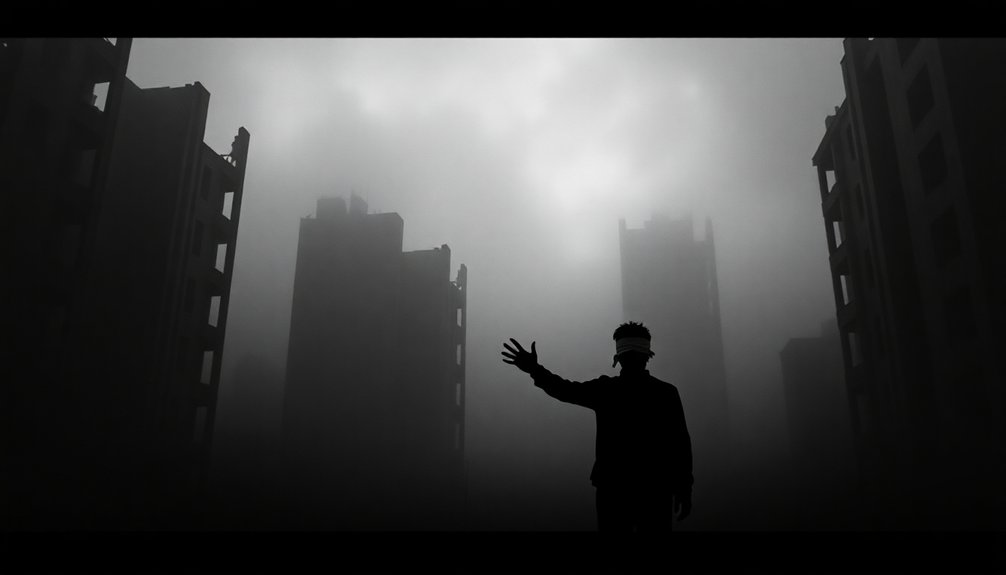
In a world where an inexplicable epidemic of blindness strikes without warning, José Saramago’s *Blindness* thrusts you into a harrowing exploration of human nature and societal disintegration.
As social order collapses, you witness the raw complexities of survival amid moral ambiguity. The characters, led by a doctor’s wife who retains her sight, navigate a chaotic landscape where empathy dwindles and societal indifference reigns.
You see how individuals respond to the crisis, revealing their true selves—some exhibit cruelty, while others show unexpected compassion.
Saramago’s unique narrative style immerses you in this disorienting reality, compelling you to confront the fragility of civilization and the ethical dilemmas that emerge when humanity faces its darkest hour. The theme of hope vs. despair prompts introspection about personal equilibrium amid the chaos.
The Girl With All the Gifts by M.R. Carey
While society crumbles under the weight of a devastating fungal infection, M.R. Carey thrusts you into a dystopian world in *The Girl With All the Gifts*.
Here, you meet Melanie, a young girl caught in a post-apocalyptic society where humans have become zombie-like “Hungries.” As part of a group of children subjected to cruel experiments, she possesses unique immunity and heightened intelligence.
Carey’s narrative challenges your understanding of humanity, forcing you to confront ethical dilemmas surrounding survival and scientific experimentation.
Melanie embodies both hope and danger, blurring the lines between savior and threat. This gripping blend of horror and science fiction keeps you questioning what it truly means to be human in a world gone awry. Additionally, the story serves as a reflection of totalitarian regimes and control, illustrating the fragility of freedom in dire circumstances.
The Passage by Justin Cronin
*The Passage* by Justin Cronin catapults you into a harrowing future where a government experiment spirals out of control, releasing a virus that transforms humans into monstrous, vampire-like “virals.”
As the story unfolds over a century, you witness the collapse of civilization through the eyes of various characters grappling with survival in a desolate world.
The horror of this post-apocalyptic landscape forces individuals to confront their deepest fears and make unimaginable sacrifices.
In a world ravaged by chaos, survival demands facing our darkest fears and making heart-wrenching choices.
Amidst the chaos, hope for humanity flickers, reminding you of the resilience of the human spirit.
Cronin’s narrative intertwines scientific hubris with the fragility of life, leaving you to ponder the thin line between progress and destruction. Resilience in adversity is a recurring theme that echoes through the struggles of the characters as they fight for survival.
Prepare for a gripping journey through despair and the fight for survival.
The Man in the High Castle by Philip K. Dick
In *The Man in the High Castle*, you encounter a chilling alternate history where the Axis powers triumphed in World War II, reshaping America under totalitarian regimes.
As you explore this world, you’ll question reality and perception, particularly through the lens of the fictional book within the novel, *The Grasshopper Lies Heavy*.
This complex narrative challenges you to reflect on the consequences of history and the nature of oppression, echoing the themes of systemic racism that Richard Wright explores in *Native Son*.
Alternate History Exploration
Imagining a world where the Axis powers triumphed in World War II, Philip K. Dick plunges you into a chilling alternate history.
In *The Man in the High Castle*, you witness a divided United States under totalitarian rule, where Nazi Germany and Imperial Japan impose their oppressive regimes.
The narrative immerses you in the lives of characters traversing the Pacific States of America and the Nazi-controlled East, revealing the stark realities of power and oppression.
Through this dystopian genre, Dick skillfully explores the fragility of freedom, challenging you to question the very nature of reality and truth.
The existence of a fictional book within the story serves as a metaphor, urging you to reconsider historical interpretation and perspective.
Totalitarianism and Oppression
While traversing the oppressive world of *The Man in the High Castle*, you quickly realize how totalitarian regimes manipulate reality and control lives.
The pervasive surveillance and relentless propaganda serve as tools for these oppressive political ideologies, ensuring that dissent is quashed. Characters grapple with their identities, shaped by the authoritarian governance that surrounds them.
As you explore deeper, the moral complexities of resisting such regimes emerge, forcing you to question the cost of freedom.
Philip K. Dick’s portrayal of extreme nationalism and state control reveals the fragile nature of truth, as counterfeit artifacts blur the line between authenticity and deception.
You can’t help but feel the weight of oppression, reflecting the human struggle against tyranny.
Reality and Perception
Totalitarian regimes not only impose physical oppression but also reshape reality itself.
In *The Man in the High Castle*, you’re thrust into a world where the Axis powers have triumphed, and perception is distorted by relentless propaganda. As characters navigate this altered America, they grapple with the subjective nature of identity and truth.
The novel within the novel further complicates your understanding of reality, prompting you to question what’s authentic in a society that manipulates historical narratives. This intricate web of perspectives reveals how totalitarian control can warp individual perception, leaving you to ponder how easily reality can be reshaped.
Ultimately, Dick challenges you to confront the tenuous link between identity and the reality you accept.
The Maze Runner by James Dashner
In a world stripped of memory and choice, *The Maze Runner* by James Dashner thrusts you into the heart of a perplexing maze alongside a group of boys known as the Gladers.
In a realm devoid of memory, *The Maze Runner* immerses you in a harrowing maze with the resilient Gladers.
As Thomas, the protagonist, arrives without any recollection of his past, you commence on a journey to uncover your identity amidst the chaos.
The dystopian setting forces you to confront survival against manipulative forces that orchestrate the maze’s deadly challenges.
Each twist and turn reveals secrets that bind the Gladers together, testing their leadership and resilience.
The fast-paced narrative keeps you on edge, urging you to piece together the truth about the maze and the world beyond it, making you question the very nature of freedom and choice. This struggle for survival mirrors the resilience strategies that empower individuals post-conflict, showcasing the strength of the human spirit in the face of adversity.
Station Eleven by Emily St. John Mandel
As civilization crumbles in the wake of a devastating flu pandemic, *Station Eleven* by Emily St. John Mandel immerses you in a haunting post-apocalyptic world.
The narrative weaves through various timelines, focusing on a traveling symphony that performs Shakespearean plays, emphasizing the importance of art and culture in preserving humanity.
You witness the fragility of life and the resilience of human relationships amid chaos and despair.
Mandel’s exploration of survival reveals how community bonds become crucial in a shattered existence.
The novel, celebrated with accolades like the Arthur C. Clarke Award, highlights art’s enduring power even when civilization has collapsed.
Adapted into a TV series, it further explores these themes, inviting you to reflect on the essence of humanity. Additionally, the stories of survival and empowerment through shared narratives resonate deeply, showcasing the strength found in community during times of crisis.
Oryx and Crake by Margaret Atwood
In “Oryx and Crake,” you’ll confront the unsettling consequences of genetic engineering and corporate greed.
As Snowman navigates a world shaped by his friend Crake’s experiments, you’re forced to grapple with the ethical dilemmas that arise from prioritizing profit over humanity.
This powerful narrative challenges you to reflect on what survival truly means in a future where our choices may lead to our own downfall. Furthermore, the story echoes the real-world concerns about the impact of social media on our perceptions of reality and ethical responsibility.
Genetic Engineering Ethics
How far can humanity push the boundaries of nature before crossing an ethical line? In *Oryx and Crake*, Margaret Atwood confronts you with the ethical implications of genetic engineering.
You’ll grapple with the following issues:
- Commodification: Genetic engineering often prioritizes profit over ethics, as seen in Glenn’s creation of a new species.
- Social Stratification: The novel warns of a world where genetic manipulation enforces class divisions.
- Moral Responsibilities: Characters like Snowman embody the burden of scientists’ choices on society.
- Scientific Experimentation: Atwood highlights the dangers of unchecked experimentation, leading to catastrophic consequences.
As you reflect, consider the balance between scientific progress and the moral responsibilities that come with it.
Corporate Greed Consequences
The ethical dilemmas surrounding genetic engineering in *Oryx and Crake* extend into the domain of corporate greed, revealing a future where profit trumps morality.
You see how corporate control shapes humanity, particularly through Crake, who prioritizes profit over ethical considerations. This unchecked corporate greed leads to catastrophic environmental consequences, as genetically modified organisms replace natural ecosystems.
Atwood’s narrative illustrates the commodification of human life with the Crakers, beings engineered for corporate profit, stripped of emotions and social structures.
In this dystopian world, individual freedoms vanish under the weight of corporate interests, highlighting the dangers of a society that allows profit to dictate moral boundaries.
Atwood’s cautionary tale warns against the perils of unchecked scientific advancements and rampant consumerism.
Human Survival Dilemmas
While traversing the bleak landscape of *Oryx and Crake*, you witness the profound human survival dilemmas that arise from the intersection of genetic manipulation and corporate malfeasance.
The story challenges you to confront several key issues:
- The ethical dilemmas posed by genetic engineering and its impact on humanity.
- Snowman’s struggle with moral responsibility in a post-apocalyptic society.
- The consequences of prioritizing profit over the well-being of individuals and the environment.
- The necessity for technological stewardship to safeguard future generations.
Atwood’s narrative paints a stark picture of a world where love, identity, and survival intertwine, urging you to reflect on the fragile nature of civilization and the choices that shape it.
The Giver by Lois Lowry
In a world where conformity reigns supreme, Lois Lowry’s *The Giver* invites you to explore the chilling consequences of a society that prioritizes sameness over individuality.
As you follow Jonas, the protagonist chosen to be the Receiver of Memory, you witness his awakening to human emotions buried beneath layers of control.
In this dystopian society, the suppression of feelings guarantees order, but at what cost?
Lowry forces you to confront the stark reality of a life devoid of choice and personal freedom.
Confront the chilling truth of existence stripped of choice and the haunting absence of personal freedom.
The themes of memory and individuality resonate deeply, prompting you to reflect on the true value of your own emotions and the importance of embracing diversity in an increasingly conformist world.
Fahrenheit 451 by Ray Bradbury
- The dangers of societal apathy and conformity.
- The critical thinking stifled by mass media and entertainment.
- The importance of preserving literature against ignorance.
- The chilling reality of censorship that leads to the loss of individuality.
Bradbury warns you of the perils that arise when intellectual freedom is sacrificed, reminding you to cherish the written word and engage with ideas that challenge the status quo.
Conclusion
You might think these dystopian tales are too grim to enjoy, but they’re actually mirrors reflecting our own society’s flaws. Each story invites you to explore the depths of humanity, resilience, and hope amidst chaos. By engaging with these narratives, you’ll find not just despair, but inspiration to confront real-world issues. So, plunge into these masterpieces; they’ll challenge you, provoke thought, and ultimately remind you of the strength we all possess to shape a better future.