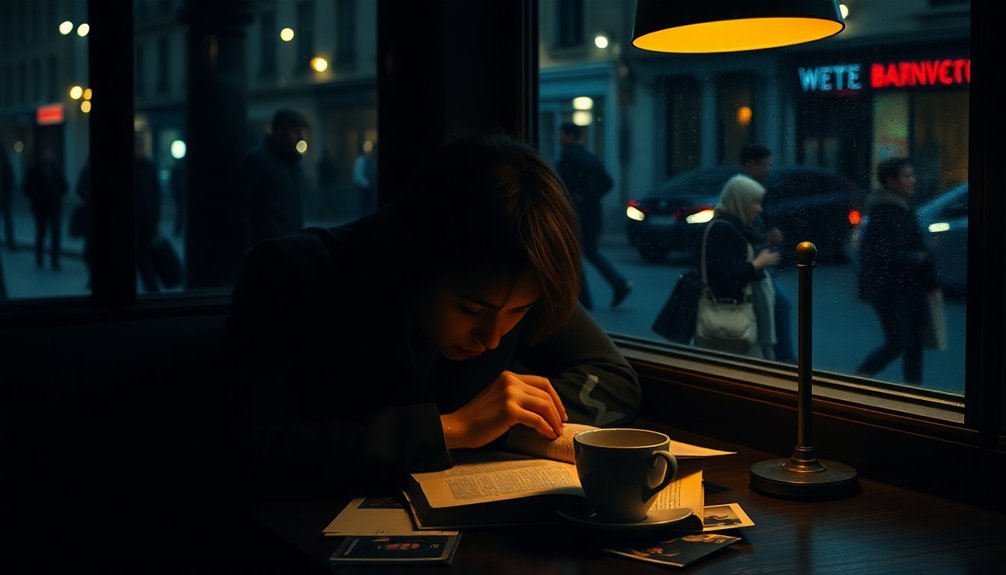

In “The Bookshop,” Penelope Fitzgerald paints a poignant picture of Florence Green, a widow enthusiastic to enrich her small town with literature. However, she faces fierce opposition from the community, particularly from the ambitious Violet Gamart. The novel explores themes of ambition, societal norms, and the complexities of human relationships. Fitzgerald’s elegant prose draws you in, revealing the struggle between hope and reality. If you explore further, you’ll uncover deeper insights into these characters and their world.
Author Background and Context
Penelope Fitzgerald’s life story is as compelling as her fiction. Born in 1916, she faced financial difficulties and even homelessness before publishing her first novel at age 60.
Fitzgerald’s keen observations of small-town life and the intricacies of human relationships shine through in her work, especially in The Bookshop. This novel, released in 1978, captures the essence of ambition and societal opposition, reflecting her experiences as a teacher and bookstore employee.
Her talent didn’t go unnoticed; she won the Booker Prize in 1979 for Offshore, solidifying her status as one of the 50 greatest British writers since 1945.
Fitzgerald’s ability to blend humor with poignant social commentary makes her a significant figure in contemporary literature. Additionally, her writing style, marked by philosophical ideas, parallels the rich intellectual heritage found in the works of other notable authors like Aldous Huxley.
Plot Summary and Character Analysis
As you immerse yourself in The Bookshop, you’ll follow Florence Green, a determined widow who dreams of opening the only bookshop in the insular seaside town of Hardborough.
Her ambition to enrich the community faces fierce opposition, particularly from the influential Violet Gamart, who desires the Old House for her own arts center.
Florence’s dream of a bookshop clashes with Violet Gamart’s ambitions for an arts center, igniting fierce community rivalry.
This character analysis reveals how Florence embodies the working-class heroine, battling societal resistance and pettiness.
Mr. Brundish, an intellectual ally, supports her, while Christine, a local girl she hires, becomes enmeshed in the town’s rivalries.
Ultimately, Florence’s dream crumbles, highlighting the harsh realities of community dynamics, as she quietly departs Hardborough after the bookshop’s closure, leaving a poignant reflection on ambition and societal constraints. The struggles faced by Florence resonate with themes of resilience amid adversity, showcasing the challenges individuals endure when pursuing their dreams in the face of opposition.
Key Themes and Motifs

The struggles Florence Green faces in “The Bookshop” illuminate key themes that resonate throughout the narrative. Her ambition to enrich Hardborough’s cultural life clashes with fierce community opposition, particularly from figures like Mrs. Gamart.
This conflict critiques societal norms, highlighting the challenges a working-class heroine encounters in a traditional environment resistant to change. Fitzgerald skillfully employs irony and subtle humor, showcasing the absurdity of the community’s pettiness while emphasizing the gentleness and kindness of Florence against her antagonists’ ego and self-interest.
Ultimately, the novel reflects on the limitations of hope, revealing the harsh realities faced by those who dare to challenge the status quo in pursuit of their dreams. In a similar vein, the story of Louis Zamperini in “Unbroken” serves as a testament to the triumph of the human spirit, demonstrating resilience in the face of overwhelming adversity.
Literary Style and Composition
While reading “The Bookshop,” you’ll notice how Fitzgerald’s plain yet elegant prose captures the essence of small-town life in 1950s England. Her writing blends subtle and dry wit, drawing you into a world where characters grapple with societal expectations and personal ambition. Penelope Fitzgerald’s narrative unfolds like a tragicomic tale, highlighting the complexities of human relationships and community dynamics. The concise language she employs reveals the depth of her characters, balancing charm with intricacy. This composition invites literary analysis, as you explore themes of ambition and the human condition woven throughout the story. Ultimately, Fitzgerald’s storytelling resonates, prompting you to reflect on the intricacies of life in a small town and the quiet struggles within it. Additionally, the exploration of societal norms in her characters’ interactions mirrors the complexities of marriage presented in historical contexts.
Reader Reactions and Reception

When you read “The Bookshop,” you might find yourself torn between admiration and critique, which reflects its mixed reception.
Many of you may prefer the book to its film adaptation, feeling the latter lacks the emotional depth you crave.
As you explore the characters and themes, your enjoyment levels may fluctuate, with some moments resonating while others leave you feeling indifferent. Additionally, the themes of healing and empowerment resonate with many readers, reflecting a broader desire for narratives that inspire resilience and strength.
Emotional Responses to Narrative
Although readers’ reactions to “The Bookshop” vary widely, many express a notable emotional detachment from its characters and storyline.
You might find that the emotional impact of the narrative falls short, despite its exploration of ambition and community dynamics. Readers often mention a lack of engagement with Florence’s journey, leading to mixed feelings about her quiet departure and the bookshop’s failure.
While Fitzgerald’s subtle humor and clever prose attract some appreciation, they don’t resonate on an emotional level for many. This character detachment can leave you feeling unsatisfied rather than upset, as the narrative depth intended by Fitzgerald sometimes feels overshadowed by these issues.
Ultimately, reader responses reflect a blend of critique and appreciation, highlighting the book’s complexity.
Comparisons With Film Adaptation
Many viewers felt disappointed by the film adaptation of “The Bookshop,” believing it lacks the emotional depth of Fitzgerald’s original novella.
While some praised the performances by Emily Mortimer and Bill Nighy, they noted that changes to the narrative diminished its emotional resonance.
The film introduced a romantic subplot that wasn’t present in the book, which many critics argue detracts from the story’s core themes and tone.
Reviews consistently highlight that the adaptation, although visually pleasing, fails to capture the darker, more poignant aspects of Penelope’s writing.
Reader Enjoyment Levels
Reader reactions to “The Bookshop” reveal a spectrum of enjoyment levels, as reflected in its overall rating of 3.28 out of 5 from over 26,000 ratings.
Many of you may find the emotional impact lacking, with some expressing apathy toward the character development and plot.
While Fitzgerald’s gentle humor charmed certain readers, it didn’t resonate with everyone, leading to varied responses.
Some, like Liz Dexter and Davida Chazan, preferred the book over its film adaptation, while others deemed the film weak.
Emotional responses can shift over time, showcasing a complex relationship with the text.
Ultimately, your enjoyment of “The Bookshop” will depend on your personal connection to its characters and themes.
Adaptation Comparison: Book vs. Film
When comparing the adaptation of “The Bookshop” to Penelope Fitzgerald’s original novella, it’s clear that the film introduces notable changes that shape the narrative differently.
The film, directed by Isabel Coixet, adds a romantic subplot between Florence and Mr. Brundish, which isn’t present in the book.
While the novella offers a poignant critique of societal norms and ambition, the adaptation leans towards lyrical aesthetics, often overshadowing its somber themes.
Characters like Milo North and Violet Gamart are portrayed with more polished motivations in the film, diverging from their book counterparts.
Critics argue that the film lacks the darker insights and subtle irony of Fitzgerald’s writing, resulting in a commercially palatable but less impactful story compared to the original novella. Furthermore, the exploration of societal expectations in both the novella and the film reflects ongoing conversations about gender roles and autonomy.
Emotional Responses and Personal Reflections
Emotional resonance often eludes readers of “The Bookshop,” leaving them grappling with a sense of disconnect from the characters and their journeys. Many express dissatisfaction, struggling to forge an emotional connection amid the narrative’s subtle humor.
The mixed reception highlights how Florence’s bookshop failure and her quiet departure evoke a muted response instead of the expected heartbreak. While some find the ending depressingly poignant, others reflect on how their views on literature evolve over time.
You might feel underwhelmed, especially after seeing the film adaptation; it lacks the depth of emotion present in the book. Such varied personal reflections reveal just how differently readers experience this tale, emphasizing the challenge of capturing genuine emotion in storytelling. This struggle mirrors the importance of cherishing relationships emphasized in other literary works, as it showcases the fragility of connection amidst adversity.
Final Thoughts on The Bookshop
As you reflect on the characters in “The Bookshop,” you might notice how their interactions shape the community dynamics in Hardborough.
Florence’s ambition clashes with the town’s resistance, revealing much about societal norms and individual aspirations.
This tension not only drives the plot but also leaves you questioning the balance between hope and the reality of human connections. The struggle between collective action and individual desires mirrors the historical resistance movements that inspire us to challenge oppressive circumstances.
Reflecting on Characters
Characters in “The Bookshop” serve as vivid reflections of societal dynamics and personal struggles. Florence Green, an ambitious widow, exemplifies personal resilience as she battles the hostility from Violet Gamart, the embodiment of societal expectations and class privilege.
Gamart’s relentless efforts to undermine Florence’s dream highlight the oppressive nature of small-town politics. In contrast, Mr. Brundish stands as a supportive ally, representing a rare appreciation for literature that cuts through the narrow-mindedness of the community.
Christine, the young girl hired by Florence, symbolizes the generational divide and the impact of local dynamics on personal aspirations, ultimately facing her own challenges under Gamart’s influence.
Together, these characters weave a poignant societal critique, revealing the complexities of ambition and resistance.
Exploring Community Dynamics
The interplay of community dynamics in “The Bookshop” vividly illustrates how collective attitudes shape individual experiences.
You witness Florence Green’s struggle against jealousy and resistance, particularly from Mrs. Gamart and local shopkeepers who feel threatened by her ambitions. Hardborough’s insular nature exposes entrenched social hierarchies that challenge Florence as she pursues her dream.
The tension between her individual aspirations and the townspeople’s conservative mindset highlights the difficulty outsiders face when introducing new ideas. The inclusion of controversial literature, like “Lolita,” further exacerbates community tensions, pitting progressive thought against traditional values.
Ultimately, the narrative reveals how these community dynamics can stifle personal ambitions, showcasing the overwhelming influence of the town’s elite on Florence’s quest for cultural enrichment.
Conclusion
In closing, *The Bookshop* invites you to dive deep into its poignant narrative, where each character’s struggle reflects the complexities of human nature. As you navigate the trials faced by Florence, you realize that sometimes, you have to roll with the punches. Fitzgerald’s masterful storytelling and rich themes linger in your mind, urging you to ponder the simple yet profound impact of literature in our lives. It’s a story that truly resonates, long after the last page is turned.