

The Beatnik style emerged from the Beat Generation, prioritizing individuality over conformity. Rejecting materialism, it showcased casual attire like jeans, oversized sweaters, and black turtlenecks. Key figures such as Jack Kerouac and women like Diane di Prima blended practicality with a unique aesthetic influenced by jazz culture. This fashion challenged traditional gender roles and inspired a youthful rebellion. Explore how this literary movement not only defined a fashion era but also shaped modern trends.
The Origins of Beatnik Style in Literature and Art

The Beatnik style emerged as a bold response to the constraints of 1940s and 1950s society, where practicality and comfort took precedence over conventional fashion norms.
Rooted in the Beat Generation’s rejection of materialism, this aesthetic prioritized functionality over conformity. Key literary figures like Jack Kerouac and Allen Ginsberg showcased this through their casual attire—think jeans, t-shirts, and work jackets.
Women writers like Diane di Prima and Joyce Johnson embraced a similar vibe, opting for black jeans and oversized sweaters, which defied the traditional femininity of the era.
The influence of jazz music and urban bohemianism further shaped this style, intertwining artistic expression with everyday wear. The literary movement also inspired a sense of empowerment and rebellion that resonated deeply within the cultural landscape of the time.
Ultimately, the Beat philosophy transformed fashion into a canvas for rebellion and authenticity.
Key Figures Who Shaped the Beatnik Aesthetic
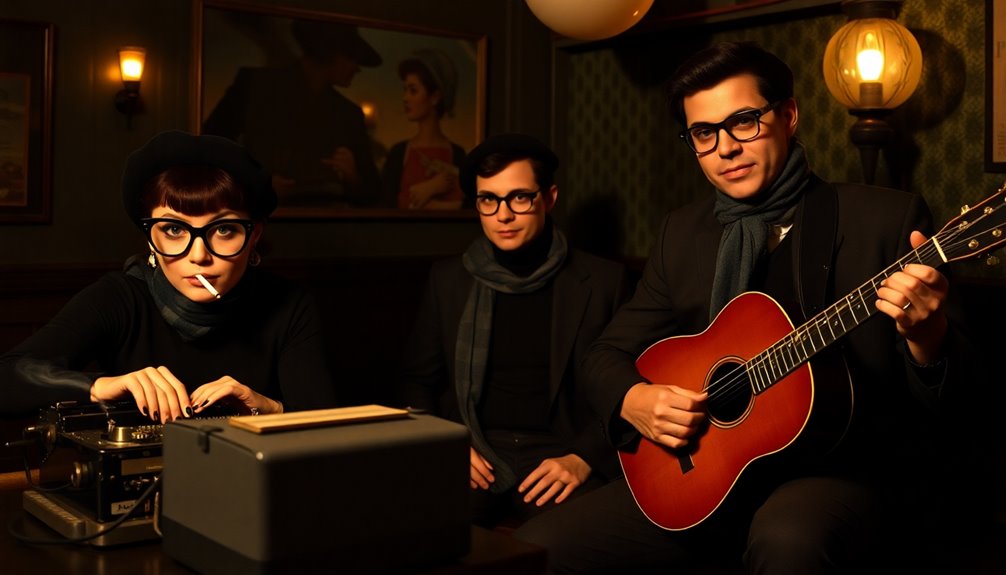
When you think of beatnik style, iconic figures like Jack Kerouac and Allen Ginsberg immediately come to mind, each shaping the aesthetic with their unique looks.
Women like Diane di Prima also played an essential role, blending practicality with individuality in their fashion choices.
Together, these male and female icons created a distinct visual identity that defined the Beat Generation. Their influence can be compared to the impact of iconic detective characters in literature, such as Sherlock Holmes, who also shaped cultural perceptions through their unique traits and narratives.
Male Icons of Beatnik Style
Beatnik style, characterized by its blend of rebellion and intellectualism, owes much to its iconic male figures who shaped its aesthetic.
Jack Kerouac, the voice of the Beat Generation, embraced practical clothing like Pendleton shirts and bomber jackets, embodying a casual look.
Allen Ginsberg, with his powerful poetry, often sported black attire and round glasses, merging sophistication with a rebellious spirit.
William S. Burroughs showcased an eclectic style, donning double-breasted suits and fedoras that echoed the movement’s countercultural ethos.
Finally, Neal Cassady, the free-spirited muse, preferred casual workwear and denim, resonating with the anti-materialistic stance of the beatnik lifestyle.
Together, these male icons defined a unique aesthetic that influenced 1950s and 1960s culture.
Influential Women of Beatnik Culture
While male figures like Jack Kerouac and Allen Ginsberg often took center stage in the Beatnik movement, women played an equally essential role in shaping its aesthetic and ideology. Influential women like Diane di Prima and Joyce Johnson promoted Beatnik fashion that prioritized functionality and individuality, challenging traditional femininity.
Icons such as Audrey Hepburn and Jean Seberg embodied the movement’s ethos in their signature black turtlenecks and capri pants, while Juliet Greco’s dramatic eye makeup exemplified beatnik chic.
Many women embraced ethnic clothing, reflecting cultural ties and anti-materialism. These contributions expanded the narrative of the Beat Generation, emphasizing themes of freedom, sexuality, and self-expression—reminding us that women were pivotal in defining the beatnik style.
Essential Elements of Beatnik Fashion

Emphasizing comfort and practicality, essential elements of Beatnik fashion reflect the anti-materialistic spirit of the Beat Generation.
You’ll find staples like black jeans and oversized sweaters at the heart of this style, promoting a laid-back yet edgy look. Women often opted for functional clothing, breaking away from the traditional femininity of the 1950s by choosing capri pants and simple blouses.
Monochromatic tones like black, white, and gray dominate the color palette, symbolizing sophistication and rebellion against conformity. Key accessories such as berets and horn-rimmed glasses enhance the intellectual and bohemian vibe.
Hairstyles were typically short and simple, while makeup aimed to enhance natural beauty, fully embodying the Beatnik rejection of elaborate societal norms. The collaborative refinement of ideas in Beatnik culture also influenced their unique aesthetic, merging literature and fashion into a distinctive lifestyle.
The Influence of Jazz Culture on Beat Style
Jazz culture profoundly shaped Beat style, infusing it with an energy that mirrored the rhythm and spontaneity of the music itself.
The aesthetics of bebop musicians influenced Beat writers, who adopted relaxed silhouettes and monochromatic outfits that echoed the laid-back vibe of jazz performances. Accessories like fedoras and berets became popular, showcasing the quirky flair inspired by jazz icons such as Charlie Parker and Dizzy Gillespie.
Bebop musicians’ aesthetics inspired Beat writers to embrace relaxed styles and quirky accessories, reflecting jazz’s laid-back vibe.
Frequenting jazz clubs and coffeehouses, you’d find Beatniks blending literary pursuits with the improvisational spirit of jazz, allowing creativity to flow freely.
The vernacular of jazz, with terms like “cool” and “dig,” became essential to Beat communication, reinforcing the deep connection between jazz culture and the Beat lifestyle. This connection also reflects the timelessness of love in poetry, as both movements emphasize emotional resonance and personal expression.
Women of the Beat Generation: Redefining Fashion Norms
Women of the Beat Generation flipped the script on 1950s fashion by choosing functional styles that prioritized comfort and individuality.
You’ll notice how they embraced pieces like black jeans and oversized sweaters, breaking away from traditional femininity.
Their bold choices not only challenged societal norms but also helped redefine what it meant to be a fashionable woman in their time. This transformation paralleled the counter-culture movement that characterized the 1960s, influencing the artistic expression of women like Talitha Getty.
Functional Fashion Choices
During the Beat Generation, the fashion choices of key figures like Diane di Prima and Joyce Johnson showcased a bold shift towards functional style that redefined femininity.
These women embraced functional fashion, opting for black jeans, capri pants, and oversized sweaters that prioritized comfort over the opulence of the 1950s. Their crisp blouses and boxy cropped jackets reflected an understated yet distinct bohemian aesthetic.
This shift wasn’t just about clothing; it symbolized a rejection of societal norms and embraced individuality and self-expression. By choosing practicality, they not only challenged traditional ideas of femininity but also laid the groundwork for future fashion movements.
The influence of their choices continues to resonate, evident in today’s sustainable and anti-capitalist fashion trends.
Breaking Traditional Femininity
The Beat Generation’s fashion choices weren’t just about comfort; they were a radical departure from traditional femininity. Women like Diane di Prima and Joyce Johnson embraced functional styles, opting for black jeans, capri pants, and oversized sweaters.
This shift directly contrasted with the opulent New Look of the 1950s, highlighting individuality and freedom in women’s clothing. By breaking traditional femininity, Beat women prioritized practicality over elaborate styles, reflecting broader changes in gender roles.
Their choices included elements like stretch belts and simple blouses, reinforcing a more unadorned aesthetic. This movement not only challenged societal norms but also aligned with the Beat ideals of anti-materialism, paving the way for future generations to redefine women’s fashion on their own terms.
The Impact of Anti-Materialism on Clothing Choices
As the Beat Generation emerged in the 1950s, its anti-materialist philosophy greatly shaped clothing choices, steering individuals away from consumerist trends. You’d find that practical wardrobes became the norm, with blue jeans, white t-shirts, and workwear jackets dominating the scene. This was a direct rejection of the opulent styles like Christian Dior’s New Look, emphasizing a desire for simplicity and authenticity.
Women, too, embraced functionality with black jeans and oversized sweaters, asserting individuality over traditional femininity. However, the term “beatnik” later caricatured this style, showcasing how mainstream media commodified the anti-materialism of the Beats. The rejection of materialism echoes the ethical questions surrounding consumer culture, emphasizing a quest for deeper meaning beyond material possessions.
Today, the legacy of Beat fashion persists, inspiring contemporary artists and students to reflect the movement’s indifference towards consumerism through sustainable, individualistic fashion choices.
How the Stereotype of ‘Beatnik’ Evolved Over Time?
You might find it fascinating how the “beatnik” stereotype transformed from a symbol of rebellion into a commercialized caricature. Media portrayals and advertising often exaggerated traits like black clothing and berets, overshadowing the movement’s true ideals. As a result, this stereotype not only influenced fashion but also left a lasting mark on American culture. Additionally, the evolution of cultural movements often parallels historical injustices faced by marginalized groups, highlighting the need for authentic representation in media.
From Rebellion to Stereotype
While the Beat Generation emerged as a vibrant movement advocating for intellectual independence and spiritual exploration, the term “beatnik” quickly morphed into a stereotype that overshadowed its original ideals.
Coined by Herb Caen in 1958, the label mocked the perceived laziness of the Beats, reducing a profound movement to a caricature. Media portrayals painted beatniks as individuals clad in berets and turtlenecks, diluting their anti-materialistic values.
Jack Kerouac criticized this label, urging for a more accurate representation of their quest for meaning. Unfortunately, the stereotype became commercialized, ingrained in American culture, and used for entertainment and marketing purposes.
This transformation turned the rich philosophy of the Beat Generation into a cliché, overshadowing its true essence.
Media Influence and Commercialization
The evolution of the beatnik stereotype illustrates how media influence and commercialization can reshape cultural movements. The term “beatnik,” coined in 1958, mocked the Beat Generation’s perceived laziness, leading to simplified stereotypes.
Media portrayals in films like “Funny Face” and TV characters such as Maynard G. Krebs popularized exaggerated beatnik aesthetics, featuring berets and turtlenecks. As commercialization took hold, ads like “Rent-a-Beatnik” transformed the counterculture into a marketable commodity.
High fashion began referencing the beatnik image, with designers like Dior and Chanel incorporating these elements into their collections. Today, the legacy of the Beat Generation persists in youth culture, where the original ideals of rebellion and nonconformity continue to be co-opted by the fashion industry, reflecting evolving social norms.
Iconic Fashion Moments in Beatnik History
Emerging in the late 1940s and 1950s, beatnik fashion made a bold statement against the lavish styles dominating the era.
You’d often see the iconic black turtleneck paired with slim pants and berets, embodying a sense of rebellion and individuality. Women like Diane di Prima and Joyce Johnson showcased functional outfits, including black jeans and oversized sweaters, signaling a departure from traditional femininity.
The term “beatnik,” coined in 1958, caricatured this style, highlighting exaggerated elements such as goatees and horn-rimmed glasses.
The term “beatnik,” introduced in 1958, humorously captured the essence of this rebellious style with its signature goatees and horn-rimmed glasses.
This aesthetic didn’t just stay in the underground; it influenced high fashion in the 1960s, with designers like Dior and Chanel referencing beatnik looks, proving the movement’s lasting impact on contemporary culture and design. The sense of courage and resilience that characterized beatnik fashion paralleled the themes found in the epic quests of fantasy adventure novels, where characters embark on journeys filled with self-discovery and bravery.
The Role of Coffeehouses and Cultural Venues in Beat Fashion
As coffeehouses and cultural venues buzzed with creativity and camaraderie, they became the heartbeat of the Beatnik movement, shaping not just artistic expression but also fashion.
These spaces fostered a communal identity that embraced unique styles, promoting a rejection of mainstream fashion.
Key influences on the Beatnik style included:
- Gatherings at iconic spots like the Gaslight Cafe and Six Gallery, where poetry and music thrived.
- Literature from City Lights Bookstore, inspiring bohemian aesthetics.
- Comfortable clothing choices such as black turtlenecks, jeans, and oversized sweaters.
- Artistic expression through minimalist fashion, reflecting anti-materialist philosophies.
In these venues, individuality and self-expression flourished, directly impacting the sartorial choices of those who frequented them. Furthermore, the collective action of Beatniks paralleled the unity seen in historical resistance movements, illustrating how shared ideals can shape culture and style.
Modern Interpretations of Beat Style in Contemporary Fashion
You’ll notice how contemporary fashion breathes new life into Beat style, particularly through sustainable trends that prioritize individuality. Many young people express their artistic identities with eclectic outfits that reject consumerism, echoing the Beats’ rebellious spirit. As brands like Dior and Chanel embrace these influences, the anti-materialistic ethos of the Beat Generation remains a powerful force in today’s fashion landscape. This resonant spirit mirrors the dark academia sub-genre, which explores themes of elitism, intellectualism, and moral ambiguity.
Sustainable Fashion Trends
While the Beat Generation once rebelled against consumerism through a distinctive style, modern interpretations of their aesthetic are now embracing sustainable fashion trends that echo those same values.
You can embody this shift by incorporating:
- Sustainable materials: Look for organic cotton, hemp, or recycled fabrics in your wardrobe.
- Vintage pieces: Thrift shop finds like denim jeans and oversized sweaters promote eco-consciousness while paying homage to Beat style.
- Minimalist palettes: Embrace monochromatic looks, reflecting both the simplicity and timelessness of Beat aesthetics.
- Ethical brands: Support designers who prioritize anti-capitalist sentiments, focusing on ethical production over fast fashion.
Artistic Expression Through Clothing
Modern interpretations of Beat style in contemporary fashion showcase how artistic expression through clothing remains a powerful means of individuality.
You’ll find elements like blue jeans, white t-shirts, and oversized sweaters that defy conformity and consumerism, blending comfort with rebellion. High fashion designers, including Kim Jones, draw from Beat poetry, paying homage to figures like Jack Kerouac, which highlights the Beat Generation’s lasting impact on aesthetics.
Today’s fashion enthusiasts embrace sustainable choices that reflect the non-materialism championed by Beatniks. The minimalist aesthetic—marked by monochromatic outfits and understated accessories—continues to inspire, stressing sophistication and intellectuality.
Casual yet artistic clothing choices resonate with a desire for self-expression, allowing you to reject fast fashion trends while honoring Beat influences.
Influences on Youth Culture
Beatnik style has woven its way into the fabric of today’s youth culture, inspiring a new generation to embrace individuality through fashion.
The influence of the Beat Generation is evident in contemporary trends that celebrate self-expression and sustainability. Here are some key elements you’ll notice:
- Sustainable Choices: Youth prefer second-hand clothing, reflecting the anti-materialist ethos of the Beats.
- Streetwear Aesthetics: Oversized sweaters and wide-legged pants dominate wardrobes, merging comfort with personal style.
- Gender-Neutral Fashion: Inspired by figures like Diane di Prima, today’s fashion promotes functionality over traditional gender norms.
- Cultural Celebrations: Modern poetry readings and music festivals echo the communal vibes of the iconic Beat coffeehouses.
These influences encourage you to express yourself authentically while embracing a rich cultural legacy.
The Beatnik Influence on Youth Culture and Rebellion
As the Beat Generation emerged in the mid-20th century, it sparked a profound influence on youth culture and rebellion, reshaping how young people expressed their identities.
The beatnik style embraced an anti-fashion aesthetic, showcasing practical clothing like blue jeans and simple t-shirts as symbols of defiance against materialism and conformity.
The beatnik style celebrated practicality over fashion, using blue jeans and t-shirts to challenge materialism and conformity.
Female beatniks, such as Diane di Prima and Joyce Johnson, challenged traditional femininity with functional styles, inspiring a wave of individuality in women’s fashion.
Coffeehouses became essential hubs for artistic expression and social activism, drawing influences from jazz culture.
Even today, the legacy of Beat aesthetics lives on as contemporary youth adopt sustainable fashion choices, echoing the anti-capitalist sentiments that defined the Beat Generation.
How Does Beatnik Fashion Challenge Traditional Gender Roles?
While many women in the 1950s were expected to conform to traditional standards of femininity, those in the Beat Generation boldly defied these norms through their fashion choices.
They championed self-expression and challenged gender norms by embracing styles that prioritized comfort and practicality.
Consider these transformative fashion elements:
- Functional clothing: Black jeans and oversized sweaters replaced restrictive dresses.
- Individualistic styles: Capri pants and simple blouses rejected the opulent New Look.
- Androgynous attire: Workwear and bomber jackets typically associated with men became staples.
- Minimalist aesthetics: Short hairstyles and understated accessories symbolized a shift away from elaborate femininity.
This redefinition of gender roles in fashion during the Beat era paved the way for future feminist movements, demonstrating clothing’s power as a tool for liberation.
The Legacy of Beatnik Style in Today’s Fashion Trends
The influence of the Beat Generation on today’s fashion trends is unmistakable, weaving a rich tapestry of individuality and anti-materialism into the fabric of contemporary style.
You’ll find that modern collections, like Kim Jones’ Fall 2022 line, pay homage to Beat aesthetics and figures like Jack Kerouac. Key elements of Beatnik style—think turtlenecks, oversized sweaters, and denim—are staples in your casual wardrobe, reflecting a bohemian spirit.
The rise of thrift shopping highlights a collective embrace of vintage styles, signaling a rejection of consumerism.
Today, fashion acts as a canvas for personal and political expression, echoing the activist roots of the Beat movement. Embracing these trends allows you to connect with a legacy that champions authenticity and sustainability.
Exploring the Connection Between Beat Literature and Fashion
Beat literature and fashion are intertwined, each reflecting a rebellion against societal norms. The Beat Generation’s anti-materialistic philosophy shaped a distinct fashion style that emphasized comfort and practicality.
Here’s how their individuality came to life through fashion:
- Casual staples: Blue jeans, white t-shirts, and work jackets became symbols of defiance against mid-century conformity.
- Women’s choices: Figures like Diane di Prima favored black jeans, capri pants, and oversized sweaters, challenging traditional femininity.
- Beatnik caricature: The term “beatnik” emerged in 1958, leading to a commodification of their aesthetic in mainstream culture.
- Lasting influence: Designers today, like Kim Jones, still draw inspiration from Beat writers, showcasing the enduring connection between Beat literature and fashion.
Conclusion
To summarize, the Beatnik style not only transformed fashion but also reshaped cultural norms, encouraging self-expression and rebellion. Did you know that around 60% of today’s youth still draw inspiration from the Beat generation’s aesthetic? This enduring legacy proves that the spirit of the Beats lives on, influencing everything from runway shows to casual streetwear. So, next time you slip into a black turtleneck or a beret, remember you’re channeling a movement that changed the world.