

To write a fight scene that feels real, focus on emotional stakes that connect the reader to your characters. Use vivid settings to enhance realism and reflect your characters’ internal struggles. Make sure character motivations drive their actions, revealing true selves through authentic reactions. Blocking is essential for clear choreography that illustrates each character’s journey. Balancing action with character development is key. Stick around for more insights on crafting gripping encounters that resonate deeply.
Understanding the Emotional Stakes in Fight Scenes

Emotional depth transforms a fight scene from mere action into a gripping narrative moment.
Emotional depth elevates fight scenes, turning physical clashes into powerful narratives that resonate with readers.
When you establish emotional stakes, you allow readers to connect with the characters’ motivations and vulnerabilities. A fight isn’t just about physical prowess; it should reflect internal conflicts, where personal stakes like love, revenge, or dignity intensify the confrontation.
Before the fight, clarify what’s at risk—loss of control, trust, or even life. This anticipation heightens reader engagement.
After the brawl, explore the emotional fallout; characters should emerge changed, revealing the weight of their experiences. By weaving in their histories and internal wounds, you create an authentic, impactful scene that resonates long after the last punch is thrown. This mirrors the dynamic character development seen in Home Fire as siblings navigate their conflicting loyalties.
Emotional stakes make every blow count.
The Role of Setting in Enhancing Fight Realism
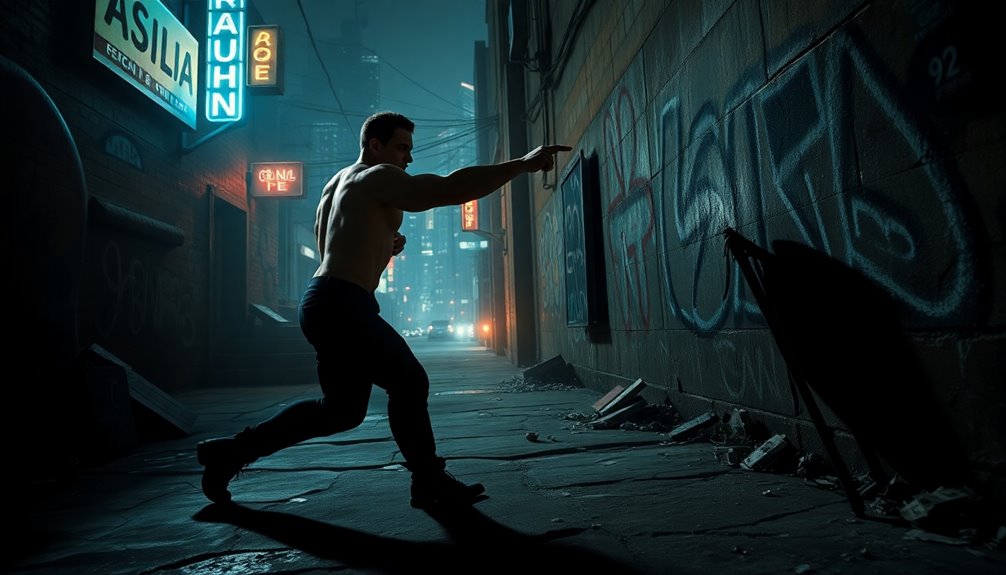
When you set your fight scene in a familiar location, the emotional weight can skyrocket, intensifying the characters’ internal conflicts. Think about how environmental factors, like obstacles or unique features, can shape the action and strategies during the fight. This is similar to how Bigger Thomas’s struggles against systemic oppression in “Native Son” illustrate the profound impact of racial dynamics on an individual’s actions and psyche.
Emotional Weight of Locations
The setting of a fight can transform an ordinary brawl into a gripping clash of wills, as locations like a packed bar or an empty alley evoke distinct emotions and stakes.
The emotional weight of locations greatly influences the intensity of the confrontation, with familiar environments amplifying the characters’ internal struggles.
Picture the sweat-slicked floor of a crowded bar, where the smell of fear and adrenaline hangs heavy in the air, or the oppressive silence of a desolate alley, heightening the stakes.
Environmental elements, like shattered glass or looming shadows, serve as additional opponents, impacting strategies and outcomes.
Sensory details immerse readers, making the fight feel immediate, while contrasting sounds create anticipation, deepening the emotional impact of each blow.
Familiarity Amplifying Tension
A familiar setting can elevate the tension in a fight scene, transforming it from a simple brawl into a clash loaded with personal stakes. When characters engage in a familiar environment, like a childhood home or a favorite café, their emotional histories intertwine with the action.
This familiarity amplifies the stakes, making the fight feel more significant to both you and your readers. Elements within that setting, such as obstacles or vantage points, influence strategies and outcomes, adding realism.
The sensory details—like the sounds of a bustling street or the eerie silence of an alley—create contrasting atmospheres that heighten intensity. By using these familiar locations, you deepen connections to characters’ motivations, turning the fight into an emotional struggle.
Environmental Impact on Action
Familiar environments not only amplify emotional stakes but also dictate the flow of action during a fight. The setting plays an essential role in the environmental impact on action, shaping characters’ strategies and decisions.
For instance, narrow alleys or crowded spaces can create unique challenges, forcing characters to adapt quickly. Engage your readers by incorporating sensory details—the gritty texture of the ground or the distant sounds of chaos—immersing them in the brawl.
The emotional weight of a familiar bar or an abandoned warehouse can reflect characters’ internal struggles, heightening the stakes. Additionally, bystander reactions and environmental hazards enrich the context, making the fight feel dynamic and believable, ultimately enhancing the realism of your scene.
How Character Motivations Drive Action in Fights
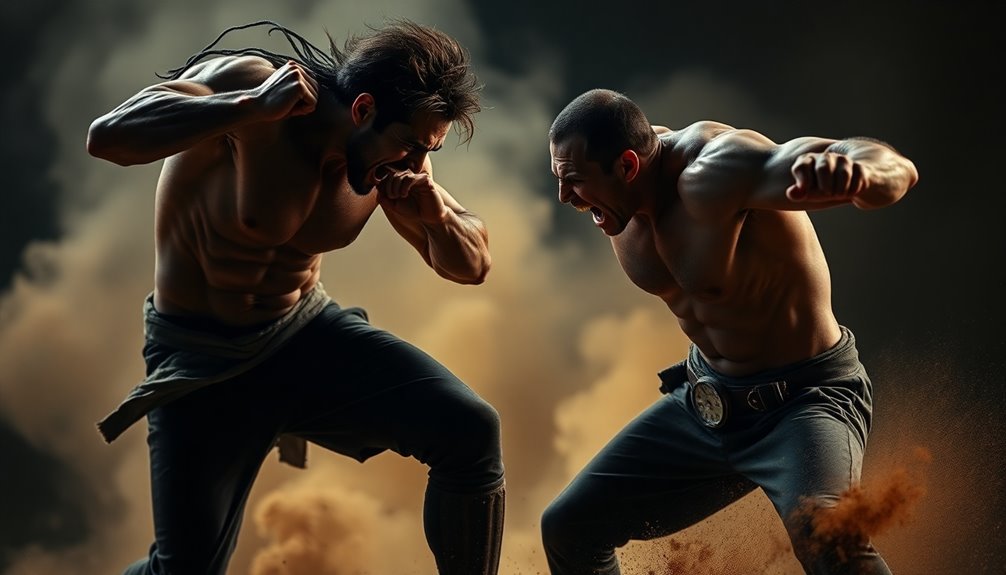
Character motivations fuel every punch and kick in a fight, shaping how they react under pressure.
When you understand a character’s internal wounds, the stakes become personal and the conflict more gripping.
As you craft these battles, remember that clarity in their desires not only drives the action but also keeps readers emotionally invested. Additionally, recognizing the impact of systemic discrimination on a character’s psyche can deepen the emotional stakes in their confrontations.
Internal Wounds Influence Actions
When internal wounds shape a fighter’s psyche, their motivations can dramatically influence the outcome of a confrontation. A character’s past traumas or emotional scars manifest in their fighting style, driving them to confront or avoid conflict.
If they carry a history of betrayal or loss, it may compel them toward revenge or redemption, intensifying the fight’s emotional stakes. Internal conflicts often dictate their actions; for instance, a character burdened by guilt might hesitate, creating tension that resonates with readers.
Ultimately, the resolution of a fight can lead to profound changes in their internal world, showcasing growth or further entrenchment in their emotional wounds. This depth enriches the scene, making it feel more real and relatable.
Emotional Stakes Matter Most
Conflict thrives on emotional stakes, drawing readers into the heart of a fight scene. When you ground the conflict in character motivations, the stakes feel tangible.
Consider these elements that heighten emotional stakes:
- Love: A character fights to protect someone they cherish, making the battle intensely personal.
- Revenge: A protagonist’s desire to settle a score adds urgency and desperation to their actions.
- Dignity: Fighting for respect or honor transforms a brawl into a battle of self-worth.
As characters confront their internal wounds during these fights, their motivations become clearer, allowing readers to connect deeply.
The consequences shouldn’t end with the fight; they should echo through the narrative, leaving emotional scars that shape future conflicts and character dynamics.
Motivations Shape Fight Dynamics
Emotional stakes provide a foundation, but motivations drive the action within a fight. When you understand what fuels your characters—be it love, revenge, or survival—you can craft compelling fight scenes that resonate deeply.
Characters’ motivations shape their fighting styles and choices, revealing their strengths and vulnerabilities. For instance, a character seeking dominance may fight aggressively, while one protecting a loved one might hesitate, adding layers to the conflict.
This contrast heightens tension, drawing readers in as they invest in the outcomes. By clearly establishing motivations before the brawl, you create anticipation and clarity, making the fight feel necessary and impactful.
Crafting Authentic Character Reactions During Combat
As the clash of steel echoes around you, your heart races with a cocktail of fear and determination that fuels every movement. Characters in combat reveal their true selves through authentic reactions, making the scene relatable and gripping.
- Adrenaline spikes, causing your reflexes to sharpen, while your trembling hands betray your emotional state.
- The metallic taste of blood fills your mouth, a visceral reminder of the stakes at hand.
- Internal monologues swirl in your mind, exposing your motivations and fears, deepening your connection to the moment.
Incorporating these details not only enhances realism but also highlights characters’ flaws, like hesitation or panic. This vulnerability adds tension, illustrating growth and making their journey through combat all the more compelling. Just as the Joad family’s journey reflects struggles against social injustice, characters in combat face their own battles that reveal their resilience and humanity.
The Importance of Blocking: Choreographing the Scene
When you choreograph a fight scene, blocking is essential for defining each character’s movements and positions. Clear visualizations of these actions enhance the scene’s clarity and emotional impact, allowing readers to fully engage. Incorporating elements of intricate plot can also elevate the tension and stakes within the fight, drawing readers deeper into the narrative.
Key Elements of Blocking
Blocking serves as the backbone of any fight scene, ensuring that characters’ movements and positions are clearly defined. Effective blocking not only enhances the choreography but also adds realism and emotional depth.
Here are three key elements to evaluate:
- Spatial Relationships: Establish where characters are in relation to each other and obstacles, creating tension and dynamics.
- Environmental Influences: Use elements like furniture or terrain to impact strategies and intensify the fight.
- Emotional Reflection: Allow blocking to mirror characters’ motivations and emotional states, enriching the scene’s narrative.
Visualizing Character Movements
To create a compelling fight scene, clearly visualizing character movements is essential, as it not only defines the action but also immerses the reader in the experience.
Blocking your scene means defining where each character stands and how they move, ensuring their actions are coherent and engaging. Plan the choreography to maintain a fluid flow, making every movement purposeful and tied to the narrative.
Use descriptive language that avoids technical jargon, allowing readers to easily visualize the fight. Incorporate environmental elements, like obstacles, to heighten tension and realism.
Finally, consider using sketches or diagrams to map out these movements, helping you maintain clarity and continuity throughout the scene while effectively visualizing character movements.
Enhancing Fight Scene Clarity
Visualizing character movements sets the stage for an engaging fight scene, but it’s blocking that truly shapes the action. Effective blocking defines positions and movements, enhancing clarity and helping readers visualize the combat.
Consider these elements for impactful blocking:
- Character positioning: Establish where each fighter stands, creating a dynamic interplay between them.
- Environmental factors: Incorporate obstacles like furniture or terrain; these influence strategies and add realism.
- Emotional stakes: Let movements reflect internal struggles, revealing motivations through their actions.
Using Language and Rhythm to Convey Tension
A well-crafted fight scene draws readers in, making them feel the tension with every word. Using direct language enhances immediacy, allowing the adrenaline and emotional weight of the moment to hit hard.
Vary your sentence lengths; short, clipped sentences create urgency, while longer ones build tension and describe intricate movements. Choose your words carefully, aligning them with your characters’ emotional states to amplify intensity.
Incorporate sensory details—the thud of fists, the tang of blood—to immerse readers in the action and heighten emotional stakes. A mix of visceral and abstract descriptions captures the fight’s essence without overwhelming readers.
This balance keeps your scene relatable and engaging, ensuring they stay on the edge of their seats. The courage of resistance movements serves as a reminder that even in the most desperate situations, individuals can rise to the occasion and fight against overwhelming odds.
Exploring Different Fighting Styles: What Fits Your Characters?
Choosing the right fighting style for your characters can greatly enhance their depth and authenticity.
Each style reflects their personality and background, shaping how they engage in combat.
Consider these aspects when selecting fighting styles:
- Speed and Precision: Boxing highlights a character’s quick reflexes and sharp accuracy.
- Grappling and Control: Wrestling emphasizes strength and strategy, ideal for characters who thrive on dominance.
- Fluid Movements: Martial arts like karate or judo showcase discipline and training, adding elegance to their fighting.
Additionally, the struggles for survival faced by characters in narratives, such as those in Rohinton Mistry’s works, can inform the intensity and context of their fighting styles.
Incorporating Internal Conflicts Into Physical Battles
Fighting isn’t just about the physicality; it’s also a battleground for your characters’ internal struggles. As they exchange blows, their internal conflicts—like fear, guilt, or anger—should shape their actions and decisions.
Picture a character grappling with guilt; they might hold back, hesitating when they should strike. This emotional turmoil adds depth to the fight, making it relatable and impactful. Highlight their motivations, such as seeking redemption or proving themselves, to elevate the stakes.
The climax of the battle should reflect how these internal conflicts resolve or escalate, influencing their performance. After the fight, allow for reflections that showcase how this confrontation transforms or reaffirms their identity, deepening the reader’s connection to your characters. The raw portrayal of these struggles echoes themes of systemic oppression that can challenge the notion of ignoring personal histories.
Sensory Details: Engaging Readers in the Fight Experience
The heart pounds in your chest, adrenaline surging as each punch lands with a bone-jarring impact. Sensory details immerse you in the chaos, letting you feel every moment intensely. Imagine this:
- The metallic taste of blood fills your mouth, sharp and coppery.
- The stench of sweat hangs heavy in the air, mixed with the earthy scent of damp ground.
- The sickening crack of bone echoes as a punch connects, sending shockwaves through your body.
Each sensation pulls you deeper into the fight, heightening the stakes and emotions. You can almost feel the sting of a bruise forming, the warmth of adrenaline coursing through your veins. The resilience of the human spirit, much like that showcased in impactful stories of resilience, emphasizes the strength found even in the darkest moments.
Engaging multiple senses creates a vivid, multi-dimensional experience that makes the conflict feel real.
Balancing Action and Character Development in Fight Scenes
While the adrenaline of a fight scene can captivate readers, it’s essential that the action reflects the characters’ internal struggles and growth. Each punch and kick should reveal their motivations and emotional stakes, making the fight feel meaningful. Consider how character flaws and vulnerabilities come into play; these elements enhance relatability, allowing readers to connect with your characters on a deeper level. As the action unfolds, incorporate sensory details and emotional responses to create an immersive experience that highlights the stakes of the conflict. This is akin to how systemic racism shapes characters’ lives and interactions in stories, emphasizing the importance of personal responsibility and empathy amidst conflict.
The Aftermath: How Fights Affect Character Growth
After an intense fight, characters often face a whirlwind of emotions that can profoundly impact their growth. The aftermath of conflict isn’t just about the physical scars; it’s about how these experiences reshape their identities.
You might notice:
- Lingering guilt or triumph that informs their choices and relationships.
- Psychological effects like PTSD, altering their worldview and reactions in future confrontations.
- Physical injuries requiring recovery time, affecting their capabilities and emotional states.
Each of these elements leads to introspection, pushing characters to make critical decisions that define their paths.
The emotional resonance of the aftermath not only deepens character arcs but also enriches your narrative, inviting readers to connect more intimately with their struggles.
Avoiding Common Pitfalls in Writing Fight Scenes
When crafting fight scenes, it’s crucial to steer clear of common pitfalls that can undermine the impact of the action.
Avoid excessive repetition in your sentence structure; keeping it fresh maintains reader interest. Don’t get lost in overly complex descriptions that slow the pace or confuse your audience.
Ascertain your characters have clear motivations for fighting, as conflicts without purpose feel hollow. Keep realism in mind; unrealistic fights can break immersion and pull readers out of the story.
Finally, make certain your fights contribute to the overall narrative, aiding character development or plot progression.
Resources for Enhancing Your Fight Scene Writing Skills
To create compelling fight scenes, you can tap into a wealth of resources designed to enhance your writing skills. Here are a few essential tools to take into account:
- Books: Read “Write the Fight Right” by Alan Baxter and “Violence: A Writer’s Guide” by Rory Miller for insights on the psychology of violence and practical writing tips.
- Workshops: Engage with martial arts experts through workshops like those at Authors Combat Academy to deepen your understanding of various fighting techniques.
- Feedback: Use beta readers to identify plot holes and improve the realism of your fight scenes.
Conclusion
In the end, writing a fight scene is like dancing on a razor’s edge—you need to balance intensity with authenticity. By understanding emotional stakes and character motivations, you can create a scene that resonates. Remember, it’s not just about the punches thrown, but how those moments shape your characters. So, go ahead and let your imagination spar; the more real you make it, the more your readers will feel every hit and every triumph.