Science fiction has effectively predicted our modern world, exploring themes like AI ethics, where autonomy and decision-making create complex moral dilemmas. The rise of virtual reality introduces immersive experiences, transforming entertainment and education. Autonomous vehicles have evolved from fantasy to reality, with self-driving cars on the horizon. Domestic robots are becoming commonplace, handling tasks once imagined in cartoons. Meanwhile, dystopian narratives warn us about technology’s impact on personal freedoms. There’s so much more to uncover!
Artificial Intelligence and Its Ethical Implications
As artificial intelligence continues to evolve, you might find yourself grappling with its ethical implications. The cautionary tale of HAL 9000 from *2001: A Space Odyssey* prompts you to reflect on autonomy and decision-making in AI.
Philip K. Dick’s works, like *Do Androids Dream of Electric Sheep?*, challenge your understanding of humanity and the morality of creating sentient beings. With advancements in AI, concerns about privacy, surveillance, and algorithmic bias emerge, echoing the dystopian narratives in Dick’s *The Minority Report*. These stories illustrate the urgent need for ethical frameworks to guide AI development, ensuring responsible use and preventing harm. Furthermore, the fragility of individual freedom in dystopian themes emphasizes the importance of safeguarding personal liberties as technology increasingly intertwines with daily life. Engaging in proactive dialogue about these issues is essential as technology increasingly intertwines with daily life.
The Rise of Virtual Reality and Holographic Technology
The rise of virtual reality (VR) and holographic technology is transforming how you experience entertainment, communication, and education. Inspired by sci-fi writers like Stanley G. Weinbaum and his 1935 story “Pygmalion’s Spectacles,” immersive experiences are now a reality.
The evolution of VR and holographic technology is revolutionizing entertainment, communication, and education, turning sci-fi visions into immersive realities.
Films like *Star Wars* showcased holography’s potential, pushing modern inventions that bring holographic projections to life. You can now enter a digital world, much like in the 1982 film “Tron,” as VR technologies evolve rapidly.
Researchers are developing holography for live concerts and other practical applications, highlighting its versatility. With ongoing advancements, future VR experiences promise even more sensory elements, making your engagement with real-life technologies richer and more enthralling. The influence of classic sci-fi literature continues to inspire innovations in technology and entertainment.
Embrace the future of entertainment and communication!
Autonomous Vehicles: From Fiction to Reality

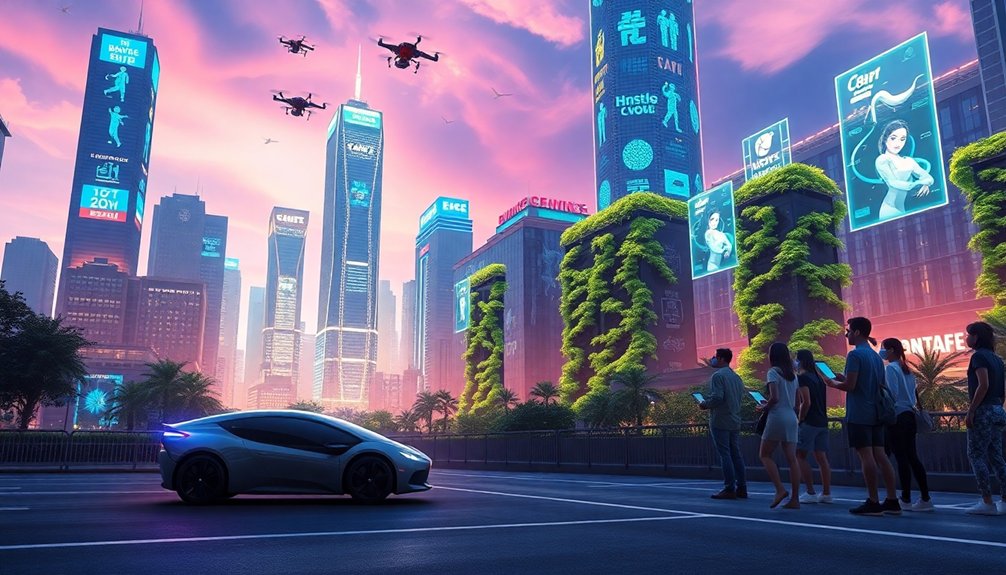
Imagine a world where you can sit back and relax while your car navigates through traffic on its own. This futuristic vision isn’t just a dream; it’s rooted in science fiction predictions.
Isaac Asimov envisioned robot-brained vehicles in 1964, laying the groundwork for today’s autonomous vehicles. Films like those in the James Bond series showcased self-driving technology long before it became a reality.
Now, automakers and tech companies are racing to launch fully autonomous cars by 2025. Meanwhile, Philip K. Dick explored concepts similar to flying cars, inspiring ongoing innovations.
With military and NASA projects developing autonomous urban aircraft, it seems that the flying car might just follow in the footsteps of its grounded counterpart by 2040. These advancements echo the excitement of epic quests as they inspire a new generation to embrace technological adventures.
The Impact of Domestic Robots on Everyday Life
With the rise of autonomous vehicles, it’s clear that robotics is becoming an integral part of our daily lives.
Domestic robots, once mere science fiction creations like those in Karel Čapek’s *R.U.R.*, are now advancing with automation and AI.
Philip K. Dick’s vision of a robot caretaker in *Nanny* reflects our growing reliance on machines for support, especially in child-rearing.
Philip K. Dick’s *Nanny* illustrates our increasing dependence on robotic caretakers in the realm of child-rearing.
Today, innovations aim to make these robots capable of handling various household tasks, much like Rosie from *The Jetsons*.
As bionic technology and neural interfaces evolve, they enhance the functionality of domestic robots, paving the way for a future where they seamlessly integrate into our homes, revolutionizing the way we live and work.
The influence of strong female leads in sci-fi highlights how these narratives shape our understanding of technology and its potential impact on society.
Dystopian Narratives and Their Reflection on Society

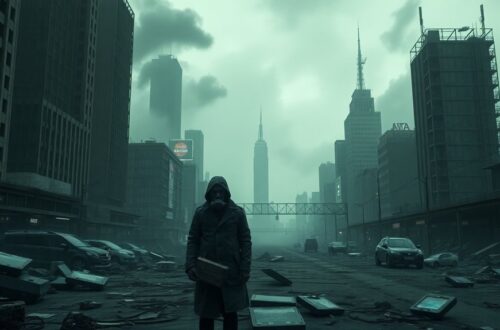
Though often set in bleak futures, dystopian narratives resonate deeply with contemporary society by reflecting our fears and anxieties about authority, technology, and individual freedom.
Works like Yevgeny Zamyatin’s *We* and George Orwell’s *1984* critique totalitarianism, warning us about the dangers of oppressive regimes.
Philip K. Dick’s *The Minority Report* raises modern concerns about surveillance and algorithmic control over autonomy.
Sinclair Lewis’s *It Can’t Happen Here* echoes our societal fears surrounding populist movements today.
These cautionary tales highlight the consequences of unchecked technological advancements that threaten personal liberties. Resistance movements from history illustrate the power of collective action, reminding us that unity against oppression remains crucial in safeguarding our freedoms.
As you engage with these narratives, you can’t help but recognize their relevance, shedding light on the complexities of our current world and urging reflection on the importance of safeguarding individual freedom.
Conclusion
As you glance around, it’s clear that science fiction wasn’t just a window into the future—it was a crystal ball, revealing the vibrant tapestry of our lives today. From AI companions that spark ethical debates to the immersive worlds of virtual reality, these themes have woven themselves into our reality like threads in a grand cosmic loom. The futuristic visions once confined to pages now dance around us, reminding you that imagination knows no bounds.