

“Alone in Berlin” shows you how silence can be a powerful form of resistance. Otto and Anna Quangel transform their grief into quiet defiance against the Nazi regime by writing anti-Hitler postcards. Their story highlights the significance of small acts of rebellion in oppressive times, illustrating how individual courage can challenge tyranny. As you explore their journey, you’ll uncover the emotional depth and enduring relevance of their struggle against oppression in today’s world.
The Historical Context of “Alone in Berlin”
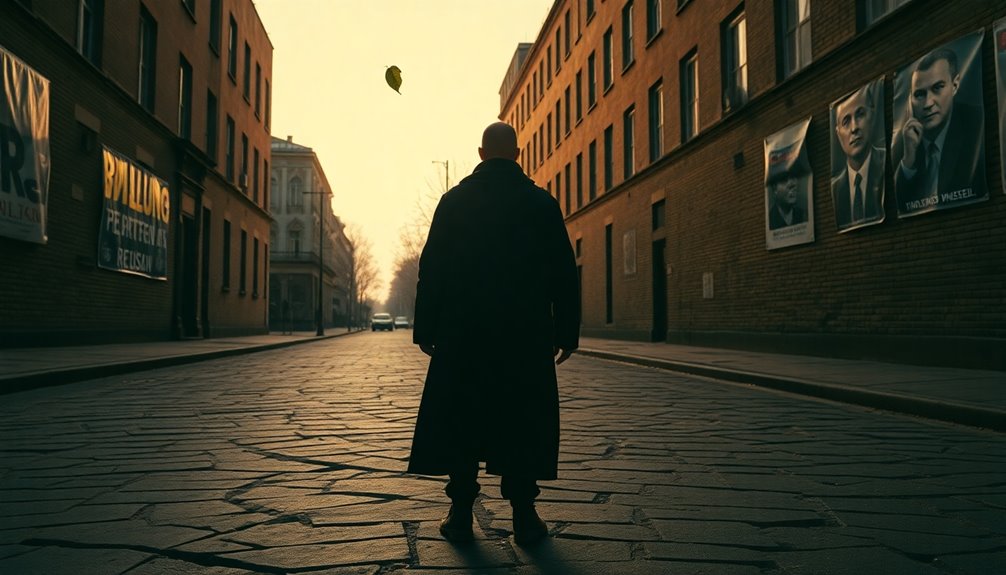
As you explore the historical context of “Alone in Berlin,” you’ll find it’s set against the grim backdrop of 1940s Berlin, where the Nazi regime instilled fear and oppression in everyday life.
The story unfolds during a time when the Gestapo’s pervasive influence turned ordinary citizens into wary observers, cautious of expressing dissent.
Otto and Anna Quangel’s journey begins with personal loss, igniting their resistance against a brutal regime. Their campaign of distributing anti-Hitler postcards symbolizes the courage of individuals standing up against tyranny, despite the overwhelming odds.
Otto and Anna Quangel’s personal tragedy sparks a courageous campaign against tyranny through the distribution of defiant postcards.
The narrative captures the psychological toll of living under totalitarian rule, revealing how small acts of defiance can resonate deeply in a society stifled by fear and repression. The impact of small acts of defiance is a poignant reminder of how ordinary individuals can challenge oppressive systems.
Who Are Otto and Anna Quangel?

Otto and Anna Quangel are a working-class couple in 1940s Berlin, driven by the grief of losing their son in WWII. They channel this sorrow into a brave act of resistance, distributing anti-Nazi postcards that challenge the regime’s propaganda. Their story highlights the power of individual courage in the face of tyranny. This act of defiance reflects the broader theme of individual conviction that can spark impactful dissent against oppression.
Background of the Couple
In the heart of Berlin during World War II, Otto and Anna Quangel represent a compelling narrative of transformation and resistance.
Initially supportive of the Nazi regime, their lives take a drastic turn after their son’s tragic death in the war. This loss ignites a fire within them, prompting Otto and Anna Quangel to shift their perspective and stand against the oppressive government.
Their acts of resistance begin with a covert campaign of writing and distributing anti-Hitler postcards, urging fellow citizens to oppose tyranny.
Inspired by the real-life couple Elise and Otto Hampel, their shared commitment to resist reflects not only moral courage but also a deepening bond forged in the face of danger and despair.
Their Act of Resistance
Fueled by their profound grief, Otto and Anna Quangel transform from passive citizens into active resisters against the Nazi regime.
This working-class couple, devastated by their son’s death in combat, initiates a secret campaign that embodies their act of resistance. They write and distribute 285 handwritten postcards, each one a bold critique of Hitler and a call to arms for the public to reject the oppressive regime.
Their actions, driven by personal loss and a thirst for justice, show that even the smallest voices can challenge totalitarianism.
Otto and Anna’s story, inspired by the real-life Otto and Elise Hampel, highlights how ordinary individuals can make extraordinary impacts in times of darkness.
The Significance of Their Resistance

While many were paralyzed by fear under the Nazi regime, Otto and Anna Quangel chose to resist, demonstrating the profound significance of individual defiance.
Their campaign of distributing 285 handwritten postcards denouncing Hitler highlights how acts of resistance, however small, can challenge totalitarian rule.
This German couple’s quiet defiance became a powerful symbol in a society gripped by oppression. Their actions, though leading to their arrest and execution, emphasized the importance of preserving one’s humanity amidst tyranny.
The Gestapo’s intense pursuit of the Quangels reveals the regime’s fear of dissent, proving that even minor acts of resistance could provoke severe consequences.
Their story encourages you to reflect on the value of standing up against injustice, regardless of the odds, as it embodies the resilience of ordinary individuals fighting against oppression.
The Impact of War on Ordinary Citizens
Although the horrors of World War II often seem distant, the emotional toll on ordinary citizens like Otto and Anna Quangel remains strikingly relevant.
The impact of war manifests profoundly in their lives, especially after the tragic loss of their son, which ignites their resistance against the Nazi regime. Fear and paranoia envelop Berliners, forcing them to navigate a treacherous landscape where every decision can have dire consequences.
The Quangels’ secret leafleting campaign showcases how seemingly small acts can preserve one’s humanity amid chaos. Yet, their fate—betrayal, arrest, and execution—underscores the harsh realities faced by those who dared to dissent. In this light, the story reflects the profound effects of systemic discrimination that can permeate society during times of crisis.
Such stories remind us of the psychological burden ordinary citizens bear during totalitarian rule.
Exploring the Themes of Courage and Defiance
In “Alone in Berlin,” you see how individual acts of defiance, like the Quangels’ postcard campaign, can ripple through an oppressive regime.
The film challenges you to contemplate the moral complexity of standing up against injustice, even when it feels risky.
Through their quiet resilience, you witness the profound impact of courage in the face of tyranny. Additionally, the portrayal of systemic oppression in literature, as seen in Richard Wright’s Native Son, highlights the importance of confronting societal injustices through personal actions.
Individual Acts Matter
Every small act of resistance can spark a larger movement, as illustrated by Otto and Anna Quangel in “Alone in Berlin.” Their decision to distribute 285 anti-Hitler postcards highlights the power of individual courage against a backdrop of tyranny.
You see how these individual acts transform Otto and Elise’s lives, turning their grief into a purposeful struggle for truth and justice. Despite the risks, their defiance encourages others to question authority, demonstrating that even seemingly insignificant actions can resonate deeply within society.
The narrative emphasizes that while the Quangels faced immense danger, their courage serves as a beacon of hope, reminding you that each act of resistance contributes to the collective fight against oppression.
Moral Complexity Explored
While steering through the treacherous waters of tyranny, “Alone in Berlin” reveals the intricate moral dilemmas faced by its characters, particularly Otto and Anna Quangel.
Their leafleting campaign against Nazi Germany embodies both courageous defiance and the harsh reality of isolation in resistance. You see their inner conflict reflected in Inspector Escherich, who struggles between his duty to the regime and his growing disapproval of its brutality.
The Quangels’ choice to distribute anti-Hitler postcards underscores the tension between self-preservation and moral conviction, as their grief transforms into a commitment to oppose oppression.
The narrative illustrates that even small acts of courage matter, reminding you that standing against injustice is essential, despite the dire consequences that may follow.
Resilience Against Oppression
Despite the overwhelming odds, Otto and Anna Quangel embody resilience against oppression through their quiet acts of defiance.
Grieving their son lost in WWII, they transform their pain into a courageous campaign, distributing anti-Hitler postcards. Each postcard represents a small yet powerful act of resistance, illustrating how individual actions can challenge tyranny.
Their struggle reveals that standing up against totalitarianism, despite the risks, is an expression of profound moral courage.
Even Inspector Escherich, initially loyal to the Gestapo, grapples with his respect for the Quangels, showcasing the potential for empathy within oppressive systems.
Ultimately, their tragic fate underscores the high stakes of resistance, reminding you that maintaining humanity in brutal regimes is a true reflection of courage and defiance.
How Did Postcards Become a Symbol of Dissent?
Although many might think of postcards as simple mementos, they became a powerful symbol of dissent during the Nazi regime, thanks to the courageous actions of Otto and Anna Quangel. Their handwritten postcards served as a covert protest, distributing 285 messages that urged fellow citizens to resist Hitler’s oppressive rule.
Here’s how these postcards encapsulated dissent:
- Each postcard contained provocative statements that denounced the government.
- The act of writing allowed the Quangels to process their grief over their son’s death.
- The Gestapo’s investigation revealed the regime’s fear of grassroots dissent.
Ultimately, the Quangels’ postcards illustrate that even small acts of rebellion can hold significant moral weight against totalitarianism, creating a legacy of silent resistance. This highlights the importance of individual freedom in the face of oppressive regimes and the necessity of resistance against them.
The Role of the Gestapo in the Quangels’ Story
As the Quangels quietly distributed their postcards, the Gestapo relentlessly sought to crush any spark of dissent in Nazi Germany. Tasked with investigating these anti-Hitler messages, Inspector Escherich and his team employed intense surveillance and intimidation tactics to uncover the source of the Quangels’ defiance. The regime’s fear of such small acts of resistance fueled a widespread manhunt, showcasing the oppressive atmosphere Otto and Anna navigated. Their leafleting effort was deemed a capital crime, and the Gestapo’s brutal methods reflected the lengths to which they’d go to maintain control. Ultimately, the relentless pursuit culminated in the Quangels’ arrest and execution, highlighting the grave consequences faced by those who dared to resist in silence against the Nazi regime. These actions echo the themes of systemic racism and oppression found in Richard Wright’s *Native Son*, illustrating how societal structures can dehumanize individuals and suppress dissent.
Emotional Resonance: Loss and Grief in the Film
Grief permeates every frame of “Alone in Berlin,” powerfully illustrating the emotional toll of loss on Otto and Anna Quangel. The loss of their son during WWII transforms this working-class couple from mourners into fierce anti-Nazi activists.
Grief transforms Otto and Anna Quangel, propelling them from mourning parents to resolute anti-Nazi activists in a poignant portrayal of loss.
Their journey reflects the following key aspects of grief:
- Shared Despair: Their mutual support helps them cope with their overwhelming sorrow.
- Fuel for Resistance: The pain of loss ignites their resolve to resist the oppressive regime.
- Isolation Amplified: The film’s 1940s Berlin setting intensifies their feelings of loneliness and despair.
Ultimately, their tragic fate underscores the personal costs of standing up against tyranny, leaving a lasting impact on you as the audience. The narrative echoes themes of systemic oppression as seen in other works, highlighting the profound effects of societal injustices on individual lives.
The Director’s Vision: Vincent Perez’s Approach
Vision shapes the narrative of “Alone in Berlin,” and Vincent Perez’s approach is pivotal to its emotional depth. By co-writing the screenplay, he infused his director’s vision into the story and character development, emphasizing the emotional weight of Otto and Anna Quangel’s intimate relationship as they resist the Nazi regime.
Perez authentically captured the historical context by filming in actual Berlin locations, enhancing the film’s realism. He highlighted the quiet yet profound acts of defiance, showcasing how personal convictions can inspire significant moral courage in oppressive circumstances. Furthermore, Perez drew parallels between the film’s historical themes and contemporary issues of free speech and governmental oppression, making the story resonate powerfully with modern audiences. The exploration of queer identity in Baldwin’s work also emphasizes the importance of individual resistance against societal norms, mirroring the Quangels’ fight against tyranny.
Critical Reception: How Was the Film Received?
When “Alone in Berlin” premiered, audience reactions were mixed, reflecting the film’s uneven pacing. While you might appreciate the strong performances from Emma Thompson and Brendan Gleeson, some critiques pointed out that the film struggled to maintain momentum. This blend of emotional depth and pacing issues shaped the overall impression critics left on the film. The film’s exploration of systemic racism’s impact resonates with contemporary discussions about race and identity, similar to themes found in Richard Wright’s “Native Son.”
Audience Reactions and Impressions
Many viewers found themselves divided over “Alone in Berlin,” as evidenced by its mixed critical reception. While the film holds a 57% approval rating on Rotten Tomatoes and a Metacritic score of 52, audience reactions highlight its emotional depth and powerful performances.
Here are some key impressions:
- Strong Performances: Brendan Gleeson and Emma Thompson’s portrayals resonated deeply, showcasing the characters’ emotional struggles.
- Resonance with Current Issues: The film’s theme of quiet resistance against oppression struck a chord, drawing parallels to contemporary concerns about free speech.
- Emotional Weight: Many viewers noted the film’s portrayal of loss and despair, leaving a lasting impression that lingered long after the credits rolled.
Despite criticisms of pacing, the film’s emotional impact remains undeniable.
Critiques on Pacing Issues
While the emotional performances of Brendan Gleeson and Emma Thompson shine, critiques of pacing in “Alone in Berlin” often overshadow these strengths.
With a 57% approval rating on Rotten Tomatoes and a Metacritic score of 52, critics express divided opinions about the film’s effectiveness. Many note that the sluggish pacing hinders the overall emotional impact, making it challenging for you to fully engage with the story.
Comparisons to Fritz Lang’s film “M” highlight how the pacing issues disrupt momentum, even as the performances resonate deeply.
Despite these critiques, Gleeson and Thompson’s portrayals convey the narrative’s weight powerfully.
Ultimately, the film’s pacing detracts from its potential, leaving viewers with mixed feelings about the storytelling flow.
Lessons on Individual Action Against Oppression
Even in the darkest times, individual actions can spark significant change, as shown by Otto and Anna Quangel’s quiet resistance in “Alone in Berlin.”
Their story highlights how one couple’s courage to distribute anti-Hitler postcards inspired others to question the tyranny surrounding them.
Here are some key lessons on individual action against oppression:
- Small Acts Matter: Even simple gestures can create a ripple effect, motivating others to resist.
- Personal Loss Can Ignite Change: Grieving parents became determined resistors, showcasing how pain can fuel courage.
- Moral Integrity is Essential: Standing up for what’s right, even when alone, emphasizes the importance of individual conscience.
Ultimately, their actions remind us that resistance against oppression is fundamental in any era, resonating deeply today.
The Real-Life Inspirations Behind the Story
Otto and Elise Hampel’s story serves as the true inspiration behind “Alone in Berlin,” showcasing how personal tragedy can ignite a powerful response to oppression.
After losing their son in the war, the Hampels transformed their grief into a secret campaign against the Nazi regime. From 1940 to 1942, they distributed about 285 anti-Hitler postcards throughout Berlin, urging others to resist tyranny. Their courageous actions were fueled by a deep sense of justice and loss, illustrating the impact of individual resistance.
Unfortunately, the Gestapo captured the Hampels in 1943, leading to their execution. Hans Fallada’s access to their Gestapo files allowed him to craft a poignant narrative, bringing their story of defiance to life in “Jeder stirbt für sich allein.”
Reflections on the Power of Quiet Resistance
Quiet resistance embodies a profound strength that often goes unnoticed in the face of tyranny.
In “Alone in Berlin,” you witness how individual acts of courage can spark hope amidst despair. The Quangels’ journey illustrates this power through their small yet impactful actions.
Here are three reflections on quiet resistance:
- Subtle Defiance: Leaving handwritten postcards serves as a powerful reminder that even minor gestures can challenge oppression.
- Emotional Bonds: As Otto and Anna unite in their clandestine efforts, their love deepens, showcasing the personal stakes involved in standing against injustice.
- Complex Morality: Characters like Inspector Escherich reveal that quiet resistance can evoke respect, demonstrating the moral conflicts within oppressive systems.
These elements emphasize that quiet resistance is essential in the struggle against tyranny.
Why Does “Alone in Berlin” Remain Relevant Today?
The themes of “Alone in Berlin” resonate powerfully in today’s world, where individual acts of resistance remain essential against oppressive regimes.
In a time when tyranny threatens free speech and civil liberties, the Quangels’ quiet dissent serves as a potent reminder that small actions can spark significant change.
Their emotional journey illustrates the moral complexities of standing up against oppression, inviting you to reflect on your role in resisting injustice.
Reflect on your own role in resisting injustice and the moral complexities of standing against oppression.
As you witness their courage, consider how their story relates to contemporary struggles for justice.
The film’s exploration of fear, sacrifice, and resilience urges you not to remain silent in the face of tyranny, emphasizing that even the simplest acts of defiance can contribute to a larger movement for freedom.
Conclusion
In a world where silence often feels like complicity, remember that “still waters run deep.” Otto and Anna Quangel’s story in “Alone in Berlin” teaches us that even quiet acts of defiance can ripple through history. Their courage inspires us to stand up against oppression, reminding us that every small action counts. As you reflect on their journey, consider how your own silent resistance can spark change in today’s turbulent times. Don’t underestimate the power of your voice, even when it’s soft.