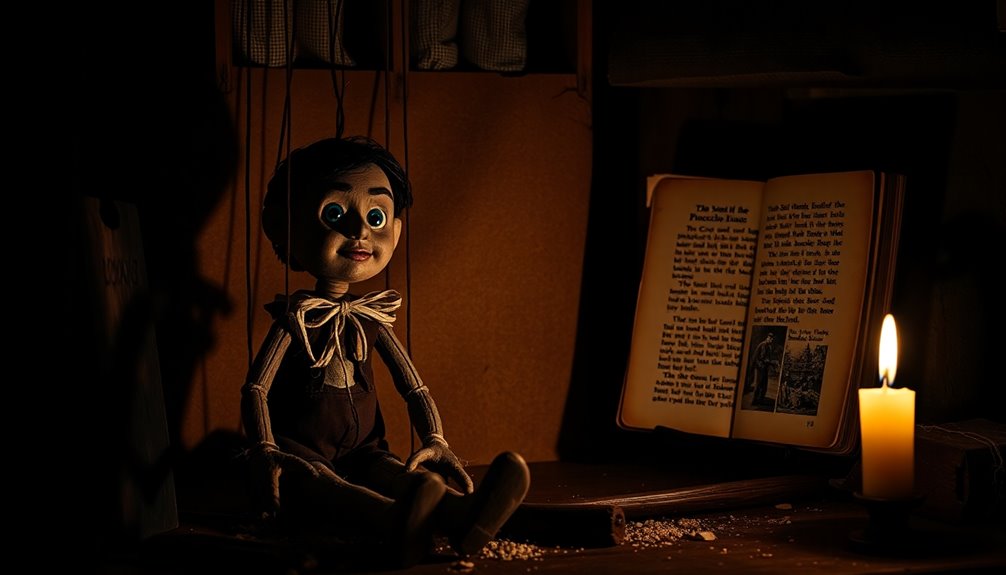
Pinocchio’s origins are much darker than you might expect. Carlo Collodi’s childhood shaped this tale of punishment and redemption, where disobedience leads to gruesome consequences, like the death of the Talking Cricket. Characters like Geppetto reveal harsh parental love, and the story’s themes reflect systemic moral complexities. Unlike today’s cheerful adaptations, the original features grim outcomes and enigmatic figures. Curious to uncover how these elements have influenced modern interpretations? There’s much more to explore.
The Startling Origins of Pinocchio’s Tale
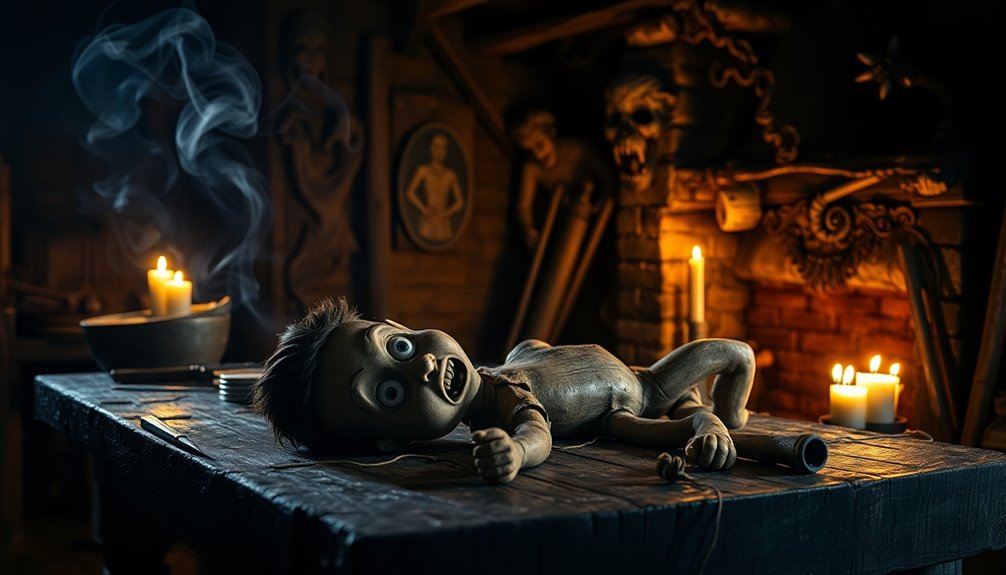
When you plunge into the origins of *The Adventures of Pinocchio*, you quickly discover a tale far darker than the cheerful adaptations you might know. Carlo Collodi’s dark original isn’t just a whimsical story; it’s steeped in moral lessons delivered through harsh consequences.
For instance, Pinocchio faces gruesome punishments for his misbehavior, including a shocking hanging scene that underscores the severity of his actions. His character embodies selfishness and disobedience, leading to terrifying outcomes rather than lighthearted adventures.
Collodi initially aimed this narrative at an adult audience, embedding elements of horror and responsibility that starkly contrast with today’s child-friendly versions. Even shocking events, like Pinocchio killing the Talking Cricket, reveal just how startling this classic tale truly is. Additionally, much like Agatha Christie’s works, Pinocchio’s story intricately weaves moral lessons into its narrative, emphasizing the consequences of one’s actions.
Carlo Collodi’s Life and Its Influence on the Story
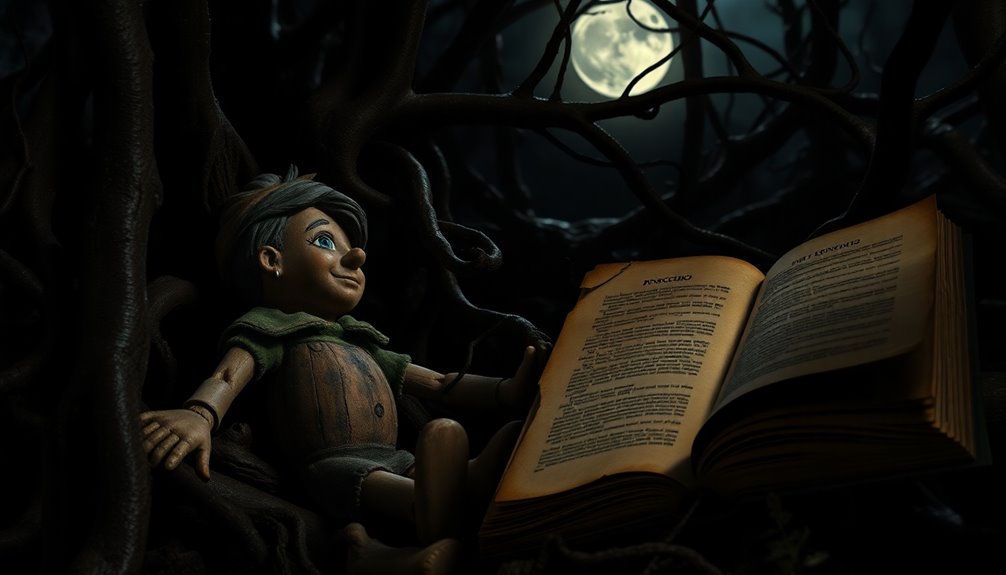
Carlo Collodi’s tumultuous childhood deeply shaped the themes in *The Adventures of Pinocchio*. Growing up in Florence as the eldest of ten siblings, he faced loss and hardship, which influenced the darker themes woven throughout the story.
His difficult upbringing, marked by separation from his family, instilled a unique worldview, reflected in the moral lessons of Pinocchio’s journey. Originally serialized in *Giornale per I bambini*, the tale targeted young readers but explored adult experiences and societal challenges.
Collodi’s personal tragedies added grim elements, like punishment and moral consequences, to the narrative. Notably, he initially planned a darker ending, showcasing his inclination to explore the complexities of human behavior and morality, making Pinocchio a rich, layered tale. Furthermore, like *A Tree Grows in Brooklyn*, Collodi’s work emphasizes the immigrant experience, highlighting struggles and resilience within societal frameworks.
Key Characters and Their Dark Roles
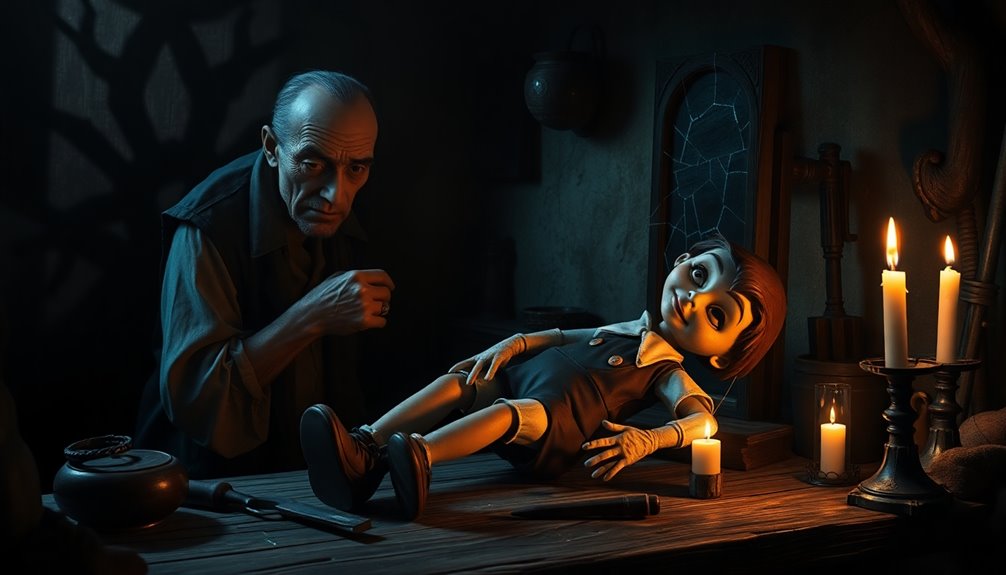
In exploring the key characters in “Pinocchio’s Dark Story,” you’ll see how their actions shape the narrative’s grim tone.
Master Antonio’s discovery of the magical wood sets off a chain of dark events, while Geppetto’s struggles highlight the harsh realities of his love for Pinocchio.
Meanwhile, the tragic fate of the Talking Cricket serves as a stark reminder of the consequences when wisdom is ignored. Additionally, the narrative reflects systemic racism’s dehumanizing effects that resonate throughout various tales, illustrating how societal prejudices can shape individual destinies.
Master Antonio’s Discovery
Master Antonio stumbles upon a peculiar block of wood, its cries echoing through his workshop with each cut. Intrigued, he sees potential beyond the mundane—this magical block of wood could transform into something extraordinary. Driven by curiosity and the promise of profit, he decides to sell it to Geppetto, unknowingly setting off a tragic chain of events.
- The wood’s intended use for a table leg symbolizes ordinary beginnings.
- Antonio embodies the struggles of the working class, highlighting the story’s darker themes.
- His actions foreshadow Pinocchio’s misadventures, emphasizing disobedience and consequence.
Master Antonio’s discovery marks the start of a dark journey, intertwining fate and chance in the creation of a puppet that defies its nature.
Geppetto’s Struggles
Geppetto toils away in his dim workshop, each chip of wood echoing his loneliness and financial struggles. His heart yearns for companionship, leading him to carve Pinocchio, a decision that spirals into chaos.
As his creation comes to life, Geppetto faces the harsh consequences of parental sacrifice. Despite his good intentions, he finds himself wrongfully imprisoned due to the puppet’s mischievous antics, a cruel twist of fate.
The emotional turmoil weighs heavily on him, magnifying the burdens of responsibility. Each misstep Pinocchio takes reflects Geppetto’s own struggles, illustrating the darker elements of fatherhood.
In a world filled with betrayal and danger, Geppetto embodies the trials of a father trying desperately to guide his wayward son.
The Talking Cricket’s Fate
Although the Talking Cricket tries to guide Pinocchio with wisdom and warnings, his efforts lead to a tragic fate. In Collodi’s original tale, the consequences of disobedience are starkly illustrated through this character’s demise.
- The Talking Cricket embodies moral guidance, urging Pinocchio to make responsible choices.
- Pinocchio’s violent reaction to the cricket’s advice reveals his reckless nature and disregard for wisdom.
- The cricket’s death symbolizes the harsh reality of ignoring guidance, emphasizing the story’s dark themes.
Unlike the Disney adaptation where the cricket survives, this grim fate underscores the severe repercussions for those who challenge the misguided.
The Talking Cricket’s tragic end highlights the importance of heeding moral lessons in Pinocchio’s chaotic journey.
Themes of Punishment and Redemption in Pinocchio
In *The Adventures of Pinocchio*, punishment and redemption intertwine, creating a compelling moral landscape. You witness Pinocchio facing gruesome punishments for his disobedience, like being hanged for his mischief. These harsh consequences emphasize the severity of ignoring moral guidance.
However, his transformation from a wooden puppet to a real boy symbolizes redemption and personal growth, reflecting the importance of embracing responsibility and goodness. Characters like the Talking Cricket serve as moral guides, warning you of the repercussions that come with reckless behavior.
Collodi intended this tale to show that laziness and selfishness lead to dire outcomes, reinforcing how accountability shapes one’s journey. Ultimately, these themes illustrate the complex nature of morality in a child’s life, mirroring the systemic oppression and racial inequalities that can profoundly shape one’s identity and agency.
The Contrast Between Original and Adapted Narratives
- Pinocchio kills the Talking Cricket, whereas adaptations often portray him as a moral guide.
- Collodi’s Blue Fairy appears ghostly and enigmatic, unlike the benevolent figure in Disney’s version.
- The original story includes gruesome punishments, like attempted hanging, absent in today’s retellings.
- These elements showcase how contemporary adaptations sanitize Collodi’s work, shifting away from its intended adult audience and profound moral lessons. Additionally, the theme of self-discovery is often overshadowed in modern retellings, which focus more on entertainment than the original’s deeper messages.
Cultural Impact and Lasting Legacy of Pinocchio
As Pinocchio’s tale has traversed cultures and time, it’s become a powerful symbol of the consequences of dishonesty. Translated into 260 languages, this story ranks among the most widely read in children’s literature, second only to the Bible.
The iconic image of Pinocchio’s nose growing when he lies resonates universally, reinforcing moral lessons. Numerous adaptations, including Guillermo del Toro’s and Robert Zemeckis’s 2022 films, explore the original version’s darker themes, showcasing its cultural relevance.
The legacy of Pinocchio also extends to various cultural works and even an asteroid named 12927 Pinocchio. The enduring fascination has led to attractions like Pinocchio Park in Collodi, Italy, where visitors can immerse themselves in this timeless narrative.
Conclusion
As you explore Pinocchio’s eerie origins, you can’t help but feel the shadows lurking behind the whimsical tale. Each character, with their dark secrets, pulls you deeper into a world where punishment and redemption intertwine. You might wonder how such a haunting story morphed into childhood delight. But remember, beneath the surface of every beloved narrative lies a chilling truth waiting to be uncovered. Are you ready to confront the darkness hidden within?