

Phil Knight’s “Shoe Dog” takes you on a gripping journey through Nike’s rise from a small startup to a global icon. With just a $50 loan, Phil faced immense challenges, including financial struggles and conflicts with suppliers. His perseverance and innovative spirit transformed failures into lessons. You’ll discover essential leadership insights too, focusing on trust and empowerment. This memoir reveals how Nike not only revolutionized athletic footwear but also made a significant cultural impact along the way.
The Origins of Nike: How Phil Knight’s Vision Took Flight
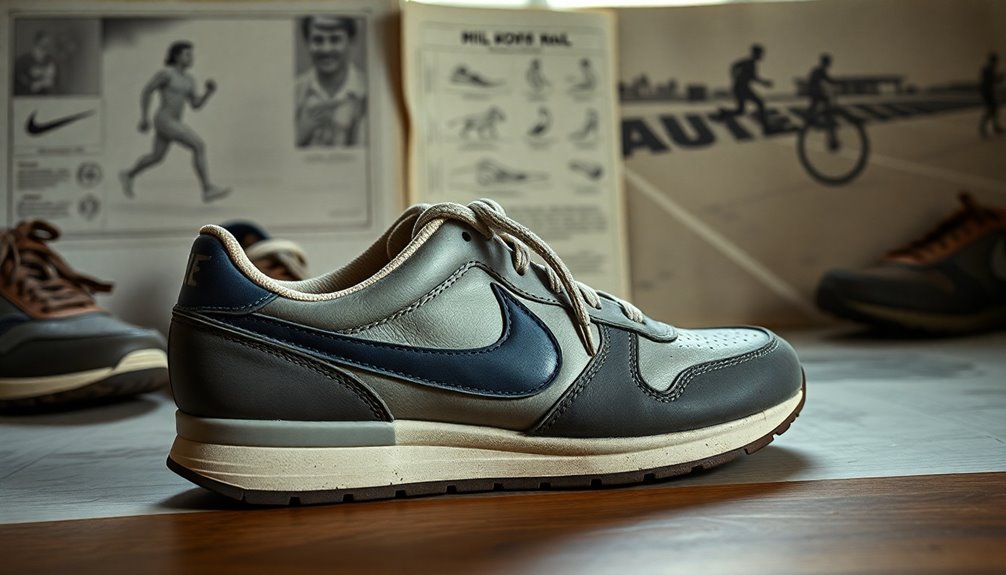
When Phil Knight first envisioned Nike, he didn’t just dream about creating another shoe brand; he aimed to revolutionize the running experience. His entrepreneurial journey began in 1964 when he borrowed $50 and started selling Japanese running shoes from his car’s trunk.
The partnership with Onitsuka Tiger was essential, but Knight’s ambition pushed him to create something unique. In 1971, Nike introduced its first shoe, showcasing the now-iconic Swoosh logo designed for just $35.
Yet, Knight faced significant financial struggles in those early years, transforming $8,000 in gross sales into a business empire exceeding $30 billion. His memoir captures this incredible transformation, highlighting how determination and vision turned Nike into a global powerhouse in athletic footwear. This journey underscores the importance of resilience in overcoming challenges, showcasing the grit required to succeed in entrepreneurship.
Key Challenges Faced on the Road to Success

Despite his ambitious vision, Phil Knight faced numerous challenges that could have derailed Nike’s success from the start. He grappled with financial struggles, borrowing $50 and grossing only $8,000 in his first year.
Phil Knight’s journey began with financial struggles, borrowing $50 and grossing only $8,000 in his first year.
The partnership with Onitsuka Tiger was riddled with conflicts, pushing Knight to risk everything for Nike’s independence. Production delays and quality control issues threatened the brand’s reputation, but Knight’s commitment to innovation led to the first Nike shoe in 1971.
Amid fierce competition and skepticism, his resilience shone through. These obstacles ultimately fueled Nike’s transformation into a global leader in athletic footwear, with annual sales exceeding $30 billion. Knight’s journey exemplifies how perseverance can turn challenges into stepping stones for success.
Lessons in Leadership: Trust and Empowerment in Management

Overcoming challenges in the early days shaped Phil Knight’s approach to leadership at Nike. He believed in fostering a culture of trust and empowerment, allowing employees to take ownership of their tasks. This not only cultivated a strong team dynamic but also supported team autonomy and creativity.
Here are some key lessons from his leadership style:
- Prioritize clear communication of collective goals.
- Delegate responsibilities while maintaining oversight.
- Encourage initiative by trusting your team members.
- Listen more than you speak to build rapport.
- Celebrate surprising results that come from empowered individuals.
Knight’s management philosophy underscores that effective leadership lies in balancing delegation and guidance, ensuring everyone can thrive while working toward shared objectives. Additionally, embracing the power of personal agency can lead to transformative outcomes within a team environment.
The Role of Perseverance in Phil Knight’s Journey
Perseverance proved to be a cornerstone of Phil Knight’s journey as he transformed a modest idea into one of the world’s leading brands.
In his memoir, Knight shares how grit and resilience helped him navigate numerous challenges, including financial struggles that started with a mere $50 loan.
Despite early sales of only $8,000, his unwavering commitment to overcoming obstacles fueled his entrepreneurial path.
Knight illustrates that success isn’t just about celebrating victories; it requires embracing failures and learning from them.
The years of hardship ultimately led to Nike’s annual sales exceeding $30 billion, showcasing that perseverance is essential for achieving aspirations.
His journey exemplifies that true success lies in the ability to push through adversity. The emergence of the iconic Nike swoosh serves as a testament to Knight’s creativity and commitment to quality amidst challenges.
Insights on Innovation: How Nike Redefined the Athletic Market
In “Shoe Dog,” you’ll see how Nike transformed the athletic market through disruptive marketing strategies and innovative product development.
By forging partnerships with iconic athletes, they didn’t just sell shoes; they created a movement.
This approach redefined performance standards and set Nike apart as a leader in the industry. Additionally, much like Agatha Christie’s intricate plots, Nike’s strategies often involved unexpected twists that captivated consumers and kept them engaged.
Disruptive Marketing Strategies
Nike’s approach to disruptive marketing has fundamentally transformed the athletic market, setting new standards for how brands connect with consumers. By implementing innovative strategies, the brand not only captured attention but also created lasting emotional connections.
Here’s how they did it:
- Leveraging celebrity endorsements, especially with Michael Jordan, skyrocketed brand visibility.
- The iconic “Just Do It” campaign resonated with the American Dream, motivating countless individuals.
- Direct-to-consumer sales enhanced profit margins and fostered closer relationships.
- Nike Air technology showcased product innovation, differentiating their athletic footwear in a competitive landscape.
- Engaging storytelling in marketing campaigns highlighted athletes’ journeys, deepening consumer ties.
These disruptive strategies helped Nike achieve sales topping $30 billion, redefining the athletic market in the process.
Innovative Product Development
While many brands focus solely on marketing, Nike’s innovative product development has been at the heart of its success, redefining the athletic market.
Phil Knight recognized early on that feedback from athletes like Steve Prefontaine could drive performance improvements in athletic footwear. This commitment to continuous innovation led to cutting-edge technologies like the Air cushioning system, which revolutionized comfort and performance in running shoes.
Nike’s market strategy effectively married product innovation with athlete endorsements, establishing the brand as a cultural icon. With annual sales exceeding $30 billion, Nike demonstrates that a relentless pursuit of innovative product development not only enhances athlete experience but also solidifies its position as a leader in the global athletic footwear market.
Athlete Partnerships Impact
By forging powerful partnerships with iconic athletes, Nike transformed the athletic market and redefined brand loyalty. These endorsements not only boosted product innovation but also created a cultural phenomenon.
- Michael Jordan’s Air Jordan brand skyrocketed sales and brand recognition.
- Steve Prefontaine’s collaboration established Nike as a serious competitor in athletic footwear.
- Athlete insights drove the development of technologically advanced products, like the Nike Air cushioning system.
- Nike’s strategic partnerships expanded its reach into diverse sports markets.
- This approach fostered deep emotional connections with consumers, increasing loyalty and trust.
Ultimately, Nike’s athlete partnerships played a vital role in achieving annual sales exceeding $30 billion, forever changing the landscape of the athletic industry.
The Cultural Impact of Nike and Its Evolution as a Brand
Nike’s journey from a humble start-up to a cultural icon shows how brand identity can evolve dramatically.
By embracing innovation and connecting with consumers through powerful narratives, you see how Nike has shaped not just the athletic footwear market, but also the broader cultural landscape.
This evolution highlights the brand’s influence on lifestyle, sports, and social movements, making it a significant player in contemporary culture. Additionally, the intricate plotting of Nike’s marketing strategies has allowed it to resonate deeply with diverse audiences around the world.
Brand Identity Evolution
As the landscape of athletic wear transformed, Nike shifted from its humble beginnings focused solely on performance footwear to a powerhouse brand that embodies innovation, style, and cultural relevance.
Phil Knight’s vision propelled Nike to become a cultural icon, symbolizing empowerment and perseverance through strategic endorsements.
Key elements of Nike’s brand identity include:
- The iconic Swoosh logo, recognized worldwide
- The empowering tagline “Just Do It,” launched in 1988
- Innovative technologies like Nike Air and Flyknit
- Endorsements from legends like Michael Jordan and Serena Williams
- A commitment to social issues, resonating with diverse audiences
Through this evolution, Nike not only redefined athletic footwear but also carved out a significant place in popular culture.
Cultural Influence Through Innovation
While many brands aim for cultural relevance, few have achieved it with the same impact as Nike. You see, Nike transformed from a small start-up into a global powerhouse, boasting annual sales over $30 billion. The iconic Swoosh logo symbolizes athletic excellence and innovation, solidifying Nike’s status as a cultural icon.
Its groundbreaking marketing strategies, featuring high-profile endorsements from legends like Michael Jordan, revolutionized sports marketing and created deep connections with consumers. Nike’s commitment to innovation, showcased through Air technology, enhances athletic performance while setting lifestyle trends.
Additionally, Nike embraces themes of empowerment and diversity, resonating with a broad audience and reinforcing its leadership in both sports and cultural movements.
Conclusion
In the grand race of life, you find yourself in the lane of Phil Knight, where grit fuels your momentum and risk sharpens your focus. Like a well-crafted shoe, your journey molds to the path ahead, embracing challenges as stepping stones. Trust and perseverance become your allies, guiding you through uncertainty. As you innovate and evolve, remember that every stride you take not only shapes your destiny but also leaves an indelible mark on the world around you.