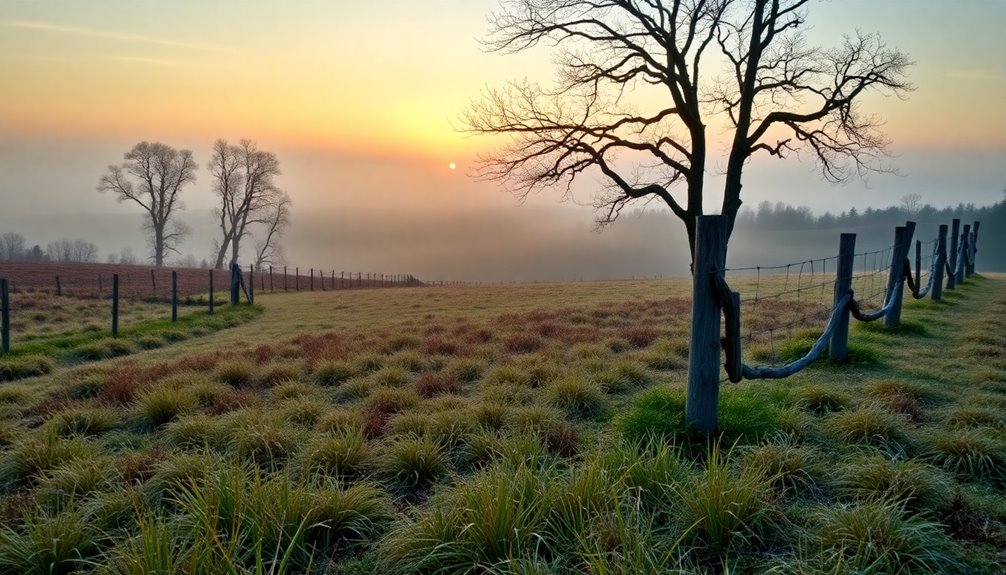
In modernist poetry, you’ll find poets like Robert Frost grappling with the intricate bond between land and human experience. Frost captures the beauty and harsh realities of rural life, while exploring themes of alienation and societal expectations. His use of ordinary language makes complex emotions accessible, reflecting the struggles of modernity. This connection to the land highlights resilience and aspirations, offering a powerful glimpse into the human condition. Discover how these themes resonate deeply in his work and that of his contemporaries.
The Essence of Modernism in Poetry
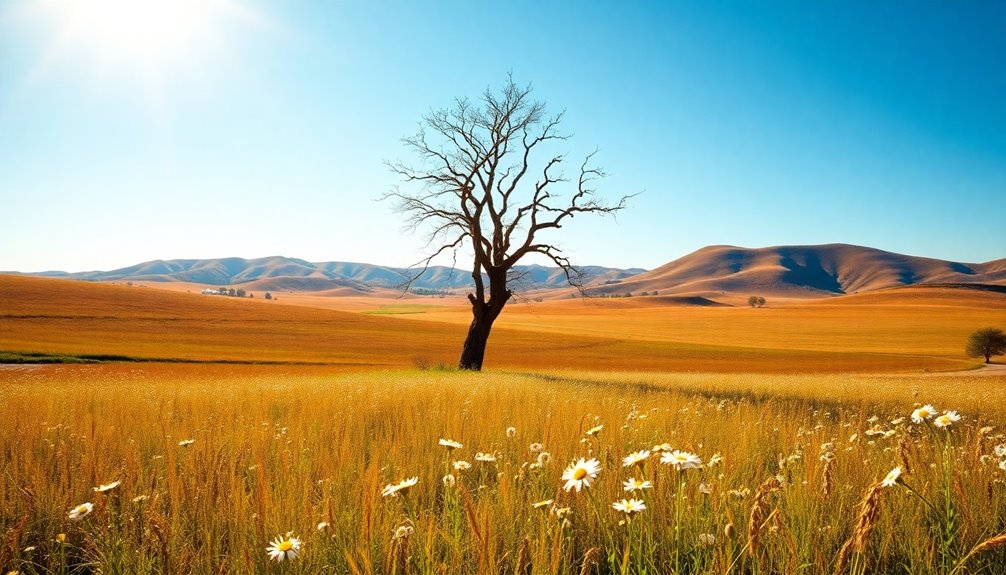
Modernism in poetry marks a significant departure from traditional forms, as poets sought to capture the essence of a rapidly changing world. This movement represents a radical shift, emphasizing new subjects, themes, and styles that reflect the complexities of post-World War I society.
As an American poet, Robert Frost embodies modern poetry by delving into existential questions and highlighting the tension between individual experiences and societal expectations. His innovative use of vernacular language and rural imagery contrasts sharply with the urban sophistication of his peers, showcasing the harsh realities of rural life.
Notable works like “Mending Wall” and “Departmental” illustrate his engagement with themes of alienation and the ambiguity of human relationships, making his contributions essential to the modernist landscape. Additionally, Frost’s exploration of the complexities of human relationships echoes the psychological depth found in modern mystery novels like “Gone Girl.”
Robert Frost’s Connection to the Land
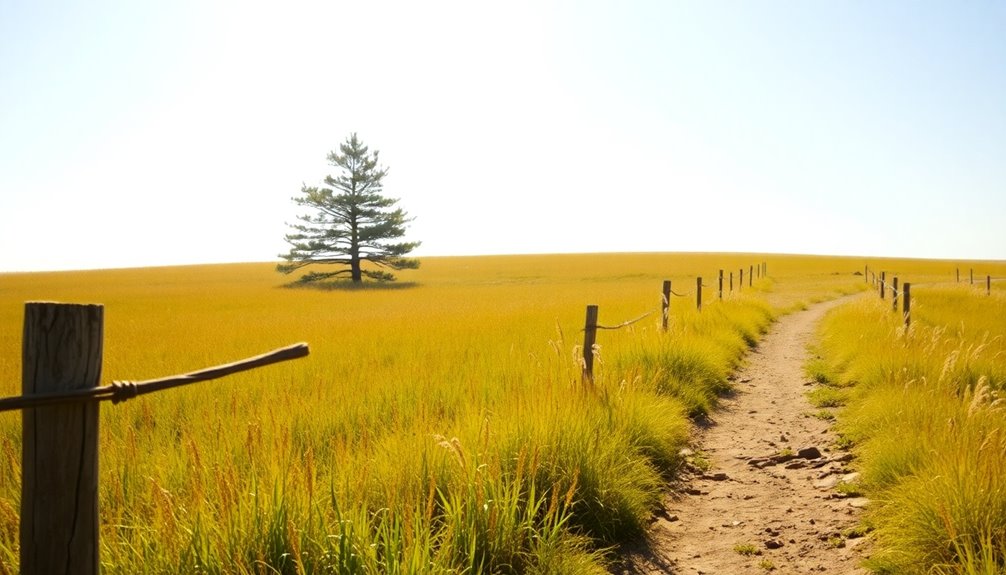
When you read Robert Frost’s poetry, you can’t help but notice how the New England landscape shapes his identity and themes. His vivid rural imagery not only captures the beauty of nature but also reveals the deeper connections between people and their environment. Frost’s work resonates with the themes of resilience and aspirations reflected in the struggles of characters like Francie Nolan in *A Tree Grows in Brooklyn*.
Nature as Identity
Robert Frost’s poetry serves as a vivid canvas that captures his profound connection to the New England landscape, where nature becomes an essential element of identity. In his work, you’ll find a deep exploration of how the rural settings shape personal and collective identities.
With ordinary language and vernacular speech, as seen in “Mowing” and “Out, Out–,” Frost emphasizes the intimate bond between individuals and their environment. His imagery resonates within American literature, portraying nature as both a source of inspiration and a complex backdrop for human experience.
Frost reveals the beauty and danger of nature, highlighting the tensions that arise in modern life and our often fraught relationship with the land, offering a nuanced perspective on rural existence.
Rural Imagery Significance
Though often overlooked, rural imagery in Frost’s poetry reveals the deep connections individuals have with the land. His works, like “Mending Wall” and “Out, Out–,” capture both the harsh realities and the intrinsic beauty of rural life.
By using ordinary language, Frost engages with common experiences, contrasting sharply with earlier romantic views. This rural imagery illustrates how modern life affects our relationship with nature, highlighting the psychological impact of industrialization.
You’ll see how Frost emphasizes labor, as in “Mowing,” where tools symbolize human effort and connection to the earth. His poems serve as a lens to explore how changing relationships with the land shape emotions, reminding us of the significance of our ties to nature in an increasingly disconnected world.
Rural Life in Frost’s Work: a Departure From Romanticism
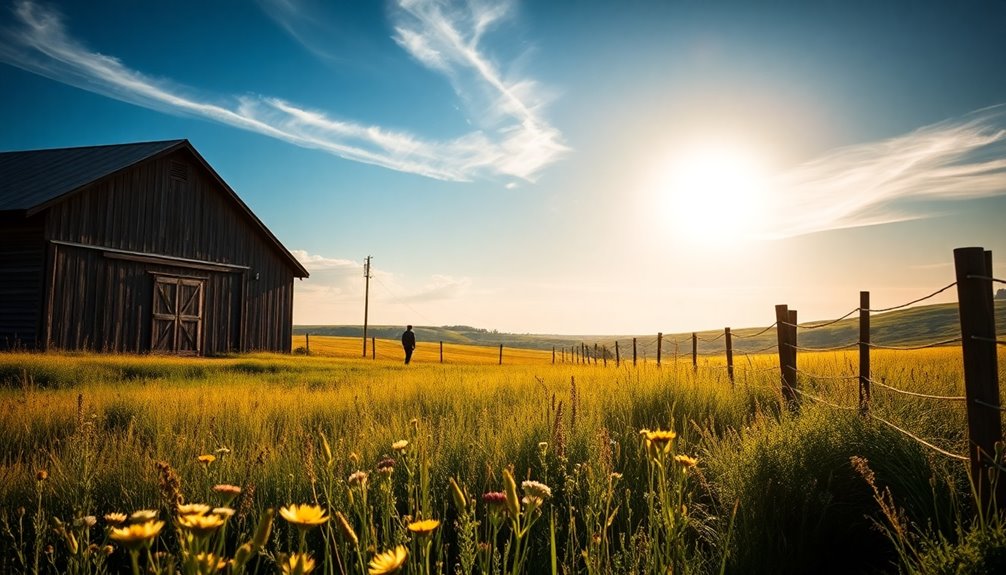
While many poets of the Romantic era idealized rural life, Frost’s work starkly contrasts this view by revealing the harsh realities and complexities of existence in the countryside.
In his poetry, you see the true essence of rural life in New England, where beauty intertwines with danger. Frost uses ordinary language to portray the lives of common people, capturing their innocence alongside the darker consequences of modernity.
Works like “Mending Wall” and “The Road Not Taken” illustrate the tensions of individual choices in a rural setting, emphasizing the psychological impacts of industrialization. Frost’s exploration of moral integrity resonates with the themes found in classic literature, such as those in Charles Dickens’ “Great Expectations.”
Themes of Nature and Human Experience in Frost and Modernism
Frost’s exploration of nature goes beyond mere description; it reflects the intricacies of human experience in a world shaped by modernity. In his poetry, you see the tension between beauty and danger, as seen in “Mowing” and “Out, Out–.” He uses ordinary language to depict rural life, capturing both innocence and the psychological impact of a rapidly industrialized society.
This backdrop allows him to address themes of nature and highlight the disconnection between humanity and the environment. Frost’s work resonates with modernist themes of alienation and the search for meaning, emphasizing the struggle between individual desires and societal expectations. His stylistic innovations enrich American poetry, making profound statements about our relationship with nature in contemporary life. Additionally, the symbolism of birdsong in literature illustrates love’s resilience amidst despair, paralleling the emotional depth found in Frost’s exploration of the human condition.
The Role of Labor in Frost’s Poetry
Labor plays a pivotal role in Frost’s poetry, revealing the profound connection between human experience and work. In poems like “Mowing,” you see how he reflects on the bond between the worker and their tools, emphasizing labor’s significance in shaping identity.
In “Out, Out–,” he starkly illustrates the dangers of labor through a tragic narrative, showing how industrial work can have fatal consequences. The presence of tools in his poems signifies a deeper relationship with the land, portraying work not merely as survival but as essential to existence.
Drawing from his working-class background, Frost captures the dignity and struggles of manual work, addressing the tensions between traditional craftsmanship and the industrialization affecting rural life. This theme resonates with the notion of systemic racism in Wright’s “Native Son,” where societal structures profoundly impact individuals’ experiences and identities.
Poetic Innovations: Frost’s Use of Traditional Forms
Though rooted in traditional verse, Robert Frost’s poetry innovatively bridges the gap between classic forms and modern themes. He employs structures like iambic pentameter, creating accessible poetry that resonates with diverse readers.
Frost’s use of regular meter, combined with the irregularities of natural speech, showcases a unique tension that enhances his work’s emotional depth. By integrating familiar imagery and vernacular language, he crafts Frost poems that reflect modernist themes such as alienation and the complexities of human experience.
This blend of old and new poetic techniques allows you to engage profoundly with contemporary issues, making his poetry relatable and relevant. Ultimately, Frost’s innovative approach redefines how traditional forms can express modern sensibilities. The resilience and determination of World War II resistance movements serve as a poignant reminder of the human spirit’s capacity to confront adversity, echoing the struggles depicted in Frost’s works.
The Sound of Sense: Capturing Rhythm in Frost’s Versification
The rhythm of spoken language pulses through Robert Frost’s poetry, capturing the essence of everyday speech in a way that feels authentic and relatable. His concept of the “sound of sense” showcases how he manipulates rhythm and meter, particularly through:
- Irregular Meter: Reflects the complexities of natural speech.
- Iambic Pentameter: Serves as a foundation for his innovative techniques.
- Wave Metaphor: Illustrates the tension between structure and fluidity.
- Blending Forms: Combines traditional and modernist themes for a unique voice.
Additionally, Frost’s work resonates with themes of identity and belonging, akin to the exploration of these concepts in Jean M. Auel’s *Earth’s Children* series.
Frost’s Contemporaries: Shared Poetic Practices and Themes
When you examine Frost’s contemporaries, you’ll notice they share common themes of alienation and complexity in their work. Their innovative poetic techniques and use of rural imagery reflect a modernist approach that resonates deeply with Frost’s own style. Together, they highlight the evolving relationship between individuals and their environments during a time of significant change. This exploration of hidden histories enriches our understanding of their artistic expressions and the societal norms they navigated.
Common Themes in Modernism
While exploring the common themes in modernism, you’ll find that poets like Robert Frost and his contemporaries—such as T.S. Eliot and Ezra Pound—grappled with similar ideas. They often addressed:
- Alienation: Reflecting the emotional distance between individuals and society.
- Disillusionment: A sense of disappointment with traditional values and beliefs.
- Individual vs. Societal Expectations: The struggle between personal desires and societal pressures.
- Impact of Industrialization: Examining how modern life affects the relationship between humans and nature.
These themes highlight a departure from romanticized depictions of life, embracing the complexities of human experience and the modern condition.
Frost’s unique voice resonated with these ideas, blending tradition and innovation in his poetry.
Poetic Techniques and Innovations
Modernist poets like Robert Frost, T.S. Eliot, and Ezra Pound embraced innovative poetic techniques that shaped American literary traditions. They skillfully blended traditional forms with vernacular speech, allowing their work to resonate with diverse audiences.
Frost’s use of the “sound of sense” captured the natural rhythms of speech, creating a unique voice. He explored themes of alienation and the human experience, particularly in poems like “Mowing” and “Out, Out–,” which reflect on labor’s impact on identity.
Alongside his contemporaries, Frost utilized rich imagery and symbolism, illustrating humanity’s relationship with nature amidst modernity. His focus on memory, choice, and time aligns with modernist inquiries into the self, as seen in “The Road Not Taken.”
Influence of Rural Imagery
Though Robert Frost often stands out for his use of rural imagery, his contemporaries like Edna St. Vincent Millay and William Carlos Williams also employed similar themes to navigate the complexities of modernity.
They explored how rural settings reflect identity and community, challenging earlier romantic notions of country life.
Here are some shared practices among these poets:
- Complex Portrayals: They depicted rural life’s harsh realities, not just its beauty.
- Modern Tensions: Poems like “Mending Wall” illustrate the conflict between tradition and modernity.
- Psychological Depth: Nature serves as a backdrop for emotional and psychological struggles.
- Authenticity in Voice: Their use of vernacular language mirrors Frost’s quest for genuine expression in American life.
Imagery and Symbolism: The Landscape as a Character
In Robert Frost’s poetry, the landscape emerges as an essential character that mirrors the emotional landscape of its speakers. You’ll notice how Frost employs vivid imagery, painting rural settings that embody both beauty and danger.
In poems like “Mowing” and “Out, Out–,” the landscape reflects the complexities of human experience and labor. Through symbolism, tools and natural elements reveal broader themes of identity and mortality, allowing the environment to engage meaningfully with the characters’ struggles.
The New England backdrop captures the tension between tradition and modernity, inviting you to explore deeper into the imagery. This intricate relationship between man and nature not only enhances Frost’s exploration of modernist themes but also enriches your understanding of the human condition. Additionally, Frost’s work can be seen as part of a wider literary movement that emphasizes the importance of young adult fiction in fostering empathy and resilience among readers.
Emotional Depth: The Intersection of Personal and Universal Themes
In Robert Frost’s poetry, you’ll find a powerful blend of personal experience and universal themes that resonate deeply.
His exploration of loss, identity, and human connection invites you to reflect on your own emotional experiences while connecting them to broader truths.
As you engage with his work, you’ll see how the personal can spark profound reflections on life’s complexities. Additionally, Frost’s themes of resilience in overcoming adversity echo the transformative journeys found in autobiographical narratives like Maya Angelou’s “I Know Why the Caged Bird Sings.”
Personal Experience in Poetry
Personal experiences often serve as the backbone of poetry, allowing writers to dive deep into emotional landscapes that resonate universally. In Robert Frost’s work, you see how personal experiences translate into good poetry through:
- Imagery: Frost’s Dismal Swamp symbolizes chaotic feelings, mirroring struggles you might face.
- Language: His use of everyday language makes complex emotions accessible, inviting you in.
- Life Reflections: Frost’s exploration of borders reflects his own experiences, prompting you to contemplate identity amidst chaos.
- Emotional Depth: The intertwining of personal narratives with broader themes illustrates the complexities of life, showing you how individual stories connect us all.
Through these elements, Frost crafts poetry that’s not just personal but profoundly relatable.
Universal Themes Explored
While exploring the depths of human emotion, Robert Frost’s poetry reveals universal themes that resonate with you and others alike. His work often captures the essence of life in New England, reflecting experiences of isolation, loss, and the struggle for identity.
In poems like “Out, Out–,” he intertwines personal tragedy with broader concepts of mortality, making you feel the weight of grief and vulnerability. The tension between individual choices and societal expectations further highlights how your personal journey connects to larger narratives.
Emotional Resonance and Connection
Frost’s ability to intertwine personal experiences with universal themes creates a profound emotional resonance that speaks to your own life. His poetry evokes deep feelings through shared human experiences, enabling you to connect with the intricacies of existence.
Here are key aspects of this emotional depth:
- Personal Loss: Frost’s reflections on grief highlight the fragility of life, resonating with your own experiences of sorrow.
- Rural Imagery: The backdrop of rural life offers familiarity, allowing you to find solace in shared struggles.
- Choice and Consequence: Poems like “The Road Not Taken” explore the tension of decision-making, mirroring your own life choices.
- Accessible Language: Frost’s vernacular invites diverse readers to engage with profound emotional landscapes, enriching the human experience.
The Impact of Industrialization on Frost’s Poetics
As industrialization reshaped the landscape of rural life, Robert Frost’s poetry captured the complexities of this transformation, reflecting the psychological impact of modernity on humanity’s relationship with nature.
In his letters, Frost often expressed a longing for the “dream that labor knows,” highlighting the dignity found in manual work. In poems like “Mowing” and “Out, Out–,” he examined the dangerous juxtaposition of man and machine, revealing how industrial advancements altered traditional views of nature.
Frost depicted nature as both beautiful and perilous, illustrating the tension between an idealized rural existence and harsh modern realities. Through ordinary language and vivid imagery, he bridged the gap between pastoral ideals and industrial disruption, making his poignant critiques resonate with contemporary audiences.
Frost’s Dual Audience: Balancing Popularity and Literary Integrity
When you read Robert Frost, you can see how he balances commercial success with literary esteem.
He engages a diverse audience by using accessible language and relatable themes, inviting everyone to connect with his work.
Frost’s subtlety in poetic expression allows deeper meanings to emerge, enriching the experience for both casual readers and literary critics.
Balancing Commercial Success And Esteem
Steering through the intricate landscape of poetry, Robert Frost aimed to appeal to both popular and elite audiences, ensuring his work resonated with a wide range of readers.
He navigated the delicate balance of commercial success and literary esteem by:
- Crafting accessible language without sacrificing deeper meanings.
- Drawing from his working-class background to emphasize personal autonomy.
- Avoiding elitism, allowing emotional resonance to shine through.
- Reflecting the cultural tensions of early 20th-century America, where success could conflict with artistic integrity.
Frost’s ability to embrace this duality not only broadened his audience but also enriched his poetry, making it relatable and profound, a true reflection of his literary mastery.
Engaging Diverse Reader Audiences
Robert Frost’s ability to balance commercial success with literary integrity naturally extends to his engagement with diverse reader audiences. He skillfully appeals to both popular and elite groups, reflecting cultural divisions while inviting everyone to connect with his work.
By using ordinary language and relatable themes, you can find familiar experiences in his poetry, which contrasts with the complexities often found in modernist works. Frost encourages you to engage with his verses on multiple levels, allowing for a richer understanding beyond straightforward meanings.
His focus on emotional resonance and intention fosters diverse interpretations, enabling readers from various backgrounds to appreciate his poetry. This balance of accessibility and depth reinforces Frost’s significant role in early 20th-century American literature.
Subtlety In Poetic Expression
Subtlety in poetic expression defines Robert Frost’s unique ability to connect with both popular and elite audiences. His great poems allow readers to explore layers of meaning while remaining accessible.
Here’s how he balances these two worlds:
- Ordinary Language: Frost uses simple words that resonate with common experiences.
- Deeper Interpretations: His subtlety invites readers to investigate complex themes beyond the surface.
- Emotional Resonance: He emphasizes feelings that engage audiences on multiple levels.
- Cultural Navigation: Frost skillfully manages the tension between commercial success and artistic integrity.
Through this careful balance, Frost’s work remains beloved while retaining its literary depth, ensuring that both casual readers and critics find value in his poetry.
Modernism’s Influence on Frost’s Narrative Style
Frost’s poetry often unfolds like a conversation you might overhear in a quiet rural setting, drawing you into the complexities of human experience. His narrative style reflects modernism’s themes of alienation and ambiguity, as characters wrestle with their ties to nature and society.
In poems like “Mending Wall” and “The Road Not Taken,” Frost blends colloquial language with traditional forms, tackling modern concerns about choice and individuality. His conversational tone mirrors the intricacies of human interaction, highlighting the tensions of modern life.
Critical Reception: Frost’s Legacy in the Modernist Canon
Legacy is a powerful force in literature, and few poets have left as indelible a mark on the modernist canon as Frost. His critical reception reflects a fascinating evolution, with scholars evaluating his unique position amid the avant-garde tendencies of his peers.
Here are key aspects of Frost’s legacy in Modernism:
- Ordinary Life: Frost’s ability to depict complex human experiences in accessible language.
- Traditional Forms: His use of traditional forms contrasts with modernist experimentation.
- Pulitzer Prizes: Four awards underscore his impact and recognition in the literary community.
- Biographical Insights: Recent publications reveal deeper insights into his artistic motivations and personal tragedies.
Frost’s contributions continue to spark debate regarding his status within the literary canon.
The Relevance of Frost’s Work in Today’s Literary Landscape
In today’s literary landscape, Robert Frost’s poetry remains strikingly relevant, echoing themes that resonate with modern readers. His exploration of choice, nature, and the human condition—especially in works like “The Road Not Taken”—invites you to reflect on decision-making complexities.
Frost’s accessible language and traditional verse forms create a bridge across generations, making his work approachable for all. His vivid depictions of rural life challenge the urbanization and industrialization of American life, prompting you to examine your relationship with the environment.
The tension between tradition and modernity in Frost’s work mirrors ongoing literary debates, while his focus on alienation and existential reflection aligns with contemporary trends, ensuring his continued relevance in today’s discourse.
Conclusion
In exploring the shared poetic practices of Robert Frost and his peers, you uncover a rich tapestry woven from threads of nature, labor, and human experience. Frost’s connection to the land serves as both a grounding force and a bridge to modernist themes, inviting you to reflect on your own relationship with the world. His legacy, like a sturdy tree weathering the seasons, continues to inspire and resonate, reminding you that poetry can deepen your understanding of life itself.