
If you’re looking for mind-bending dystopian novels that’ll change how you see the future, consider “The Dream Hotel” by Laila Lalami, where surveillance and control loom large. “Our Missing Hearts” by Celeste Ng highlights art as a weapon against oppression, while “Golden State” challenges the idea of objective truth. From the haunting realities of “The Running Man” to the societal critiques in “Uglies,” these stories force you to confront unsettling truths about our world. And there’s more to discover.
The Dream Hotel by Laila Lalami
In a world where dreams are no longer private, Laila Lalami’s “The Dream Hotel” immerses you in a chilling dystopia where the government employs dream tracking technology to foresee crimes before they happen.
This thought-provoking novel critiques bureaucratic control and the erosion of civil liberties, echoing contemporary concerns about surveillance. As you read, you’ll confront the ethical dilemmas of living under constant scrutiny, where your dreams become a monitored activity.
Lalami explores the psychological toll this takes on individuals, highlighting the tension between personal freedom and state power. By presenting dreams as a form of resistance against oppressive systems, “The Dream Hotel” stands out among dystopian novels, challenging you to reflect on the implications for your own future. The narrative serves as a reminder of the importance of collective action in standing against tyranny, much like the historical resistance movements during World War II.
The Resisters by Gish Jen
Laila Lalami’s exploration of surveillance in “The Dream Hotel” sets the stage for another poignant examination of control in Gish Jen’s “The Resisters.”
Set in a near-future AutoAmerica, this novel introduces you to a society ruled by an autonomous internet entity known as Aunt Nettie. You’ll witness the stark divisions between the privileged Netted and the marginalized Surplus, highlighting the harsh realities of a dystopian world where technology dictates life.
As characters grapple with family, identity, and personal agency, they reveal the sacrifices made for comfort and conformity.
Jen’s narrative raises essential questions about information privacy and the ethics of surveillance, urging you to reflect on the implications of technology in governance and the potential futures we might face. The story serves as a cautionary tale, reminding readers of the importance of defense of rights against authoritarianism in an age increasingly dominated by surveillance and control.
Our Missing Hearts by Celeste Ng
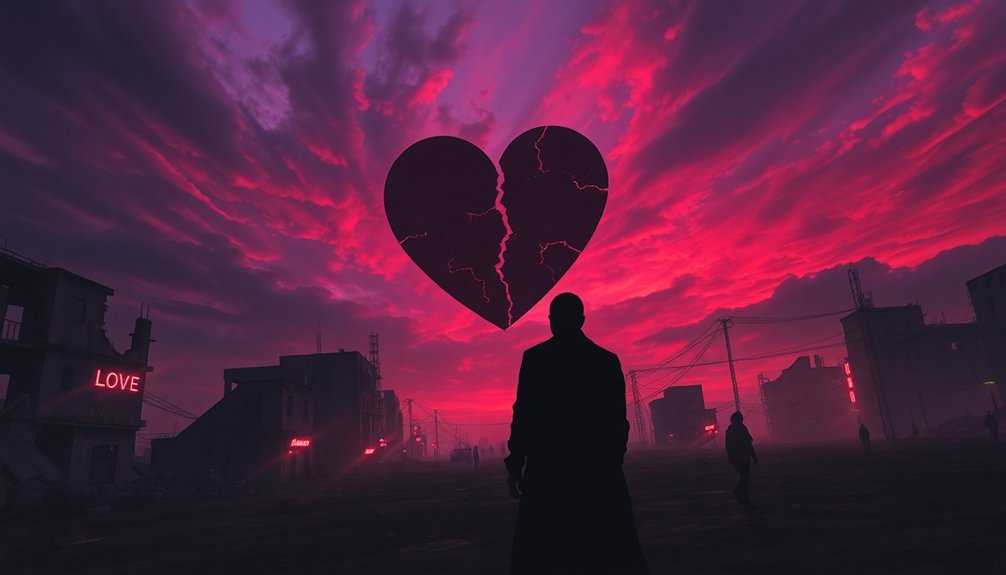
In “Our Missing Hearts,” Celeste Ng paints a haunting picture of a society where discrimination reshapes families and identities.
As you explore the characters’ struggles, you’ll see how art becomes their powerful tool for resistance against oppression.
This poignant narrative urges you to reflect on the impact of societal control and the importance of reclaiming one’s voice. The story resonates with themes of systemic racism that challenge readers to confront uncomfortable truths about identity and privilege.
Art as Resistance
While traversing a dystopian world in “Our Missing Hearts,” Celeste Ng illustrates how art becomes a powerful form of resistance against oppressive regimes.
In a society where the PACT law threatens to tear families apart, characters turn to creative expression to reclaim their identities and challenge authoritarian control.
Through poetry, storytelling, and visual art, they navigate a landscape stifled by fear and censorship.
Ng emphasizes that art as resistance isn’t just about survival; it’s a means to foster connection and assert individuality.
By intertwining personal struggles with political commentary, she showcases the necessity of creative voices in confronting systemic injustice.
“Our Missing Hearts” ultimately reminds you that art can ignite hope and inspire change in the darkest of times.
Discrimination and Family Impact
As the oppressive PACT law looms over society in “Our Missing Hearts,” you witness firsthand how discrimination shatters family bonds.
The story centers on a mother torn from her son, illustrating the devastating impact of government policies on familial relationships. You feel the weight of her longing, as systemic injustice disrupts their connection and forces families apart.
Through Bird’s journey, you explore themes of identity and belonging in a world rife with misinformation and fear. Ng emphasizes that, despite the discrimination, love drives people to resist and protect one another.
This poignant narrative reveals the lengths families will go to safeguard their loved ones, making you reflect on the true cost of oppression and the resilience of the human spirit.
Golden State by Ben H. Winters
Set in a dystopian California where honesty is mandated and deception is punishable, “Golden State” by Ben H. Winters thrusts you into a world under constant surveillance by “Speculators.”
You follow Lazlo Ratesic, a Speculator with a troubled past, as he probes into a personal investigation that shakes the very core of society’s commitment to truth.
This gripping narrative blends noir and speculative fiction, pushing you to question the nature of objective truth versus subjective reality.
As Lazlo uncovers dark secrets, you’ll see how a society obsessed with honesty can lead to oppressive control and loss of personal freedom.
This thought-provoking entry in the dystopian series compels you to reflect on contemporary issues of trust and surveillance in your own life. Furthermore, it echoes the themes found in *The Immortal Life of Henrietta Lacks*, where the ethical implications of informed consent in research raise critical questions about individual rights in a deeply interconnected society.
Poster Girl by Veronica Roth

In a world where the government has fallen and society struggles to rebuild, “Poster Girl” by Veronica Roth introduces you to Sonya Kantor, a young woman grappling with the aftermath of a regime that once dictated every aspect of her life.
Set in a dystopian landscape marked by surveillance through brain implants, Sonya faces societal rejection and seeks redemption.
As she navigates multiple government shifts, the story explores the complexities of identity and morality.
Roth weaves action with emotional depth, pulling you into Sonya’s journey of self-discovery and resistance against oppressive systems.
This critique of modern technology challenges you to reflect on the balance between security and personal freedom, making “Poster Girl” a compelling read for our times. The narrative prompts readers to consider the implications of global education as a means to empower individuals against systemic oppression.
The Parable of the Sower by Octavia Butler
What if you could feel the pain of those around you? In Octavia Butler’s dystopian novel, “The Parable of the Sower,” you meet Lauren Olamina, a young woman steering through a collapsing society in 2025 Los Angeles, ravaged by climate change and chaos.
Lauren’s hyper-empathy makes survival even more challenging, as she experiences the suffering of others intimately. As she journeys through this broken world, she develops a new belief system called Earthseed, promoting resilience and adaptability.
Butler’s powerful narrative tackles pressing social issues like race and gender, forcing you to confront contemporary societal challenges. This acclaimed novel serves as a haunting reflection on our future, urging you to reflect on the fragility of civilization and the importance of community. In a manner reminiscent of the universal quest for stability, Lauren’s journey highlights the balance between hope and despair in the face of adversity.
Rebel by Marie Lu
In “Rebel” by Marie Lu, you’ll find yourself immersed in a society where a morality-tracking system dictates people’s lives. As you follow Eden’s personal journey, you’ll witness her struggle against oppressive norms and the quest for personal freedom. The themes of rebellion and societal control challenge your views on morality and technology’s role in shaping our future. This narrative resonates with current concerns about the impact of social media on societal norms and personal identities.
Societal Morality Tracking
Though you may think of morality as a personal compass, *Rebel* by Marie Lu reveals a chilling reality where it’s tracked and quantified by the state.
In this dystopian world, societal morality tracking is enforced through a behavior-tracking chip system that dictates your access to essential services like education and healthcare. This creates a rigid class structure heavily influenced by moral compliance.
As you follow the protagonists, you witness their lives under constant surveillance, where every decision is scrutinized by the government. The pressure to conform weighs heavily, raising profound questions about autonomy and individuality.
Lu’s narrative critiques the dangers of equating morality with social worth, forcing you to confront the implications of a society that prioritizes conformity over personal freedom.
2. Protagonist’s Personal Journey
Eden’s journey in *Rebel* by Marie Lu unfolds as a powerful exploration of self-discovery amidst a repressive regime.
As you follow her through a dystopian society that tracks morality, you witness her struggle between societal expectations and her own beliefs. Eden grapples with moral choices that define her identity, forcing her to reevaluate what it means to be true to herself.
Her relationships deepen the narrative, highlighting themes of loyalty and trust as she learns the importance of community in fighting oppression.
This protagonist’s personal journey reveals not just her evolution, but also the broader struggle for freedom and individuality, making her quest resonate deeply in a world where conformity is enforced.
3. Themes of Rebellion
As you immerse yourself in the world of *Rebel* by Marie Lu, you’ll quickly realize that rebellion isn’t just a backdrop—it’s the heartbeat of the story.
In a dystopian Antarctica, Eden confronts a society controlled by behavior-tracking chips that reward conformity. Faced with the oppressive norms imposed by the ruling class, she and her allies ignite a rebellion against these unjust standards.
Their struggle emphasizes personal agency, revealing the sacrifices necessary to fight for individuality in a system that prioritizes compliance. Through Eden’s journey, you’ll grasp the power of collective action and moral choices in the face of government control.
Ultimately, *Rebel* challenges you to reflect on your own societal structures and the importance of standing up for freedom.
Day Zero by Kelly DeVos
In a world grappling with political strife and deep-rooted distrust, “Day Zero” by Kelly DeVos immerses you in the life of Susan “Jinx” Marshall as she navigates a society fraught with survival challenges.
This dystopian narrative highlights corruption and resilience, showcasing Jinx’s struggle with her family’s dynamics amid harsh realities. You witness her fight against oppressive government policies, which threaten personal freedoms and agency.
DeVos masterfully develops Jinx’s character, emphasizing loyalty and family ties in times of crisis. The novel expertly combines action and emotional depth, making it a compelling read for fans of dystopian fiction.
You’ll find yourself reflecting on contemporary societal issues as Jinx’s journey unfolds, leaving you questioning the future. The themes of hope and perseverance resonate deeply, reminiscent of the resilience showcased in stories like Louis Zamperini’s survival during WWII.
Followers by Megan Angelos
In “Followers” by Megan Angelos, you’ll confront the dark side of fame and its grip on personal identity.
The contrasting timelines reveal how reality TV and social media distort authenticity and shape self-perception.
As you journey with Orla and Marlow, you’ll reflect on the impact of a celebrity-driven culture on relationships and mental health. Engaging with this narrative prompts a deeper understanding of the mind-body connection and its role in shaping well-being in a digital age.
Themes of Fame’s Consequences
While maneuvering through the intricacies of fame, “Followers” by Megan Angelos immerses you in a future where social media dictates identity and dreams.
The novel raises fascinating questions about the true cost of fame and the impact on personal identity.
- How does constant surveillance affect self-acceptance?
- What happens when individual authenticity is sacrificed for public approval?
- Can dreams thrive under the pressure of societal expectations?
- Is the pursuit of fame worth the emotional toll it takes?
Through its characters, you witness the struggle for self-worth amid a relentless quest for validation.
“Followers” serves as a cautionary tale, reminding you that in a world obsessed with fame, the essence of who you’re may be lost.
Reality vs. Authenticity
The struggle between reality and authenticity emerges as a central theme in “Followers” by Megan Angelos, where characters grapple with their true selves amid the pressures of social media.
Alternating between 2016 and 2051, the novel critiques the reality TV culture that distorts genuine relationships and personal dreams.
You witness Orla and Marlow steering through a world where societal expectations dictate their online personas, raising questions about what it means to be authentic.
In a landscape where lives are meticulously curated for validation, the distinction between reality and authenticity blurs.
As you explore their journey, you’ll realize the cautionary tale about living under constant surveillance and how technology shapes self-perception, forcing you to reflect on your own relationship with authenticity.
Impact on Personal Identity
As you explore “Followers” by Megan Angelos, you’ll quickly see how fame and social media shape personal identity in profound ways. The narrative shifts between 2016 and 2051, revealing the long-term impact on self-perception and dreams.
Key themes include:
- External validation: How likes and followers can distort self-worth.
- Loss of dreams: Orla and Marlow’s struggles highlight societal pressures.
- Superficial relationships: The critique of influencer culture reveals the emptiness of online connections.
- Authenticity vs. acceptance: The characters face tough choices, raising questions about true self in a digital world.
Ultimately, the book challenges you to reflect on the sacrifices made for societal acceptance and the true impact on personal identity in our increasingly connected lives.
Only Ever Yours by Louise O’Neill
In a world where beauty dictates fate, “Only Ever Yours” by Louise O’Neill thrusts you into a chilling dystopia where girls are engineered and ranked based on their looks.
You follow Freida, the protagonist grappling with immense pressure to conform to superficial standards. As she navigates friendships and jealousy, you witness the destructive nature of societal expectations that prioritize appearance over individuality.
This good dystopian novel serves as a poignant critique of contemporary beauty ideals, forcing you to confront how these pressures shape personal identity and self-worth.
O’Neill’s gripping narrative compels you to reflect on gender roles and the commodification of women, making you rethink how society values beauty and its impact on each individual’s life trajectory. The themes presented echo the importance of personal growth and resilience, emphasizing the need to embrace authenticity in a world that often prioritizes superficiality.
American War by Omar El Akkad
Set against a backdrop of a fractured America, “American War” by Omar El Akkad immerses you in a haunting future shaped by climate change and civil strife.
This dystopian novel follows Sara T. Chestnut, a young girl maneuvering through the chaos of the Second American Civil War. It digs deep into themes that challenge your perceptions of society:
- Survival amid violence
- The impact of climate change
- Nationalism and political division
- Personal and collective trauma
El Akkad’s masterful blend of journalism and fiction forces you to confront contemporary issues and the potential future of our world.
With its thought-provoking narrative and vivid storytelling, “American War” stands as a significant contribution to the dystopian genre, encouraging crucial reflection on our current reality.
The Running Man by Stephen King
In “The Running Man,” you witness the brutal lengths people will go to for survival in a dystopian world.
As Ben Richards fights for his life on a deadly game show, the story critiques our society’s obsession with entertainment and the desensitization to violence.
King’s narrative challenges you to reflect on the moral implications of commodifying human existence for profit.
Survival in Dystopia
While steering through a brutal reality where survival often means sacrificing one’s humanity, “The Running Man” thrusts you into a chilling game of life and death.
You follow Ben Richards as he navigates a dystopian landscape where desperation drives people to extreme measures for survival. The novel forces you to confront harrowing truths about the nature of existence in a decaying society.
- Survival often requires moral compromises.
- The line between hunter and hunted blurs.
- Class disparity intensifies the stakes of survival.
- Entertainment commodifies violence and human suffering.
King’s narrative invites you to reflect on the ethical dilemmas and personal sacrifices faced in this ruthless game, compelling you to question what you might do to survive.
Societal Critique and Commentary
Survival in “The Running Man” isn’t just about staying alive; it’s a scathing critique of societal structures that prioritize entertainment over humanity.
You see how the wealthy elite manipulate impoverished individuals, turning their lives into a brutal game for public spectacle. This dystopian world highlights societal disparities, showcasing the desperation of those like Ben Richards, who’ll go to extreme lengths to escape oppression and reclaim dignity.
King masterfully illustrates the impact of media manipulation, revealing how society’s obsession with violence distracts from pressing social issues. As you explore deeper, you’ll question personal freedom and the ethics of a system that sacrifices individuals for profit.
Ultimately, it serves as a cautionary tale about unchecked capitalism and moral decay in pursuit of entertainment.
The Power by Naomi Alderman
Naomi Alderman’s “The Power” electrifies the reader with a provocative exploration of gender dynamics in a world where women can emit deadly electric shocks. This favorite dystopian novel flips the script on power, revealing how quickly roles can change.
Through multiple perspectives, Alderman investigates the societal impacts of this newfound ability, raising critical questions about:
- Power dynamics and gender roles
- Autonomy and personal agency
- The potential for societal change
- The consequences of reversed power structures
Winning the Baileys Women’s Prize for Fiction in 2017, “The Power” has sparked essential conversations about gender and control.
Its adaptation into a television series further amplifies its influence, ensuring that these discussions remain relevant in contemporary culture.
The 100 by Kass Morgan
In a world where the remnants of humanity cling to life in a dwindling space station, Kass Morgan’s “The 100” thrusts you into a gripping post-apocalyptic narrative.
You follow 100 juvenile delinquents sent back to Earth to see if it’s habitable again after a nuclear apocalypse. This dystopian tale dives deep into survival, leadership, and moral dilemmas as these teens confront the harsh realities of a world they barely know.
Relationships and conflicts among the diverse group shape their journey, revealing the complexities of human nature when pushed to the brink.
Morgan’s blend of science fiction and young adult drama captivates you, making you ponder the future of humanity. It’s a thrilling read that raises crucial questions about survival and ethics.
Uglies by Scott Westerfeld
As you plunge into Scott Westerfeld’s “Uglies,” you’ll find yourself in a future where beauty is mandated by society. You’ll follow Tally Youngblood, who initially can’t wait for her transformation into a “Pretty.”
However, as the story unfolds, she begins to question the true cost of conformity. You’ll really love how the novel tackles profound themes:
- Individuality vs. societal expectations
- The impact of cosmetic surgery on self-worth
- The division between “Uglies,” “Pretties,” and “Specials”
- The rebellion against oppressive beauty standards
Through Tally’s journey, Westerfeld critiques the dangerous allure of enforced beauty, making you reconsider how you perceive beauty in your own life.
“Uglies” is a thought-provoking start to an enchanting series.
Conclusion
As you close the final page of these mind-bending dystopian tales, the echoes of their worlds linger like shadows in your mind. Each story paints a vivid landscape of caution and hope, where the future twists and turns like a winding road. You can almost feel the weight of their warnings pressing against your chest, urging you to reflect, to question, and to dream. In this kaleidoscope of possibility, you’re left wondering: what will your future hold?