
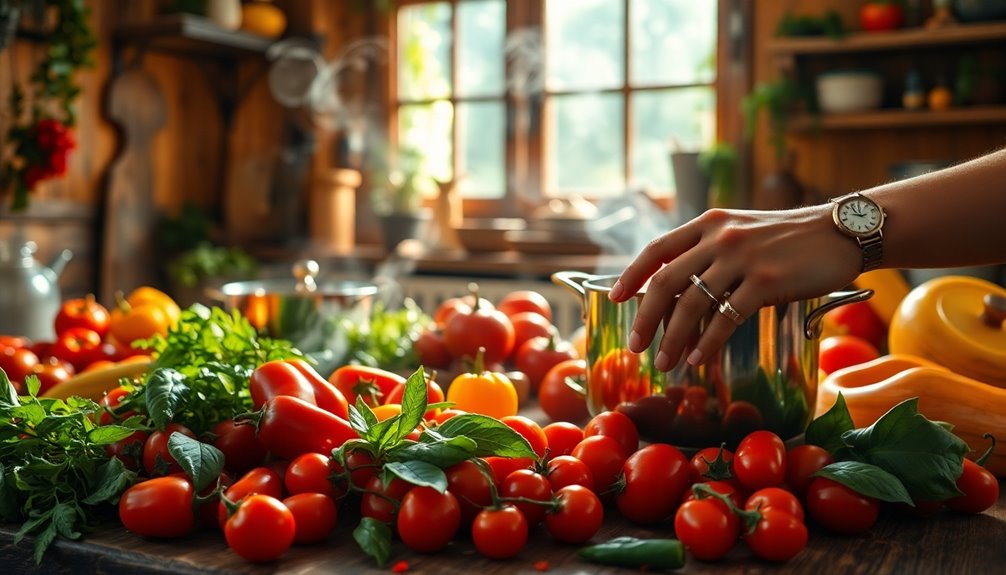
In “Like Water for Chocolate,” magical realism intertwines with Tita’s culinary journey, transforming everyday cooking into an expression of deep emotions and desires. Through her dishes, Tita channels love, rebellion, and heartache, creating a world where food becomes a powerful narrative device. The kitchen serves as her sanctuary, reflecting her struggles against maternal control and societal expectations. This mesmerizing blend of flavors and feelings not only forges family bonds but also challenges traditional norms. Discover the enchanting details of Tita’s culinary magic.
The Enchanting World of Magical Realism in Literature

Magical realism invites you into a world where the extraordinary seamlessly weaves into the fabric of everyday life, transforming the mundane into something enchanting.
In this genre, love often blooms in unexpected ways, blending with reality to create profound emotional connections. You’ll find that ordinary moments are infused with magic, allowing you to experience a deeper understanding of characters’ inner lives.
Love intertwines with the extraordinary, transforming ordinary moments into magical experiences that deepen our connection to the characters’ souls.
In “Like Water for Chocolate,” for instance, Tita’s culinary creations serve as a conduit for her emotions, leading to extraordinary reactions from those who taste her dishes. This fusion of love and magical realism highlights the significance of emotional expression and family dynamics, encouraging you to suspend disbelief and embrace a world where the magical enriches daily existence.
Introducing Tita: a Culinary Protagonist With a Passion

Tita’s culinary journey is more than just cooking; it’s her way of channeling her emotions and asserting her identity. In the kitchen, she transforms her feelings into dishes that not only nourish but also enchant those who taste them. This space becomes her sanctuary, where she finds empowerment amidst the constraints of family tradition. Through her cooking, Tita’s emotional struggles become a form of magical realism that deeply affects the lives of those around her.
Tita’s Culinary Journey
While steering through the complexities of her family’s traditions, Tita De la Garza finds solace in the kitchen, where her culinary skills blossom into a powerful form of self-expression.
Each dish she prepares, especially her rich chocolate creations, reflects her innermost feelings and desires. Cooking becomes her way to care for others, even as she grapples with the oppressive expectations placed upon her.
Tita’s recipes symbolize her emotional journey, transforming her pain and longing into something tangible. As she blends ingredients, her passion fuels a rebellion against the constraints of her family’s traditions.
Every meal she serves not only nourishes the body but also stirs the souls of those who partake, creating a magical connection between food and emotion.
Emotions Infused in Food
In the world of culinary artistry, emotions simmer alongside the ingredients, creating a rich tapestry of flavors that resonate deeply with those who experience them.
Tita De la Garza transforms her internal struggles into delectable recipes for dishes that express her longings and defiance. Each meal she prepares is infused with her emotions, turning ordinary ingredients into extraordinary experiences.
For instance, the wedding cake she bakes evokes intense feelings in everyone who tastes it, revealing the power of food as a medium of communication.
The kitchen becomes her sanctuary, allowing her to assert her identity amid familial pressures. Through Tita’s culinary passion, we see how emotions infused in food can bridge personal desires and family dynamics, ultimately showcasing her resilience.
Kitchen as Empowerment Space
Empowerment blooms in the kitchen, where Tita De la Garza transforms her culinary talents into a declaration of independence. In this vibrant space, she channels her emotions, turning forbidden love and familial constraints into expressive dishes.
Each meal she prepares defies her mother’s oppressive control, allowing Tita to reclaim her identity through cooking. The kitchen becomes her sanctuary, a domain where her frustrations and longings find voice and flavor.
With every recipe, Tita not only honors her cultural heritage but also ignites magical effects in those who savor her creations. Food serves as a powerful means of resistance, illustrating how Tita’s culinary passion fuels her journey toward empowerment and liberation within a world that seeks to silence her.
The Role of Food as Emotion in Like Water for Chocolate
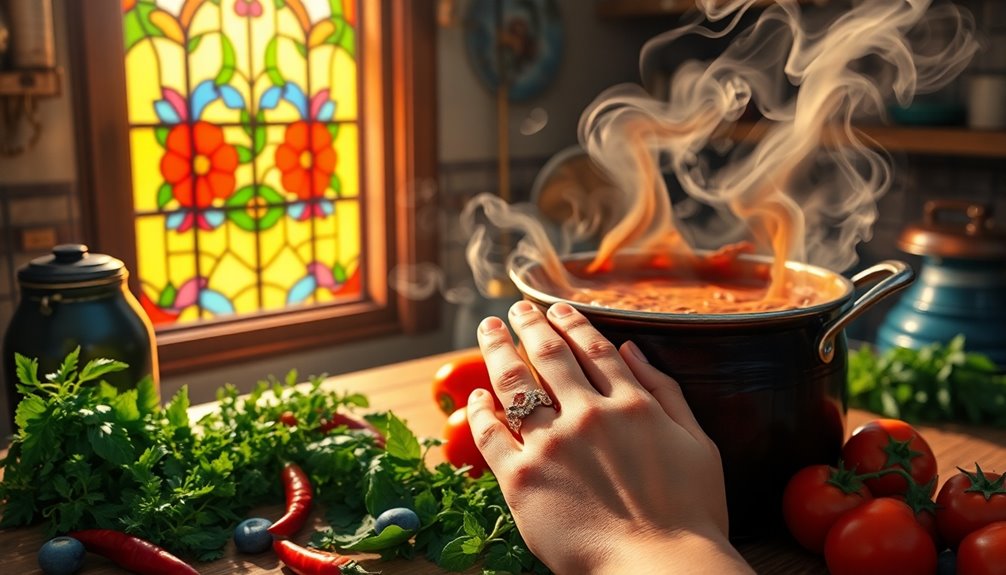
Food serves as a powerful emotional conduit in “Like Water for Chocolate,” revealing the intricate ties between culinary art and personal expression. Tita de la Garza channels her feelings through her cooking, making each dish a reflection of her emotions.
Food becomes an emotional expression in “Like Water for Chocolate,” as Tita de la Garza’s cooking mirrors her deepest feelings.
You can almost taste her heartache and passion with:
- The wedding cake that brings guests to tears, echoing Tita’s sorrow.
- Enchiladas colored by longing, filled with memories of unfulfilled love.
- Quail in rose sauce, igniting Gertrudis’s sensual awakening.
- Spicy mole, a rebellious act against her mother’s control.
Through these dishes, Tita transforms her repressed emotions into vibrant expressions of love, defiance, and yearning, illustrating the profound concept of food as emotion. This interplay between food and feeling not only enriches her character but also serves as a lens through which the reader can explore her journey of self-discovery and liberation.
Exploring Tita’s Family Dynamics and Their Impact on Her Cooking
Tita’s family dynamics shape her cooking in profound ways, particularly under Mama Elena’s strict control. As you explore the rivalries with her sisters, you’ll see how those tensions push Tita to use food as her emotional outlet. Each dish she creates becomes a reflection of her struggles, revealing the deep impact of her family on her culinary expressions. Tita’s journey of female empowerment through her cooking ultimately challenges the societal norms that confine her.
Mama Elena’s Authoritative Control
Although familial love often intertwines with support, in Tita’s case, it manifests as a heavy burden under Mama Elena’s authoritarian rule. This cruel family tradition forces Tita into a life of servitude, stifling her independence and happiness.
You can almost feel the weight of Tita’s emotions expressed through her cooking, a sanctuary from her oppressive reality. Imagine:
- Tears soaking into a wedding cake, each drop a silent scream.
- The scent of cinnamon intertwining with longing and regret.
- A simmering pot of mole, rich with unspoken desires.
- The flickering candlelight casting shadows of resentment on the kitchen walls.
Mama Elena’s control disrupts familial bonds, trapping Tita in a cycle of emotional turmoil that echoes throughout their home.
Sisterly Rivalries and Tensions
The oppressive atmosphere created by Mama Elena doesn’t just affect Tita; it also intensifies the rivalry with her sisters, particularly Rosaura. This sisterly rivalry stems from their mother’s authoritarian control, positioning them as competitors rather than allies.
Tita feels the emotional weight of their strained relationships, especially when she bakes the wedding cake for Pedro and Rosaura. In that moment, her heartbreak and longing seep into the cake, affecting everyone who consumes it.
Mama Elena’s manipulation transforms her daughters into tools for her comfort, deepening tensions. Tita’s struggle for identity and freedom becomes palpable through her cooking, as each dish reflects her rebellion against the oppressive family dynamics that bind her.
Cooking as Emotional Outlet
Cooking serves as Tita’s emotional lifeline, allowing her to channel feelings of love, pain, and rebellion into every dish she prepares.
As the youngest daughter, her culinary creations reflect her inner turmoil and desires, resulting in magical reactions from her family. Each meal becomes a canvas for her emotions, influenced by the oppressive control of Mama Elena and the rivalry with Rosaura.
In this sanctuary of the kitchen, Tita expresses herself fully, breaking free from confinement.
Imagine:
- Spice-infused aromas that evoke bittersweet memories.
- Melting chocolate that mirrors her longing for love.
- Chilling soups that embody her resentment.
- Fiery peppers representing her fierce rebellion.
Tita’s cooking truly becomes her emotional outlet.
How Do Recipes Become Narrative Devices in the Story?
As you explore “Like Water for Chocolate,” you’ll notice that each recipe serves as an essential narrative device that intertwines with Tita’s emotional journey.
These recipes reflect her emotional expression, revealing her struggles and desires. Each dish Tita prepares becomes a conduit for her feelings, as seen when a wedding cake infused with her tears causes guests to weep.
The act of cooking transforms into a powerful form of self-discovery and rebellion against familial constraints. Through food, Esquivel weaves themes of love and loss, illustrating how Tita’s culinary creations not only nourish but also resonate deeply with those who partake in them. In this way, recipes become vivid expressions of Tita’s inner world and cultural identity, showcasing the magical realism that permeates her cooking.
The Influence of Mexican Culture and Traditions on the Narrative
Rooted in the rich tapestry of Mexican culture, “Like Water for Chocolate” immerses you in traditions that shape its narrative. The novel beautifully intertwines food and family dynamics, showcasing how deeply these elements influence the characters’ lives.
- Quail in Rose Petals – A dish symbolizing forbidden love.
- Chiles in Walnut Sauce – An expression of celebration and connection.
- Tamales – A staple of familial gatherings, reflecting warmth and unity.
- Mole – A complex blend that captures the essence of heritage.
Through Tita’s culinary artistry, you witness how food serves as a medium for emotional release and cultural identity. Esquivel’s portrayal of Mexican traditions emphasizes the struggle against societal expectations and the power of motherhood, grounding the story in rich customs. Moreover, the theme of generational poverty in the narrative parallels broader immigrant experiences, highlighting the resilience of the characters.
The Symbolism of Cooking: Crafting Identity and Freedom
In “Like Water for Chocolate,” food transforms into a powerful tool for Tita, allowing her to express her innermost feelings and assert her identity.
Cooking becomes her form of self-expression, infusing her emotions into every dish, ultimately influencing those who taste her creations. Each chapter’s recipe connects Tita’s culinary journey with her quest for freedom, turning cooking from a mundane chore into an act of rebellion against maternal oppression.
Through her skills, she navigates her forbidden love for Pedro, reclaiming her agency. The magical realism enhances this symbolism, turning ordinary meals into extraordinary experiences filled with passion. This interplay of food and emotion showcases how Tita’s creations serve as a bridge between her desires and societal constraints.
Tita’s culinary creations ultimately reflect her desire to break free from family constraints and societal expectations, crafting her identity through the art of cooking.
Emotional Alchemy: The Transformative Power of Tita’s Dishes
When Tita cooks, she doesn’t just prepare meals; she transforms her emotions into tangible experiences that resonate with those who eat her food. Her culinary creations embody emotional alchemy, turning feelings of love and sadness into dishes that evoke profound reactions.
Imagine:
- A wedding cake laced with Tita’s tears, flooding guests with sorrow.
- Spicy mole that ignites a fiery desire in unsuspecting diners.
- Sweet bread that carries the warmth of true love, binding family together.
- A simple soup that comforts like a hug, soothing the soul.
Each dish is a vessel of Tita’s rebellion against Mama Elena’s control, allowing her to express herself and connect, revealing how food intertwines with emotion and the complexity of human relationships. Tita’s cooking serves not only as a means of emotional expression but also as an act of defiance against the patriarchal norms imposed by her family.
Lasting Impressions: The Legacy of Like Water for Chocolate in Modern Literature
Tita’s emotional culinary creations in “Like Water for Chocolate” not only resonate deeply with her family but also lay the groundwork for the novel’s enduring influence on modern literature.
Tita’s heartfelt dishes shape her family’s bonds and solidify the novel’s lasting impact on contemporary literature.
The legacy of “Like Water for Chocolate” permeates contemporary narratives, encouraging authors to weave food, emotion, and cultural identity into their stories.
Laura Esquivel’s unique blend of recipes and storytelling has sparked a trend that enriches character expression and thematic depth.
Themes of forbidden love and feminine empowerment strike a chord with today’s readers, making the novel a cornerstone in gender and cultural studies.
Its critical acclaim and adaptations keep its messages alive, reminding us of the ongoing struggle for women’s rights and personal desires in literature.
Moreover, like the struggles and triumphs of marginalized individuals highlighted in non-fiction, Tita’s journey embodies the fight for identity and autonomy within oppressive structures.
Conclusion
In the end, *Like Water for Chocolate* invites you to savor the magic simmering in every page. Tita’s journey, steeped in love and longing, whisks you away to a world where food breathes emotion and tradition dances through time. As you close the book, you can’t help but feel the lingering warmth of her dishes, a reminder that in every bite lies a story—one that nourishes the soul and ignites the spirit of those who dare to dream.