Absolutely, “Dracula” remains a fascinating read. Its themes of societal anxieties, gender politics, and the clash of modernity with the supernatural resonate today just as they did over a century ago. Stoker’s rich storytelling, innovative epistolary format, and complex characters provide psychological depth. You’ll find timeless reflections on power dynamics, immigration, and empowerment that provoke thought about contemporary issues. Keep exploring, and you’ll uncover even more layers to this classic masterpiece.
The Birth of Modern Horror
“Dracula” stands as a cornerstone in the evolution of modern horror, introducing innovative storytelling techniques that captivate readers even today.
Stoker’s tale employs an epistolary format, using letters and diary entries to create an intimate and immediate experience, a technique that feels fresh even now.
This Gothic horror explores themes like Victorian sexuality and the anxieties surrounding immigration and technology, making it relevant across generations.
Each reading reveals new insights, enhancing the psychological depth of horror beyond physical threats.
The diverse perspectives enrich the narrative, building suspense and offering a multifaceted portrayal of terror.
In blending these elements, “Dracula” not only transformed horror literature but also paved the way for future adaptations, cementing its place in literary history. Additionally, the novel’s exploration of power and corruption resonates with modern readers, reflecting ongoing societal issues.
The Count: More Than Just Another Monster
When you think of Count Dracula, it’s easy to see him as just another monster, but there’s much more beneath the surface.
He embodies the exploitation of the working class by the aristocracy, highlighting societal inequalities that still resonate today.
His struggle with immortality and connection to his ancestral ties reveals a deeper commentary on the fears of losing cultural identity in a rapidly modernizing world. This complex character reflects the social injustices that were prevalent in 19th-century literature, urging readers to confront the inequalities that persist in contemporary society.
Aristocracy and Exploitation
Power dynamics and exploitation are at the heart of Bram Stoker’s portrayal of Count Dracula, revealing the dark underbelly of aristocracy in the Victorian era. The Count symbolizes the parasitic relationship between the elite and the working class, highlighting how the privileged thrive by preying on the vulnerable.
His powers wane when distanced from his ancestral soil, mirroring the decline of old European nobility amidst modernity. Dracula’s immortality hinges on feeding off common people, illustrating the exploitation that sustains the aristocracy.
Stoker’s nuanced exploration transcends simple horror, tapping into anxieties about class, power, and societal stability. The Count’s presence in England reflects fears of immigration and the potential threats to an established social order, further emphasizing these themes.
Immortality and Ancestral Ties
The exploration of Count Dracula’s character reveals not just a monster, but a complex figure grappling with the weight of immortality and his ancestral ties.
His existence highlights the decline of old European nobility, weakened when far from his ancestral soil. This connection to heritage emphasizes his struggle with identity and belonging, showing how deeply tied he’s to his land.
As he consumes the blood of common people, Dracula embodies a parasitic relationship that mirrors societal dynamics, illustrating the exploitation inherent in class structures.
His immortality serves as a metaphor for survival in a modern world increasingly detached from tradition, reflecting the inevitable decay of power and the haunting presence of the past that shapes his existence.
The True Heroes: Mina Harker and Van Helsing

While many readers may initially view Jonathan Harker and Dr. Van Helsing as the primary heroes, it’s actually Mina Harker and Van Helsing who truly shine.
Mina embodies both Victorian propriety and modern capabilities, showcasing her expertise in technology, which proves essential.
Van Helsing, with his unique blend of science and superstition, challenges traditional gender roles.
- Mina transforms from victim to empowered heroine, reflecting societal anxieties.
- Van Helsing bridges old-world beliefs and modern science in his fight against Dracula.
- Together, they redefine heroism, challenging conventional portrayals of power dynamics.
Their partnership not only confronts monstrous evil but also subverts expectations, making them the true heroes of Stoker’s masterpiece. The atmospheric descriptions throughout the story enhance the tension and suspense surrounding their battles against dark forces.
Sexual Politics and Victorian Anxiety
As you explore “Dracula,” you’ll notice how the novel grapples with Victorian anxieties about female sexuality and empowerment.
Lucy’s transformation from a pure maiden into a sexually aggressive figure captures society’s fears about women stepping beyond their traditional roles.
Mina Harker, with her blend of propriety and modern capability, highlights sexual politics as she becomes essential to the male characters while simultaneously being protected from Dracula’s powers.
The vampire women, who aggressively pursue men, invert gender norms and link female empowerment with monstrosity, amplifying the psychological terror of Victorian horror.
Stoker’s narrative uses Mina’s forced blood drinking as a violation of purity, tapping into deep-seated fears around sexuality and morality that defined the era’s anxieties.
Furthermore, the portrayal of unity among female characters in these narratives echoes the collective struggle against oppressive societal norms, adding depth to the examination of female roles in horror.
Technology and Terror
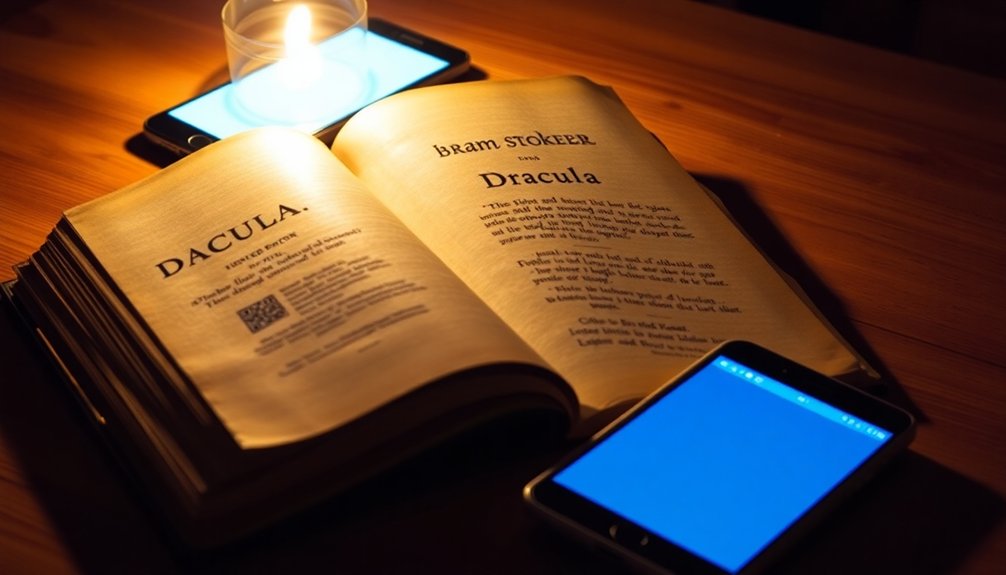
Victorian anxieties about female sexuality and empowerment intertwine with the era’s technological advancements in “Dracula,” creating a unique tension between modernity and horror.
Stoker’s use of 19th-century technology serves as a weapon against ancient evil. This interaction enhances the narrative’s urgency and terror, drawing you deeper into its chilling embrace.
- The epistolary format, with letters and diary entries, mirrors contemporary communication methods.
- Characters like Van Helsing embody the clash of science and superstition, showcasing the struggle against the unknown.
- Stoker’s integration of recorded media resonates with today’s found footage horror, highlighting fears of progress.
- The societal manipulation depicted in “Dracula” reflects how technology can be used to control and oppress, echoing themes found in modern dystopian narratives.
Each reading reveals fresh layers of psychological and physical horror, making Stoker’s classic relevant in our tech-driven world.
The Shadow of Colonialism
In “Dracula,” late 19th-century anxieties about colonialism and the fear of the foreign “other” permeate the narrative, presenting Count Dracula as a formidable threat to British society and its morals.
His movement from Transylvania to England symbolizes an invasion of foreign influences, mirroring societal fears of immigration and cultural contamination.
The themes of contagion and disease highlight how encounters with the foreign can corrupt, with vampirism serving as a metaphor for the spread of alien ideologies.
Stoker’s depiction of Dracula as a parasitic aristocrat reflects exploitative colonial relationships, resonating with the working class’s anxieties.
The power struggles between Dracula and the British characters comment on the decline of old-world nobility amid the tides of modernity and colonial expansion. Additionally, the collective action of the British characters in uniting against Dracula mirrors the historical context of resistance movements, emphasizing the importance of solidarity in combating perceived threats.
Why Dracula Still Matters
“Dracula” still matters today because it addresses themes like immigration and societal anxieties that hit close to home in our modern world.
As you read, you’ll notice how Stoker’s reflections on cultural fears remain relevant, prompting you to think critically about our own issues.
The novel’s complex characters and their struggles mirror ongoing conversations about power and gender, making it a rich text for exploration. Additionally, the societal fears depicted in the novel echo the pioneers of social change who challenged oppressive systems and advocated for justice.
Timeless Themes Resonate Today
Fear and fascination intertwine in Bram Stoker’s tale, revealing timeless themes that still resonate today. As you investigate “Dracula,” you’ll find connections that echo modern societal issues:
- Gender and Empowerment: Characters like Mina and Lucy confront Victorian anxieties about female liberation, a discussion that remains relevant today.
- Class Dynamics: Count Dracula embodies the parasitic nature of aristocracy, highlighting economic disparities still present in our world.
- Immigration and Contagion: The novel reflects fears surrounding immigration and disease, mirroring current global challenges like pandemics.
Through its psychological horror and unique epistolary format, “Dracula” invites you to explore these themes, making it a timeless exploration of the human condition that continues to captivate readers across generations.
Cultural Reflections and Anxieties
Bram Stoker’s “Dracula” resonates not just as a horror story but as a mirror reflecting the cultural anxieties of its time—anxieties that still grip modern society. The late 19th-century fears around immigration and sexual politics echo today, as we grapple with similar issues.
Themes of contagion and societal decay resonate, especially during global health crises, prompting reflection on our vulnerabilities. Stoker’s portrayal of Dracula highlights class struggles, revealing the parasitic relationship between the aristocracy and the working class.
Meanwhile, Mina Harker embodies female empowerment, deftly maneuvering societal expectations while showcasing modern capabilities. Each rereading uncovers new insights, cementing “Dracula” as a timeless exploration of the fears and challenges that continue to shape our world.
Conclusion
You might think “Dracula” is just an old tale, but its themes still resonate today. The blend of horror, sexuality, and Victorian anxieties makes it a fascinating read that goes beyond mere scares. By exploring the complex characters and their struggles, you’ll find relevance in our modern world. So, pick it up again—you’ll discover that Bram Stoker’s masterpiece isn’t just a relic of the past; it’s a timeless exploration of our deepest fears and desires.