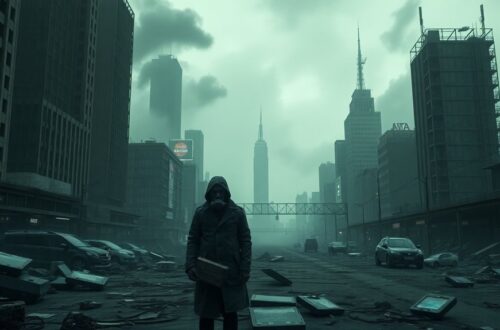

Science fiction authors have become our modern-day prophets by using their vivid imaginations to predict future technologies and societal changes. Writers like Isaac Asimov and Arthur C. Clarke blended intuition with research, envisioning innovations like personal computing and satellite communication. Their narratives challenge us to think critically about ethics and technology’s roles in society. These stories not only entertain but also provoke essential discussions about our future. Stick around to explore how these prophetic themes continue to evolve.
The Role of Imagination in Technological Prediction
As science fiction authors weave their narratives, they often tap into their imagination to predict technological advancements that might shape our future. By blending elements of past, present, and future, you’ll see how these writers reflect current trends and inspire real-world innovations.
Take Arthur C. Clarke, for instance; his foresight about communication satellites in “The Other Side of the Sky” stands as a demonstration to the power of imagination in science. Writers like Isaac Asimov and Frederik Pohl combine intuition and research to craft stories that resonate with potential future technologies. Additionally, the works of authors like Philip K. Dick often explore mind-bending narratives that challenge our understanding of reality and identity.
Their visionary ideas challenge societal norms, provoking discussions about ethics and scientific progress. In this way, science fiction authors truly act as modern-day prophets, shaping the dialogue around tomorrow’s possibilities.
Visionaries of the Future: Key Science Fiction Authors
While many writers have imagined the future, a select group of science fiction authors have truly become visionaries, shaping our understanding of technological possibilities. Their insightful predictions have influenced real-world advancements and sparked important discussions.
- Isaac Asimov: Pioneered personal computing concepts.
- Arthur C. Clarke: Foretold satellite communications.
- Philip K. Dick: Explored artificial intelligence and human identity.
- H.G. Wells: Warned of the dangers and benefits of nuclear energy.
- Ray Bradbury: Critiqued media consumption and technological dependency.
These science fiction writers not only envisioned the future but also highlighted the ethical implications of technological development. Their works serve as critical lenses through which we can evaluate our relationship with emerging technologies and the potential consequences of our choices. As we navigate modern challenges, the themes from classic sci-fi narratives continue to resonate, reminding us of the complex interplay between society and innovation.
Notable Predictions That Came True
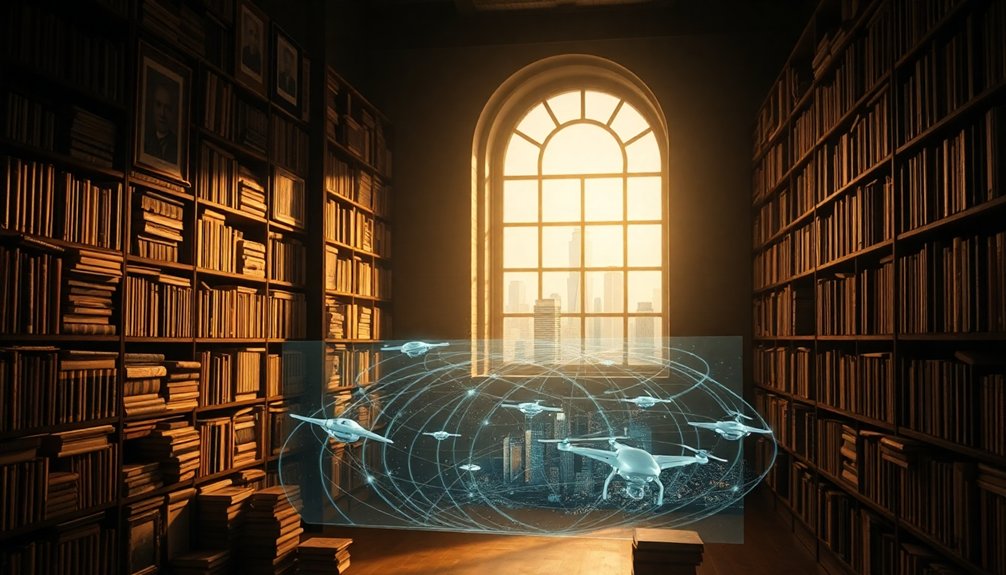
You might be surprised to learn how many science fiction predictions have actually come true.
From the early concepts of computing to groundbreaking innovations in space exploration, these authors envisioned futures we now take for granted.
Let’s explore some of the most notable examples that have shaped our reality. Additionally, many of these works serve as cautionary tales about totalitarian regimes and control, emphasizing the importance of safeguarding personal freedoms in our own society.
Early Computing Concepts
Although science fiction often explores the boundaries of imagination, many early computing concepts predicted technological advancements that would later become reality.
Visionaries like Isaac Asimov and Arthur C. Clarke imagined futures we now recognize. Here are some notable predictions:
- Isaac Asimov’s “Sally” featured autonomous vehicles, foreseeing challenges in self-driving tech.
- Arthur C. Clarke’s HAL 9000 showcased AI with speech and decision-making abilities.
- William Gibson coined “cyberspace” in “Neuromancer,” predicting our current digital reality and virtual environments.
- Hugo Gernsback depicted video calling in “Ralph 124C 41+,” decades before it emerged.
- John Brunner introduced computer networking concepts in “Shockwave Rider,” paralleling today’s cybersecurity discussions.
These early computing concepts laid the groundwork for the technologies we use today.
Space Exploration Innovations
Building on the imaginative foresight of early computing concepts, science fiction has also considerably shaped our understanding of space exploration.
Authors like Jules Verne and Arthur C. Clarke emerged as prophets, accurately predicting innovations that would later become reality. Verne’s *From the Earth to the Moon* outlined escape velocity and splashdown, both realized during the Apollo missions.
Clarke’s vision of geostationary satellites in *Extra-Terrestrial Relays* paved the way for real-time communication, exemplified by Syncom 2.
Heinlein’s lunar colony in *The Moon is a Harsh Mistress* mirrors today’s discussions on Moon bases.
H.G. Wells and Clarke further inspired research into astrobiology, fueling our quest for extraterrestrial life.
These science fiction’s predictions continue to guide our journey into space.
The Impact of Science Fiction on Modern Technology
As science fiction continues to captivate imaginations, its influence on modern technology becomes increasingly evident. Sci-fi writers have inspired innovators to create groundbreaking technologies we often take for granted.
Consider the following examples:
- Communications satellites: Arthur C. Clarke’s vision paved the way for global telecommunications.
- Credit cards: Edward Bellamy imagined a cashless society, which mirrors today’s digital transactions.
- Autonomous vehicles: Isaac Asimov’s stories prompted discussions on self-driving technology’s ethics and functionality.
- Constant audio connectivity: Ray Bradbury foresaw the popularity of earbuds, reflecting our current lifestyle.
- Virtual reality: Sci-fi narratives have driven advancements in immersive technology.
These innovations show how science fiction not only entertains but also shapes our world. Furthermore, the concept of female protagonists in sci-fi emphasizes the importance of diversity in storytelling, inspiring future generations of innovators.
Ethical Considerations in Sci-Fi Narratives
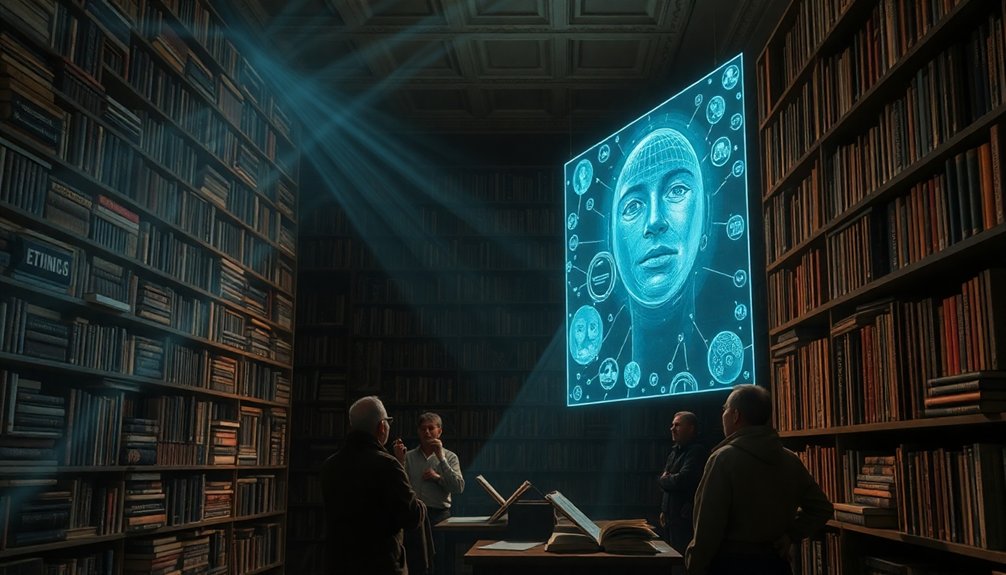
When you read sci-fi, you’re not just enjoying a story; you’re encountering complex ethical dilemmas that mirror our reality.
From the moral implications of technology to the blurred lines between human and artificial intelligence, these narratives challenge you to contemplate your values.
They also reveal the potential societal impacts of dystopian futures, urging you to evaluate what kind of world you want to create. Additionally, much like Ta-Nehisi Coates’ reflections on systemic racism, these stories prompt urgent discussions about the ethical dimensions of our choices and their effects on marginalized communities.
Moral Implications of Technology
While exploring the moral implications of technology in science fiction, you’ll find that authors often act as modern-day prophets, warning us about the ethical dilemmas we face.
They highlight the importance of understanding our ethical responsibilities and the potential societal consequences of our choices regarding technological progress.
- Aldous Huxley critiques genetic engineering’s effects on social classes.
- Isaac Asimov introduces the Three Laws of Robotics to address moral dilemmas in AI.
- George Orwell warns against surveillance technology and privacy erosion.
- Ray Bradbury critiques censorship’s impact on knowledge and critical thinking.
- H.G. Wells questions the ethics of atomic warfare and its destructive potential.
These narratives compel us to reflect on the implications of our technological advancements.
Human vs. Artificial Intelligence
In exploring the ethical considerations surrounding human and artificial intelligence, science fiction serves as a critical lens that challenges our understanding of consciousness and morality.
Sci-fi authors like Isaac Asimov and Ray Bradbury raise urgent questions about the ethical implications of AI. Asimov’s “I, Robot” introduces the Three Laws of Robotics, aiming to safeguard humanity, while “Blade Runner” confronts the rights of artificial beings, blurring the lines between human and machine.
Bradbury’s “Fahrenheit 451” critiques technology’s role in eroding human relationships, emphasizing the moral responsibilities tied to AI integration.
With works like “Westworld,” contemporary narratives further explore autonomy and consciousness, urging you to scrutinize the ethical landscape as you navigate the complex terrain of human vs. artificial intelligence.
Societal Impact of Dystopia
Dystopian narratives expose the darker facets of society, forcing you to confront ethical dilemmas that resonate in our own world.
These narratives not only entertain but also challenge you to reflect on the ethical implications of modern issues, such as:
- Surveillance and privacy erosion (1984)
- Censorship and the loss of knowledge (Fahrenheit 451)
- Genetic engineering and social hierarchies (Brave New World)
- Extreme inequality and media desensitization (The Hunger Games)
- Identity and the nature of consciousness (Philip K. Dick’s works)
Science Fiction as a Reflection of Societal Values
Science fiction often serves as a mirror, reflecting the values and concerns of the society in which it’s created. Through dystopian narratives like Orwell’s *1984*, you see cautionary tales about totalitarianism and the erosion of freedoms, echoing real-world anxieties around surveillance.
Science fiction mirrors societal values, reflecting fears of totalitarianism and surveillance through cautionary tales like Orwell’s *1984*.
In contrast, *Star Trek* offers an optimistic view of technology, promoting diversity and unity in space exploration.
Bradbury’s *Fahrenheit 451* critiques censorship and our reliance on technology, while Huxley’s *Brave New World* dives into the ethics of genetic engineering and consumerism.
Asimov’s *I, Robot* explores our relationship with automation, raising questions about artificial intelligence.
These works of fiction illuminate the evolving societal values, encouraging critical reflection on our present and future. They resonate with themes found in historical narratives, such as the triumph of the human spirit, which inspire perseverance in the face of adversity.
Looking Ahead: The Future of Science Fiction Prophecy
As we look to the future, the role of science fiction as a prophetic force becomes increasingly essential.
You’ll find that contemporary authors aren’t just storytellers; they’re visionaries shaping our understanding of tomorrow.
- Predictive technologies like AI and genetic engineering are explored in future novels.
- Dystopian narratives warn us about societal pitfalls and ethical dilemmas.
- Influential figures, including tech giants, cite sci-fi as a key inspiration.
- New narratives will tackle the impacts of evolving technologies on humanity.
- Science fiction will continue to serve as a lens for cultural commentary and reflection.
In this way, science fiction authors remain our guides, helping us navigate the complexities of an uncertain future. Additionally, their works often reflect current global issues, prompting discussions about the ethical implications of our choices and actions.
Conclusion
As you stand on the horizon of tomorrow, remember that science fiction is like a lighthouse, guiding us through the fog of uncertainty. The visions crafted by authors are seeds planted in our minds, blossoming into innovations that shape our world. Just as the ancients consulted the stars, you too can look to these modern-day prophets. They remind you that imagination isn’t just a flight of fancy; it’s the blueprint for the future, waiting for you to build upon it.