In *Dracula: Comedy of Terrors*, you’ll see a hilarious twist on the classic vampire tale. The story transforms Dracula into a bumbling figure, blending horror and humor to highlight absurdities within the genre. Characters like Van Helsing take on exaggerated traits, creating comedic moments that relieve tension. This clever mix of satire and laughter not only entertains but also invites reflection on societal fears. Stick around to uncover more about how comedy reshapes modern horror storytelling!
The Origins of Dracula and Its Evolution
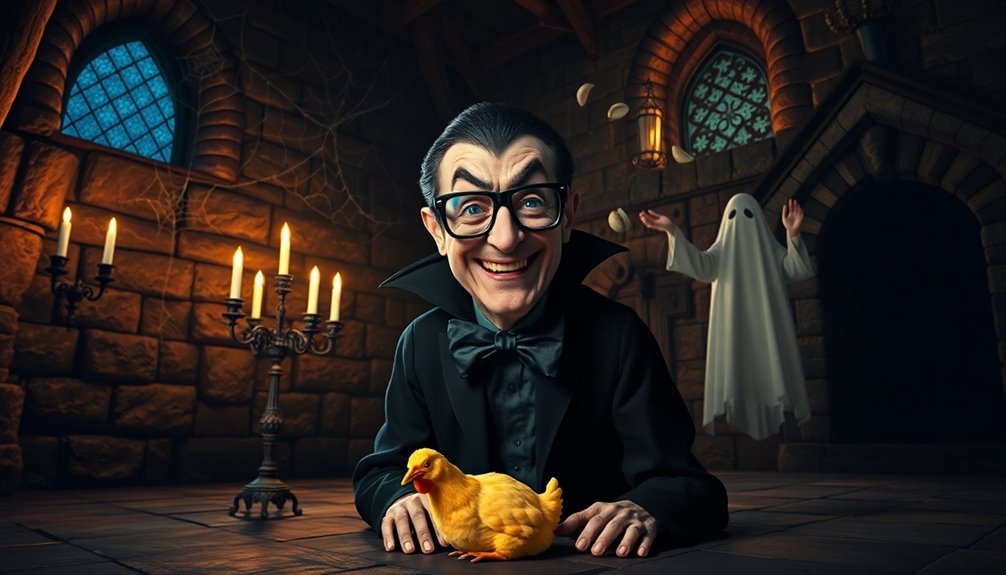
While many people associate Dracula with horror, the character’s origins are rooted in a fascinating blend of history and folklore. You’ll find his Gothic roots intertwined with various literary influences, from Bram Stoker’s novel to earlier vampire myths.
The historical context of 15th-century Romania introduces you to Vlad the Impaler, a figure who shaped Dracula’s chilling persona. Over time, his character evolution reflects societal fears and desires, adapting through cultural adaptations across the globe.
As genre blending becomes more common, Dracula’s tale employs innovative narrative techniques, mixing horror with elements of romance and adventure. This interplay enriches the story, making it a timeless exploration of humanity’s fascination with the macabre and the absurd. Additionally, Stoker’s epistolary format in Dracula allows for a unique storytelling approach that heightens the tension and drama throughout the narrative.
How Comedy Enhances the Horror Narrative
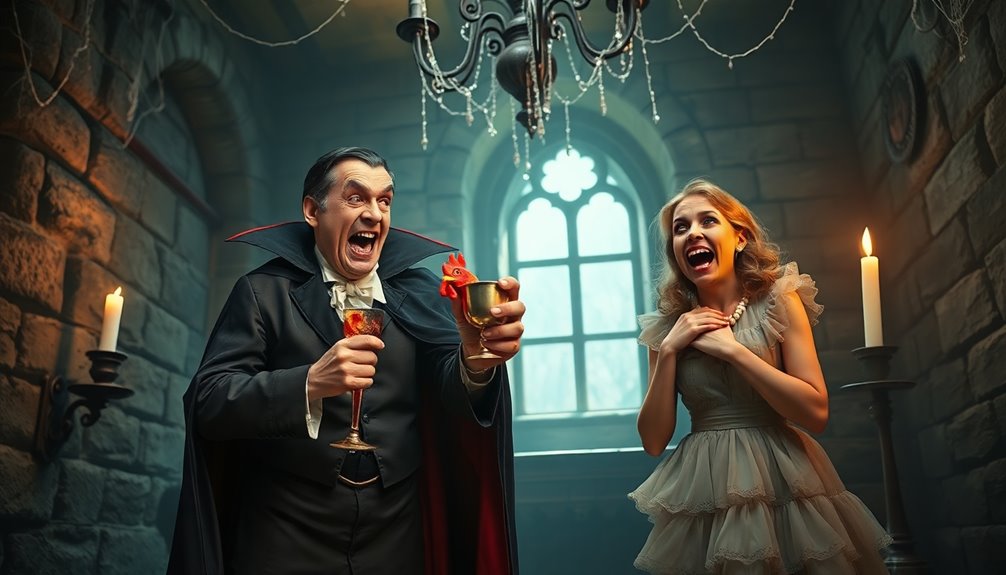
Comedy often serves as a surprising ally in horror narratives, creating an intricate dance between fear and laughter. By weaving in dark humor, you can alleviate tension, offering a breather before plunging back into the frights.
This balance not only heightens the horror but also makes it more relatable. Comedic timing plays an essential role here; the right joke at the right moment can transform a chilling scene into one that’s both eerie and amusing.
This unexpected twist keeps you engaged, as you never know when a laugh might emerge from the shadows. Ultimately, blending comedy with horror enriches the experience, allowing you to explore deeper themes while enjoying a rollercoaster of emotions.
Additionally, the Gothic themes present in works like *The Phantom of the Opera* illustrate how humor can coexist with darkness, enhancing the overall narrative complexity.
Key Characters Reimagined: From Terrifying to Hilarious
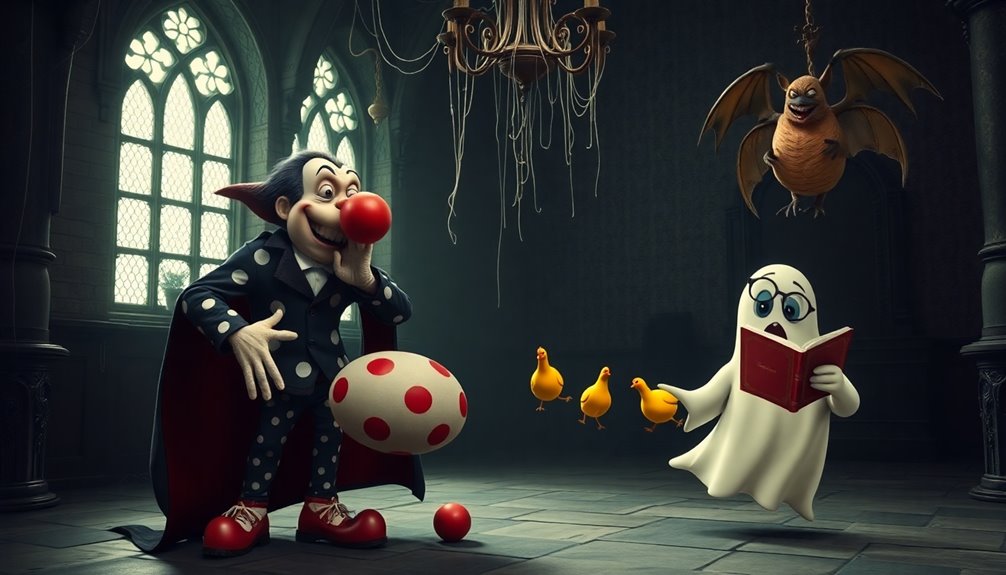
When you think of iconic horror characters like Dracula, it’s hard to imagine them in a comedic light. Yet, reimagining these figures allows for fascinating character contrasts.
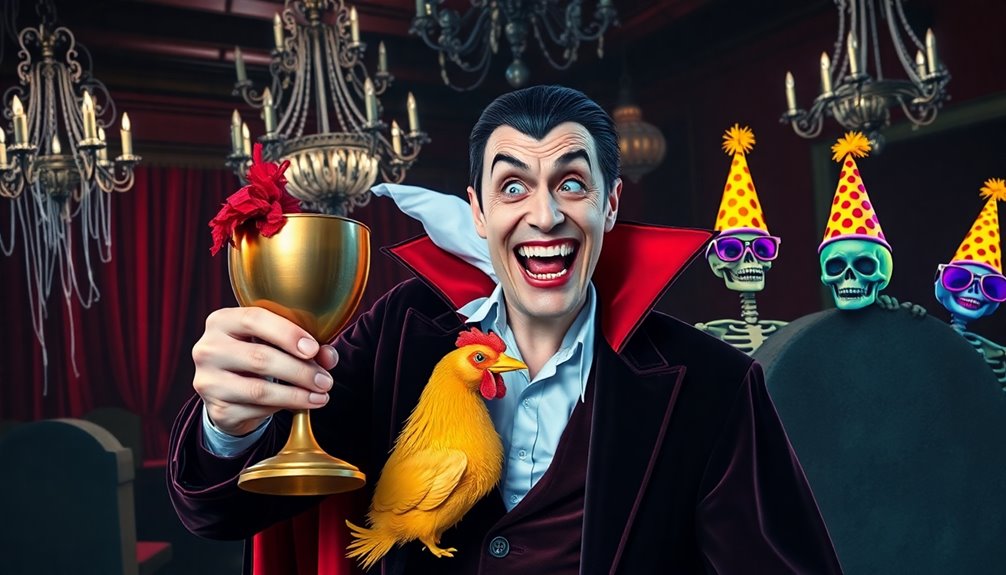
Picture Dracula, once a figure of fear, transformed into a bumbling, overly dramatic vampire who fumbles his way through vampire lore. He becomes a comedic archetype, playing off stereotypes while still maintaining his dark allure.
The fearless Van Helsing morphs into a paranoid ghost-hunter, wielding garlic like a protective talisman from his own anxieties.
This shift in perspective not only brings laughter but also highlights absurdities within the horror genre. By blending terror with humor, these characters take on new dimensions, inviting you to enjoy the hilarity lurking beneath the surface of fear. Additionally, their stories echo themes of unrequited love and obsession, revealing the darker sides of their personalities in a lighthearted way.
The Role of Satire in “Dracula: Comedy of Terrors”
Satire serves as a powerful tool in “Dracula: Comedy of Terrors,” transforming traditional horror tropes into something delightfully absurd. By employing satirical commentary, the production cleverly critiques societal norms and fears surrounding the vampire mythos.
You’ll notice how characters exaggerate their roles, poking fun at their own melodrama. This self-awareness enhances the comedic timing, making each punchline land perfectly. For instance, Dracula’s over-the-top attempts at seduction become hilariously awkward, subverting expectations.
The humor doesn’t just entertain; it invites you to reflect on the clichés of horror. As you laugh, you realize the absurdity of fear itself, shifting your perspective on what fright truly means. This blend of satire and comedy offers a fresh take on a classic tale, reminiscent of the intricate plot found in Agatha Christie’s works.
Noteworthy Scenes That Blend Laughter and Fright
In “Dracula: Comedy of Terrors,” you’ll find scenes packed with hilarious misunderstandings that keep you on your toes. Characters react in absurd ways to their frightful situations, blending terror with laughter seamlessly. These moments highlight the clever interplay between comedy and horror** that defines the show. This comedic approach parallels the themes of madness that often emerge in gothic narratives, showcasing how fear can be transformed into humor.
Hilarious Misunderstandings and Mix-Ups
While the tale of Dracula often evokes chills, it’s the hilarious misunderstandings and mix-ups that steal the spotlight. Imagine the chaos when characters misinterpret vampire antics, leading to laugh-out-loud scenes. You can’t help but giggle at the absurdity of it all!
- A terrified villager mistakes a bat for a lost kitten, leading to a comical chase.
- Dracula’s attempts at charm turn into miscommunication mishaps, causing his romantic advances to backfire spectacularly.
- A misunderstanding about garlic leads to a dinner party filled with unintentional hilarity and awkward moments.
These moments remind you that even in horror, laughter can emerge from confusion, showcasing how miscommunication can turn spine-tingling situations into pure comedy.
Absurd Reactions to Frights
When characters encounter frights that would typically induce horror, their absurd reactions often lead to unexpected hilarity.
Picture a vampire with an exaggerated response to a rubber bat, showcasing one of those absurd phobias. It’s comical when characters face laughable monsters, like a mummy that can’t wrap its head around modern technology.
Unintended jump scares become playful terror, with characters shrieking at shadows or their own reflections. The irony in fright plays out as they confront their comical fears, turning what should be terrifying into a series of humorous tropes.
These moments remind us that even in the darkest tales, laughter can shine through, making the horror all the more entertaining.
Audience Reactions: Finding Humor in the Macabre
How do audiences find laughter in the darkness of a Dracula-themed comedy? You might be surprised at how dark humor and gothic satire intertwine, creating a space where twisted laughter thrives. The unexpected punchlines and playful terror transform the macabre into something delightfully absurd.
- Macabre irony: Characters face grim situations, but their reactions are hilariously outlandish.
- Comedic relief: Moments of levity punctuate the horror, allowing you to breathe amidst the tension.
- Absurd horror: The ridiculousness of the scenarios underscores the humor.
In this blend of fear and fun, you uncover a unique experience that makes you chuckle even as the shadows loom large.
It’s this balance that keeps you coming back for more!
The Impact of Comedy on Modern Horror Storytelling
The laughter found in Dracula-themed comedies shows just how effectively humor can reshape horror storytelling today.
You see, blending comedy with traditional horror tropes can create a fresh narrative that keeps audiences engaged. When you watch characters navigate spooky scenarios with witty banter, it transforms tension into laughter, making the horror more palatable.
Comedic timing becomes essential here; a well-placed joke can relieve fear while simultaneously amplifying the absurdity of the situation. This technique not only entertains but also invites you to question the conventions of horror. Additionally, much like the acts of resistance that inspire courage, comedic horror encourages audiences to confront their fears through laughter.
Conclusion
In blending horror and humor, “Dracula: Comedy of Terrors” shows how laughter can coexist with fear. Did you know that 70% of audiences find comedy in horror films enhances their overall enjoyment? This unique fusion not only redefines classic characters but also invites you to see the absurdity lurking beneath the surface. As you revisit these tales, remember that a little laughter can make the darkest stories all the more engaging. Embrace the chilling fun!