
Many animals exhibit signs of grief, suggesting they may grasp some aspects of death. Elephants mourn their dead, orcas carry deceased calves, and chimpanzees show distress after losing companions. However, distinguishing between emotional responses and the understanding of death’s finality is complex. Some species may not fully comprehend mortality but demonstrate deep emotional connections. If you’re curious about how these behaviors impact ethical practices and conservation, there’s much more to explore.
The Historical Debate on Animal Death Awareness

As scientists began to explore the emotional lives of animals, they faced a longstanding debate about whether animals possess awareness of death and the capacity for grief.
Historically, many scientists hesitated to acknowledge that animals could experience complex emotions, believing humans were unique in their understanding of death.
Charles Darwin, however, argued in 1871 that animals do feel a range of emotions, including grief in animals.
This perspective gained traction in the 20th century as researchers observed behaviors suggesting emotional responses to death, like elephants mourning their deceased.
Additionally, the ongoing impact of systemic oppression on marginalized communities reflects the complexities surrounding emotional responses, echoing debates within the animal welfare discourse.
As you investigate this debate, consider how it’s shaped our understanding of death and emotional capacity in animals, and recognize the implications for animal welfare in light of these findings.
Observational Evidence of Grief in Non-Human Species
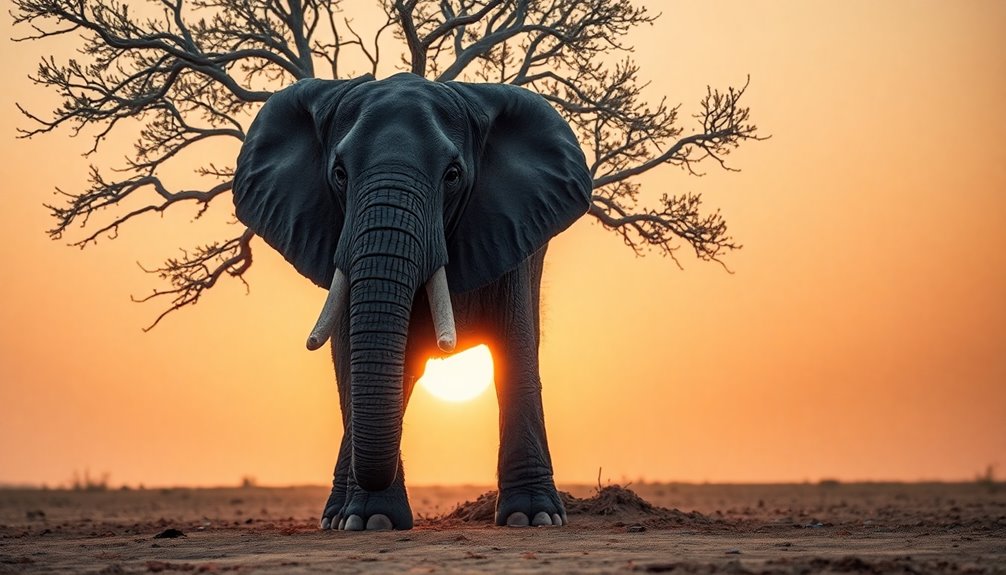
Observational evidence increasingly shows that non-human species can experience grief, challenging the notion that such deep emotional responses are unique to humans.
You can see this in various species demonstrating behaviors that suggest an understanding of death and the emotional impact it has on their social groups.
- Elephants revisit deceased companions, exhibiting signs of distress.
- Orcas, like Tahlequah, carry their deceased calves for extended periods, altering typical behavior.
- Chimpanzees display grief-like actions, grooming and carrying deceased infants.
These examples highlight that animals understand death, as evidenced by their grief behaviors.
From elephants to giraffes, it’s clear that nonhuman animals have emotional responses resembling human mourning, enriching our understanding of their complex social lives. Furthermore, the power of storytelling in both human and animal contexts can serve as a means to process and communicate experiences of loss.
Understanding Grief vs. Comprehending Death?

While many animals exhibit behaviors that suggest grief, distinguishing between emotional reactions and a true understanding of death is complex. You might notice how animals grieve through actions like grooming or carrying deceased companions, showcasing emotional bonds rather than comprehension of mortality.
For instance, elephant matriarchs display intricate emotional responses, yet this doesn’t confirm that they comprehend death’s finality. The cognitive processing of non-functionality and irreversibility is a significant aspect of understanding death that only a few species, like great apes, may partially grasp.
Emotional responses, such as a mother giraffe’s distress after her calf’s death, reflect grief but don’t indicate acknowledgment of death itself. This distinction remains a pivotal area in animal cognition studies. Additionally, the exploration of systemic racism in literature parallels the complexity of understanding emotional responses, revealing deeper layers of cognition in both humans and animals.
The Role of Emotional Bonds in Animal Behavior
Emotional bonds play an essential role in how animals react to loss. When you observe behaviors like an orca carrying her deceased calf or elephants mourning their companions, it’s clear that these connections drive their grief responses. Understanding these emotional ties helps you appreciate the depth of animal behavior in the face of death. This complexity of emotional connections mirrors the themes of resilience in the face of adversity found in literature, showcasing how these bonds influence behavior during difficult times.
Grief Responses in Animals
Grief responses in animals reveal the profound emotional bonds they form with each other, often mirroring human experiences of loss. Through comparative thanatology, you see how various species demonstrate their understanding of death:
- Elephants visiting deceased family members, engaging in mourning behaviors.
- Chimpanzees and other social animals grooming and comforting each other after loss.
- Tahlequah, the orca, carrying her deceased calf for 17 days, showcasing deep emotional connections.
These observations reflect the complexity of grief responses in animals, indicating that they experience distress and emotional turmoil similar to humans.
Recognizing these behaviors not only enhances our understanding of animal emotions but also emphasizes the importance of emotional connections within their social structures.
Emotional Connections and Death
Understanding how animals react to loss highlights the importance of their emotional connections and the impact these bonds have on their behavior.
For instance, a mother giraffe stays with her deceased calf despite danger, showcasing deep emotional ties. Elephants display complex mourning rituals, visiting deceased family members to express their grief.
Baboons exhibit increased stress after losing relatives, indicating profound emotional responses linked to their social bonds. The orca Tahlequah carried her dead calf for 17 days, suggesting a unique understanding of death.
Chimpanzees also groom deceased companions, showcasing emotional connections that reveal their potential grief.
Case Studies: Notable Instances of Mourning
When you look at elephants and chimpanzees, you can see profound expressions of grief that highlight their emotional depth. Elephants engage in mourning rituals that demonstrate strong social bonds, while chimpanzees show unique behaviors after losing loved ones. These cases reveal just how deeply animals can feel and express loss, much like the sibling rivalry showcased in the tale of Kane and Abel.
Elephants’ Mourning Rituals
Elephants exhibit remarkable mourning rituals that highlight their emotional depth and social bonds. When a companion dies, you’ll notice them engaging in specific behaviors that reflect their grief and emotional connection to the deceased.
For example:
- Matriarch Grace stood vigil by her friend Eleanor’s body until her own death in 2003.
- Elephants from various families gathered around Eleanor’s remains for a week, showcasing communal mourning.
- Observations reveal them gently touching and caressing the bones of their kin, indicating a profound understanding of loss.
These actions suggest that elephants possess complex emotional responses to death, further emphasizing the intricate social structures within their herds.
Through these rituals, they demonstrate a deep, instinctual bond that transcends mere survival.
Chimpanzee Grief Expressions
Chimpanzees display profound grief expressions, showcasing their emotional complexity in the face of loss. You might be surprised to learn that primate mothers often carry their deceased infants, engaging in grooming and caressing behaviors, which indicate deep emotional bonds.
In a notable case, Pansy, an elderly chimpanzee, showed awareness of her mortality, prompting unusual behaviors from her companions as they gathered around her in her final moments. After her passing, the surviving chimps comforted each other through grooming, reflecting a shared emotional response to their loss.
Research even shows that chimpanzees experience heightened stress responses, like increased glucocorticoids, after losing companions, further supporting the idea that these primates genuinely understand and express grief.
Comparative Thanatology: An Emerging Field
As researchers explore comparative thanatology, they’re uncovering fascinating insights into how various animal species grapple with death. This emerging field challenges the belief that only humans understand mortality, revealing complex emotional landscapes in animals that exhibit signs of grief.
- Elephants revisit the remains of deceased family members, demonstrating deep emotional connections.
- Dolphins form support groups for dying podmates, showcasing social behaviors tied to loss.
- Observational studies highlight mourning rituals, which vary greatly across species.
- Understanding systemic racism can further illuminate the emotional responses of animals in the face of loss, as social structures often influence their grieving processes.
Cognitive Milestones in Death Recognition
While many assume that only humans can grasp the concept of death, emerging research reveals that several animal species achieve significant cognitive milestones in recognizing mortality.
For instance, advanced social species like elephants and great apes demonstrate an understanding of irreversibility, recognizing that death is a permanent state. They show non-functionality by perceiving that deceased individuals don’t perform actions.
Furthermore, behaviors such as visiting deceased companions and engaging in mourning rituals suggest complex emotional responses to loss. These actions indicate a level of cognitive processing that goes beyond mere instinct.
Visiting deceased companions and mourning rituals reveal animals’ deep emotional responses and cognitive awareness of loss.
Comparative studies highlight that animals like chimpanzees and elephants possess a sophisticated understanding of mortality, challenging our perceptions of how non-human beings experience grief and loss. Notably, complex emotional responses similar to those found in human experiences of grief have been observed in various species.
How Different Species Process Mortality?
Understanding how different species process mortality reveals a complex emotional landscape that extends beyond humans. Research indicates that animals can understand death and exhibit emotional responses to death, reflecting their experiences with loss.
- Elephants revisit the bones of deceased companions, showing mourning behaviors.
- Orcas like Tahlequah carry their dead calves, altering their routines in grief.
- Chimpanzees groom and carry deceased infants, demonstrating deep emotional connections.
These behaviors highlight various aspects of death across species, suggesting that the recognition of mortality isn’t exclusive to humans. Importantly, these emotional responses echo the systemic oppression faced by marginalized groups, revealing a shared struggle for understanding and connection in the face of loss.
Ethical Implications of Animal Grief Awareness
Recognizing that animals experience grief can profoundly reshape our ethical approach to their treatment. When you understand animal grief, it emphasizes the need for humane practices in captivity and during handling.
Observing grief behaviors in species like elephants and chimpanzees highlights their emotional capacities, which should influence conservation policies and habitat protection. Ethical considerations arise when you acknowledge that animals can suffer distress from loss, prompting you to rethink practices like culling or habitat destruction.
Research into animal grief can lead to improved welfare standards, advocating for environments where animals can express their emotions and mourn appropriately. This acknowledgment challenges traditional views of human exceptionalism and calls for a more empathetic approach to animal rights and welfare in various contexts. Additionally, the psychological effects of grief in animals mirror those experienced by humans, emphasizing the need for deeper understanding and respect for their emotional lives.
Future Research Directions in Animal Death Cognition
Future research can probe into various aspects of animal death cognition, particularly in species with notable social intelligence, like elephants and great apes.
Here are some potential research directions:
- Investigate cognitive and emotional milestones that contribute to understanding mortality.
- Apply terror management theory to explore how experiences shape animals’ perceptions of death.
- Conduct observational studies to analyze communication behaviors about death among species such as chimpanzees and dolphins.
Additionally, examining the systemic racism faced by marginalized communities could provide insights into how social constructs influence perceptions of mortality across species.
Bridging Philosophy and Animal Behavior Science
While exploring the intersection of philosophy and animal behavior science, you’ll discover that insights from both fields can greatly enhance our understanding of how animals perceive death.
Philosopher Susana Monsó challenges the notion that only humans grasp mortality, urging you to reflect on animal cognition and emotional responses.
The emerging field of comparative thanatology reveals that species like elephants and dolphins exhibit behaviors resembling human mourning rituals, suggesting a deeper awareness of loss.
Engaging in philosophical discussions about these observations can enrich your interpretation of animal grief.
Conclusion
In exploring animal grief, you’ve seen that many species feel loss just like we do. Picture an elephant gently touching the bones of a deceased herd member, trumpeting softly in mourning. This poignant scene highlights their deep emotional bonds and awareness of death. As you reflect on these connections, remember that understanding animal grief not only enriches our compassion but also urges us to contemplate the ethical implications of their emotional lives.