

To break a curse, you can engage in various folklore methods like performing cleansing rituals with herbs such as sage or rue. Using protective talismans and engaging in community support can amplify your efforts. Visualization techniques, like envisioning negative energy being absorbed by the earth, can also be powerful. These methods focus on your intention and emotional release, creating a pathway to healing. Discovering more about specific rituals can deepen your understanding and effectiveness.
What Is a Curse and How Does It Affect You?

A curse is often viewed as a dark spell designed to bring harm or misfortune into your life. It’s rooted in various cultural and spiritual beliefs, often manifesting as psychological or spiritual warfare.
You might find yourself facing persistent negative experiences—health issues, relationship troubles, or financial setbacks—all potentially linked to a curse or hex. The belief that you’re cursed can amplify feelings of helplessness and anxiety, creating a self-fulfilling prophecy where misfortune seems to multiply.
Additionally, curses can evolve over time, gaining strength as they’re passed from one person to another, fueled by emotions and intentions. Understanding the impact of systemic racism and other social factors can further enlighten your perspective on how external influences might contribute to perceived curses.
Understanding what a curse is and how it affects you empowers you to seek methods for protection, cleansing, or breaking that hex.
Signs That You Might Be Under a Curse
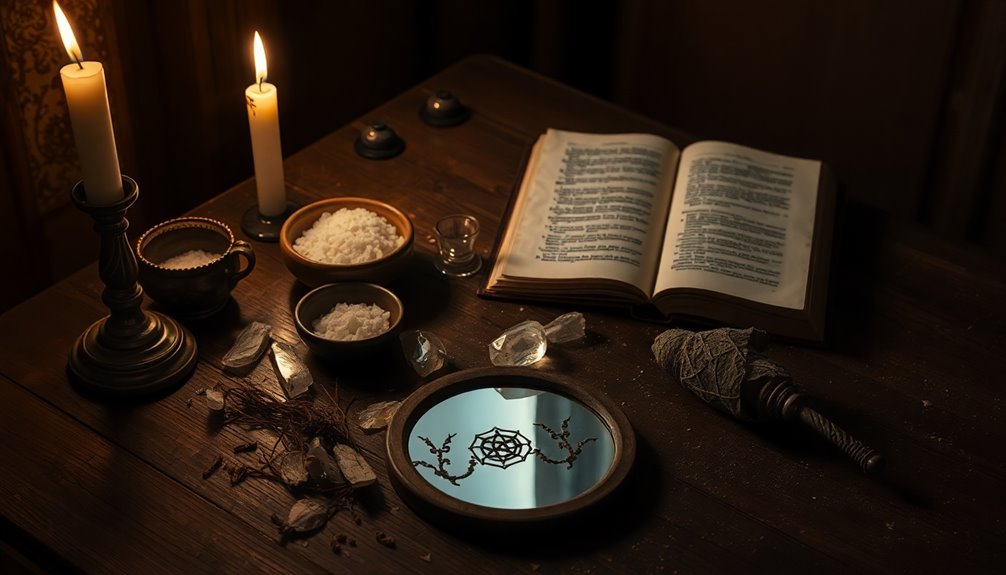
Have you ever felt like misfortune just won’t let up? If you’re experiencing persistent setbacks that seem to lack logical explanations, you might be noticing signs of being under a curse.
Sudden, unexplained physical ailments can leave you feeling heavy and uneasy, adding to your distress. Disturbing dreams filled with symbolic threats often reflect subconscious fears and negative energies, hinting at an unseen influence in your life.
Additionally, disruptions in relationships, finances, or work can suggest that a curse is affecting various aspects of your existence. Trust your intuition; if you have a gut feeling that something’s off, it’s worth considering that you might be under a curse, as noted in many traditions. Just as in And Then There Were None, where characters face inexplicable events leading to their downfall, your situation may mirror a similar sense of ominous fate.
Historical Context of Curses in Folklore
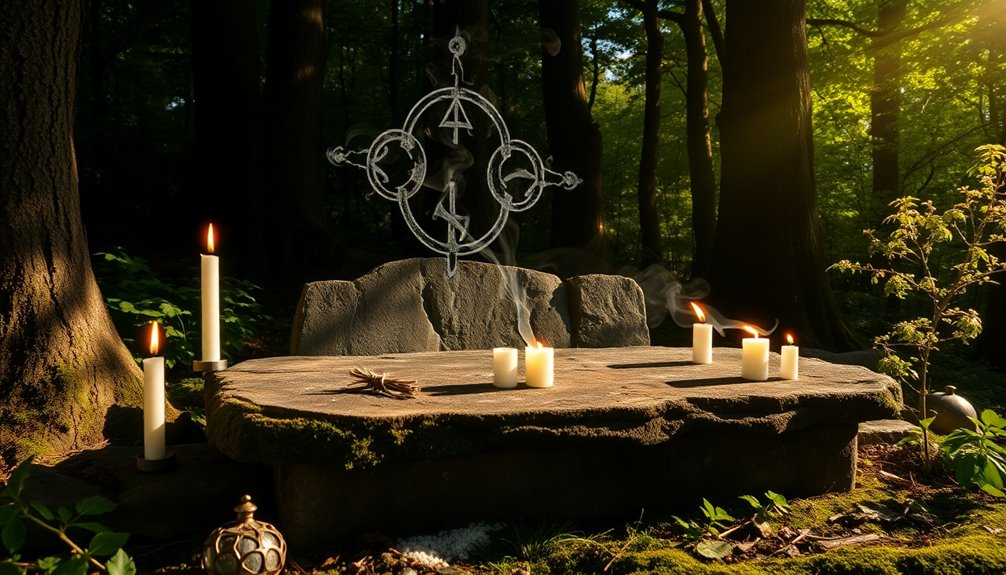
Curses have deep roots in ancient beliefs and practices, often serving as a reflection of cultural morals and societal fears.
You’ll find that different cultures have unique interpretations and rituals surrounding curses, shaping how they view accountability and justice.
Understanding these historical contexts can help you grasp the varied significance of curses across folklore. Additionally, the exploration of systemic oppression in literature, such as in Richard Wright’s “Native Son,” reveals how cultural narratives around justice and accountability can impact societal beliefs about curses.
Ancient Beliefs and Practices
Throughout history, cultures around the world have woven curses into their folklore, reflecting deep-seated beliefs in the power of words and magic. Curses were often seen as malevolent spells aimed at causing harm, rooted in personal grievances. When someone felt wronged, they might resort to magic for retribution, believing that a simple incantation could invoke misfortune upon their adversary.
To counteract these forces, ancient practices emerged, helping individuals break a hex through rituals, protective talismans, or communal support. The psychological impact of curses was profound, as many believed that merely fearing a curse could influence their health and fortune.
These practices not only reveal societal values but also showcase humanity’s enduring struggle against unseen forces.
Cultural Variations in Curses
Beliefs about curses vary widely across cultures, each reflecting unique historical contexts and societal fears.
In Slavic and Celtic traditions, curses often arise from personal grievances like betrayal or jealousy, serving as a form of psychological warfare. Historical records reveal that communities used curses to assert social control when conventional justice failed.
You’ll notice cultural variations in curses, with specific rituals designed to counter them, such as using mirrors in European folk magic to deflect negativity. Many societies also developed protective measures, like talismans and amulets, to safeguard against curses.
Additionally, protective herbs play an essential role in various cultures, offering a natural remedy to repel harmful energies and enhance spiritual protection.
Common Beliefs About Breaking Curses
Common beliefs suggest that cleansing rituals, like bathing in herbal infusions or saltwater, help purify you and eliminate the negative energy tied to curses. Protective talismans, such as amulets or symbols, are thought to shield you from future curses and lessen the impact of existing ones. Community support also plays a vital role; group rituals and prayers can amplify collective energy for successful outcomes. Additionally, folklore often recommends writing a letter to the source of the curse and performing a symbolic act, like burning it, to facilitate emotional release and aid in breaking the curse. Furthermore, the importance of collective outrage against systemic racism highlights how community efforts can empower individuals and help them reclaim their dignity.
The Power of Intention in Curse Breaking
Understanding the power of intention is vital for effectively breaking curses, as it enables you to align your personal will with your desired outcome. By setting a clear and focused intention, you direct your energy towards removing the curse and restoring balance in your life.
It’s important to state your intentions with clarity, using affirmative language that commands rather than requests, which enhances the spell’s potency. Believing in your personal strength and the effectiveness of your ritual can greatly influence your success.
Additionally, seeking community support and sharing intentions during rituals can amplify collective energy, leading to more powerful and effective curse-breaking practices. Embrace this power of intention, and you’ll find yourself better equipped to confront and overcome any curse. The ethical implications of medical research highlight how intentions can shape not only personal outcomes but also broader societal changes.
Rituals and Spells for Breaking Curses
When you’re ready to break a curse, traditional rituals and effective spell ingredients play an essential role. You’ll find that practices like cleansing with herbs and using specific items can greatly impact the outcome. Engaging in these rituals often reflects the allure of forbidden knowledge and the moral ambiguity present in many ancient traditions.
Traditional Ritual Techniques
Traditional rituals for breaking curses often utilize specific spells and techniques that harness spiritual energies to counteract negativity.
One effective method is the mirror spell, where you surround a token from the person who cursed you with mirrors, reflecting their negative energy back.
Cleansing baths with protective herbs like rosemary and salt help purify you from lingering curse effects, restoring balance.
Another popular technique is the lemon method, which absorbs negative energy and symbolizes curse removal when disposed of.
Community participation enhances these rituals, as shared prayers and intentions amplify collective power.
Effective Spell Ingredients
To effectively break a curse, choosing the right spell ingredients is essential, as they amplify your intentions and harness spiritual power.
Start with a bowl of water, which cleanses and absorbs negative energy during your ritual. Silver candles symbolize purity and protection, so light them to enhance your focus.
Incorporate mirrors to reflect negativity back to its source, counteracting the curse effectively. Don’t forget protective herbs like garlic, rue, and rosemary; these are known for their ability to ward off evil and purify your space.
Finally, include personal items or symbols related to the individual afflicted by the curse, as they strengthen the ritual’s power and reinforce your intentions.
With these ingredients, you’re well-equipped to break the curse.
Using Protective Charms and Talismans
Have you ever wondered how protective charms and talismans can safeguard you from negative energy? These tools, like the Hamsa hand and pentacle, are designed to deflect curses and hexes while providing spiritual protection.
Many cultures infuse these charms with specific herbs, such as garlic and rue, known for their protective properties. Symbols like the Eye of Horus or the Ankh enhance talismans’ power, actively warding off evil influences.
By regularly wearing or carrying these protective charms, you not only amplify your personal energy but also remind yourself of your intention to shield against harm. Additionally, the practice of using emotional expression in crafting personalized talismans can further enhance their effectiveness in breaking or preventing curses.
Crafting personalized talismans by infusing items with your intentions can further enhance their effectiveness in breaking or preventing curses.
The Role of Cleansing Herbs and Rituals
Cleansing herbs play an essential role in breaking curses by purifying both your space and spirit. Incorporating rituals with these herbs, like burning sage or taking herbal baths, can considerably enhance your protection and restore balance. Regularly practicing these methods not only wards off negative energies but also promotes emotional well-being. Independent bookstores serve as community hubs, fostering connections among readers and enhancing cultural exchange through the diverse voices they celebrate.
Importance Of Cleansing Herbs
Why are cleansing herbs so essential in breaking curses and maintaining spiritual well-being? These powerful botanicals, like sage and rosemary, are traditionally burned to purify spaces and eliminate negative energies tied to curses.
Grounded in ancient wisdom, their spiritual significance spans various cultures, emphasizing their role in protection. Regularly using cleansing herbs in your practices not only helps break curses but also fosters a protective environment against future harm.
Specific herbs, such as garlic and rue, are especially noted for their protective properties, often hung above doorways to fend off malevolent forces. Engaging with these herbs empowers you, reinforcing your personal energy and intention while promoting overall spiritual health.
Embrace cleansing herbs to enhance your well-being and safeguard your spirit.
Rituals For Purification Practices
Although rituals for purification practices can vary widely, they often share a common thread: the use of cleansing herbs to enhance their effectiveness. Burning sage or rosemary can purify your space and help remove the negative energy linked to curses.
Incorporating protective herbs like garlic and rue into your rituals can guard against malevolent influences while boosting your spiritual clarity. Water plays a crucial role in purification practices, especially when combined with herbs to create a sacred cleansing bath.
You might also hang protective herbs like dill and St. John’s Wort above doorways to create barriers against negativity. Pairing these rituals with self-care techniques like visualization and intention-setting strengthens your personal energy, aiding in breaking curses effectively.
The Importance of Community Support in Healing
When facing the challenges of curses and hexes, having a strong community support system can make all the difference in your healing journey.
Community support amplifies your efforts, fostering a sense of belonging that’s essential for emotional recovery. Here are three ways community support enhances your healing:
- Collective energy during rituals can greatly boost their effectiveness, making hex-breaking more powerful.
- Shared experiences provide valuable insights and techniques, creating a stronger network for protection and understanding.
- Emotional backing from friends and family helps you release negativity and reinforces your empowerment against curses. Additionally, the importance of human connections is reflected in various healing processes, illustrating how shared challenges can foster resilience and support.
Visualization Techniques for Counteracting Curses
Visualization techniques can be a powerful ally in counteracting curses, as they allow you to harness your mind’s energy to create protective barriers.
Start by imagining a bright light surrounding you, repelling negative energy. Picture the curse as a dark cloud or entity that you can actively push away or dissolve through focused intention.
You might also envision the curse being absorbed by the earth, transforming into positive energy that promotes healing.
To enhance your practice, incorporate affirmations; repeating positive statements reinforces your personal power and resilience.
Engaging in guided imagery, where you visualize a peaceful setting or a protective figure, helps create a mental space for emotional release and empowerment against curses, fortifying your defenses. This practice of visualization mirrors the power of storytelling found in literature, where characters use their narratives to assert agency and hope amidst adversity.
How to Maintain Protection After Breaking a Curse
Breaking a curse is just the beginning; maintaining your protection is vital for long-term peace.
To keep negativity at bay and guarantee your safety, follow these essential steps:
- Wear protective charms like the Hamsa hand or pentacle to create a personal shield against future curses.
- Cleanse your space regularly by burning protective herbs such as sage or rosemary, purifying your environment and keeping lingering negative energies away.
- Incorporate protective crystals like black tourmaline or obsidian into your home décor; they absorb and neutralize negative energy, enhancing your protection.
Resources for Further Exploration on Curses and Hexes
Exploring the nuances of curses and hexes can deepen your understanding and empower you against negative energies.
For those interested in Folk Magic Traditions, several resources are invaluable. Jim Haskins’ “Voodoo & Hoodoo” offers insight into breaking curses within African American practices.
In J. F. Doering’s “Three White Hexes,” you’ll find cultural contexts that enrich your understanding of hexes.
Richard L.T. Orth’s “Folk Religion of the Pennsylvania Dutch” examines local beliefs and rituals related to curses.
For historical perspectives, H. Sebald’s “Franconian Witchcraft” traces the evolution of hex beliefs.
Finally, “Conjuring in the Big House Kitchen” by M. P. Leone and G. M. Fry details the interplay of folklore and social context in kitchen magic.
Conclusion
In exploring the world of curses, it’s crucial to remember that nearly 50% of people believe they’ve experienced some form of bad luck linked to a curse. This statistic highlights how deeply rooted these beliefs are in our culture. By understanding the signs, utilizing community support, and practicing powerful techniques, you can break free from these negative influences. Remember, you have the power to reclaim your life and dispel any darkness that lingers. You’re not alone in this journey.