

If you loved *The Secret History*, you might feel torn about *The Little Friend*. It’s rich in atmospheric detail and explores intriguing themes, but some find the pacing slow and character depth lacking. The narrative shines with Southern Gothic elements, yet it offers a different experience, focusing more on mood than plot. Whether it’s your next favorite or a frustrating read, you’ll want to discover what others think about this intriguing novel.
Why Readers Are Divided on The Little Friend

While some readers find charm in the atmospheric style of The Little Friend, others feel frustrated by its slow pacing and lack of a gripping plot. This disappointment often stems from high expectations, especially for those seeking a thrilling murder mystery akin to Tartt’s The Secret History.
Instead of an engaging plot, you encounter a narrative rich in detail but lacking urgency. Character development divides opinions too; some find the characters relatable and complex, while others see them as derivative and shallow.
This inconsistency fuels mixed reactions, as readers grapple with the book’s languid pacing and focus on character studies. Ultimately, your enjoyment may hinge on what you value more: an intricate plot or deep character exploration. The dual nature of words in literature can shape your experience, as they serve as both a source of destruction and a path to redemption through storytelling.
Key Themes and Literary Influences in The Little Friend
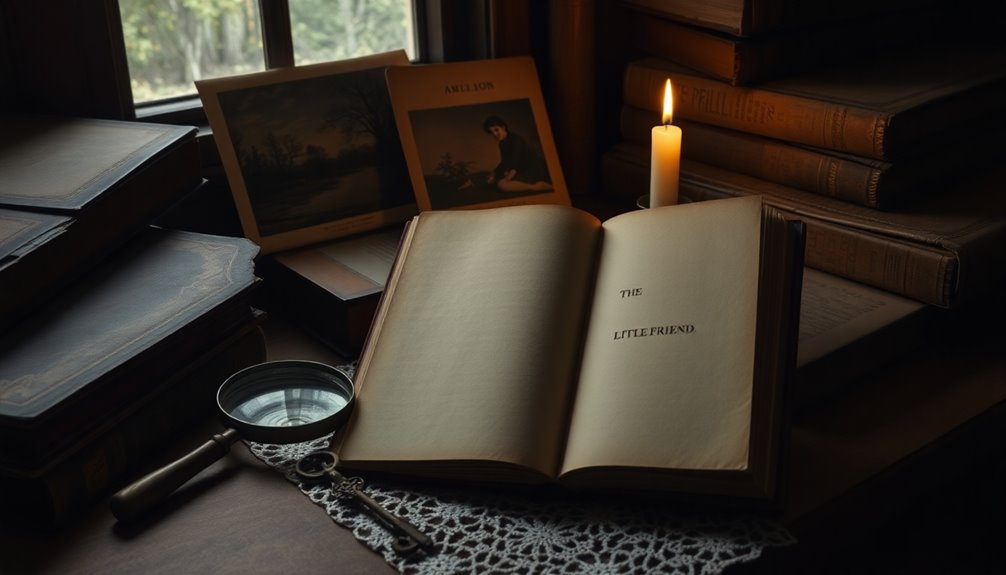
The Little Friend explores complex themes of loss of innocence, social division, and decay, all set against the haunting backdrop of 1970s Mississippi.
This Southern Gothic narrative immerses you in a world where Harriet, the protagonist, embodies the childlike adventure reminiscent of literary influences like Rudyard Kipling and Robert Louis Stevenson.
The atmospheric narrative prioritizes mood over plot resolution, inviting you to linger in the richly described settings.
However, some critics argue that this focus on atmosphere occasionally overshadows character development and thematic depth.
The intertextual references throughout the novel further enrich its layers, drawing comparisons to Harper Lee’s To Kill a Mockingbird and emphasizing the intricate cultural dynamics of the American South.
Additionally, the theme of emotional expression resonates through Harriet’s journey, reflecting her attempts to navigate the complexities of her surroundings and relationships.
Comparing The Little Friend to The Secret History

When you compare The Little Friend to The Secret History, you’ll notice striking differences in narrative style and character development.
While The Secret History offers a tightly woven plot with rich emotional layers, The Little Friend presents a more meandering Southern Gothic tale that some readers find lacks resolution.
Exploring the thematic elements in both works can shed light on Tartt’s evolving approach to storytelling and character exploration. Tartt’s fascination with art and beauty is evident in her nuanced character portrayals and intricate narrative structures.
Narrative Style Differences
Though both novels are products of Donna Tartt’s vivid imagination, their narrative styles diverge considerably, impacting how you experience each story.
- The Little Friend offers a languidly atmospheric narrative, prioritizing mood over plot resolution.
- Its extensive intertextual references can sometimes overshadow character development, leaving you feeling detached.
- The Secret History, in contrast, features a tightly woven narrative structure that emphasizes coherence and emotional payoff, enhancing pacing.
- You’re drawn into its themes of morality and existentialism in an elite academic setting, making for a more impactful read.
Ultimately, while both novels showcase Tartt’s descriptive prowess, the pacing and narrative style of The Secret History often resonate more effectively with readers.
Character Development Contrast
While both novels showcase Donna Tartt’s talent for storytelling, character development stands out as a key differentiator.
In The Secret History, you find richly drawn characters like Henry and Camilla, whose complex motivations and moral dilemmas engage you deeply.
In contrast, Harriet in The Little Friend often lacks the same complexity, with her motivations presented through a limited lens. Supporting characters, such as the Ratliffs, come off as caricatures rather than fully fleshed individuals, diminishing the narrative’s emotional impact.
While The Little Friend attempts to explore themes like loss of innocence, it doesn’t deliver the profound character arcs you encounter in The Secret History.
Thematic Exploration Evaluation
Thematic exploration in literature often shapes a reader’s emotional connection to the story, and in this regard, The Little Friend struggles to match the depth found in The Secret History.
While both novels tackle significant themes, their execution differs greatly.
- Thematic coherence: The Secret History’s themes are intricately woven, whereas The Little Friend’s feel less unified.
- Emotional depth: You’ll find a richer emotional resonance in The Secret History.
- Character development: The Secret History offers complex character studies, while The Little Friend’s characters are often overshadowed by genre tropes.
- Narrative style: The Little Friend focuses on atmosphere, lacking the plot resolution that defines The Secret History.
Character Development: Depth or Derivative?
As you explore the character development of *The Little Friend*, you might find yourself grappling with the tension between depth and derivative portrayals. Harriet Cleve Dufresnes, the determined protagonist, resonates with some readers, yet her characterization can feel flawed and lacks the complexity found in Tartt’s other works.
Supporting characters like the Cleve family matriarchs and Danny Ratliff often appear more as caricatures than fully realized individuals, which limits the narrative’s emotional impact.
While Tartt’s prose style excels in creating atmospheric settings, it sometimes overshadows character development, leaving you with a sense that the characters are derivative.
This contrast between youth and adulthood, although present, falls short of delivering a meaningful exploration of depth, making the character development less compelling overall. Furthermore, just as Bigger Thomas in *Native Son* grapples with the dehumanizing effects of racism, the characters in *The Little Friend* struggle with their own societal pressures, impacting their complexity.
The Writing Style: Lyrical Prose vs. Pacing Issues
- The lush descriptions provide emotional depth, creating an immersive atmosphere.
- Extended passages can feel tedious, bogging down the plot’s progression.
- The blend of genres adds complexity but may frustrate those seeking a tighter storyline.
- Tartt’s ambition in character exploration often overshadows plot development.
- Ultimately, while the writing style captivates, the pacing challenges can leave you feeling unsatisfied with the overall reading experience. Notably, Tartt’s work resonates with themes of morality, guilt, friendship, and betrayal, which are also central to her acclaimed narrative style in *The Secret History*.
Is The Little Friend Worth Your Time?
When considering whether *The Little Friend* is worth your time, think about what you enjoy in a story.
If you appreciate rich character development and thematic exploration, you might find value in Tartt’s intricate narrative style. However, if you’re looking for a gripping plot or fast pacing, you may want to reconsider. Additionally, exploring themes like personal growth can enhance your reading experience, similar to how readers connect with characters in Pilcher’s works.
Narrative Style Assessment
- The pacing can feel slow, with many finding the beginning and end more engaging than the middle.
- The atmospheric blend of Southern Gothic and coming-of-age elements enriches the setting but may frustrate plot-driven readers.
- Critics note a focus on intertextual references rather than character development, leaving some characters feeling like caricatures.
- If you appreciate deep explorations in a richly detailed world, you might find value here, but if you seek a tightly woven plot, it may not be worth your time.
Character Development Insights
Although character development is a key aspect of *The Little Friend*, opinions on its execution vary widely among readers. You might find Harriet a determined yet flawed protagonist, whose quest for truth propels the story. However, her complexity may not satisfy everyone.
The secondary characters, like the Ratliffs, often feel more like caricatures than fully realized individuals, limiting the richness of character interactions. Critics argue that the narrative prioritizes atmospheric detail over meaningful character development, resulting in a lack of emotional payoff.
While Harriet’s perspective contrasts youthful innocence with adult complexities, some readers feel this approach falls short. Ultimately, your enjoyment of the character development may hinge on your expectations, especially when compared to Tartt’s other works.
Thematic Exploration Value
- The character studies are compelling yet flawed, particularly with Harriet’s relatable struggles.
- The atmospheric writing appeals to those who enjoy rich detail.
- The exploration of social division reflects deeper societal issues.
- Slow pacing may challenge your patience, making the novel feel tedious at times.
Ultimately, whether it’s worth your time depends on your literary preferences.
Conclusion
In the end, whether you plunge into *The Little Friend* is up to you. This book straddles the line between lyrical prose and pacing issues, much like a tightrope walker balancing on a thread of silk. If you’re craving a deep exploration of character and theme, it just might be worth your time. But if you’re after a fast-paced thrill, you might feel like you’re wading through molasses. Choose wisely; your reading journey awaits!