

In “Between the World and Me,” Ta-Nehisi Coates addresses systemic racism and its chilling effects on black identity through a personal narrative. He shares his experiences of fear and oppression, contrasting the lives of “dreamers” who benefit from white supremacy with “strugglers” facing harsh realities. Coates challenges you to understand the emotional and historical weight of racial injustice, urging for awareness and collective action. There’s so much more to uncover about this essential dialogue.
The Personal Narrative of Race and Identity
When you immerse yourself in Ta-Nehisi Coates’ “Between the World and Me,” you’ll find a powerful blend of personal narrative and historical context that reveals the complexities of race and identity in America.
Coates writes a heartfelt letter to his son, Samori, reflecting on his own experiences with systemic racism and the weight of being a black body in a society rife with racial violence.
Coates pens a poignant letter to his son, illuminating the harsh realities of systemic racism and the burden of black identity.
He contrasts “dreamers,” who benefit from white supremacy, with “strugglers,” who confront the brutal realities of their existence.
Through vivid depictions of fear and oppression, Coates emphasizes the emotional toll of steering through life as a black individual.
His narrative serves as an essential reminder of the ongoing struggle for awareness, understanding, and justice. Moreover, Coates’ reflections on systemic racism reveal the deep-rooted historical legacies that continue to shape the Black experience in America.
Systemic Racism and Its Impact on Black Bodies
Systemic racism profoundly impacts black bodies, manifesting in violence, oppression, and a constant struggle for dignity. Each year, thousands of black individuals fall victim to police violence, a stark reminder of the historical legacy of oppression rooted in slavery and segregation.
You see the power dynamics at play, where law enforcement often wields authority to inflict harm without accountability. This reality creates an environment filled with fear, forcing you to navigate your daily life with heightened vigilance.
The emotional and physical toll is immense, leaving you psychologically and physically exhausted. Society’s rules dictate how black bodies must contort themselves, undermining your dignity and perpetuating a cycle of violence and oppression that feels inescapable. These experiences echo the dehumanizing effects of racism that Richard Wright illustrates in “Native Son,” highlighting the systemic injustices faced by marginalized individuals.
The Role of Law Enforcement in Racial Violence
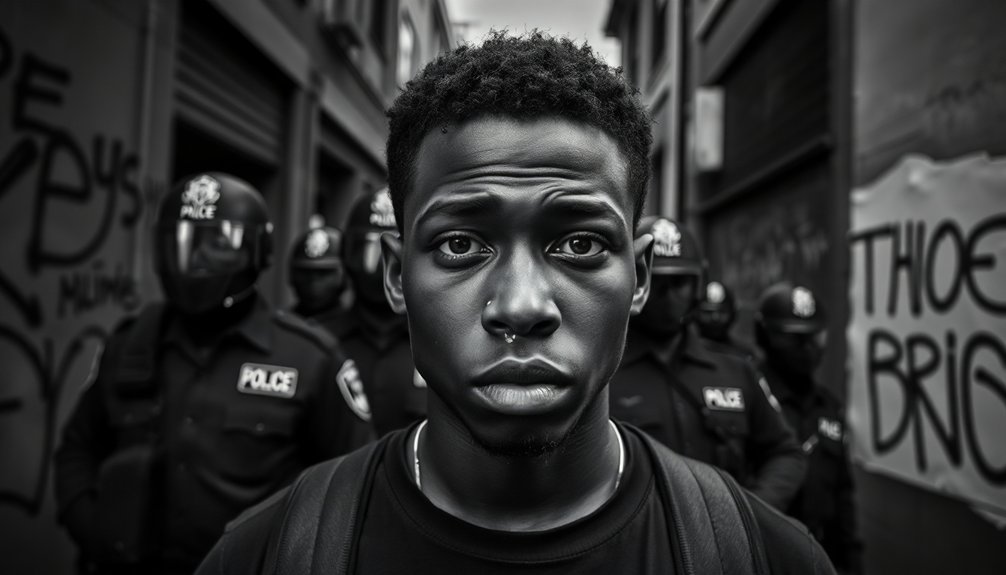
Although the role of law enforcement is often framed as a protector of public safety, it frequently becomes a source of racial violence against black communities.
You see, the police wield the authority to destroy black bodies without accountability, perpetuating systemic violence. Instances like Eric Garner’s choking highlight a troubling legacy of oppression.
The police possess unchecked power to harm black individuals, reinforcing a painful history of systemic oppression.
When you encounter law enforcement, fear often shadows you, reflecting a deep mistrust born from historical injustices. This state-sanctioned violence underscores a broader societal issue, where laws disproportionately impact black individuals.
The emotional and physical toll of police violence manifests in your everyday experiences, leaving you vulnerable in a system that’s supposed to protect you.
Recognizing this reality is essential in understanding the ongoing struggle against racial violence. Acts of defiance against oppressive systems, much like those in literature, remind us of the importance of resilience in the face of injustice.
Historical Context of Racial Oppression
You can’t ignore how the legacy of slavery still impacts black Americans today. Systemic injustices rooted in that history continue to shape social and economic realities, making it essential to recognize these connections. Understanding this context is key to addressing the ongoing struggles within marginalized communities. The historical implications of colonialism and its effects on societies further illustrate the complexities of racial oppression in America.
Legacy of Slavery’s Impact
As the legacy of slavery endures, it shapes the ongoing realities of racial oppression in America. This legacy is rooted in the exploitation of black bodies for economic gain, a practice that began in the 17th century.
Coates reveals that, at the onset of the Civil War, the value of enslaved individuals surpassed all American industry, highlighting the deep economic foundations built on racial exploitation.
The historical context includes the lasting impact of Jim Crow laws and the systemic injustices that still affect black communities today. Many white individuals remain unaware of their privilege and the historical ramifications of white supremacy, which perpetuates this legacy.
Discussions around “black on black crime” often obscure these systemic issues, reinforcing misunderstandings and shame.
Systemic Injustice Today
Systemic injustice today continues to echo the historical oppression faced by Black Americans, revealing a deeply entrenched cycle of inequality.
The legacy of police violence against Black bodies remains a chilling reminder of past atrocities, as seen in the tragic deaths of Eric Garner and Michael Brown. These incidents highlight the lethal consequences of systemic racism still at play.
Today, Black Americans represent about 8% of the world’s imprisoned population, underscoring the disproportionate impact of incarceration rates tied to systemic injustice.
In addition, the economic exploitation of Black bodies, rooted in slavery, continues to fuel disparities in wealth and education.
While some benefit from ignorance of these struggles, many fight daily for basic human dignity and rights, aiming for change amidst persistent oppression.
Education as a Tool of Compliance

While many view education as a pathway to empowerment, it often functions more as a tool of compliance, particularly for marginalized communities.
Ta-Nehisi Coates critiques the American education system for prioritizing conformity over genuine learning, especially for Black students. Inadequate educational environments often lead to high dropout rates, with many young Black men facing incarceration.
Ta-Nehisi Coates highlights how the education system’s focus on conformity undermines authentic learning for Black students.
This failure illustrates how schools can constrain potential, creating a toxic atmosphere and perpetuating systemic violence against these communities. Instead of fostering curiosity, education becomes a means to escape oppression, ultimately reinforcing the cycle of violence and compliance.
Coates’ narrative underscores that real empowerment through education remains elusive when the system prioritizes control over growth. The stories of marginalized individuals’ contributions to society highlight the importance of inclusive education that acknowledges diverse histories and experiences.
The Emotional Toll of Racial Injustice
Education’s role as a tool of compliance often leaves emotional scars that extend far beyond the classroom, particularly for marginalized communities. The emotional toll of racial injustice weighs heavily on black bodies, manifesting as profound grief and constant fear.
This legacy of violence and systemic disenfranchisement creates a pervasive anxiety that shapes your daily interactions, especially with law enforcement. You can’t help but feel the exhaustion from the vigilance required to navigate a racially hostile environment.
Instances like the killings of Michael Brown and Eric Garner highlight the mistrust that plagues your community. The scars of slavery and segregation linger, informing your identity and collective consciousness, making it clear that the impact of racial injustice is both deep and enduring. The efforts of humanitarian pioneers continue to inspire movements advocating for justice and equality, reminding us that the fight for civil rights is ongoing.
Cultural Identity and Representation in America
How does the absence of representation shape your understanding of cultural identity in America? When you look at history books, you notice a glaring lack of black heroes, which reinforces feelings of inferiority and marginalization.
This absence impacts your perception of cultural identity, making it difficult to appreciate the richness of black contributions. By reclaiming their narratives, black individuals endeavor to establish pride and visibility in a society that often overlooks them.
Places like Howard University serve as cultural hubs, showcasing the diversity within black thought and identity. Acknowledging the significance of black bodies in America isn’t just about visibility; it’s about celebrating a culture that has endured systemic racism, ultimately strengthening the representation necessary for empowerment and recognition. Furthermore, the stories of hidden heroes remind us of the profound impact that marginalized voices have had on shaping history and culture.
The Legacy of Violence Against Black Communities
You can’t ignore the historical roots of violence against Black communities, which continue to shape their experiences today.
Systemic oppression isn’t just a relic of the past; it manifests in daily interactions and policies that threaten their safety and well-being.
Understanding this legacy is essential for grasping the ongoing struggles for justice and dignity faced by Black Americans. The stories of resistance movements during World War II demonstrate that collective action can serve as a powerful tool against systemic injustice, inspiring current and future generations to advocate for change.
Historical Roots of Violence
Although many may think of violence as an isolated phenomenon, the legacy of violence against black communities in America is deeply rooted in a historical context of exploitation and dehumanization.
This systemic racism began with the enslavement of black bodies, where individuals were treated as property for profit. The consequences still echo today, as seen in the disproportionate police brutality faced by black individuals, highlighted by cases like Eric Garner and Michael Brown.
Generations bear the fear and trauma of this violence, reinforcing the vulnerability of black bodies in society. The narrative of “black on black crime” often distracts from the systemic issues that perpetuate violence, obscuring the deep-seated injustices that continue to shape these communities.
Systemic Oppression Today
As systemic oppression continues to shape the lives of Black communities today, the echoes of historical violence remain ever-present.
Police violence is a stark reality, as seen in the tragic cases of Eric Garner and Michael Brown, exposing the deadly consequences faced by Black bodies during routine encounters. This destruction of lives isn’t just isolated; it reflects a broader pattern rooted in the legacy of slavery and segregation.
The educational system compounds this oppression, with high dropout rates for young Black men leading to increased incarceration and cycles of poverty.
Meanwhile, the term “Black on Black crime” often distracts from these systemic issues, perpetuating shame while ignoring the socio-economic inequalities that fuel ongoing violence and discrimination.
The Call for Awareness and Collective Action
Recognizing the urgent need for awareness and collective action is essential in confronting systemic racism and its deep-rooted effects on American society.
Ta-Nehisi Coates challenges you to face uncomfortable truths about racial injustice and engage in honest dialogue about race. By fostering awareness of the black experience, you take an important step toward meaningful change.
Coates highlights the significance of understanding the historical context of racial violence, urging you to acknowledge this legacy to address contemporary issues effectively. He emphasizes accountability and reform within law enforcement, stressing the necessity of confronting police violence against marginalized communities.
Ultimately, ongoing conversations about race are indispensable; your active participation in the struggle for equality will help create a more just and equitable society. Furthermore, the impact of systemic discrimination on communities of color reveals the urgent need for comprehensive equity initiatives to dismantle biases and promote inclusivity.
Conclusion
In the tapestry of America, threads of pain and resilience weave together, painting a vivid portrait of struggle and hope. Coates’ words echo like a clarion call, urging you to confront the shadows of systemic racism that loom large. As you stand at the crossroads of awareness and action, remember that each step toward understanding is a step toward healing. Together, let’s dismantle the walls of indifference, forging a brighter future where every voice is heard and valued.