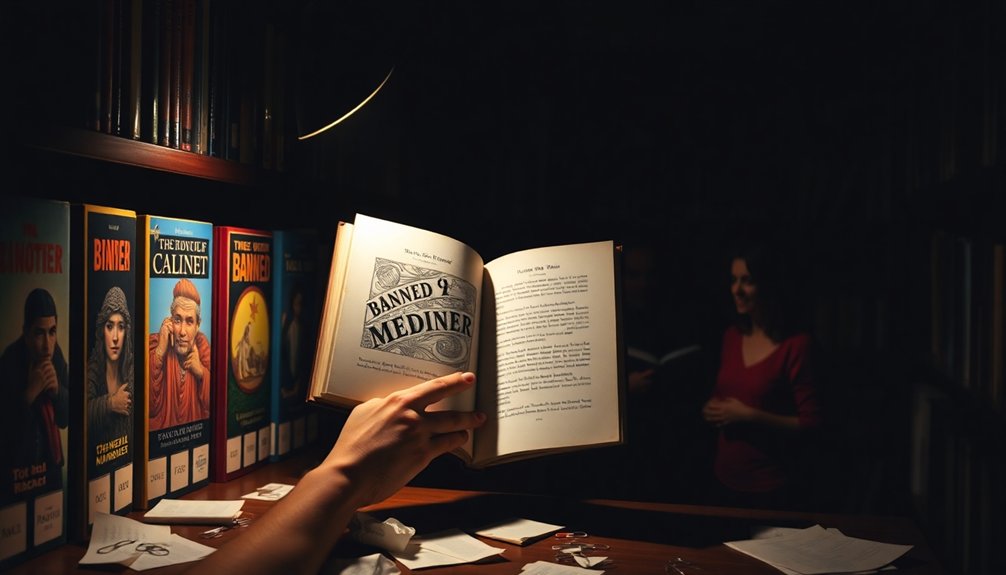
Banned books like *To Kill a Mockingbird* and *1984* tackle critical issues like racism and oppression, making them essential in today’s world. Titles such as *The Bluest Eye*, *Gender Queer: A Memoir*, and *The Hate U Give* spark discussions on identity, systemic racism, and social justice. Even *Harry Potter* faces scrutiny over themes of magic and morality. These controversies underscore the importance of freedom of expression. Stick around to discover how these books continue to resonate today.
To Kill a Mockingbird by Harper Lee
Harper Lee’s *To Kill a Mockingbird* remains a powerful lens through which you can explore America’s complex history with race and morality. This novel has faced bans in various school districts due to its frank use of racial slurs and stark depictions of racial injustice.
Published in 1960, it’s been challenged for addressing sensitive themes like rape and moral complexity, with some arguing these topics aren’t suitable for younger readers. Despite winning the Pulitzer Prize for Fiction in 1961, its frequent challenges highlight the ongoing tension between educational value and community standards.
As one of the top challenged books in recent years, it underscores the relevance of discussions about censorship and freedom of expression regarding race and representation. The importance of compassion and empathy in understanding racial injustice serves as a reminder of the broader themes depicted in literature like *The Book Thief*, which also confronts the challenges of oppression and defiance.
The Bluest Eye by Toni Morrison
- Racial slurs that wound identities.
- The trauma of sexual abuse that haunts her innocence.
- The relentless pursuit of unattainable beauty standards.
Banned in 29 school districts during the 2022-2023 school year, Morrison’s work remains relevant, igniting discussions about race and self-worth. *The Bluest Eye* encourages readers to confront systemic racism and its profound impact on marginalized communities. Despite its accolades, *The Bluest Eye* reveals the ongoing struggle against societal norms that impact marginalized communities.
Gender Queer: A Memoir by Maia Kobabe
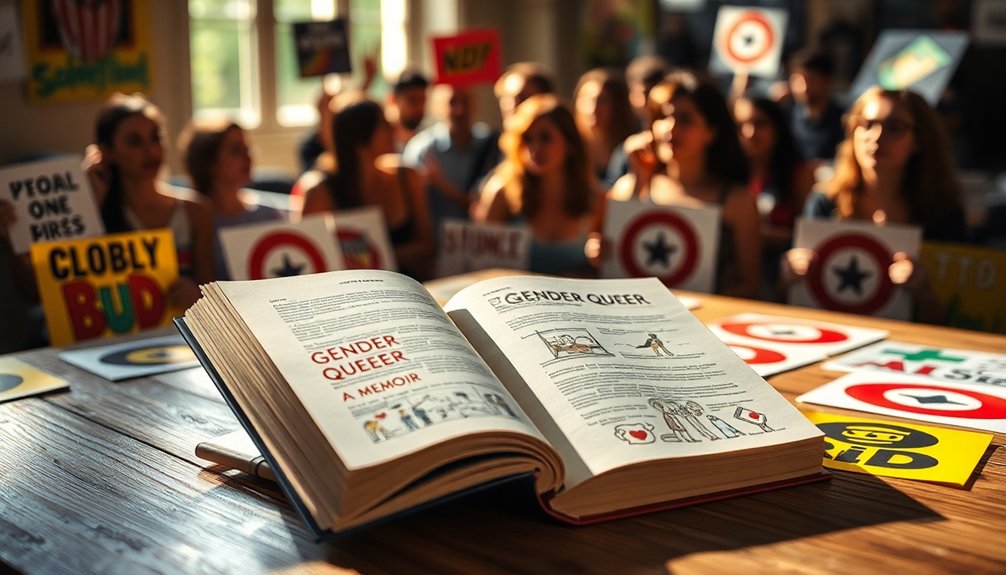
*Gender Queer: A Memoir* by Maia Kobabe offers an intimate look into the complexities of nonbinary and asexual identity.
This graphic memoir has gained recognition as a 2020 Stonewall Honor Book, yet it faces significant challenges in schools and libraries due to its LGBTQIA+ content. Critics often label it as sexually explicit, making it one of the most frequently banned or challenged titles in recent years.
In 2023, numerous districts documented its challenges, reflecting ongoing tensions surrounding gender identity representation.
However, this memoir serves as an essential educational resource, fostering understanding and dialogue about gender diversity. Advocating for *Gender Queer* is imperative, as access to diverse literature promotes inclusivity and supports the mental health of LGBTQIA+ youth. By embracing personal growth, readers can better appreciate the importance of representation in literature and its impact on individual identity.
The Hate U Give by Angie Thomas
When you read *The Hate U Give* by Angie Thomas, you confront raw depictions of racial injustice and police brutality that resonate deeply with today’s youth.
This powerful narrative not only sheds light on systemic racism but also sparks vital conversations about censorship and freedom in educational settings.
As the book faces challenges in schools, consider how its themes impact young readers and the importance of discussing these issues openly. Furthermore, the normalization of drug use and its dangers can be paralleled with the racial injustices depicted in the narrative, emphasizing the need for informed discussions around these societal issues.
Racial Injustice Representation
- The anguish of a community grappling with police violence.
- The struggle of a Black teenager torn between two worlds.
- The urgent need for representation in literature and media.
Despite being frequently banned for its candid portrayal of these issues, the book remains an essential voice in discussions about systemic racism and the importance of sharing authentic experiences.
It challenges you to reflect on the ongoing fight for justice and equality.
Impact on Youth
While many books face bans for their controversial themes, *The Hate U Give* by Angie Thomas stands out for its profound impact on youth. This novel addresses the realities of police violence against Black communities, sparking vital conversations about systemic racism and activism.
Through its relatable characters and gripping narrative, it offers representation that many young readers desperately need. By engaging with these topics, you’re encouraged to develop empathy and understanding in a culturally divided society.
Its accolades, including the William C. Morris Award, highlight its significance in youth literature. Ultimately, *The Hate U Give* empowers you to reflect on social justice issues, making it an essential text in shaping informed, compassionate future generations.
Censorship and Freedom
- It confronts police brutality, making uncomfortable truths accessible.
- It explores identity, prompting readers to reflect on their own experiences.
- It fosters intellectual freedom, allowing diverse voices to be heard.
1984 by George Orwell
George Orwell’s *Nineteen Eighty-Four* remains a powerful symbol of resistance against oppressive regimes. Banned in various countries, including the USSR until 1988, its critique of totalitarianism and themes of censorship resonate today.
The novel’s depiction of surveillance is chillingly relevant, especially as protestors in Russia invoke it to challenge government actions during the Ukraine war. This illustrates how Orwell’s work continues to inspire those fighting for freedom of expression against authoritarian control.
Orwell’s portrayal of surveillance resonates today, empowering protestors in Russia to resist authoritarianism amid the Ukraine war.
In China, the book’s mention is forbidden on social media, highlighting extreme measures taken to suppress dissenting literature.
As discussions about misinformation and censorship intensify, Orwell’s exploration of truth manipulation serves as an essential reminder of the importance of vigilance in safeguarding our rights. Furthermore, the collective action illustrated in resistance movements during World War II underscores the power of unity in confronting oppressive forces today.
The Handmaid’s Tale by Margaret Atwood
Imagine:
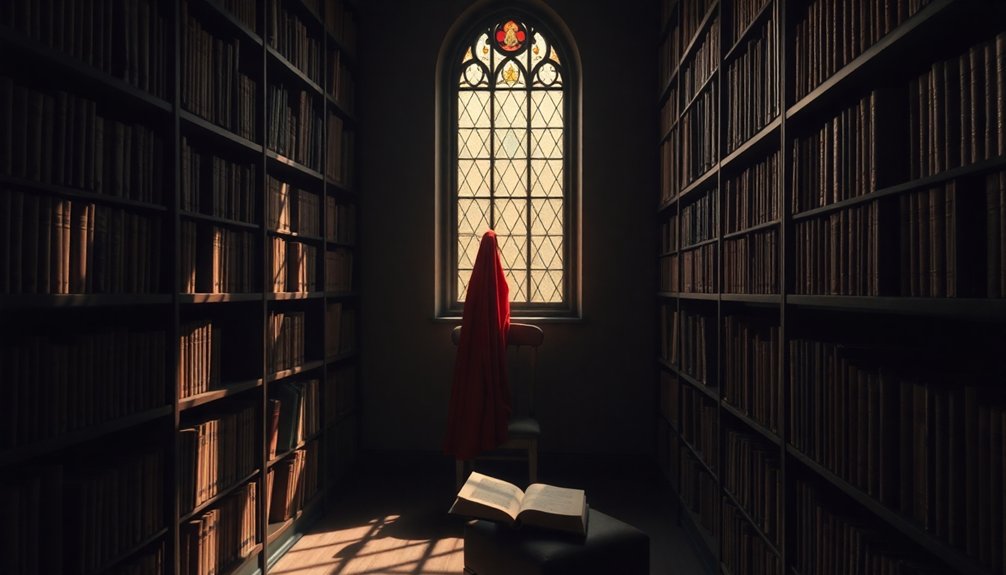
- A society where women wear red cloaks, symbolizing oppression.
- The chilling silence of a world stripped of choice and voice.
- Protests echoing the novel’s themes, emphasizing the fight for reproductive rights.
Since its resurgence in 2017, *The Handmaid’s Tale* serves as a powerful reminder of the ongoing battle for gender equality, urging readers to reflect on the fragility of freedom and the importance of resisting censorship. The narrative’s exploration of generational poverty highlights how societal challenges can shape individual destinies, paralleling the struggles faced by characters in other significant literary works.
Harry Potter and the Sorcerer’s Stone by J.K. Rowling
When you think about *Harry Potter and the Sorcerer’s Stone*, it’s hard to ignore the debate over magic and morality that surrounds it.
Some argue that the book undermines religious values, while others celebrate its cultural impact and legacy in children’s literature.
This controversy raises important questions about the role of literature in shaping young minds and the boundaries of freedom of expression. Furthermore, it reflects larger themes of totalitarian regimes and control, urging readers to consider the implications of authority and freedom in their own lives.
Magic and Morality Debate
While many readers find joy in the magical world of *Harry Potter and the Sorcerer’s Stone*, the book has sparked significant debate over the morality of its themes. Critics argue that the series, often banned and challenged, glorifies magic and the occult, which raises concerns among conservative groups.
This controversy highlights three key aspects:
- Magic as Temptation: Some believe it encourages children to engage with sorcery.
- Moral Conflicts: The story challenges traditional values, leading to fears about its influence.
- Censorship Battles: Ongoing tensions reflect society’s struggle with children’s exposure to themes of magic and morality.
Despite these challenges, the series celebrates friendship and bravery, complicating the dialogue about artistic expression versus societal values.
Cultural Impact and Legacy
Although *Harry Potter and the Sorcerer’s Stone* has faced its share of controversies, its cultural impact and legacy are undeniable. This book has become a cultural phenomenon, enchanting millions of young readers and sparking a renewed interest in children’s literature.
Its themes of friendship, bravery, and the battle between good and evil resonate deeply, encouraging discussions about moral values and freedom of expression.
While J.K. Rowling’s recent political comments have complicated its legacy, the ongoing debates around the book reflect broader societal tensions.
Despite being challenged and banned in some areas, *Harry Potter and the Sorcerer’s Stone* continues to inspire literacy and a love for reading, proving its significance in both literature and education today.
Conclusion
Banned books are like flickering candles in a dark room, illuminating truths we often shy away from. Each story challenges us to confront our fears, biases, and the complexities of society. By embracing these narratives, you’re not just reading; you’re igniting conversations that matter. So, let’s keep the flames alive—dare to explore, question, and learn from the pages that have sparked global controversies. After all, it’s in these stories that we find the power to change the world.