
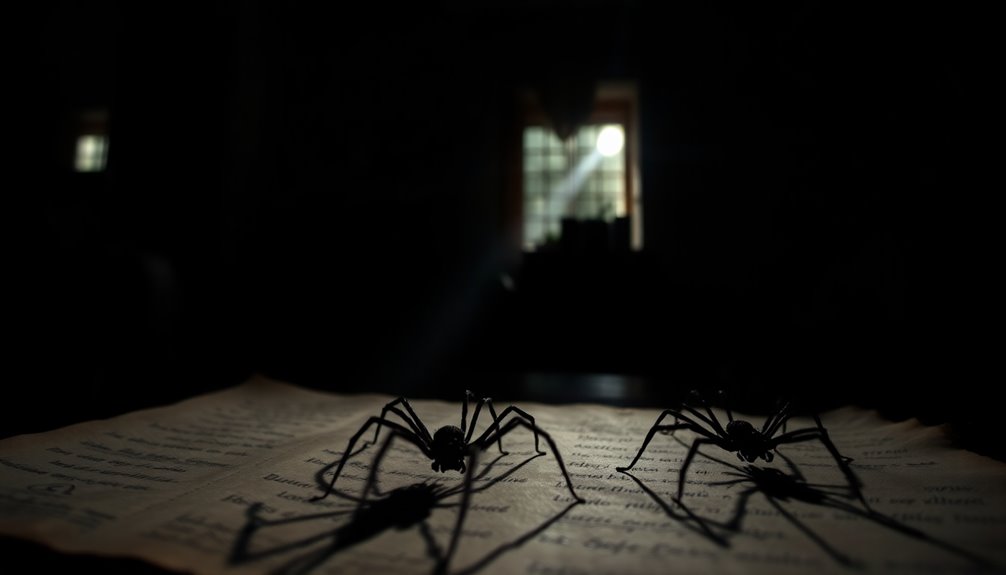
Scary spider drawings tap into your imagination and amplify deep-seated fears. These artistic portrayals emphasize spiders’ unsettling features and unpredictable movements, triggering instinctual anxiety. Cultural narratives often paint these creatures as villains, especially for women, reinforcing frightening images. Humor and community can help you cope, turning fear into shared laughter. By confronting these fears through art, you can find beauty in spiders. Discover how creativity shapes your perception and the psychology behind these fears.
The Connection Between Art and Fear
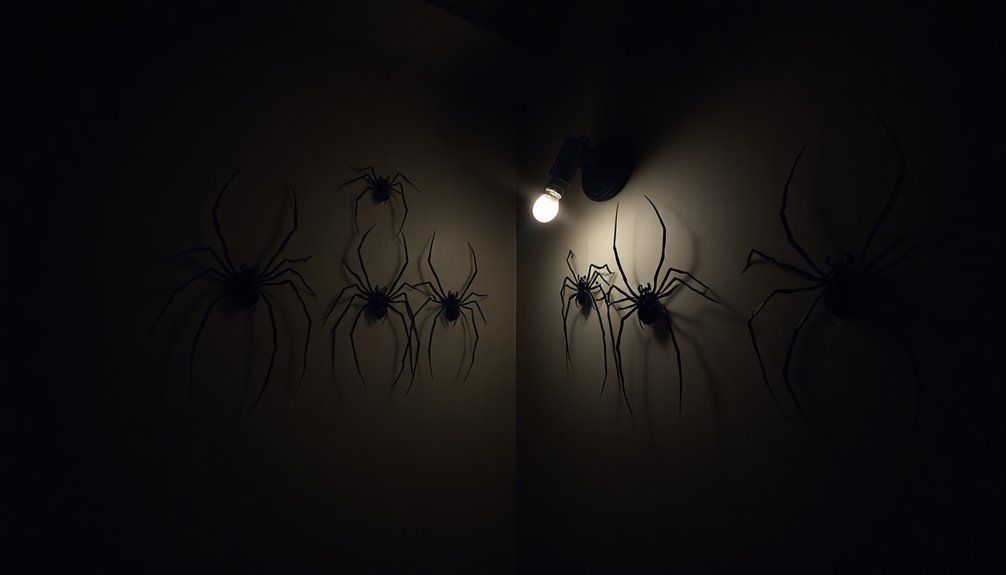
Art and fear are deeply intertwined, as artistic representations of spiders often amplify our natural anxieties. When you gaze at images of black widows, you might feel your heart race, a response linked to anxiety disorders.
Artists exaggerate spider features, creating uncanny imagery that intensifies your fears. The use of shadow and contrast enhances this effect, making you feel the danger lurking in the unknown.
Artists amplify spider traits, crafting unsettling visuals that heighten your fears, with shadows weaving a sense of lurking danger.
Research shows that encountering frightening art can trigger real physiological responses, mirroring those from actual fear-inducing situations. Yet, there are good things about this connection. Such art allows you to confront and explore your fears in a safe space, transforming anxiety into a creative dialogue that can foster understanding and acceptance. The interplay between grief and love highlights how art can evoke powerful emotions, reflecting our deepest vulnerabilities.
What Makes Spiders So Scary?
Spiders can trigger an instinctual fear in many people, partly due to their unpredictable movements and eerie appearance. Often seen as some of the most feared animals around us, they can provoke panic even when they pose little real-life danger.
Cultural narratives reinforce this fear, portraying spiders as menacing creatures. With studies showing that around 75% of people, especially women, express fear of them, personal encounters frequently lead to irrational reactions, like screaming or frantic attempts to escape.
These reactions highlight how deeply rooted the fear of spiders is. Yet, sharing humorous stories about spider encounters often helps people cope, reminding us that while spiders may be scary, they’re not as threatening as we imagine. Furthermore, this fear can be likened to the systemic racism that affects perceptions and experiences in society, as both can evoke strong emotional responses based on deeply ingrained cultural narratives.
The Role of Imagination in Fear Responses
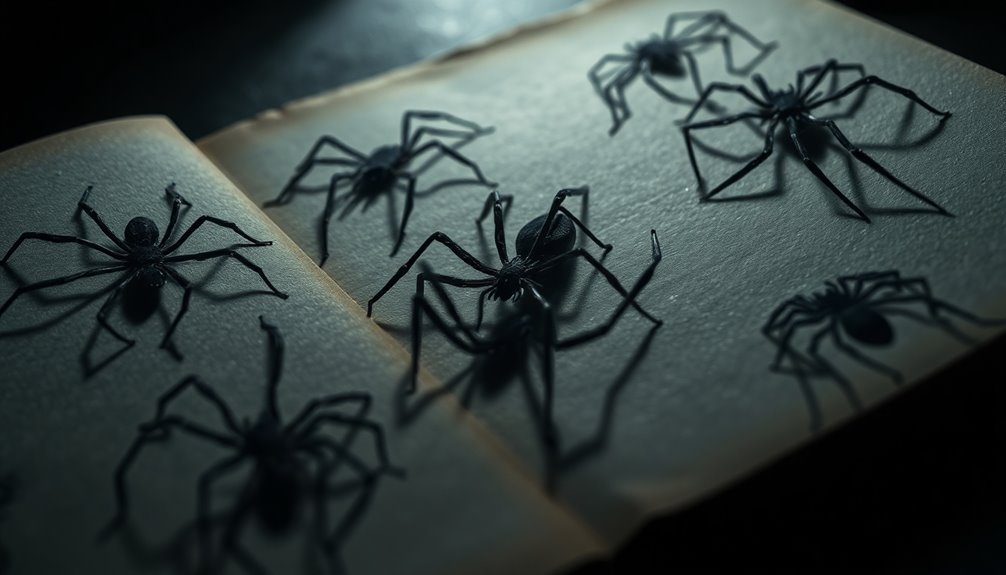
Your imagination can turn a simple spider into a terrifying monster, especially if you’ve had frightening experiences in childhood. When you see scary imagery, it amplifies those feelings, making threats feel more intense than they may actually be. This heightened perception can trigger anxiety, even before you have a chance to think rationally about the situation. This response is akin to the inherent evil within humanity, where fear can distort reality and lead to irrational behavior.
Perception of Threatening Imagery
While many people might dismiss their fear of spiders as irrational, the perception of threatening imagery considerably influences our emotional responses. Your brain rapidly identifies potential threats, leading to heightened anxiety when you encounter spider images.
This fear response is often amplified by cultural narratives and personal experiences, shaping your emotional reactions.
- Imagination Intensifies Fear: Visualizing worst-case scenarios with spiders can elevate your dread.
- Cultural Influences: Societal portrayals often depict spiders as malevolent, reinforcing negative perceptions.
- Physiological Triggers: Even harmless images can cause increased heart rates, showcasing the imagination’s power in fear.
Understanding these factors can help you navigate and address your fear of spiders more effectively.
Influence of Childhood Experiences
Childhood experiences play a pivotal role in shaping how you perceive spiders and can greatly amplify your fear. When parents use negative language or express fear themselves, you might internalize these responses.
Research shows that children often fear spiders due to environmental factors rather than innate instincts. In fact, studies indicate that 75% of students surveyed fear spiders, especially females, highlighting the influence of social and familial dynamics.
Cultural narratives and media further cement these fears, making you associate spiders with danger. If you’ve had negative experiences or heard scary stories about spiders early on, these can lead to long-lasting phobias, emphasizing how imagination and learned responses contribute considerably to your fear reactions.
Cultural Influences on Spider Fear
Cultural narratives shape how you view spiders, often painting them as sinister villains in stories and films.
Myths and misconceptions feed your fears, especially with Halloween imagery amplifying anxiety around these creatures.
Plus, societal norms suggest women might be more prone to this fear, complicating how you and others approach spiders in everyday life. Additionally, the allure of forbidden knowledge can parallel our fascination with fears, drawing us into complex emotional responses much like those depicted in literature.
Cultural Depictions of Spiders
Throughout history, numerous cultures have shaped our perceptions of spiders, often leading to a widespread fear of these creatures. While cultural references like “Charlotte’s Web” promote empathy, many narratives paint spiders as evil.
Here are three ways these depictions influence fear:
- Halloween Imagery: The spooky season amplifies fear with exaggerated decorations, embedding negative associations.
- Misconceptions: Beliefs that spiders are aggressive persist across cultures, reinforcing their scary reputation.
- Historical Narratives: Stories often portray spiders as symbols of evil, passing down fears through generations.
These cultural influences create a complex web of fear, where misconceptions and stereotypes, particularly regarding women, further entrench these feelings.
Understanding these depictions helps unravel our emotional responses to spiders.
Myths and Misconceptions
While many people admire the intricate webs spiders weave, myths and misconceptions about these creatures often overshadow their beauty. Cultural narratives frequently paint spiders as malevolent, reinforcing your fears and misbeliefs.
You might be surprised to learn that only 0.1-0.3% of spider species are actually dangerous to humans. Yet, widespread beliefs amplify their perceived threat. Even literature like “Charlotte’s Web” tries to promote empathy, but many cultural references still frame spiders as scary.
Halloween imagery, with exaggerated spider decorations, further fuels this fear. Additionally, gender stereotypes suggest women are more likely to fear spiders, perpetuating misconceptions in societal discussions.
Gender and Spider Fear
When it comes to fear of spiders, societal influences play a significant role in shaping perceptions, especially regarding gender. Studies show that around 75% of women report some level of arachnophobia, reinforcing stereotypes that women are inherently more fearful.
Cultural representations in media and folklore exaggerate this fear, making it seem like a gender trait. To cope with their fear, many women use humor, fostering community and shared experiences.
Here are three key points to reflect on:
- Stereotypes: Cultural narratives often depict women as less capable of handling spiders.
- Generational Influence: Parental language can shape children’s fear responses, perpetuating gender differences.
- Coping Mechanisms: Humor serves as a powerful tool for women to manage their fear.
The Psychology Behind Arachnophobia
Arachnophobia, the intense fear of spiders, often emerges from a complex interplay of genetic predispositions and environmental influences.
You might find that about 75% of women and 50% of men experience this fear, revealing a notable gender disparity.
Misconceptions about spiders amplify your anxiety, especially since only 0.1-0.3% of species pose real threats to humans.
Misunderstandings about spiders fuel anxiety, despite only a tiny fraction being genuinely harmful to humans.
Cultural narratives and familial influences shape your perception, often without any direct traumatic experiences.
Events like Halloween further heighten societal fears through imagery and storytelling.
Psychological theories suggest that your fear may stem from evolutionary responses, where quick detection of spiders was essential for survival.
Understanding these factors can help you confront and manage your arachnophobia more effectively. Moreover, similar to how systemic racism dehumanizes individuals in literature, systemic oppression can also distort our perceptions of fear and threat in everyday life.
How Media Portrays Spiders
Here are three key ways media portrays spiders:
- Films and TV Shows: Movies like *Arachnophobia* and *Eight Legged Freaks* depict giant, aggressive spiders, reinforcing their threat in your mind.
- Halloween Imagery: Oversized spider decorations during Halloween create strong associations between spiders and horror, amplifying societal fears.
- Social Media: Platforms rapidly share horrifying spider images and videos, heightening anxiety and enforcing negative stereotypes.
While some literature, like *Charlotte’s Web*, attempts to show spiders positively, the prevailing media portrayals often overshadow these attempts, keeping fear front and center in your imagination. Additionally, many mystery novels, such as *The Girl with the Dragon Tattoo*, feature complex female protagonists that challenge traditional roles, highlighting how narratives can reshape perceptions.
The Impact of Personal Experiences With Spiders
Personal encounters with spiders can be surprisingly intense, often triggering immediate and dramatic reactions. You might find yourself screaming or tossing a shoe in panic when a spider surprises you in the shower or on your bed.
These chaotic moments often lead to humorous experiences that you and your friends can laugh about later, creating a sense of camaraderie among those who share similar fears. Many people share stories of their creative removal tactics—like using a vacuum or a broom—just to avoid direct contact.
These anecdotes not only lighten the mood but also help normalize your fears, fostering discussions that blend humor with understanding of arachnophobia. In this way, personal encounters become a source of community and connection. Moreover, these fears can echo the ethical implications of medical research, as they highlight how our personal experiences shape our understanding of the world around us.
The Science of Fear: Why Do We React Strongly?
When you see a spider, your heart might race, and fear can take over. This reaction often stems from a mix of personal experiences and cultural influences that shape how you view these creatures. Understanding why you react this way can help you manage your fears and confront them more effectively. The legacy of resistance movements during World War II illustrates how confronting fears can lead to empowerment and change.
Origins of Arachnophobia
While many people may not realize it, arachnophobia—an intense fear of spiders—affects about 75% of individuals surveyed, particularly women. This fear may stem from a mix of genetic predispositions and cultural influences.
Here are three key origins of arachnophobia:
- Innate Responses: Research indicates that fear of spiders may be partly innate, as young children often show curiosity instead of fear.
- Cultural Narratives: Negative descriptors used in parenting and historical depictions, like the serpent in the Garden of Eden, frame spiders as evil, reinforcing fear-based associations.
- Exposure Therapy: Gradual exposure to spiders can help reduce fear and anxiety, improving emotional responses over time.
Understanding these origins can help you confront and manage arachnophobia effectively.
Cultural Influences on Fear
Cultural influences shape our fears in profound ways, often amplifying irrational responses to creatures like spiders.
Cultural narratives frequently depict spiders as symbols of danger and evil, reinforcing societal misconceptions. For instance, Halloween imagery exaggerates spider representations, shaping public perceptions through storytelling and decoration.
Research shows that parental language filled with negative descriptors about spiders can instill learned fear in children, suggesting that fear isn’t innate but taught.
Notably, while Western cultures often view spiders negatively, some Eastern traditions celebrate their positive attributes.
Exposure to these negative cultural depictions heightens emotional responses, making you more likely to react fearfully during real-life encounters.
Understanding these influences can help you challenge and reshape your own fears.
Drawing as Exposure Therapy for Fear
Here are three ways drawing helps with your fears:
- Desensitization: Regularly illustrating spiders can help reduce your anxiety over time.
- Creative Expression: Focusing on the artistic aspects allows you to see spiders as imaginative subjects rather than threats.
- Understanding: You start to dissociate your fear from the actual creature, promoting a healthier perspective.
Additionally, much like the community’s collective effort to support Jefferson, drawing can foster a sense of community support that aids in overcoming personal fears.
Through drawing, you can navigate your fears and foster a sense of control, making your anxiety more manageable.
Techniques for Overcoming Fear of Spiders
When it comes to overcoming your fear of spiders, a variety of effective techniques can help you regain control.
Gradual exposure techniques, like visualizing spiders or watching others face them, can desensitize you over time. Combine this with relaxation methods such as deep breathing and muscle relaxation to manage anxiety’s physical symptoms.
Creating a vision board showcasing positive outcomes from facing your fears can motivate you to stay committed. Engaging in self-reflection and mindfulness can also enhance your ability to confront fears effectively.
If your fear feels overwhelming, consider seeking professional help. Therapists specializing in exposure therapy can provide structured strategies tailored to your needs.
The Humor in Spider Encounters
Facing your fear of spiders can be a serious journey, but humor often provides a lighthearted escape. When you share your spider encounters, you might find laughter in the chaos.
Here are some funny aspects that can help you cope:
- Creative Removal Techniques: Ever tried using a vacuum? The sight of a spider flying into it can be hilarious, despite the initial fear!
- Spider Battles: Recounting your “epic” showdown with a spider can make for a great story, showcasing the absurdity of our reactions.
- Comedic Dialogues: Sharing exaggerated tales with friends fosters a sense of community, transforming fear into laughter.
Using humor not only normalizes your fear but also lightens the mood around those unexpected encounters.
Community and Shared Experiences With Fear
Although spiders often provoke fear, sharing your experiences can turn anxiety into connection. You might find that many people have chaotic, humorous tales about their spider encounters.
These shared experiences foster a sense of community, allowing you to laugh together over exaggerated spider battles or dramatic reactions—like screaming or throwing objects.
Light-hearted discussions about spider-related nightmares and creative solutions create a supportive environment for those with arachnophobia. By normalizing these fears through collective storytelling, you realize you’re not alone.
Instead of feeling isolated, you can confront your anxieties together, using humor as a coping mechanism. In this way, community bonds strengthen, turning fear into something you can navigate collectively.
Finding Beauty in Spiders Through Art
Finding beauty in spiders through art can transform how you perceive these often-misunderstood creatures. By engaging with artistic representations, you can discover the intricate beauty of spiders and challenge societal fears.
Here are three ways to appreciate their elegance:
- Explore Unique Features: Notice the segmented bodies and specialized legs that artists emphasize, revealing the beauty in their design.
- Embrace Creative Colors: Non-lifelike colors in spider art can shift your perspective, allowing you to see beyond fear and into mesmerizing creativity.
- Cultivate Empathy: By portraying spiders positively, you foster appreciation and counter misconceptions, nurturing a more compassionate view of these fascinating arachnids.
Through art, you can transform anxiety into admiration, discovering the beauty hidden in the world of spiders.
Conclusion
In exploring the eerie beauty of spider drawings, you’ve uncovered how fear intertwines with imagination and culture. Remember, it’s not just the spider itself that sends shivers down your spine; it’s the stories we tell ourselves. Embracing that fear can transform it into something beautiful, allowing you to see these creatures in a new light. After all, isn’t the real terror often found in the shadows of our minds, waiting to be illuminated by understanding?