

Media plays a key role in shaping body narratives, especially for fat protagonists in literature. These characters push against societal beauty standards and reflect diverse experiences. By highlighting personal growth and self-acceptance, they foster empathy and connection among readers. As you explore more, you’ll see how representation in stories not only challenges harmful stereotypes but also encourages the body-positive movement, paving the way for a richer tapestry of narratives that resonate with many.
The Rise of Fat Protagonists in Young Adult Literature

As the Young Adult (YA) literature genre evolves, it increasingly features fat protagonists, reflecting a growing awareness of diverse body representations.
These characters often navigate themes of personal growth and self-acceptance, challenging societal beauty standards head-on. By showcasing fat protagonists, authors encourage readers to engage in discussions about body positivity and acceptance, creating a more inclusive literary landscape.
Notable titles have gained traction, resonating with those who face similar body image struggles. This trend not only validates the experiences of readers but also dismantles harmful stereotypes. Furthermore, diverse perspectives in YA fiction enhance the exploration of body narratives, fostering empathy and understanding among its audience.
With every story featuring a fat protagonist, the genre embraces a diverse body narrative, fostering empathy and understanding among its audience.
How Does Body Size Affect Reader Perception and Empathy?

As you explore body size in literature, you’ll notice how it shapes your perceptions and empathy.
Characters of diverse sizes can challenge stereotypes, making their stories more relatable and impactful.
This representation not only influences how you see yourself but also deepens your emotional connections to the narratives. Furthermore, recognizing the role of emotional expression in character development can enhance your understanding of their journeys.
Body Size and Empathy
Diverse body sizes in literature profoundly shape reader perception and empathy. When you encounter larger characters, your body positivity ratings often increase, leading to greater empathy.
Characters with high body esteem, no matter their size, feel relatable and likable, fostering emotional connections. According to Social Comparison Theory, you might find yourself comparing your body to these characters, sometimes resulting in increased body satisfaction and reduced appearance-related concerns.
Narratives featuring fat protagonists challenge societal stereotypes, validating the experiences of individuals with similar body types. This validation not only enhances empathy but also sparks discussions around body diversity.
Representation in Literature
When literature includes varied body sizes, it greatly shapes how you perceive characters and connect with their experiences.
Diverse representation, especially featuring fat protagonists, fosters relatability and empathy, enhancing your understanding of different body experiences.
In Young Adult (YA) literature, fat characters challenge societal stereotypes and spark essential conversations about body image and acceptance.
This exposure to characters with positive body esteem can uplift your own body satisfaction, as narratives emphasizing personal growth and acceptance resonate deeply.
By validating the experiences of readers with similar body types, literature creates a more inclusive environment.
Ultimately, these narratives not only enhance your empathy but also challenge prevailing beauty ideals, promoting body positivity and a healthier societal perception of body image.
Impact on Reader Perspectives
Literature featuring varied body sizes considerably shapes how you perceive characters and their experiences.
When you read about larger characters, your body positivity ratings often improve, regardless of your own size. You might find yourself relating more to characters who embrace body acceptance and exude high body esteem, which can inspire empathy and diminish negative self-perceptions.
Engaging narratives with fat protagonists challenge stereotypes and help you connect with diverse experiences. This positive representation not only validates your feelings but also encourages discussions about body acceptance.
Ultimately, these portrayals can enhance your psychological well-being and body image satisfaction, illustrating how media profoundly influences your self-perception and emotional health.
Challenging Stereotypes: The Role of Body Positivity
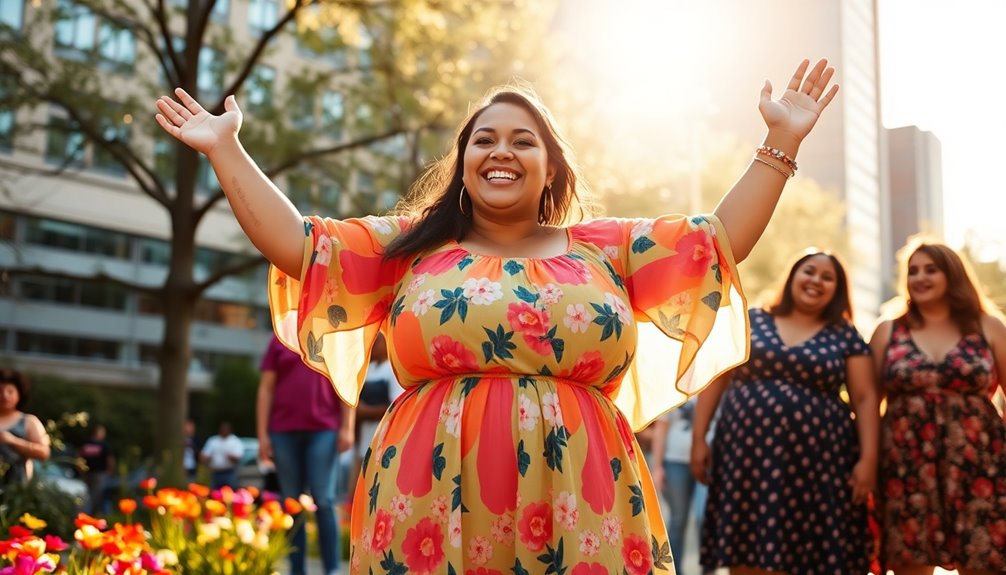
Body positivity plays an essential role in challenging stereotypes around beauty and self-acceptance. The body-positive movement actively promotes acceptance of diverse body types, empowering you to embrace your uniqueness.
When you engage with body-positive content, especially through social media, you often notice improvements in body appreciation and emotional well-being. Stories featuring fat protagonists in young adult literature provide relatable narratives that focus on personal growth, helping to dismantle harmful stereotypes. These diverse representations validate your experiences and encourage broader conversations about body diversity. By advocating for inclusive media, you contribute to an environment that fosters self-acceptance and challenges societal norms, ensuring everyone feels seen and valued for who they are.
Additionally, just as Francie Nolan’s journey in *A Tree Grows in Brooklyn* illustrates resilience in adversity, the body-positive movement emphasizes the strength found in self-acceptance despite societal pressures.
The Impact of Social Media on Body Image Narratives
As social media continues to evolve, its impact on body image narratives becomes increasingly profound. You’re constantly exposed to idealized and edited images that shape unrealistic beauty standards. This “imaginary audience” effect heightens your vulnerability to peer criticism, leading to anxiety about your appearance.
Here’s how social media influences body image:
- Idealized images create unrealistic beauty standards
- Comparisons on social media can worsen body dissatisfaction
- Young women tend to be more affected by these negative comparisons
- The body-positive movement fosters community support and acceptance
- Exposure to body-positive content can improve emotional well-being
Moreover, embracing personal freedom through positive self-talk can mitigate the effects of negative comparisons.
Navigating these narratives can be challenging, but engaging with body-positive messages may help you cultivate a healthier self-image amidst the noise.
Understanding Reader Discrepancies in Body Aspirations
How do you reconcile the gap between societal ideals and the characters you encounter in stories?
Reader discrepancies in body aspirations often stem from the clash between unrealistic beauty standards and the portrayal of larger characters in literature. These characters, often celebrated for their body-positive attitudes, can inspire you to embrace your own body image.
When you read about characters with high body esteem, it can shift your perspective, making larger bodies feel more attainable and relatable.
Reading about characters with high body esteem can transform your perspective, making diverse body types feel more relatable and attainable.
Social comparison theory suggests that comparing yourself to thin ideals can hurt your self-esteem, while seeing diverse body types can enhance satisfaction.
Engaging with these narratives allows for a more inclusive dialogue around body aspirations, challenging stereotypes and promoting understanding.
Future Directions: What’s Next for Body Representation in Literature
As you explore future directions in body representation, consider how expanding character diversity can reshape narratives.
Embracing authentic stories allows readers to connect on a deeper level, challenging stereotypes and promoting acceptance. This shift not only reflects changing societal values but also drives the demand for more inclusive literature, echoing the societal expectations that shape characters’ identities in works like *Giovanni’s Room*.
Expanding Character Diversity
While the growth of fat character representation in literature is encouraging, it’s just the beginning of a much larger movement toward diversity in body types.
To truly embrace body positivity, we need to expand the range of diverse characters in literature. Here are some essential steps for future narratives:
- Showcase various body types beyond fat characters.
- Include stories that highlight cultural differences in body image.
- Explore personal journeys of acceptance and growth across diverse backgrounds.
- Challenge stereotypes and stigma surrounding all body types.
- Advocate for emotional well-being through inclusive narratives.
Embracing Authentic Narratives
Embracing authentic narratives in literature is essential for fostering a deeper connection between readers and diverse body types. The body-positive movement is reshaping storytelling, encouraging authors to portray characters with varied body images.
Young Adult (YA) literature, in particular, is stepping up by featuring fat protagonists who navigate personal growth and acceptance. These stories resonate widely, validating readers’ experiences and challenges.
Research shows that when literature reflects diverse body types, it fosters relatability and inclusivity, breaking the mold of conventional beauty standards. As demand for authentic representation grows, future works will likely explore even deeper themes of body positivity.
Supporting diverse voices will be significant in amplifying these narratives and fostering a richer literary landscape for everyone.
Conclusion
In a world where stories weave the fabric of our perceptions, embracing diverse body narratives becomes essential. As you flip through pages filled with fat protagonists, you’re not just reading—you’re opening up empathy, shattering stereotypes, and celebrating the beauty of all shapes. The rise of body positivity in literature isn’t just a trend; it’s a revolution. So, immerse yourself, and let each story remind you that every body holds a universe of worth waiting to be explored.