
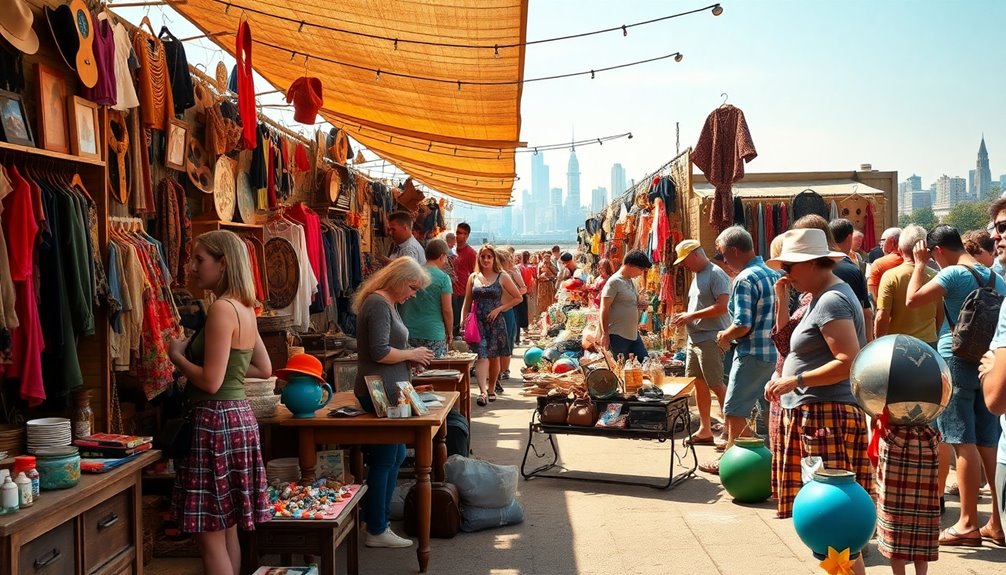
The term “flea market” comes from the French phrase “marché aux puces,” which means “market of fleas.” This colorful name likely reflects the secondhand goods that could carry pests. Emerging in 19th-century Paris, these markets evolved from a negative connotation into vibrant community spaces. They showcase diverse cultural influences and local entrepreneurship. If you’re curious about other quirky etymologies, there’s plenty more to explore!
The Quirky Origins of the Term “Flea Market”
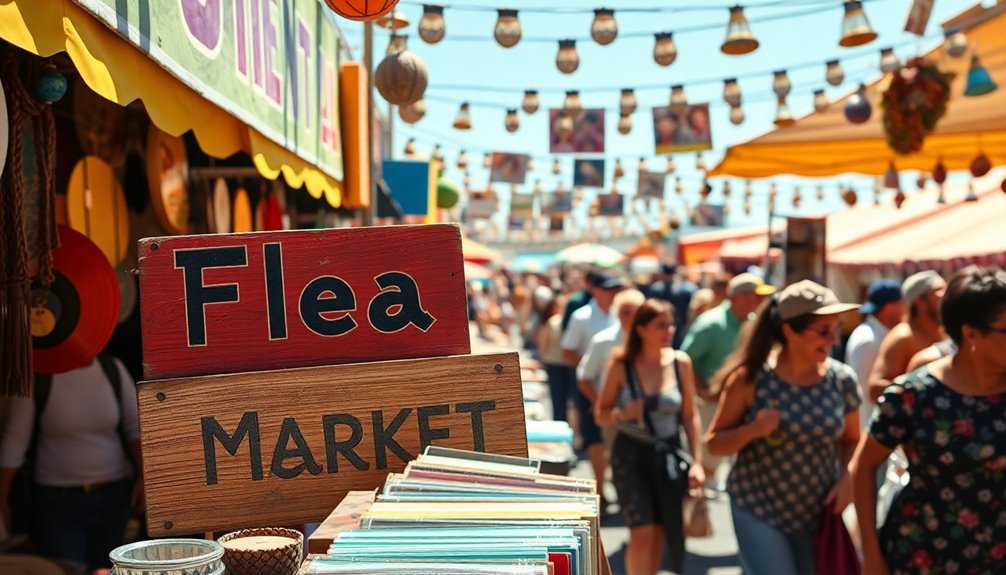
The term “flea market” has an intriguing backstory that might surprise you. It comes from the French phrase “marché aux puces,” meaning “market of fleas,” likely referencing secondhand goods that could have been infested with pests.
The first recorded English usage of “flea market” dates back to 1922, but its roots trace back to Parisian markets in the 1860s. One theory suggests that vendors displaced by urban redevelopment during Napoleon III’s reign “fled” to outdoor stalls, evolving the spelling from “flee” to “flea.”
Today, places like the Saint-Ouen flea market in Paris showcase the term’s historical significance, transforming its quirky origin into a vibrant marketplace for unique and vintage items, shedding any negative connotation over time. Interestingly, this transformation parallels the enduring popularity of mystery novels like Agatha Christie’s works, which continue to captivate audiences around the globe.
What Does “Marché Aux Puces” Really Mean?
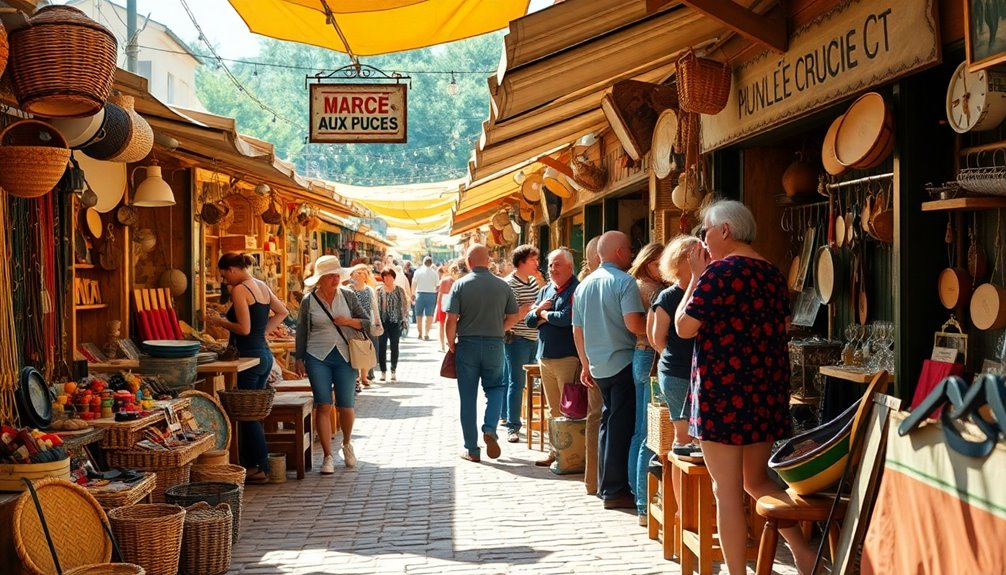
This term originated in Paris during the 1860s, hinting at the secondhand goods that might’ve come with unwelcome guests.
Understanding its roots and historical context reveals a fascinating blend of practicality and urban change. The concept of healing through nature in stories like *The Secret Garden* reflects how environments can transform perceptions, similar to the vibrant atmosphere of a flea market.
Etymology of “Marché Aux Puces”
“Marché aux puces,” translating to “market of fleas,” captures the essence of a unique shopping experience rooted in history.
The term originates from Paris, particularly linked to the Saint-Ouen market, which blossomed in the 1860s as a hub for antique and secondhand goods. The name likely reflects the worries of flea infestations associated with the old furniture and used clothing sold there.
Some suggest it connects to merchants displaced by urban renovations during Napoleon III’s era, leading to a shift from “flee” to “flea.”
Despite its odd name, the marché aux puces has evolved into a vibrant marketplace, offering you a treasure trove of vintage and collectible items that tell stories of the past.
Historical Market Practices
While exploring the historical significance of “marché aux puces,” you’ll uncover a fascinating blend of commerce and community.
This term, meaning “market of fleas,” emerged in Paris during the 1860s, referring to markets that sold second-hand goods, often including old furniture that might be infested with fleas.
As urban redevelopment under Napoleon III displaced many vendors, these flea markets became crucial hubs for second-hand goods dealers.
Saint-Ouen, one of the world’s largest flea markets, showcases the enduring appeal of antique and second-hand items.
By 1887, the term “flea market” appeared in English newspapers, marking its spread beyond France.
Today, these markets have evolved but still capture the essence of community and resourcefulness.
Historical Context: Flea Markets in 19th Century Paris
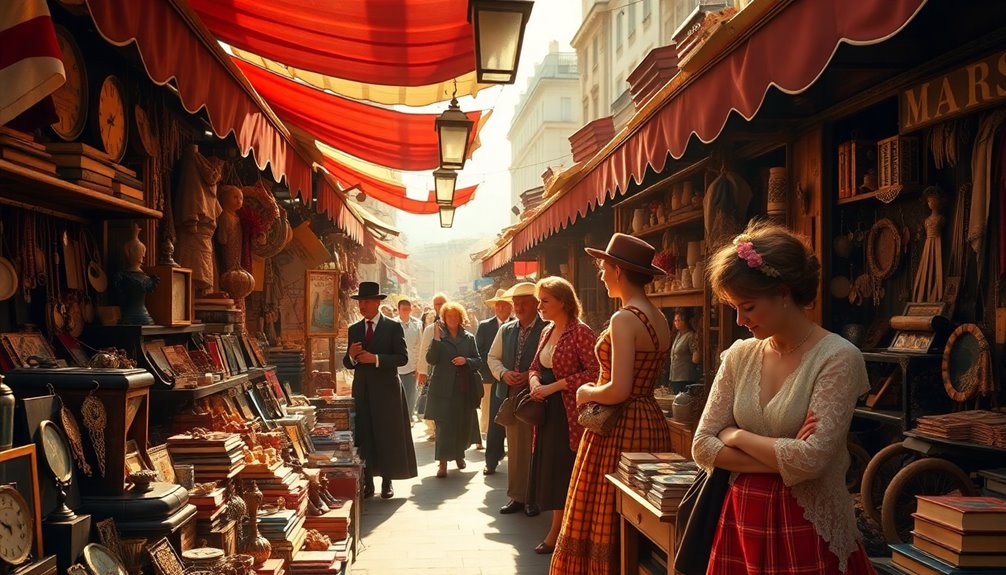
As shop owners faced displacement due to urban redevelopment under Napoleon III, many moved to outdoor stalls, selling second-hand goods that often came with a reputation for harboring pests.
The Saint-Ouen flea market, founded in the 1860s, became a bustling center for antique and second-hand dealers, solidifying the term’s popularity.
These markets were filled with discarded furniture, clothing, and various items, reflecting the socio-economic conditions of the time. Additionally, the societal impact of systemic racism can be observed in various urban settings, underscoring how marginalized groups often navigate economic challenges.
Theories Behind the Name: Fleas or Flee?
The rise of flea markets in Paris not only transformed the urban landscape but also gave birth to a fascinating etymological debate. The term “flea market,” derived from the French “marché aux puces,” raises questions about its origins.
The emergence of Parisian flea markets sparked a captivating exploration of the term “flea market” and its intriguing origins.
You might consider these theories:
- Old furniture and clothing sold at the market could have harbored fleas.
- The name might stem from vendors who’d to flee to outdoor stalls during urban renovations.
- Historical references in the U.S. date back to the 1880s, showing the term’s evolution.
- Linguists generally support the connection to the Parisian bazaar, but alternative theories reflect how language changes over time.
This intriguing mix of ideas keeps the conversation about “flea markets” lively. Additionally, the evolution of language mirrors systemic racism and its impact on society, as discussed in Richard Wright’s *Native Son*.
The First American Flea Market: a Glimpse Into History
Although the exact location remains a mystery, the first American flea market is believed to have opened around 1873 in Texas. This initial market marked the origin of flea markets in the U.S., setting the stage for their popularity.
From humble beginnings, it transformed into a vibrant space where people could buy and sell a variety of goods, including antiques and collectibles.
Today, you’ll find an estimated 5,000 flea markets operating across the nation, attracting millions of buyers and sellers each year.
These markets not only reflect a growing appreciation for sustainable consumption but also highlight local entrepreneurship. The resilience of immigrant families in seeking better opportunities parallels the spirit of community found in flea markets.
The first American flea market truly laid the groundwork for a unique cultural phenomenon that still thrives today.
How Flea Markets Evolved Over Time
Flea markets have come a long way since that first one opened in Texas around 1873. Initially viewed with skepticism, they gained popularity in the 1960s, shifting into vibrant venues for antiques and vintage treasures.
As they developed, you’d notice:
- A diverse range of secondhand goods, including old furniture
- Adaptations to changing societal practices and urban density
- Emphasis on sustainable practices, recycling goods
- A mix of formats like swap meets and neighborhood garage sales
This evolution reflects a long-standing tradition of communal commerce, where you can find unique items while promoting eco-friendly shopping. Additionally, similar to how hidden histories have reshaped our understanding of the past, flea markets reveal the stories and cultural significance behind everyday items.
Today, with over 5,000 flea markets in the U.S., they’ve become essential parts of local culture, proving their worth in modern society.
Regional Variations: Names for Flea Markets Around the World
Flea markets go by many names around the world, each reflecting local culture.
In Australia, you might hear “trash and treasure markets,” while in the U.K., they’re often called “car boot sales.”
These unique terms showcase how different regions interpret the concept of buying and selling in vibrant, communal spaces. Additionally, small-town charm in literature often mirrors the vibrant community interactions found in flea markets.
Cultural Names for Markets
When exploring markets around the world, you’ll find that names and concepts vary greatly, reflecting local cultures and traditions.
These cultural names for markets reveal unique aspects of each region:
- In the U.S., outdoor flea markets often go by “swap meets,” while indoor versions resemble bustling bazaars.
- Australians refer to them as “trash and treasure markets,” emphasizing the eclectic goods.
- In the Philippines, the term “tianggê,” derived from Mexican Spanish, showcases cultural influences.
- The U.K. calls them “car boot sales” when sellers set up from vehicle trunks, with indoor events known as jumble sales.
Each of these terms illustrates the vibrant tapestry of cultural names for flea markets worldwide.
Unique Local Terminology
Markets around the globe showcase a fascinating array of local terminology that reflects their unique cultural identities.
In the U.S., you might hear “swap meets,” where bartering is the name of the game. Meanwhile, in Australia, they’re known as “trash and treasure markets,” highlighting the thrill of finding valuable items among discarded goods.
In the Philippines, the term “tianggê” comes from Mexican Spanish, showcasing cultural exchange. Over in the U.K., “car boot sales” take place as sellers display items from their trunks, while “jumble sales” are popular indoors.
Finally, the German word “Flohmarkt” echoes the English term, reminding us of secondhand goods—potentially infested with fleas.
These unique local terminologies enrich the concept of the flea market worldwide.
Unique Cultural Significance of Flea Markets
While exploring the vibrant atmosphere of flea markets, you’ll discover they serve as crucial community hubs that foster social interaction and local entrepreneurship.
These markets reflect local culture and history, showcasing a diverse array of items, including old furniture and handmade crafts.
Flea markets embody local culture and history, offering a rich tapestry of old furniture and handmade crafts.
Consider the significance of flea markets:
- They connect communities through shared experiences.
- They highlight regional craftsmanship and heritage.
- They promote sustainable consumption by encouraging reuse and recycling.
- They attract millions of buyers and sellers annually, supporting local economies.
- Flea markets embody the spirit of the American Dream, allowing individuals to pursue their aspirations through entrepreneurship.
From the bustling Saint-Ouen flea market in Paris to your neighborhood market, these venues symbolize a unique blend of culture and commerce, making them fundamental to our social fabric.
What Can You Find at a Flea Market?
Flea markets offer a treasure trove of unique finds that can surprise even the most seasoned shopper. You’ll encounter a diverse array of secondhand goods, from old furniture and vintage clothing to quirky collectibles.
Each booth showcases the creativity and resourcefulness of local vendors, making every visit a new adventure. Depending on where you are, some flea markets specialize in antiques or handmade crafts, giving you a taste of local culture.
As you browse, don’t forget to check out the food stalls, where local cuisine adds to the experience. Plus, the thrill of bargaining allows you to negotiate prices, ensuring you leave with not only great items but also a sense of accomplishment. Additionally, visiting a unique and thematic bookshop can enhance your exploration of local culture and creativity.
Happy hunting!
The Thrill of the Hunt: Why Do People Love Flea Markets?
When you step into a flea market, you’re not just shopping; you’re on a treasure hunt.
The excitement of uncovering unique finds and connecting with local vendors creates a vibrant atmosphere that’s hard to resist.
Plus, every item tells a story, making each visit a chance to discover something new and meaningful. Additionally, much like the strong female protagonists in historical fiction, these markets showcase resilience and creativity in the face of adversity.
Unique Treasures Await Discovery
Amidst the bustling aisles of a flea market, you’ll discover a treasure trove of unique and vintage items just waiting to be unearthed. The thrill of the hunt keeps millions returning year after year, keen to find:
- Antiques that whisper stories of the past
- Collectibles that spark joy and nostalgia
- Handcrafted goods that showcase local talent
- Bargains that make your wallet smile
Every corner presents an opportunity to discover something one-of-a-kind, enhancing your shopping experience.
Unlike traditional retail, a flea market invites you to explore history through each item. Whether you’re searching for a hidden gem or simply enjoying the vibrant atmosphere, the allure of unique treasures makes flea markets a beloved destination for many.
Community Connections and Stories
Have you ever wondered why flea markets draw such a diverse crowd? These vibrant community hubs create connections among people from all walks of life, enthusiastic to browse and buy unique items.
The thrill of the hunt keeps you coming back, as you never know what unexpected treasures await—whether it’s an antique vase or vintage clothing. Bargaining adds an interactive twist, fostering personalized connections between buyers and sellers.
Each flea market reflects local culture and history, offering insights into the region’s unique character. With over 5,000 flea markets across the U.S., millions participate in this communal experience, highlighting its significance in local economies and the rich stories shared among visitors.
Modern Perceptions: Flea Markets Today
Flea markets today are vibrant social hubs that draw millions of visitors each year, enthusiastic to discover unique vintage finds and second-hand treasures.
Modern perceptions of flea markets have shifted positively, as shoppers enjoy the thrill of uncovering unusual items.
Modern views on flea markets have transformed, with shoppers reveling in the excitement of discovering one-of-a-kind treasures.
Here’s what you can expect at your local flea market:
- A diverse range of goods, from antiques to handmade crafts
- Unique collectibles that often tell a story
- Affordable clothing options that cater to various styles
- Opportunities to support local entrepreneurs and small businesses
The rise of online platforms has only enhanced this experience, allowing vendors to reach more customers while preserving the communal atmosphere that makes flea markets special.
Further Reading: Exploring More Odd Etymologies
While diving into the fascinating world of etymology, you’ll uncover a treasure trove of quirky origins behind everyday words and phrases.
Take “flea market,” for instance; it comes from the French “le marché aux puces,” meaning “market with fleas.” This name hints at its historical ties to secondhand goods that might’ve housed pests.
If you’re intrigued, explore similar terms from around the globe, like “tianggê” in the Philippines and “Flohmarkt” in Germany, each reflecting local culture.
You might also stumble upon the alternative theory that connects “flea market” to displaced vendors in 19th-century Paris, evolving from “flee market.”
Each term reveals unique stories, enriching your understanding of language and commerce. Happy exploring!
Conclusion
So, next time you wander through a flea market, remember its quirky name and rich history. You might stumble upon a vintage treasure or a strange trinket that sparks a memory, connecting you to the past. Isn’t it funny how something as simple as shopping can lead you to discover the oddities of language? Who knew that chasing down a unique find could also unravel the fascinating story behind its name? Happy hunting!