

The ambiguous ending of *John Wick: Chapter 4* leaves you questioning whether John Wick really died. It plays into the narrative trope of unreliable deaths, which keeps you engaged and speculating about a character’s fate. The gravestone hints at a potential rebirth and closure from Wick’s violent past. This storytelling choice stirs up a whirlwind of theories about his survival and what’s next for him. There’s much more to uncover about the implications of his fate.
The Ambiguous Ending of John Wick: Chapter 4
As you reach the end of John Wick: Chapter 4, you’re left with a sense of uncertainty about Wick’s fate.
The Chapter 4 ending presents a gravestone that hints at a peaceful resolution, yet it also raises questions about whether John Wick really died.
Director Chad Stahelski confirmed the filming of an alternate ending where Wick survives, but test audiences preferred the more ambiguous theatrical version.
Director Chad Stahelski revealed an alternate ending where Wick survives, but audiences favored the more ambiguous theatrical conclusion.
This choice emphasizes the intentional uncertainty surrounding his fate.
Throughout the series, Wick has endured injuries that suggest he could have survived similar situations.
This unresolved nature invites you to interpret Wick’s fate, sparking discussion about potential future developments in the franchise.
Did he live, or is this truly the end?
Much like the iconic twist ending in Agatha Christie’s mystery novels, the ambiguity surrounding Wick’s fate leaves viewers pondering the possibilities.
What Does the Gravestone Symbolize for John Wick?
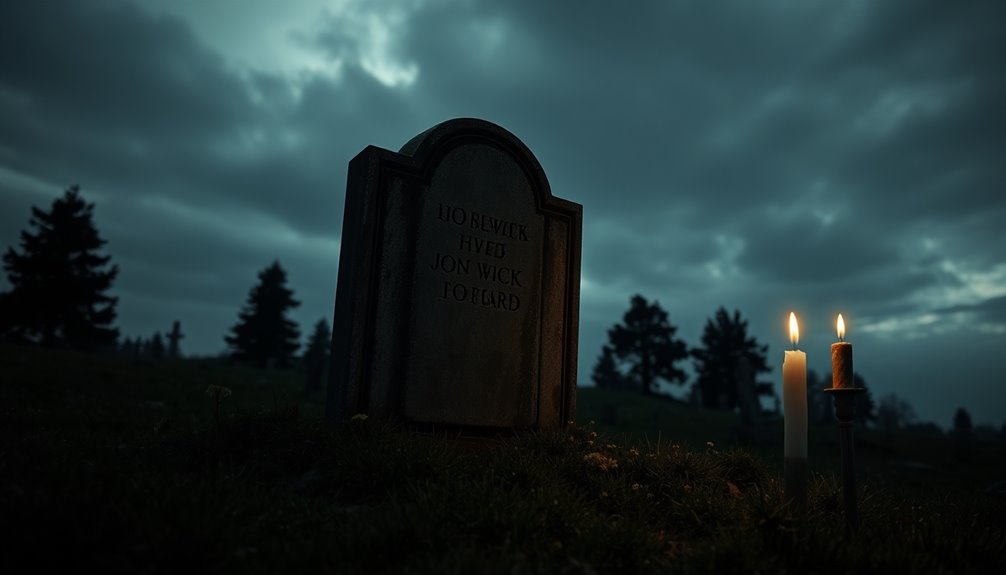
The gravestone in John Wick: Chapter 4 offers a powerful symbol of Wick’s transformation and possible rebirth. It signifies more than just death; it embodies key aspects of his journey:
- Closure from Violence: The gravestone suggests the end of the assassin’s life, representing Wick’s desire to leave his chaotic past behind.
- Search for Normalcy: It reflects Wick’s yearning for a peaceful life, a stark contrast to his violent history.
- Narrative Potential: By leaving the gravestone’s symbolism open to interpretation, filmmakers create a narrative space for viewers to ponder Wick’s fate and potential return.
Ultimately, the gravestone encapsulates John Wick’s struggle between his past and the hope for a new beginning, inviting deeper engagement with his character arc. The concept of healing through storytelling underscores how Wick’s journey can resonate with audiences, offering a profound exploration of redemption.
Exploring the Narrative Trope of Unreliable Deaths
You might notice that unreliable deaths are a common storytelling device, keeping you guessing about a character’s true fate. This uncertainty not only heightens your emotional engagement but also opens up exciting possibilities for future installments. With John Wick’s ambiguous ending, the door remains wide open for more adventures, inviting you to speculate on what could come next. This narrative technique resonates with themes of racial injustice in literature, where characters’ fates often reflect deeper societal issues.
Common Narrative Devices
While some stories seem to conclude with a character’s death, many filmmakers and writers employ the narrative trope of unreliable deaths to keep audiences guessing.
Here are three common devices that enhance this technique:
- Ambiguous Endings: Leaving a character’s fate uncertain invites discussion and speculation, much like John Wick’s supposed death in Chapter 4.
- Multiple Endings: Filmmakers may film various outcomes, allowing them to choose the most impactful version, as seen with John Wick’s living and dead scenarios.
- Symbolic Gravestones: These signify a character’s past while hinting at future possibilities, reinforcing the idea that death is a narrative device, not a finality.
Using these devices, stories explore themes of redemption and identity, promoting character evolution and keeping audiences engaged.
Impact on Audience Engagement
Unreliable deaths, like the one presented in John Wick: Chapter 4, markedly boost audience engagement by stirring discussions and theories about a character’s fate.
The film’s ambiguous ending, hinting at John Wick’s death while leaving room for speculation, invites you to plunge into various interpretations. The gravestone scene symbolizes Wick’s shift from violence to a potential peaceful life, deepening your emotional investment.
Filmmakers crafted this open-ended conclusion to spark ongoing interest in the franchise, knowing fans would engage with each installment. The allure of the “unreliable death” trope encourages you to revisit the film, analyzing clues about Wick’s survival.
This ambiguity fosters a community of theory crafting, as audiences share diverse interpretations of Wick’s fate.
Future Storytelling Possibilities
As the dust settles on John Wick: Chapter 4, the unresolved fate of the titular character opens a treasure trove of storytelling possibilities that extend beyond mere suspense.
The narrative device of his apparent death invites exploration of themes like resurrection and redemption. Here are three potential directions for future storytelling:
- Wick’s Return: Imagine John Wick resurrecting to confront new threats from the High Table, redefining his identity in the process.
- Character Evolution: Future installments could investigate Wick’s transformation, showcasing his struggles to escape his past.
- Legacy and Impact: Wick’s gravestone might symbolize a new beginning, leading to a ripple effect on other characters and conflicts within the assassin world.
These possibilities keep audiences engaged, enthusiastic to see if Wick truly lives on.
What Are the Implications of John Wick’s Possible Survival?
If John Wick survived, it opens up exciting possibilities for narrative continuity and development. You can imagine how fan theories might flourish, speculating on his next steps and the themes of redemption that could emerge. His potential return could reshape the franchise and keep audiences engaged in new and unexpected ways. This possibility of survival mirrors the complexities of systemic oppression that Ta-Nehisi Coates explores, where resilience and the struggle against overwhelming odds become central to the narrative.
Narrative Continuity and Development
While John Wick’s fate remains uncertain, the implications of his possible survival introduce fascinating narrative possibilities for the franchise. The filmmakers’ choice to leave Wick’s fate open-ended enhances narrative continuity, allowing for deeper character exploration.
Here are three key implications of his potential survival:
- Redemption Arc: Wick could pursue a path of redemption, moving away from his assassin past.
- Identity Exploration: His journey can explore themes of identity, as he reconciles his violent history with a desire for normalcy.
- Franchise Expansion: With John Wick 5 confirmed, his survival enables new storylines and character interactions, keeping fans engaged and speculating.
Ultimately, John Wick’s narrative continuity hinges on this unresolved tension, engaging audiences as they ponder his next chapter.
Fan Theories and Speculation
Could John Wick really have survived after all? Many fans think so, especially considering the non-lethal nature of his injuries during the duel with Caine. The alternate ending filmed, showing Wick alive, suggests the filmmakers wanted to keep his fate open for speculation. The gravestone at the film’s conclusion symbolizes both his past and the possibility of returning to the assassin lifestyle. With John Wick 5 confirmed and unresolved plot points still lingering, the narrative will likely continue to explore his journey. This ambiguity has ignited lively discussions among fans, enhancing engagement with the franchise and allowing for diverse interpretations of Wick’s future. Ultimately, John Wick’s survival might just be the twist that keeps fans invested.
How Does John Wick’s Fate Mirror Classic Storytelling Techniques?
As John Wick’s journey reaches its climax, his fate resonates deeply with classic storytelling techniques that emphasize transformation and the struggle for redemption.
His narrative reflects timeless themes through:
Wick’s journey encapsulates timeless themes of identity transformation, ambiguous endings, and the confrontation of one’s past.
- Identity Transformation: Wick’s gravestone symbolizes the death of his assassin persona, mirroring characters who leave their past behind for a chance at a new life.
- Ambiguous Endings: The open-ended conclusion invites speculation, allowing for future exploration of his character arc, a common technique that keeps audiences engaged.
- Facing the Past: Wick’s apparent death serves as closure but hints at future possibilities, embodying the classic trope of characters confronting their histories before moving forward.
Additionally, the themes of systemic racism in Richard Wright’s *Native Son* illustrate how characters grapple with their identities and pasts, paralleling Wick’s complex journey.
This blend of redemption and identity creates a compelling narrative that resonates with timeless storytelling.
Audience Reactions to John Wick’s Possible Death
You might feel a mix of emotions about John Wick’s possible death, as many fans share your disbelief and hope for his survival.
This uncertainty sparks plenty of speculation about future plots, leaving you wondering how the story could unfold.
As conversations heat up online, it’s clear that Wick’s fate has ignited a passionate dialogue among fans enthusiastic for what’s next. The legacy of unsung heroes in storytelling often mirrors the complexities of character arcs and audience engagement.
Mixed Emotions Among Fans
While many fans grappled with their feelings about John Wick’s apparent death in Chapter 4, the emotional weight of his final moments left a lasting impact.
You might find yourself torn between grief and hope, as the film’s ambiguous fate sparked discussions. Here are three key reactions from the audience:
- Grief: Many mourned the loss of a beloved character, feeling that his story had ended.
- Speculation: Others theorized that his death could be faked, yearning for a chance at peace.
- Excitement for John Wick 5: The confirmation of a fifth film reignited hope, suggesting his journey may not be over.
This mix of emotions highlights the profound connection fans have with John Wick and his uncertain future.
Speculation About Future Plots
The uncertainty surrounding John Wick’s fate has sparked a wave of speculation about future plots in the franchise. Fans are divided, some clinging to hope that Wick faked his death for a chance at peace.
The gravestone scene in John Wick: Chapter 4 invites this speculation, leaving you questioning whether he’s truly gone. Online discussions are buzzing with theories, and excitement grows for the confirmed John Wick 5.
Many expect it to tackle unresolved storylines and dive deeper into Wick’s journey. The filmmakers’ choice to keep his fate ambiguous aligns with classic storytelling, enhancing your engagement and setting the stage for thrilling new arcs.
Will Wick return, or is this the end? Only time will tell.
What Does Keanu Reeves Have to Say About Wick’s Future?
What does Keanu Reeves envision for John Wick’s future? He hopes to see Wick find peace and emotional closure while keeping the door open for more storytelling.
Here are three key points he emphasizes:
- Fulfillment: Reeves desires a satisfying resolution for Wick, allowing the character to evolve meaningfully.
- Physical Demands: He acknowledges the challenges of portraying Wick as he ages, which may influence future storytelling and character arcs.
- Open Endings: The conclusion of Chapter 4 was crafted intentionally to pave the way for potential sequels, indicating a willingness to further explore Wick’s journey.
Reeves’ insights reflect a balance between wrapping up Wick’s story and the exciting possibilities that lie ahead in the franchise. Additionally, the character’s journey parallels the themes of systemic racism found in Richard Wright’s “Native Son,” highlighting the impact of external forces on personal identity.
Analyzing the Creative Choices Behind Alternate Endings
How do creative choices shape the narratives we love? In the case of John Wick: Chapter 4, the decision to favor a theatrical ending showcasing Wick’s apparent death over an alternate ending where he survives is pivotal.
Director Chad Stahelski confirmed this deliberate choice, emphasizing the emotional impact of a conclusive fate. This approach aligns with classic storytelling tropes, offering satisfying character resolution while leaving room for speculation. The exploration of moral complexity in storytelling deepens the audience’s connection to characters and their journeys.
Fans engage more deeply with the franchise, discussing Wick’s fate and the implications of his perceived death. The confirmation of John Wick 5 hints at the filmmakers’ intentions to keep the door open for Wick’s return, blending emotional weight with the thrill of uncertainty in storytelling.
The Role of Action in Reinforcing John Wick’s Legacy
While exploring the John Wick franchise, you’ll quickly notice that action isn’t just a spectacle; it’s integral to the character’s identity and legacy. The meticulously choreographed sequences not only showcase Wick’s formidable skills but also connect audiences to his emotional journey.
Here are three key aspects of action that reinforce his legacy:
- Practical Effects: Director Chad Stahelski’s emphasis on real stunts creates a visceral experience that resonates deeply with viewers.
- Escalating Stakes: Each installment raises the intensity, with Chapter 4 featuring complex fight choreography and diverse weaponry that solidifies Wick’s reputation.
- Emotional Weight: The action sequences, particularly in moments of loss, enhance the narrative significance, making you feel every punch and loss alongside Wick. Moreover, the psychological depth of the character’s journey adds layers to the action, making it more than just physical confrontation.
How Do Future Projects Expand the John Wick Universe?
The John Wick franchise is set to expand considerably with several upcoming projects that promise to enrich its already intricate universe.
A prequel animated series is in the works, diving into various storylines and enhancing the lore. Meanwhile, the confirmed spinoff film “Ballerina” will introduce a new character while linking back to familiar elements of the Wick world.
Additionally, Caine, a character from Chapter 4, will star in his own spinoff, exploring his motivations and experiences as an assassin.
These projects aim to provide a deeper understanding of the characters, making the universe more immersive. As with the themes of love, loss, and resilience found in classic narratives like *Gone With the Wind*, the John Wick universe continues to evolve, ensuring fans remain engaged and intrigued.
With a mix of prequels and spinoffs, the franchise continues to evolve, ensuring fans remain engaged and intrigued.
What Is the Significance of Caine’s Post-Credits Scene for the Franchise?
Caine’s post-credits scene in John Wick: Chapter 4 serves as a pivotal moment for both his character and the franchise as a whole.
This scene sets the stage for future narratives, emphasizing key elements:
- Obligations to the High Table: Caine’s struggle highlights the complexities of leaving the assassin life behind.
- Character Development: His emotional journey, especially after killing Koji, adds depth and stakes to his choices.
- Spinoff Film Tease: Set for 2025, the upcoming film promises to explore Caine’s motivations and relationship with his daughter, connecting his story to the broader John Wick universe.
Ultimately, this moment keeps the franchise interconnected, paving the way for exciting developments in Caine’s journey.
Conclusion
In the shadowy corners of cinematic storytelling, John Wick’s fate lingers like a whispered secret. Just as Gandalf defied death to return as the White Wizard, Wick’s ambiguous end invites speculation and hope. Whether he’s truly gone or biding his time in the underworld, the allure of his legacy remains potent. As you ponder his potential return, remember: in this universe, the line between life and death is as blurred as the path of vengeance he’s chosen.