

Before the printing press, books were crafted by skilled scribes who carefully copied texts by hand on materials like parchment and vellum. They used tools like quills and ink derived from natural sources, producing unique and valuable manuscripts. Sharing occurred through networks of monasteries and scriptoria, where these manuscripts were preserved and circulated. Illuminations added beauty and meaning to the texts. If you’re curious about the techniques and materials that shaped this book culture, there’s more to uncover.
The Art of Manuscript Creation: Techniques and Tools
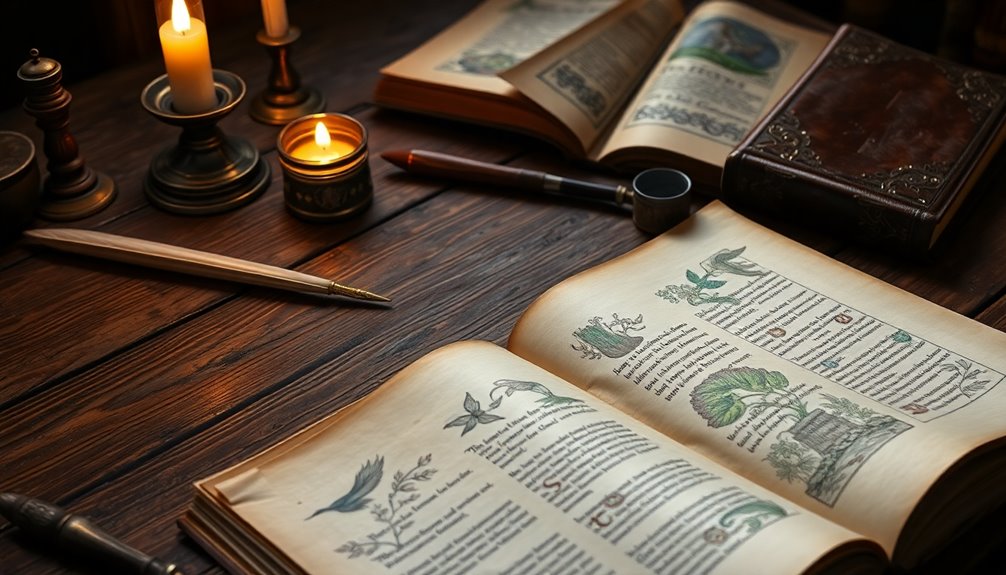
When you explore the art of manuscript creation, you’ll discover a meticulous process that combines skill, patience, and a variety of tools.
Skilled scribes crafted texts on durable materials like parchment or vellum, using quills dipped in ink made from natural substances. They employed techniques such as block lettering for formal writings and cursive for personal notes.
The creation of illuminated manuscripts added an extra layer of beauty, with decorative elements like gold leaf and intricate illustrations that enhanced the text’s significance.
This labor-intensive craft required months of careful copying, resulting in unique and valuable books. Often commissioned by wealthy patrons or religious institutions, each manuscript served to preserve and disseminate knowledge across generations. Additionally, the importance of self-reflection in personal growth echoes through the painstaking process of creating each manuscript, as artisans continually refined their skills and techniques.
The Role of Scribes in Book Production

Scribes played a vital role in the production of books before the printing press, transforming written communication through their dedication and skill.
These highly skilled individuals meticulously copied texts by hand, often in monastic scriptoria or royal households. Their work in manuscript production required precision, using quills, ink, and parchment to create clear, durable texts.
Highly skilled scribes meticulously crafted texts by hand, using quills and ink to produce clear, lasting manuscripts.
Many scribes specialized in specific genres, like religious manuscripts or legal documents, honing their expertise. They didn’t just copy; they preserved and disseminated knowledge, translating works into vernacular languages for broader audiences.
The labor-intensive nature of this manuscript production made books rare and costly, emphasizing the immense value of a scribe’s work in medieval society. Additionally, scribes often created historical mystery novels, which contributed to the preservation of cultural narratives and entertainment in their time.
Understanding Different Formats: Scrolls, Codices, and Wax Tablets

Throughout history, various formats for written communication have evolved, each with its own advantages and limitations.
Scrolls were the earliest form of books, made from materials like papyrus, featuring text in columns. While they held significant information, they required cumbersome rolling for storage and reference.
The codex emerged around the 1st century CE, consisting of individual sheets bound at the spine. This format offered greater portability and more writing space, revolutionizing how you accessed information.
Additionally, wax tablets, used since the first millennium B.C.E., allowed easy erasure of writings with a stylus, though they lacked permanence.
Each format, from scrolls to codices, showcased the artistry of skilled scribes, making them unique artifacts of their time. Notably, the popularity of texts, such as Agatha Christie’s novels, highlights the enduring impact of written works on society.
The Importance of Illumination in Manuscripts
Illumination in manuscripts not only enhances their visual appeal but also underscores the significance of the text within. These artistic embellishments—featuring gold, silver, and vibrant colors—transform ordinary pages into extraordinary works of art.
Illuminated manuscripts often boast intricate borders, decorated initials, and illustrations that serve both decorative and educational purposes. During the Middle Ages, especially in religious texts like Bibles and Books of Hours, illumination aimed to inspire devotion and reflect the divine nature of the content.
Skilled artisans known as illuminators worked diligently in monastic scriptoria, making this a communal effort. Despite their beauty, the fragile materials and intricate designs of illuminated manuscripts pose preservation challenges, making them invaluable artifacts of medieval culture and artistry. Additionally, much like the power of words in “The Book Thief,” these illuminated texts served as a means of preserving and sharing stories that connect humanity across generations.
How Were Manuscripts Shared and Distributed?
When you think about how manuscripts were shared, consider the essential role of skilled scribes who painstakingly copied texts by hand.
These copies often circulated among monasteries, creating networks of knowledge that spanned vast regions.
You’ll see that this meticulous process not only preserved important works but also helped distribute them widely. This practice echoes the transformative power of education as empowerment, illustrating how knowledge was shared and valued even in the absence of modern printing techniques.
Manuscript Copying Techniques
Manuscripts were primarily shared and distributed through a network of dedicated individuals and institutions, with scribes laboring to hand-copy texts meticulously on parchment or vellum.
This manuscript copying process often took months or even years for a single volume, depending on its complexity. Scribes employed various techniques, like block lettering for formal texts and cursive writing for personal documents, tailoring their style to the manuscript’s purpose.
Many of these works originated in monastic scriptoria, where monks dedicated themselves to preserving religious and classical texts.
Illuminated manuscripts, adorned with decorative elements and illustrations, not only attracted readers but also elevated the status of the texts, ensuring their significance across cultural contexts.
Distribution Among Monasteries
Although the process of sharing manuscripts among monasteries was labor-intensive, it played an essential role in preserving knowledge during the Middle Ages. Monks meticulously transcribed texts by hand, ensuring that both religious and classical works survived.
Monasteries served as centers of learning, facilitating the exchange of manuscripts through networks of correspondence and visits. Scriptoriums allowed for organized manuscript production, with monks assigned specific roles for copying, illuminating, and binding.
While distribution often remained within ecclesiastical contexts, some manuscripts were loaned to other institutions in need. Monastic libraries cataloged and maintained collections, promoting study and scholarship.
This careful sharing of manuscripts helped sustain intellectual life and fostered a vibrant exchange of ideas among religious communities.
The Influence of Monastic Culture on Book Preservation
While the chaos of the Middle Ages threatened the survival of written works, monastic communities emerged as bastions of preservation. These dedicated groups meticulously copied manuscripts, ensuring the survival of classical literature and religious texts. Monks, trained in reading and writing, worked in scriptoria—designated areas within monasteries tailored for book production. They used high-quality materials like vellum and ink, which enhanced the durability and legibility of the books they created. Furthermore, the practice of illuminating manuscripts not only made these texts visually stunning but also showcased the spiritual devotion of the scribes. Through their efforts, monastic communities played an invaluable role in safeguarding the written word, allowing knowledge to endure through turbulent times. This preservation mirrors the power of storytelling that is evident in works like ‘The Book Thief.’
The Transition to Printed Texts: Early Experiments
As the demand for books grew, early experiments in printing began to emerge, paving the way for a revolutionary shift in how texts were produced and shared. One notable method was woodblock printing, where artisans carved text into wooden blocks and pressed them onto paper. This innovation allowed for some reproduction of printed books before movable type was introduced.
- The Diamond Sutra, printed in 868 CE, is the oldest known dated printed book.
- Manuscripts, created by skilled scribes, were time-consuming and limited in availability.
- Bound manuscripts improved accessibility, making texts easier to navigate compared to scrolls.
These early printing methods set the stage for future advancements, transforming how knowledge was disseminated across cultures. The importance of collective action and unity in sharing knowledge can be likened to the solidarity displayed by WWII resistance movements in their fight against oppression.
The Impact of the Printing Press on Literature Accessibility
The printing press changed everything about how you access literature.
Suddenly, books weren’t just for the elite; they were available to anyone who could read, opening the door to diverse voices and ideas.
You could find works in your own language, making literature more relatable and enriching for everyone. This democratization of literature parallels the way systemic oppression in society has historically marginalized voices, as seen in works like Native Son.
Increased Book Availability
With the invention of the printing press in the 15th century, book availability transformed dramatically, making literature accessible to many who’d previously been excluded.
This breakthrough in book printing enabled mass production, shifting from rare, hand-copied texts to widely distributed works. The first printed book, the Gutenberg Bible, set the stage for a literary revolution.
- Books became affordable for the emerging middle class.
- A surge in printed materials contributed to the spread of ideas during the Renaissance and Reformation.
- By the end of the 16th century, over 10 million printed books circulated in Europe.
This significant change in the history of books reshaped literacy rates and cultural engagement, paving the way for a more informed society.
Diverse Literary Expression
Diverse literary expression flourished after the printing press revolutionized how books were produced and distributed.
Before this innovation, handwritten manuscripts were rare and costly, limiting literature’s reach to the wealthy elite.
With the introduction of printing in the mid-15th century, book production skyrocketed, making literature accessible to the general public.
The Great Bible, printed in 1539, exemplified this shift, challenging the exclusivity of Latin texts.
As printed materials became widely available during the Renaissance, public interest in literature and the arts surged, leading to a rich variety of genres, including poetry, plays, and prose.
Shakespeare’s works, once ephemeral, gained permanence and a broader readership, solidifying their impact on English literature and culture for generations to come.
Rise of Vernacular Languages
Literature’s accessibility dramatically changed as the printing press spread throughout Europe, paving the way for vernacular languages to flourish.
With the ability to mass-produce books made in local languages, texts became more approachable for everyone. This shift transformed how people engaged with literature and learning.
- The Great Bible, printed in 1539, showcased English as a legitimate language for religious texts.
- Increased availability of affordable printed materials sparked interest in native languages and classical literature.
- Authors could now reach wider audiences, diversifying literature and establishing regional traditions.
As a result, playwrights like Shakespeare emerged, making impactful works accessible in the vernacular, solidifying a distinct English literary canon.
The Significance of Incunabula in Book History
As the printing press emerged in the late 15th century, incunabula—books printed before 1501—marked a revolutionary shift in how knowledge was disseminated.
These early texts, derived from the Latin word for “cradle,” symbolize the infancy of the printing revolution, moving away from hand-copied manuscripts. Notable examples, like the Gutenberg Bible, set the standard for future book production, showcasing the innovative use of movable type.
Incunabula often combined text and illustrations, preserving manuscript traditions with illuminated initials and decorative borders. Their proliferation considerably increased access to literature, fueling rising literacy rates and the spread of ideas during the Renaissance and Reformation. Furthermore, the impact of incunabula can be compared to the way that systemic racism influenced literary narratives in works like Richard Wright’s *Native Son*, highlighting how societal structures shape communication and understanding.
You can see how incunabula played an essential role in shaping modern publishing practices and expanding knowledge.
The Legacy of Pre-Printing Book Culture on Modern Publishing
You mightn’t realize it, but the techniques used in manuscript production still shape modern publishing today.
From the elegance of cursive writing to the artistry of illuminated texts, these early practices influence how we create and present books.
As you explore the challenges of preserving these historical works, it’s clear that their legacy continues to resonate in our literary culture. Moreover, the ethical implications of medical research demonstrate how historical narratives can shape contemporary discussions around authorship and ownership in publishing.
Manuscript Techniques Influence Today
While many may think of modern publishing as a digital phenomenon, the legacy of manuscript techniques profoundly shapes today’s book culture. These techniques have influenced everything from typography to design, ensuring a connection between past and present in book history.
- Block lettering and cursive writing set the stage for modern typography and typesetting.
- The craftsmanship of hand-copying texts highlights the dedication to quality that continues in today’s publishing.
- Illuminated manuscripts inspire contemporary book design, merging text with visual artistry.
Moreover, the practice of leaving margins for annotations fosters interactive reading experiences, similar to modern note-taking in e-books.
As you explore today’s publications, remember that the roots of manuscript techniques still thrive in every page you turn.
Preservation Challenges and Solutions
The rich tradition of manuscript culture not only informs modern publishing techniques but also highlights ongoing challenges in preserving these historical texts.
Handwritten manuscripts, often crafted from delicate materials like parchment and vellum, face significant preservation issues. The intricate illustrations and pigments, while beautiful, can fade over time, complicating their care. Variations in production quality lead to inconsistent preservation methods; some manuscripts survive due to careful handling, while others succumb to neglect.
Fortunately, historical preservation efforts, such as protective enclosures and environmental controls, have shaped modern archival practices.
Today, as you engage with unique texts, you’ll appreciate the importance of preservation techniques that honor this legacy and guarantee that the stories of the past endure for future generations.
Conclusion
Before the printing press revolutionized literature, books were like precious gems, crafted with care and shared in whispers. Scribes, armed with quills and ink, transformed ideas into illuminated treasures, while scrolls and codices danced between hands. As you reflect on this rich tapestry of history, remember that today’s printed texts owe their existence to the artistry and dedication of those who painstakingly preserved knowledge, lighting the way for future generations to read, learn, and dream.