
If you’re looking for the best Regency romance novels set in high society, you won’t want to miss the electrifying tension and scandalous affairs that unfold in these enthralling tales. Stories like “Bridgerton” explore class dynamics and the pressures of reputation, while “The Duchess Deal” dives into forbidden love. These novels feature iconic characters who challenge societal norms and navigate romantic intrigues. Stay tuned, and you’ll uncover even more gems from this alluring genre.
What Is High Society in Regency Romance?
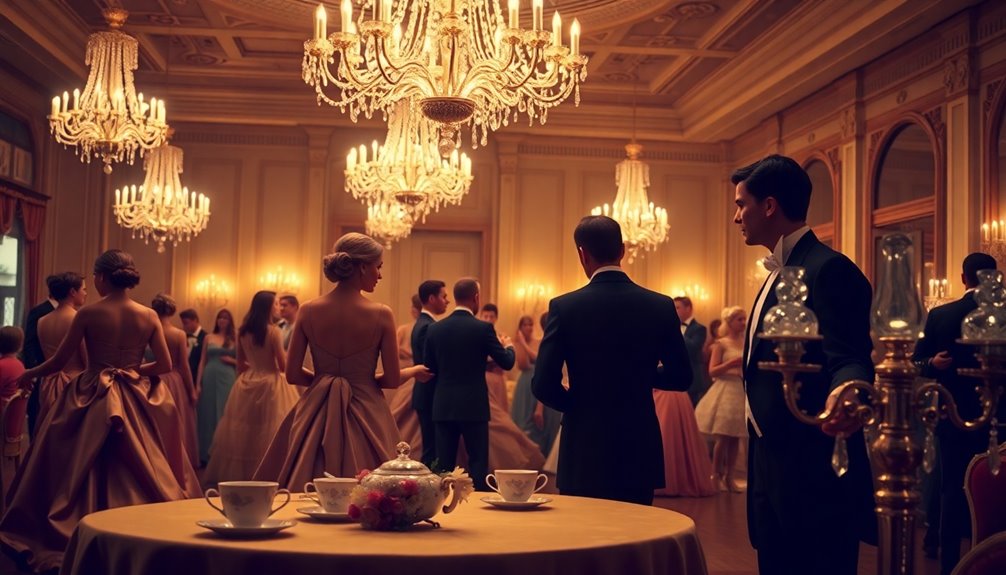
High society in Regency romance represents the elite upper class of early 19th-century England, where wealth and social status dictate one’s place in the world.
For many young women, the first time they attend a debutante ball marks a crucial moment, as it signifies their formal introduction to society and their eligibility for marriage. These events aren’t just social gatherings; they’re opportunities to showcase affluence and make important connections.
Your attire and the opulence of your residence speak volumes about your status. The season in London buzzes with balls and gatherings, creating an atmosphere ripe for matchmaking and a little bit of rivalry.
In the vibrant season of London, attire and grandeur reveal one’s true standing, igniting a spirited dance of matchmaking and rivalry.
In this world, reputation is everything, and maintaining it’s essential for survival in high society. The intricate web of class divisions influences the dynamics of relationships, as characters navigate love amidst societal expectations.
The Allure of Scandals in High Society Novels
In the world of Regency romance, scandals serve as tantalizing plots that keep readers on the edge of their seats. You’ll find characters wrestling with societal expectations, where their reputations hang by a thread.
Scandalous rumors swirl like a tempest, threatening to expose forbidden affairs and secret romances that defy the rigid norms of their elite circles. Each scandal not only propels the narrative but also critiques the moral codes of the time, revealing the complexities of human relationships.
As you immerse yourself in these stories, you’ll be captivated by how gossip and public opinion shape their lives, making every twist and turn an exhilarating exploration of passion and propriety. The allure of scandal keeps you hooked, enthusiastic for more. These themes of forgiveness and redemption resonate deeply, drawing parallels with characters navigating their own personal challenges.
Must-Read Regency Romance Novels Featuring High Society

If you’re keen to explore the glittering world of Regency high society, you’re in for a treat. These novels, rich with fascinating characters and opulent settings, draw you into a web of intrigue and romance. Get ready to experience the thrill of secret affairs and the pressures of social expectations that define this enchanting era. Additionally, these stories often highlight the marginalized individuals’ contributions that shaped the cultural landscape of the time.
Captivating Characters and Intrigue
Regency romance novels bring to life a world teeming with enchanting characters, each maneuvering the intricate web of high society.
You’ll encounter debutantes facing romantic dilemmas, torn between their desires and societal expectations. These enthralling characters experience significant character arcs as they navigate scandals, secret affairs, and the ever-watchful eyes of their peers.
The pressure to secure advantageous marriages adds depth to their journeys, highlighting the tension between personal longing and the demands of propriety.
As you explore these stories, you’ll be drawn into the drama and intrigue that define elite circles, where every choice can lead to either triumph or ruin.
Each character’s struggle enriches the narrative, making it a delightful escape into Regency life.
Opulent Settings and Affairs
While traversing the glittering world of high society, you’ll find that opulent settings play an essential role in Regency romance novels. Lavish balls held in grand estates set the stage for romance and intrigue, where elegantly dressed debutantes navigate the complexities of elite gatherings.
Amidst the dazzling chandeliers and exquisite gowns, scandalous affairs often unfold, revealing the hidden passions and societal pressures faced by the characters.
Authors like Julia Quinn and Eloisa James masterfully intertwine romance with class distinctions, enchanting your heart while showcasing the tension between societal expectations and personal desires.
As you explore these enchanting tales, you’ll discover that the allure of opulent estates and the thrill of secret liaisons make for unforgettable reading experiences.
Exploring Class and Reputation in “Bridgerton”
As you explore the world of “Bridgerton,” you’ll quickly notice how class and reputation shape every character’s journey in this vibrant portrayal of early 19th-century British society.
The series dives deep into class dynamics, showcasing how family lineage and wealth dictate one’s standing and opportunities for love. Characters like Daphne Bridgerton and Simon Basset face immense societal pressures, challenging the limitations imposed by their social roles.
Romantic expectations are often weighed down by public perception, especially through the lens of Lady Whistledown’s scandalous revelations. Lavish balls and matchmaking rituals reflect the importance of maintaining elite status, revealing that in this world, reputation is just as vital as genuine affection.
“Bridgerton” brilliantly captures these intricate social realities, echoing themes of systemic racism that Richard Wright explored in “Native Son.”
Forbidden Love and Scandal in “The Duchess Deal”
In the world of “The Duchess Deal,” love blossoms in the unlikeliest of circumstances, defying societal norms and expectations.
You’ll find the spirited seamstress, Emma Gladstone, entangled in a forbidden relationship with the brooding Duke of Ashbury. Their marriage of convenience becomes a scandalous adventure, challenging the rigid class structures of Regency England.
As Emma navigates opulent balls and lavish settings, her determination to assert her independence adds depth to their connection.
This transformative love not only reshapes their lives but also confronts the societal expectations that seek to keep them apart.
In “The Duchess Deal,” you witness how love can flourish, even amidst the chaos of high society and personal insecurities, making it a truly enchanting read.
The Role of Debutantes in Regency Romance
The debutante season is an enchanting spectacle in Regency romance, where young women step into society and vie for the attention of eligible bachelors.
Under intense societal pressures, debutantes navigate the intricate world of balls and gatherings, with their every move scrutinized. They face debutante expectations that dictate behavior, attire, and even choice of dance partners.
Families invest time and resources to secure advantageous marriage prospects, emphasizing the importance of reputation in high society. Accompanied by chaperones, these young women must uphold decorum while forging connections that could determine their futures.
This rite of passage not only highlights individual aspirations but also reinforces social hierarchies, making the debutante season a pivotal element in Regency romance narratives. The allure of forbidden knowledge in these stories often parallels the secrets and scandals that underpin high society’s façade.
How Do Social Events Shape Plotlines in High Society?
In high society, social gatherings like balls and debutante presentations aren’t just for show; they’re pivotal to the plot.
You’ll often find that scandals and romantic tensions emerge from these events, creating drama that drives the story forward.
As characters navigate expectations and competition, their motivations and relationships evolve against the backdrop of these lavish occasions.
Social Gatherings As Catalysts
While attending a lavish ball or an elegant dinner party, you’ll quickly realize that these social gatherings aren’t just mere background settings; they’re pivotal moments that shape the very essence of Regency romance plots.
These events serve as arenas where social aspirations clash with societal expectations, dictating character motivations and outcomes. For debutantes, a single dance could determine their marriage prospects, while misunderstandings can spiral into romantic entanglements fraught with tension.
The presence of influential figures often stirs rivalry, forging unexpected alliances and deepening animosities. Through these intricate interactions, characters navigate the complexities of wealth and class, driving the plot forward and showcasing the delicate dance of love amid the constraints of high society.
Scandals Fueling Romantic Tension
As social events unfold in high society, scandals emerge, fueling romantic tension and complicating relationships.
You’ll find that scandalous affairs often ignite amidst the lavish backdrop of balls, creating a whirlwind of romantic misunderstandings.
Characters navigate the intricate web of societal expectations, where their reputations hang by a thread.
When elopements or public mishaps occur, they not only heighten the drama but also push characters toward unexpected alliances or secret liaisons.
The pressure to maintain status among the elite, from “the upper tens” to “the 400,” intensifies the stakes, revealing hidden desires and motives.
In these moments, the tension thickens, driving characters to confront their feelings, leading to passionate reconciliations that make Regency romance so enthralling.
Debutante Balls and Expectations
Scandals and romantic tensions often pave the way for the grand debutante balls that define high society. These events serve as your formal introduction into the marriage market, where debutante expectations are set high.
You’ll find yourself donning a pristine white gown, participating in intricate dances, and maneuvering societal pressures that dictate your every move. Each ball is a battleground for status, heightening romantic stakes as families vie for advantageous matches.
As you mingle, alliances and rivalries emerge, influencing not just personal relationships but also your social standing. These high-stakes environments shape character development and plotlines, forcing you to confront the clash between your desires and the expectations placed upon you.
Iconic High Society Characters You’ll Love
In the world of Regency romance novels, you’ll encounter an enthralling array of high society characters who embody the complexities of love and societal expectations.
You’ll fall for spirited debutantes like Elizabeth Bennet, whose character development arcs critique the rigid norms of her time. Independent figures like Emma Woodhouse showcase strong-willed personalities, maneuvering through romantic tension dynamics that keep you hooked.
Then, there’s the charming yet roguish Mr. Wickham, who disrupts social order with his deceitful charm, illustrating the allure of scandal. You can’t forget Captain Frederick Wentworth from “Persuasion,” whose struggle between duty and desire resonates deeply. These iconic characters make you reflect on love’s triumphs and challenges against the backdrop of lavish balls and grand estates, echoing the strength and resilience of women like Elizabeth Bennett in Pride and Prejudice who challenge societal expectations.
The Impact of Philanthropy on Regency Romance Themes
In Regency romance novels, philanthropy often acts as a powerful tool for characters to boost their social status while maneuvering through the complexities of love.
You’ll notice that charity events play a pivotal role, connecting affluent individuals and revealing their moral responsibilities.
These themes of altruism not only drive the plot but also enrich character development, making the pursuit of romance intertwined with social duty. Additionally, the exploration of systemic oppression in these narratives often reflects the broader societal expectations that influence characters’ motivations and relationships.
Philanthropy As Social Capital
While traversing the intricate social landscape of Regency-era England, characters in romance novels often turn to philanthropy as a powerful tool for enhancing their social capital.
Wealthy protagonists engage in charitable motivations, donating to orphanages and hospitals to showcase their virtue. This act not only fulfills social expectations but also helps them navigate moral dilemmas, reflecting the era’s belief that true nobility stems from one’s impact on society rather than mere riches.
As the characters participate in philanthropic endeavors, they elevate their status, attracting admiration and potential suitors.
These subplots drive character development and plot progression, illustrating how social responsibility intertwines with romance, ultimately revealing that love often flourishes when combined with a commitment to bettering the community.
Charity Events and Connections
Charity events often act as vibrant backdrops in Regency romance novels, where characters not only showcase their wealth but also forge essential connections within the intricate web of high society.
These gatherings reveal charity motivations that often drive the narrative, as characters seek to enhance their reputations and craft social alliances. The organization of charity balls or events frequently serves as a pivotal plot point, allowing protagonists to encounter rivals and potential love interests, leading to romantic entanglements fraught with tension.
As characters navigate these complex relationships, the stakes rise, influencing their decisions and personal growth. Ultimately, charity events become more than mere social occasions; they’re essential for revealing secrets and deepening connections that shape the story’s course.
Altruism in Romantic Plotlines
Charitable acts often spark unexpected romantic connections in Regency romance novels, revealing how philanthropy can shape characters’ journeys.
You’ll notice that heroines often engage in altruistic motivations, driven by a desire to improve their communities while maneuvering societal expectations. These acts of transformative kindness not only enhance their moral integrity but also challenge the constraints of high society.
As they pursue charitable endeavors, they assert their independence, creating tension between personal desires and social obligations. This theme of altruism intertwines beautifully with romance, showcasing how genuine generosity can lead to love.
Why Do High Society Settings Enhance Romantic Tension?
High society settings in Regency romance novels create a rich tapestry for romantic tension, as characters navigate the strict social hierarchies and expectations that govern their lives.
The contrast between public appearances and hidden desires intensifies the emotional stakes; you see characters concealing true feelings to uphold their social standing.
Intrigue and scandal thrive in these opulent environments, leading to unexpected encounters and secret liaisons that heighten the romantic stakes.
Debutante balls and exclusive gatherings serve as perfect backdrops for love affairs, where the pressure of societal judgment adds a thrilling edge to their connections.
Ultimately, the lavish settings and societal rules amplify the stakes, drawing you deeper into the characters’ passionate struggles and yearnings. The complexities of familial bonds in these narratives often mirror the intricate relationships found in family sagas like The Thorn Birds.
Discovering More Regency Romance Novels Set in High Society
Exploring the world of Regency romance novels offers an enchanting glimpse into the lives of the elite, where opulence meets intrigue.
As you immerse yourself in these stories, you’ll encounter the strict codes of Regency etiquette that dictate every interaction. Characters often engage in social climbing, steering through the treacherous waters of status and reputation in their quest for love and wealth.
Discover the intricate dance of Regency etiquette where social climbing and the quest for love intertwine amidst high society’s strict norms.
Scandals abound, as secret liaisons and romantic deception unravel, challenging the rigid norms of high society. Jane Austen’s works like “Pride and Prejudice” and “Emma” highlight the pressures faced by debutantes, while other authors weave tales of forbidden romances that defy convention.
Each novel invites you to savor the drama and allure of Regency-era life, making them irresistible reads. Notably, the themes of female empowerment in contemporary romance have roots that echo the struggles faced by women in these historical narratives.
Conclusion
So, there you have it—high society, scandals, and romance all wrapped up in a delightful package. Who knew that a little gossip and social climbing could make love so thrilling? Forget your daily grind; immerse yourself in these novels and revel in the absurdity of it all. Because when it comes to matters of the heart, nothing says passion like a scandalous duel over a dance card. After all, who needs reality when you’ve got Regency drama?