

In Cormac McCarthy’s “Blood Meridian,” the brutal epilogue starkly portrays The Kid’s descent into darkness, highlighting his complex relationship with Judge Holden. You witness The Kid’s transformation from innocence to complicity, manipulated by the Judge, who embodies malevolence. Their final confrontation crystallizes the themes of corruption and inescapable evil. This unsettling conclusion forces you to reflect on morality, redemption, and the human struggle against darkness. There’s much more to uncover about their intertwined fates.
The Symbolism of the Outhouse Encounter

As you explore the outhouse encounter between The Kid and Judge Holden, you’ll quickly realize its significance extends far beyond a mere physical confrontation.
This moment embodies The Kid’s internal struggle, showcasing the themes of humiliation and the clash between innocence and corruption. The ambiguous nature of their interaction hints at sodomy, emphasizing the brutal power dynamics at play and the dehumanizing aspects of violence.
The setting of the outhouse serves as a stark symbol of both physical and existential degradation, reinforcing the grim realities of their world.
The outhouse symbolizes profound degradation, reflecting the harsh truths of their bleak existence.
In this pivotal confrontation, The Kid faces the culmination of his moral disintegration, while Judge Holden’s actions reveal his manipulative essence, illustrating how evil can infiltrate even the most intimate human experiences. Notably, this narrative complexity resonates with the intricate plot of Agatha Christie’s timeless masterpiece, showcasing how nuanced storytelling can elevate the tension in a mystery.
Understanding the Judge’s Role in the Narrative
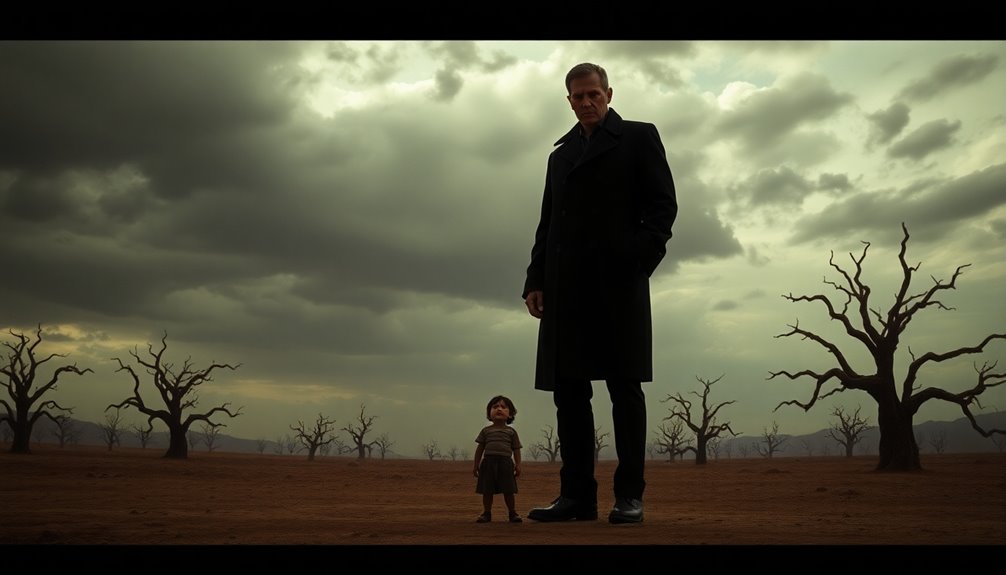
In “Blood Meridian,” Judge Holden stands out as a master manipulator, revealing the darker sides of human nature. You’ll see how his actions not only embody collective darkness but also challenge The Kid’s moral compass throughout the narrative. As you explore their complex relationship, you’ll uncover the layers of chaos and brutality that the Judge represents. Additionally, his character echoes themes of systemic oppression that resonate in literary works like Richard Wright’s “Native Son.”
Judge Holden’s Manipulative Nature
Judge Holden stands as a central figure in Blood Meridian, embodying manipulation and chaos in a world steeped in violence.
As a manipulative force, he skillfully influences The Kid and the Glanton Gang, guiding their descent into brutality and moral decay. His immense and terrible flesh serves as a physical manifestation of his dark philosophy, which he uses to justify power and domination.
Through his eloquent rhetoric, he twists morality, ensnaring those around him in his web of corruption. The Judge’s supernatural qualities amplify his manipulative nature; he seems to know the future, further unsettling those he encounters.
Ultimately, his interactions with The Kid reveal a chilling duality—an attraction mixed with repulsion, as he seeks to extinguish the last flickers of humanity within him.
Embodiment of Collective Darkness
Evil lurks at the heart of Blood Meridian, with Judge Holden serving as its personification. The Judge is the devil, embodying humanity’s collective darkness through chaos and manipulation. His presence starkly contrasts The Kid, highlighting the duality of human nature amid relentless violence.
As a philosophical force, he challenges moral frameworks, seeking to reshape mankind in his twisted image. His supernatural traits suggest he’s more than a mere character; he represents the persistent nature of evil, reflecting society’s inclination toward depravity.
The Judge’s interactions with The Kid reveal the ongoing struggle between innocence and corruption. Ultimately, he illustrates how deeply darkness can influence the human soul, making it clear that evil is a constant presence in our world.
The Kid’s Journey: From Innocence to Darkness

As The Kid begins his journey across the brutal landscape of the American West, his initial innocence and naivety drive him to seek adventure and escape. You witness his transformation as he encounters extreme violence, which chips away at his youthful idealism. The brutality around him desensitizes you, forcing him to confront the darkness inherent in humanity. Characters like Judge Holden personify this struggle, highlighting the duality within The Kid. In a pivotal moment, you see him kill a boy, marking the point of no return in his moral decay. This act signifies his complete shift from innocence to complicity in evil. The haunting ambiguity of his fate in the epilogue further underscores the inescapable nature of violence within us all. Wright’s exploration of systemic racism resonates alongside McCarthy’s portrayal of violence, revealing the darker aspects of human nature and societal neglect.
The Nature of Evil as Portrayed in Blood Meridian
In “Blood Meridian,” the essence of malevolence permeates every page, revealing itself through the characters and their actions. The Judge stands as a potent symbol of evil, embodying humanity’s darkest inclinations and manipulating others to fulfill his nihilistic desires.
In stark contrast, the Kid represents a struggle against this darkness, though his journey reveals the seductive allure of violence. As you follow the Kid’s moral decline, you see McCarthy’s assertion that evil isn’t just an external force; it’s woven into our very nature. The ambiguous fate of the Kid at the Judge’s hands highlights the inescapable grasp of evil, suggesting that succumbing to darkness is a shared human experience, forever echoing through history and existence. This complex interplay of good and evil mirrors themes found in systemic racism as depicted in Richard Wright’s *Native Son*, where characters confront their own moral dilemmas within oppressive societal structures.
Analyzing Themes of Morality and Redemption
Morality in “Blood Meridian” is a complex battlefield where the possibility of redemption continually clashes with the brutality of human nature.
The Judge embodies a philosophy of evil, reflecting humanity’s darkest impulses as he manipulates The Kid. You witness The Kid’s struggle against overwhelming violence, revealing the fragility of hope for redemption.
Their final confrontation crystallizes the themes of corruption and the inescapable nature of evil, suggesting that true redemption remains elusive in this brutal landscape.
The morally ambiguous relationship between The Kid and the Judge complicates any notion of salvation, as affection collides with predation.
McCarthy forces you to confront your own moral compass, prompting you to question the potential for redemption amid the chaos of existence. Additionally, the novel echoes themes of systemic oppression that resonate with contemporary discussions about race and identity, much like Richard Wright’s work.
The Ambiguity of Fate: What Happens to The Kid?
While the fate of The Kid remains shrouded in ambiguity, readers can’t help but ponder the implications of his final encounter with Judge Holden. This moment underscores a power dynamic that hints at humiliation and degradation, pressing you to question what fate truly awaits him.
His violent past, particularly the act against a boy, foreshadows a brutal downfall, suggesting his transformation into something darker. The Judge’s chilling assertion of immortality intertwines their destinies, leaving you wondering if The Kid’s fate is intrinsically linked to the Judge’s persistent evil.
The narrative’s existential despair resonates, urging you to reflect on how violence shapes identity and whether The Kid can escape the Judge’s malevolent grasp, or if he’s forever trapped in this cycle. As with Bigger Thomas in ‘Native Son,’ systemic racism serves as a backdrop that complicates his journey, highlighting the inescapable nature of his circumstances.
The Judge as a Manifestation of Human Darkness
The Judge as a Manifestation of Human Darkness
Judge Holden stands as a chilling embodiment of human darkness, representing the violent impulses that lurk within us all. His character serves as a stark reminder of humanity’s capacity for brutality, challenging your understanding of morality and innocence.
- He manipulates and corrupts those around him, exposing their vulnerabilities.
- His philosophical musings reveal the seductive nature of evil.
- The Judge’s perceived immortality reflects the persistent presence of darkness in society.
- His interactions with The Kid highlight the struggle between innocence and corruption.
- Holden’s brutality underscores the ease with which one can succumb to violence.
Through Judge Holden, McCarthy forces you to confront the unsettling truth of human darkness that resides within us all, resonating with the notion of systemic racism and its pervasive impact on society.
Supernatural Elements and Their Significance
As you explore *Blood Meridian*, the supernatural elements woven throughout the narrative reveal deeper truths about existence and the nature of evil.
Judge Holden, with his apparent immortality and uncanny knowledge, embodies a demonic essence that contrasts sharply with the transient lives around him. His unchanging nature reinforces his role as an eternal force of chaos, while his supernatural traits blur the lines between reality and illusion.
Instances like the Judge’s manipulation of events leave you questioning the natural order. Symbols, such as bones, represent mortality and the inevitability of death, deepening the existential themes. The inherent evil within humanity is echoed in the Judge’s actions, reflecting the darkness that resides in all individuals.
The falling stars in the final scene suggest a supernatural connection between the Judge and The Kid, highlighting their intertwined fates in this brutal world.
The Impact of Violence on Character Development
In “Blood Meridian,” you witness how the Kid transforms through his brutal experiences, shaping his identity in ways he can’t escape.
Each act of violence he commits has consequences that ripple through his moral choices, leading him further down a dark path.
As you explore this journey, you see how violence corrupts and ultimately defines who he becomes. This transformation echoes the themes of fear and systemic injustice found in works like Richard Wright’s *Native Son*, illustrating how external conditions shape individual identity.
Transformation Through Brutality
While traversing the brutal landscape of *Blood Meridian*, you witness The Kid’s transformation from a vulnerable runaway into a figure hardened by violence. Each act of brutality he endures and commits reshapes his identity, illustrating the harrowing effects of his environment.
This evolution not only desensitizes him but also mirrors the Judge’s dark philosophy, deepening his moral decay. In the end, you see that his journey through violence affects him profoundly, marking a shift from potential humanity to embodying the darkness surrounding him.
- Innocence lost amidst bloodshed
- Survival overshadowed by moral decay
- The weight of brutality on the soul
- Desensitization to violence
- The Judge as a corrupting force
Consequences of Moral Choices
The Kid’s journey through violence starkly illustrates how moral choices shape character development, revealing the profound impact of each brutal act he commits. His increasing involvement in violence, especially the pivotal moment of killing Elrod, marks a significant turn towards darkness.
This descent highlights the consequences of moral choices, as each decision leads him deeper into chaos. The Judge’s manipulation serves as a reminder of the corrupting influence of violence, revealing the depravity lurking within The Kid.
The brutal experiences shared with the Glanton Gang strip away their humanity, emphasizing how violence can transform individuals into something unrecognizable.
Ultimately, The Kid’s path illustrates that moral choices are intertwined with existential despair, reinforcing the inescapable consequences of one’s actions in a brutal world.
The Relationship Between The Kid and Judge Holden
- The Judge manipulates The Kid, drawing him into violence.
- Their final confrontation questions power dynamics and corruption.
- Holden’s twisted affection complicates their bond.
- The ambiguous fate of The Kid underscores despair and moral decay.
- Their relationship reflects human nature’s capacity for both connection and malevolence.
- In this brutal landscape, you’re left to ponder the cyclical nature of violence that binds them. The Secret History serves as a reminder of how ambition and obsession can lead to moral transgressions, paralleling the dark themes present in their connection.
Historical Context and Its Influence on the Story
Set against the backdrop of the mid-19th century American West, “Blood Meridian” immerses you in a world rife with violence and moral ambiguity. The historical context of this period, marked by brutal territorial expansion and conflicts with Native American tribes, shapes the narrative profoundly.
Cormac McCarthy draws on real events, such as the scalp-hunting expeditions led by John Joel Glanton, to ground the story in reality. Characters like Judge Holden and the Glanton gang embody the darker aspects of Manifest Destiny, reflecting the dehumanization and capacity for evil that characterized westward expansion.
This stark contrast between romanticized frontier life and the brutal truth encourages you to confront the unsettling realities of American history, resonating with contemporary themes of violence and morality.
Final Thoughts: The Enduring Legacy of Blood Meridian
Legacy often intertwines with the essence of a work, and “Blood Meridian” stands as a profound tribute to the complexities of human nature and morality. Its enduring legacy lies in its unflinching portrayal of violence and the ambiguity surrounding human motives.
- The haunting presence of the Judge challenges your understanding of evil.
- The Kid’s uncertain fate leaves you questioning morality itself.
- McCarthy’s dense prose evokes visceral imagery that lingers in your mind.
- The novel inspires deep reflections on historical and modern brutality.
- It ignites rich discussions among readers and scholars alike.
Ultimately, “Blood Meridian” invites you to confront the shadows of human existence, ensuring its relevance will echo through literature for generations to come.
Conclusion
In the haunting shadows of Blood Meridian, the outhouse stands as a symbol of humanity’s darkest instincts, a stark reminder of the choices we face. As you reflect on The Kid’s descent into a world marred by brutality, you realize that the line between innocence and evil blurs. Ultimately, McCarthy leaves you pondering the legacy of violence—how it shapes identity and morality, challenging you to confront your own understanding of good and evil in an unforgiving world.