
Fiction and non-fiction both explore narrative truth but do so differently. Fiction engages your imagination, presenting subjective truths through characters and events that aren’t real. Non-fiction, on the other hand, focuses on factual accuracy and real-life events, emphasizing objective truths. Both genres impact your understanding of the world in unique ways. Exploring how they convey these truths can deepen your appreciation for storytelling and the complexities of reality and imagination.
The Core Differences Between Fiction and Nonfiction

When you immerse yourself in the world of literature, you’ll quickly notice that fiction and nonfiction serve distinct purposes. The key differences lie in their foundations.
Fiction is a work of fiction characterized by imaginative storytelling, featuring invented characters and settings that allow for creative freedom. Nonfiction writing, on the other hand, is grounded in reality, focusing on factual accuracy, real events, and people.
Fiction thrives on imagination and creativity, while nonfiction remains rooted in factual reality and real-life experiences.
While nonfiction often follows a logical structure with headings, fiction may employ nonlinear narratives, flashbacks, and plot twists. Additionally, fiction evokes emotional responses through character development, while nonfiction aims to inform and educate. The intricacies of mystery unraveling in fiction showcase how complex narratives can captivate readers while distinguishing them from straightforward nonfiction.
Both genres can blend, as seen in creative nonfiction, but their core distinctions remain essential for understanding their unique contributions to literature.
How Fiction and Nonfiction Convey Truth
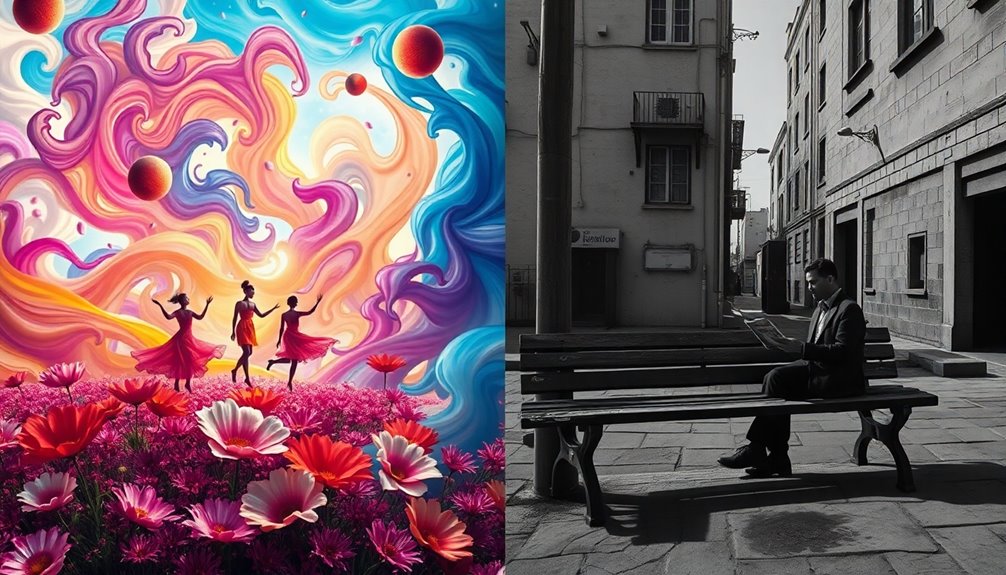
While fiction and nonfiction approach the concept of truth differently, both can profoundly influence how we perceive the world.
Fiction thrives on storytelling, engaging your emotions and inviting you to explore complex themes and moral dilemmas. It provides an experiential understanding of concepts like theology and morality, allowing you to connect on a deeper level.
Nonfiction, in contrast, emphasizes factual accuracy, relying on extensive research to present information clearly. However, studies show that you’re likely to remember stories from fiction better than straightforward facts.
The blending of fiction and nonfiction, as seen in creative nonfiction, enhances reader comprehension by using literary techniques to tell factual stories in an engaging way, making truths more relatable and memorable. This interplay can illuminate systemic oppression and the human experience in ways that purely factual accounts may not fully capture.
The Role of Research in Nonfiction Writing

Here are some key aspects of research in nonfiction:
- Reputable Sources: Rely on academic journals, interviews, and primary documents to support your claims.
- Fact-Checking: Always fact-check to guarantee your information is accurate and reliable.
- Citations and References: Include these to let readers verify details and explore deeper into the subject.
- Engaging Narratives: Use thorough research to craft compelling narratives that effectively communicate complex ideas. Additionally, understanding the impact of systemic racism on marginalized communities can enhance the depth of your nonfiction storytelling.
The Power of Imagination in Fiction
In fiction, you step into worlds that don’t exist, where your imagination can run wild.
These vibrant settings and unique characters pull you in, making you feel deeply connected to their journeys.
As you explore these stories, you’ll find that they can stir powerful emotions and even challenge your own beliefs.
The magic of such tales often lies in their ability to reflect the importance of relationships and the complexities of human connections.
Creating Imaginary Worlds
Creating imaginary worlds in fiction invites you to step into territories where the limits of reality dissolve, allowing for boundless creativity and exploration.
Fiction allows you to engage deeply with:
- Complex characters that challenge your perceptions.
- Vivid descriptions that paint immersive settings.
- Innovative themes that provoke thought on societal norms.
- Emotional intelligence enhancement through diverse experiences.
These elements foster a deeper understanding of the human experience, as you connect with narratives that mightn’t exist in everyday life.
As you traverse these fantastical territories, you’re not just a passive observer; you’re actively participating in the narrative, broadening your horizons and enriching your imagination.
Embrace this creative freedom and let your mind roam free in the worlds created by talented authors.
Evoking Emotional Responses
Emotion lies at the heart of fiction, drawing readers into a domain where they can genuinely connect with characters and their journeys. By engaging with these narratives, you experience emotional responses that range from joy to sorrow.
Fiction allows you to explore complex emotional scenarios, enhancing your understanding of true stories and the human experience. As you immerse yourself in these imaginative worlds, you may find yourself feeling real grief or joy for characters, illustrating the profound impact of narrative on emotions.
This blend of creativity and emotional engagement encourages you to reflect on themes of love, loss, and morality, offering a safe space to process your own feelings and experiences through the lens of others’ journeys, making reading transformative.
Reader Expectations: Trust and Engagement in Storytelling
While readers often crave relatable and relevant ideas, their expectations for trust and engagement in storytelling can considerably shape their experience.
Whether you’re diving into nonfiction or fiction, these factors play a fundamental role in how you connect with a narrative. Consider these aspects:
Engaging with narratives, whether fiction or nonfiction, hinges on trust and clear communication of ideas.
- Trust in the author’s ability to communicate truth enhances engagement.
- Clear communication of intended messages prevents reader disappointment.
- Balancing personal expression with audience expectations is essential.
- Understanding the nuances of reader expectations fosters deeper connections.
- Embracing mindful communication can further enrich the reader’s experience by fostering trust and understanding.
As you navigate various narratives, remember that your perception of truth can differ, affecting your overall engagement.
The Impact of Blending Fiction and Nonfiction on Readers
Blending fiction and nonfiction can profoundly impact how you engage with narratives, often enhancing your emotional connection to the story.
Hybrid narratives that weave real-life events into fictionalized accounts resonate deeply, prompting you to reflect on your own experiences.
However, this blending of fiction and nonfiction can also blur the lines of narrative truth, making it tricky to discern what’s fact and what’s fiction. You might find yourself questioning the reliability of the information presented.
This genre fusion not only enriches your reading experience but also sharpens your critical thinking skills, encouraging you to analyze and interpret the complexities of storytelling. Additionally, the exploration of the power of words in both fiction and nonfiction highlights their ability to shape identities and influence destinies.
Ultimately, understanding these nuances can transform how you perceive and engage with narratives in today’s world.
Conclusion
In the end, understanding the nuances between fiction and nonfiction enriches your reading experience. You see how each form uniquely shapes narratives and conveys truth, whether through imaginative storytelling or factual research. As you navigate these genres, consider this: isn’t it fascinating how both can evoke powerful emotions and insights? Embrace the blend of reality and imagination, and let it deepen your connection to the stories that resonate with you. Your journey as a reader is just beginning.