

If you’re looking for the best post-apocalyptic books ever written, you’re in for a gripping journey. These novels explore survival, resilience, and the human spirit in the face of civilization’s collapse. You’ll encounter diverse themes, from environmental degradation to personal redemption, and characters facing moral dilemmas that shape their destinies. With a mix of classics and modern tales, there’s something for everyone. Stick around to explore what makes these stories resonate so deeply.
What Is Post-Apocalyptic Fiction and Why Does It Matter?

Post-apocalyptic fiction, which often emerges in response to societal fears, explores life after civilization’s collapse due to catastrophic events like nuclear war or pandemics. This genre gained prominence in the 1950s as anxieties about nuclear annihilation grew, with Mary Shelley’s *The Last Man* marking one of its earliest modern examples.
Post-apocalyptic books delve into survival and the human condition, mirroring contemporary issues such as climate change and technological reliance. You’ll find iconic titles like *The Road* and *The Stand* that resonate deeply with readers. Furthermore, these narratives often draw inspiration from intricate plot twists found in mystery literature, enriching their storytelling with unexpected developments.
These narratives not only entertain but also spark discussions about real-world issues, inspiring creativity across various mediums. Engaging with these stories can help you understand societal fears and human resilience.
Key Themes Explored in Post-Apocalyptic Literature
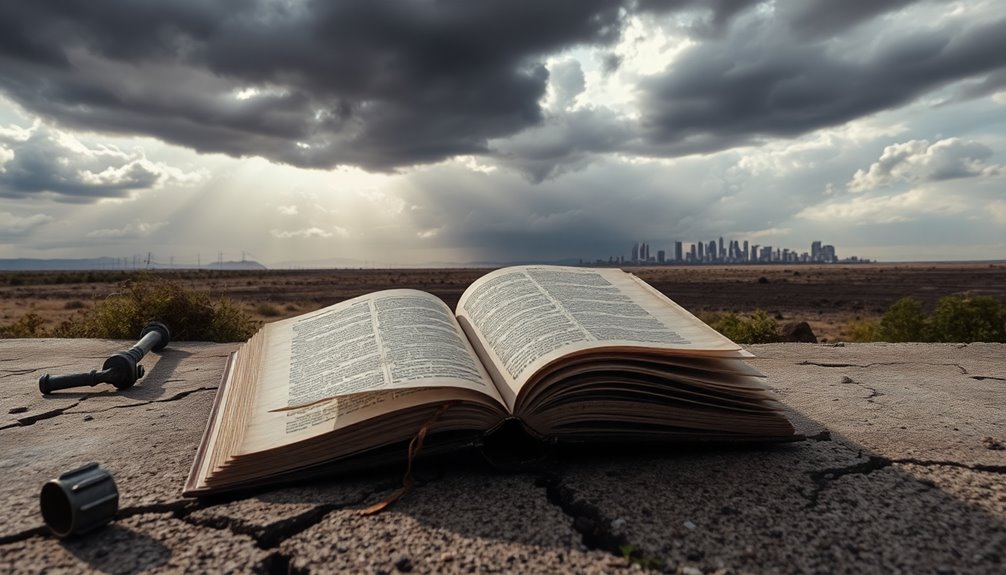
In post-apocalyptic literature, survival and human resilience stand out as central themes that pull you into the story.
You’ll often see characters facing unimaginable challenges, testing their limits while grappling with the harsh realities of a collapsed society.
As you explore these narratives, you’ll also witness the struggle for rebirth and the rebuilding of communities, reflecting both hope and despair. Additionally, the exploration of social injustice mirrors the ongoing fight for dignity and equality amid adversity found in many of these narratives.
Survival and Human Resilience
While traversing the stark realities of a world stripped of civilization, characters in post-apocalyptic literature often reveal their primal survival instincts and remarkable resilience.
These narratives act as a survival guide, illustrating how individuals confront adversity. Here are key themes that highlight survival and human resilience:
- Survival Instincts: Characters adapt resourcefully to extreme circumstances.
- Community and Trust: New bonds form, showcasing fragile trust among survivors.
- Moral Dilemmas: Ethical choices test humanity and personal values.
- Resilience Through Art: Preservation of culture fosters hope amidst despair.
Through these themes, you witness the depths of human strength, reminding you that even in dire situations, resilience shines through.
Societal Collapse and Rebirth
As civilization crumbles under the weight of catastrophic events, narratives of societal collapse and rebirth invite you to explore the depths of human resilience.
These stories often reflect our fears of existential threats—nuclear war, pandemics, or natural disasters—highlighting the fragility of what we’ve built.
You’ll encounter characters maneuvering survival challenges, forging new communities, and redefining social structures in the chaos.
Loss of technology forces survivors to embrace primitive skills and communal living, as seen in “The Road” and “Station Eleven.”
Trust and betrayal weave through these narratives, presenting moral dilemmas amid the struggle for safety.
Yet, themes of hope and resilience shine brightly, showing how art, culture, and human connection can catalyze rebirth in a shattered world.
The Evolution of Apocalyptic Narratives Through the Decades

Apocalyptic narratives have evolved considerably over the decades, reflecting societal fears and concerns that arise in different historical contexts. You can trace the evolution through several key periods:
- Early Foundations: Mary Shelley’s *The Last Man* (1826) introduced themes of isolation and societal collapse.
- Post-War Era: The 1950s saw an upswing in post-apocalyptic literature, driven by nuclear anxieties after World War II.
- Resurgence: The 1980s and 1990s featured works like Stephen King’s *The Stand*, highlighting fears of disease and environmental degradation.
- Modern Themes: The 2000s brought new narratives, such as *Station Eleven*, focusing on culture’s role in survival amid apocalyptic scenarios. The Civil Rights Movement in America serves as a significant backdrop that parallels many themes in post-apocalyptic literature, emphasizing the struggle for equality and justice even in the direst circumstances.
This evolution illustrates how our fears shape the stories we tell about the end of the world.
Top 15 Must-Read Apocalypse Novels
When you explore the top apocalypse novels, you’ll encounter gripping themes of survival that resonate deeply. Each story showcases notable character arcs that reveal the human spirit‘s resilience in the face of catastrophe. Plus, the impactful writing styles of these authors make their visions of a post-apocalyptic world unforgettable. Furthermore, these narratives often serve as cautionary tales about systemic oppression and the consequences of societal breakdowns.
Themes Of Survival
Survival stands at the heart of many post-apocalyptic novels, compelling readers to explore the depths of human resilience in the face of unimaginable challenges.
You’ll find that each narrative tackles survival in unique ways:
- In *The Road*, a father and son navigate a desolate landscape, showcasing their bond and struggle.
- *Station Eleven* intertwines survival with the resilience of art, as entertainers find hope amidst a flu pandemic.
- *I Am Legend* investigates isolation, portraying one man’s battle against despair in a world dominated by creatures.
- *On the Beach* captures psychological survival as characters confront the end, reflecting on human behavior in dire situations.
These novels offer profound insights into survival, prompting you to reflect on your own human spirit.
Notable Character Arcs
Exploring the depths of human resilience in post-apocalyptic settings often leads to unforgettable character arcs that reveal profound transformations.
In “The Road,” the father and son’s bond showcases love as a survival mechanism amidst despair.
Emily St. John Mandel’s “Station Eleven” presents significant character arcs of diverse individuals, particularly a resilient actress, who highlight art’s enduring power.
Robert Neville in “I Am Legend” evolves from a lonely survivor to a beacon of hope in a vampire-infested world.
Meanwhile, “The Stand” features Stu Redman’s journey from an ordinary Texan to a community leader, emphasizing morality.
Finally, Brother Francis in “A Canticle for Leibowitz” transforms from a novice monk to a guardian of knowledge, embodying civilization’s cyclical nature.
Impactful Writing Styles
While delving into post-apocalyptic literature, you’ll find that impactful writing styles play a crucial role in shaping the reader’s experience.
These styles elevate dystopian fiction, immersing you in the chaos and emotion of survival. Here are four standout examples:
- John Wyndham’s *The Day of the Triffids*: A gripping narrative that combines vivid descriptions with suspense.
- Richard Matheson’s *I Am Legend*: Blending themes of pandemic and vampirism, it pulls you into a haunting struggle.
- Cormac McCarthy’s *The Road*: His minimalist prose evokes deep emotional responses as you journey through despair.
- Emily St. John Mandel’s *Station Eleven*: An uplifting exploration of resilience, showcasing the power of art amidst ruin.
These styles make each story resonate long after the last page.
How to Choose the Right Post-Apocalyptic Book for You?
How do you choose the right post-apocalyptic book for your tastes? Start by considering the specific type of apocalypse that intrigues you, like nuclear war, pandemics, or climate change, as this narrows your options.
Evaluate the narrative style and tone; some books, like “The Road,” present a bleak survival story, while others, such as “Station Eleven,” offer hope years after the apocalypse.
Look for strong character development, as compelling characters enhance your connection to the story. Checking reader reviews can also provide insight into pacing and emotional impact.
Finally, explore established lists or community recommendations to discover both classic and emerging voices in post-apocalyptic science fiction that resonate with you. Additionally, consider how themes of totalitarian regimes or societal manipulation may influence the narrative’s context and character motivations.
The Role of Character Development in Apocalypse Stories
Character development plays a pivotal role in post-apocalyptic stories, shaping the reader’s experience and engagement with the narrative.
As you immerse yourself in these tales, you’ll notice how character development unfolds through:
- Transformation of protagonists facing extreme challenges, highlighting their resilience.
- Dynamics of relationships formed under duress, revealing trust and betrayal among survivors.
- Antagonists representing chaos, contrasting with protagonists’ struggle for moral integrity.
- Strong female leads, like Eda Becker in *After the End Trilogy*, challenging traditional gender roles.
These elements not only drive the plot but also prompt you to reflect on themes of redemption and moral ambiguity. Additionally, the journey towards self-acceptance highlights the importance of understanding and compassion in overcoming adversity.
Ultimately, character development enriches your understanding of survival in a world stripped bare of societal norms.
The Impact of Setting on the Narrative in Apocalyptic Fiction
In post-apocalyptic fiction, the setting often emerges as an essential force that shapes the narrative and influences characters’ choices. A bleak landscape, like in Cormac McCarthy’s *The Road*, reflects humanity’s despair, driving characters toward survival or surrender.
Environmental factors, such as nuclear fallout in Nevil Shute’s *On the Beach*, create inevitable doom, heightening tension. The choice between urban or rural settings in *Station Eleven* impacts character dynamics, emphasizing the remnants of civilization against desolate backdrops.
Additionally, Richard Matheson’s *I Am Legend* highlights isolation through deserted urban environments, while Margaret Atwood’s *Oryx and Crake* uses a dystopian future rooted in corporate greed to deepen themes. The exploration of systemic oppression in literature, as seen in Richard Wright’s *Native Son*, further underscores how settings can reflect and amplify societal issues.
Ultimately, the post-apocalyptic setting is essential in crafting compelling narratives.
Analyzing the Cultural Significance of Apocalypse Literature
When you read apocalypse literature, you confront not just the end of the world, but also the resilience of humanity in the face of adversity. These stories reflect our societal fears, from climate change to pandemics, pushing you to contemplate what survival truly means. Through artistic expression, authors capture the fragility of civilization and spark important conversations about our future. Additionally, these narratives often mirror the psychological depths of human experience, revealing our darkest fears and desires as we navigate an uncertain world.
Human Resilience Through Adversity
As societies crumble and chaos reigns in post-apocalyptic literature, you witness the incredible resilience of humanity through the struggles faced by its characters.
These narratives often highlight:
- Survival instincts that emerge in extreme adversity.
- Emotional strength, as seen in the bond between parent and child in novels like “The Road.”
- The role of art and culture, emphasized in “Station Eleven,” which maintains hope amid devastation.
- Trust and betrayal, where alliances form and dissolve, showcasing the complexities of human interactions.
Through these themes, you see human resilience not just as survival, but as a deeper reflection of our adaptability.
Apocalypse literature invites you to reflect on how these stories mirror our real-world challenges and inspire hope.
Reflection of Societal Fears
Post-apocalyptic literature not only highlights human resilience but also reflects our deepest societal fears. During the Cold War, the threat of nuclear war loomed large, inspiring works like “On the Beach” and “I Am Legend.” These narratives allow you to confront anxieties about societal collapse and the fragility of civilization.
Contemporary fears about climate change and pandemics emerge in novels like “The Road” and “Station Eleven,” emphasizing how environmental degradation and public health crises affect our lives.
In addition, titles such as “Oryx and Crake” and “Parable of the Sower” critique our consumerism, technological dependence, and moral decay. By engaging with these stories, you’re prompted to reflect on your actions and their impact on future generations and the planet.
Artistic Expression and Survival
While exploring the depths of despair in a fractured world, you’ll find that artistic expression becomes an essential lifeline.
In post-apocalyptic literature, survival isn’t just physical; it’s also deeply cultural. Here’s how artistic expression plays a critical role:
- Reflection of Fears: These stories mirror societal anxieties, sparking discussions about our reality.
- Connection Through Art: Works like *Station Eleven* illustrate how performances can create hope amidst chaos.
- Investigation of Humanity: Experimental prose in novels like *Blindness* invites you to probe into human nature’s complexities.
- Moral Dilemmas: Titles such as *Oryx and Crake* challenge you to confront ethical questions of survival and progress.
Through these themes, you grasp the profound significance of culture in enduring bleak times.
How Do Apocalypse Novels Reflect Contemporary Society?
Apocalypse novels often serve as mirrors reflecting the fears and anxieties of contemporary society, tapping into our collective concerns about existential threats like nuclear war, pandemics, and climate change.
These narratives reveal how societal collapse can emerge from unchecked technological advancements and environmental neglect, urging you to ponder the consequences of today’s decisions.
Works like “Station Eleven” showcase the resilience of art and culture during crises, emphasizing what truly matters when civilization falters.
Additionally, diverse characters in these stories explore issues of inequality and privilege, mirroring the complexities of modern life.
The rise of post-apocalyptic fiction often aligns with significant global events, illustrating how literature both responds to and shapes our understanding of society’s collective psyche.
Recommendations for Lesser-Known Post-Apocalyptic Gems
As society grapples with fears of collapse, literature offers a treasure trove of lesser-known gems that explore the aftermath of such events in compelling ways.
Here are four post-apocalyptic books you shouldn’t miss:
- “The Slynx” by Tatyana Tolstaya – Set 200 years after “the Blast,” this novel reveals a snow-covered Moscow’s cultural remnants.
- “Severance” by Ling Ma – This tale of Shen Fever examines how nostalgia shapes people as they mindlessly repeat mundane tasks.
- “The Last” by Hanna Jameson – Experience isolation and human behavior through a small group’s struggles in a remote hotel during crisis.
- “Who Fears Death” by Nnedi Okorafor – Follow Onyesonwu in a post-apocalyptic Sudan where magic intertwines with themes of violence and revenge.
These stories illuminate unique perspectives on humanity’s resilience, echoing the courage of resistance movements that inspire individuals to confront adversity.
What’s Next? The Future of Apocalyptic Fiction in Modern Literature
The landscape of apocalyptic fiction is evolving, reflecting our current anxieties and aspirations. As climate change looms large in our collective consciousness, narratives like Octavia Butler’s *The Parable of the Sower* tackle environmental degradation head-on.
Recent trends showcase technology’s role in society’s downfall, as seen in Ling Ma’s *Severance*, which critiques modern work culture through a pandemic lens. Diverse voices, including Nnedi Okorafor and Tatyana Tolstaya, enrich the genre with cultural and gender perspectives.
The blending of genres, exemplified by N. K. Jemisin’s *The Fifth Season*, adds depth to traditional post-apocalyptic tales. Interactive media, from video games to podcasts, is also expanding apocalyptic themes, allowing for innovative explorations of survival and societal collapse, engaging a wider audience than ever before. This evolution mirrors the transformative power of human connection as characters navigate despair and seek redemption amidst chaos.
Conclusion
In a world teetering on the edge of chaos, post-apocalyptic fiction isn’t just a genre; it’s a lifeline. These stories offer a mirror to our fears and hopes, showing us what humanity is capable of in the face of adversity. As you plunge into these narratives, you’ll find that each page can ignite your imagination like a thousand suns. So grab a book, embrace the chaos, and let these tales transport you to domains where survival is the ultimate adventure.