

In “The Pillars of the Earth,” Ken Follett immerses you in the intricate world of 12th century England, where cathedral construction symbolizes faith, ambition, and community resilience during the Anarchy. As characters like Tom Builder and Aliena navigate political intrigue and personal struggles, the Kingsbridge Cathedral becomes a beacon of hope. Follett’s engaging prose encourages you to connect deeply with these vibrant characters, revealing their journeys and the architectural challenges they face. Discover more about their compelling stories.
The Historical Context of Pillars of the Earth
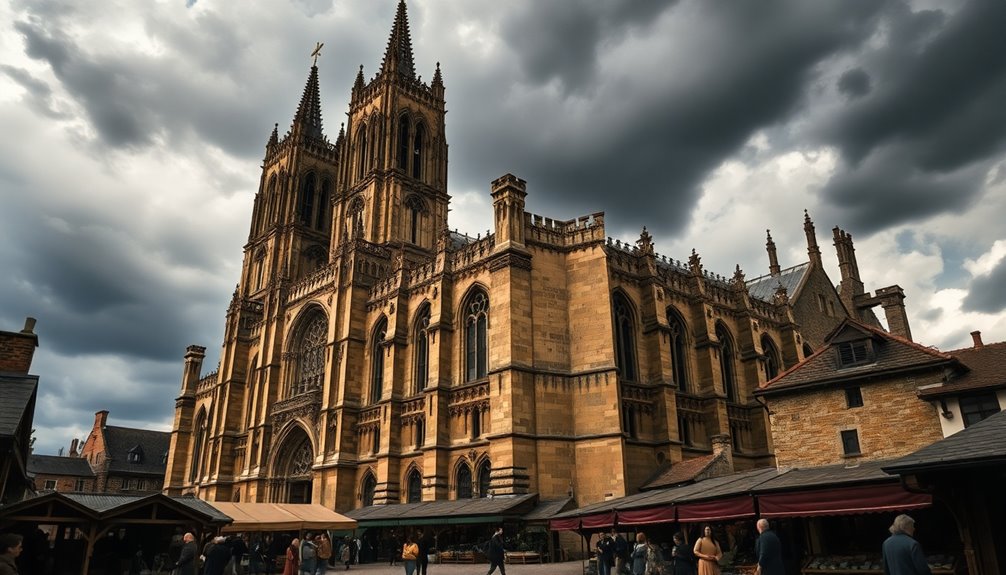
Set against the tumultuous backdrop of the 12th century, Ken Follett’s “The Pillars of the Earth” immerses you in a world marked by the Anarchy, a brutal civil war over the English throne.
This conflict erupts following the sinking of the White Ship in 1120, igniting a succession crisis after King Henry I’s death. As you explore the fictional town of Kingsbridge, modeled after Marlborough, Wiltshire, you witness the struggles of medieval society, where the construction of cathedrals symbolizes both faith and cultural identity.
Follett weaves in historical figures like Thomas Becket, grounding the narrative in reality. In this vivid setting, the pillars of the Earth rise not just as architectural feats, but as proof of resilience amid chaos. The novel’s detailed depiction of cathedral construction highlights the complexities of medieval life and the human spirit’s determination to create beauty even in times of strife.
Key Characters Who Shape the Narrative

As the tumult of the 12th century unfolds in “The Pillars of the Earth,” the lives of key characters emerge to shape the narrative and reflect the era’s complexities.
Prior Philip stands out as a monk driven by his vision for Kingsbridge’s restoration, maneuvering the treacherous waters of political intrigue and religious conflict. His determination inspires others, especially Tom Builder, who embodies the fierce passion for constructing a cathedral.
Jack Jackson, evolving from a stonemason to a notable architect, and Aliena, a resilient wool merchant, further enrich the story.
Ellen’s influence on Jack highlights the value of education in a male-dominated society. Together, these characters weave a rich tapestry of ambition, resilience, and the quest for a brighter future, as they navigate the social class dynamics that define their world.
The Importance of Kingsbridge Cathedral in the Story
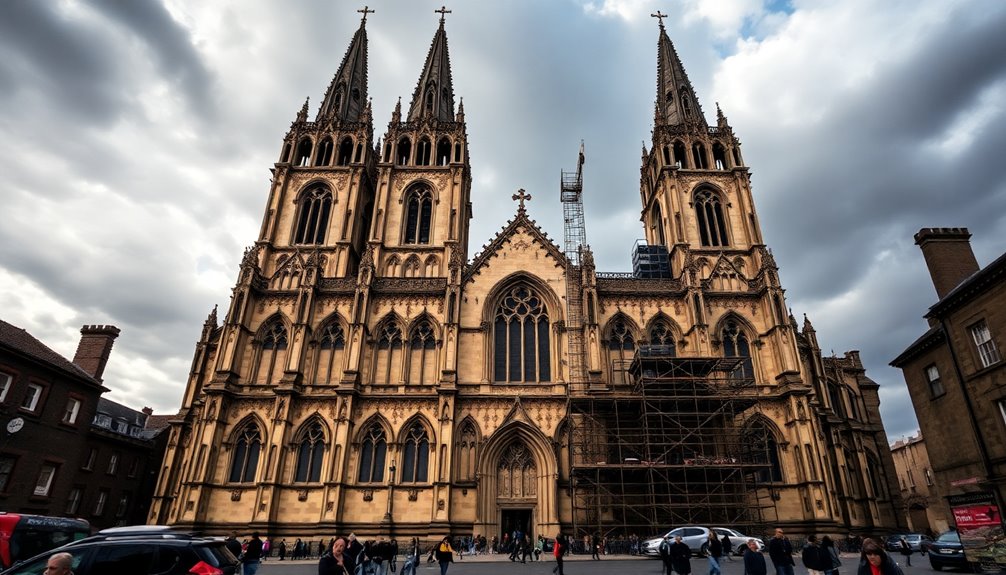
While the lives of Kingsbridge’s inhabitants unfold against the backdrop of political strife and personal ambition, the cathedral stands as a powerful symbol of hope and perseverance.
The construction of Kingsbridge Cathedral represents Tom Builder’s lifelong dream, showcasing his ambition and determination. Its development highlights the evolving architectural techniques of 12th-century England, emphasizing the importance of communal spaces in medieval life.
As various characters face their struggles, the cathedral intertwines their stories, reflecting the historical context of conflict during the Anarchy. Prior Philip’s leadership exemplifies resourcefulness and the blend of faith with politics.
Ultimately, the cathedral’s successful construction symbolizes not just triumph over adversity, but also the collaborative spirit of the community, uniting builders, craftsmen, and laborers in a shared legacy. This collective effort mirrors the evolution of Gothic architecture, which becomes a defining feature of the period.
Themes of Ambition and Resilience in Medieval Society
Ambition and resilience are central themes that drive the narrative of “The Pillars of the Earth,” illuminating the struggles of individuals within the constraints of medieval society.
Characters like Tom Builder and Aliena embody ambition as they chase their dreams despite societal limitations in 12th-century England.
Jack Jackson’s evolution from stonemason to architect showcases his resilience in overcoming personal and political hurdles amid the Anarchy.
The Kingsbridge community’s collective ambition shines as they rebuild after the tyranny of figures like William Hamleigh.
Aliena’s journey from an earl’s daughter to a thriving wool merchant highlights her resilience in reclaiming her family’s honor.
The construction of Kingsbridge Cathedral symbolizes the enduring ambition and spirit of these characters, reflecting their relentless pursuit of hope.
This pursuit mirrors the importance of community support seen in how characters in “A Fine Balance” unite against systemic oppression.
The Influence of Architecture on Character Development
Architecture markedly shapes character development in “The Pillars of the Earth,” driving personal ambitions and transformations. The aspiration to construct Kingsbridge Cathedral fuels characters like Tom Builder and Prior Philip, molding their identities and goals.
As Jack Jackson evolves from a stonemason’s son to a skilled architect, his journey showcases individual creativity within monumental projects. The architectural challenges, such as resource scarcity and political unrest, highlight characters’ resilience in a tumultuous medieval society.
For Aliena, the cathedral becomes a symbol of hope, empowering her through active involvement in its creation. Follett emphasizes how the act of building a cathedral intertwines with the characters’ lives, relationships, and destinies, illustrating architecture‘s profound influence on human experience. This narrative echoes the importance of informed consent in medical research, showcasing how individuals navigate challenges that shape their legacies.
How Follett Blends Fiction With Historical Events
In “The Pillars of the Earth,” you’ll see how Follett skillfully weaves historical events into his narrative.
By blending real figures like King Henry II with fictional characters, he creates a rich tapestry that reflects the struggles of the time.
The architectural significance of cathedrals also plays a crucial role, grounding the story in the socio-political dynamics of 12th-century England. This interplay of historical context and fiction highlights the complexities of human experience amid societal upheaval.
Historical Context Integration
While exploring the tumultuous backdrop of 12th century England, you’ll discover how Ken Follett masterfully intertwines fictional narratives with historical events in “The Pillars of the Earth.”
By placing characters like Tom Builder and Prior Philip alongside real figures such as King Henry I and Thomas Becket, Follett creates a rich tapestry that feels both authentic and engaging.
His extensive research into medieval architecture, particularly through sources like “An Outline of European Architecture,” grounds the story in the realities of cathedral construction.
Events like the sinking of the White Ship shape the political landscape and enrich character development.
The fictional town of Kingsbridge mirrors real medieval locations, allowing you to connect with the era’s architectural and cultural advancements.
Character Driven Narratives
Ken Follett’s characters in “The Pillars of the Earth” bring to life the societal struggles of 12th-century England, intertwining their fictional journeys with the era’s historical events.
Through character-driven narratives, you’ll see how figures like Aliena and Prior Philip navigate the chaos of the Anarchy, reflecting personal ambition against a backdrop of political conflict.
Each character, with their relatable flaws and aspirations, embodies the complexities of medieval life.
Follett expertly incorporates real historical figures and events, like cathedral construction, enriching your understanding of the period.
Architectural Significance Explored
The architectural evolution of Gothic cathedrals stands at the heart of “The Pillars of the Earth,” revealing how Follett seamlessly intertwines fiction with the historical realities of 12th-century England.
As you explore the narrative, you’ll see the significance of building a cathedral during the Anarchy, reflecting societal values and religious fervor.
- Follett highlights technological advancements in medieval architecture.
- The fictional town of Kingsbridge embodies the clash between secular and religious powers.
- Characters like Tom Builder and Prior Philip illustrate personal sacrifices for a collective dream.
- The narrative reveals the collaborative effort required to bring monumental projects to life.
Through these elements, Follett enriches your understanding of the historical context while engaging your imagination.
The Role of Women in the Construction of Cathedrals
Although often overlooked, women played a crucial role in the construction of cathedrals during the medieval period, as depicted in “The Pillars of the Earth.”
Characters like Ellen demonstrate that women weren’t just supporters; they actively participated in various tasks, from stone carving to managing household responsibilities that kept the builders’ lives running smoothly.
Historical research shows women worked alongside men on cathedral sites, challenging the traditional narrative that excludes their contributions.
Ellen’s character, literate and knowledgeable in multiple languages, highlights the significance of women in a male-dominated society.
Follett’s inspiration from Jean Gimpel’s “The Cathedral Builders” reinforces this idea, making it clear that women’s roles were essential to the success of monumental architectural projects like cathedrals.
Furthermore, *The Pillars of the Earth* echoes themes of systemic oppression found in Richard Wright’s *Native Son*, illustrating how marginalized groups have historically contributed to society despite facing significant barriers.
Notable Events That Drive the Plot Forward
In “Pillars of the Earth,” the Anarchy civil war creates a chaotic backdrop that deeply affects the characters’ lives and ambitions.
You’ll see how Tom Builder’s quest to construct a cathedral intertwines with the political unrest, showcasing the challenges he faces.
As tensions rise, these events propel the narrative and shape the destinies of those involved. The themes of moral integrity and social class, much like in Dickens’ works, resonate throughout the characters’ struggles and ambitions.
The Anarchy Civil War
As the Anarchy unfolded, England plunged into chaos, driven by the fierce rivalry between Empress Maud and King Stephen of Blois. This brutal civil war reshaped the kingdom and impacted the lives of its people.
Key events fueled the conflict, creating a landscape of destruction and uncertainty:
- The sinking of the White Ship in 1120 sparked a succession crisis.
- Shifting allegiances led to unpredictable outcomes on the battlefield.
- The siege of Lincoln Castle in 1141 resulted in King Stephen’s capture.
- Ordinary citizens suffered immensely as local lords clashed for power.
The Anarchy’s turmoil not only destabilized England but also paved the way for the rise of the Plantagenet dynasty, setting the stage for future conflicts.
Cathedral Construction Challenges
While the construction of Kingsbridge Cathedral unfolds, the myriad challenges faced by Tom Builder and his team become a compelling reflection of the era’s complexities.
Ken Follett’s narrative captures the harsh realities of cathedral construction challenges, from securing funding to maneuvering the treacherous political landscape.
As Tom struggles to gather resources in a time of economic hardship, the backdrop of the Anarchy complicates every decision.
William Hamleigh’s tyrannical reign disrupts progress, leading to the community’s resilience as they rally to rebuild after destruction.
Each setback drives the plot forward, emphasizing the characters’ determination.
Ultimately, the cathedral’s completion embodies hope, showcasing how perseverance can triumph over societal and natural obstacles in a tumultuous medieval world.
The Impact of Follett’s Writing Style on Reader Engagement
Ken Follett’s writing style greatly enhances reader engagement, making it easy for you to plunge into the intricate historical world of “The Pillars of the Earth.” His straightforward yet powerful prose draws you into the lives and struggles of well-crafted characters, ensuring that you remain invested in their journeys.
As a master storyteller, Follett’s narrative keeps you turning pages late into the night.
- His simple writing allows for easy immersion in complex history.
- Minimal architectural details focus your attention on character development.
- Emotional depth evokes strong responses and keeps you connected.
- The blend of historical accuracy and fiction captivates a diverse audience.
Follett’s style truly elevates your reading experience, making it unforgettable. Additionally, his exploration of social injustice illuminates the struggles faced by marginalized communities, much like the themes found in Rohinton Mistry’s *A Fine Balance*.
Adaptations and Their Reception in Modern Culture
The television series, which debuted in 2010, reached a global audience and showcased stunning production values, even if reviews were mixed. Lead performances by Ian McShane and Eddie Redmayne stood out, capturing viewers’ attention.
In 2016, a Danish musical adaptation, “Jordens Søjler,” further highlighted the story’s cultural significance beyond the page. Interest remains high, as seen with a delayed Spanish adaptation announced in 2019.
Additionally, the adventure video game released in 2017 allowed fans to interact with the narrative in new ways. While adaptations may vary, they all contribute to ongoing discussions about themes, including those relevant to groups like the Plymouth Brethren. The enduring appeal of the story is reflected in its ability to resonate with themes of ambition and rivalry, which continue to engage audiences across different mediums.
Lessons Learned From the Pillars of the Earth
Resilience is a powerful lesson drawn from “The Pillars of the Earth,” as it vividly illustrates the human spirit’s ability to endure and thrive amidst adversity.
Characters like Tom Builder and Prior Philip navigate immense challenges, reflecting how ambition fuels progress, even in the face of King Henry’s reign and civil strife.
Here are some key takeaways:
- Community Development: Construction of cathedrals fosters unity and purpose.
- Historical Context: Understanding political loyalties and conflicts shapes our decisions today.
- Collaboration: The achievements of builders and craftsmen highlight teamwork’s importance.
- Pursuit of Dreams: Despite obstacles, staying committed to your vision leads to success.
These lessons resonate, reminding us of the strength found in perseverance and collaboration.
Conclusion
So, you’ve journeyed through Ken Follett’s sprawling saga, where ambition and resilience are the real builders of Kingsbridge Cathedral—who needs cranes, right? You’ve met characters so vivid you might think they’re lurking in your closet, waiting to discuss feudal politics. And let’s not forget the architectural lessons; forget your day job, you could be a medieval architect! In the end, you realize that whether it’s bricks or dreams, it’s all about how you stack ’em.