

In ‘The Book Thief’, Death narrates the story with a unique perspective, reflecting on the beauty and brutality of humanity during World War II. Set in Nazi Germany, the tale explores themes of mortality, love, and the power of words amidst chaos. Liesel’s journey, shaped by loss and connection through literature, highlights the resilience of the human spirit. As Death shares these insights, you’ll discover how deeply intertwined language and life really are.
The Unique Perspective: Death as the Narrator

As you explore “The Book Thief,” you’ll quickly notice the unique choice of Death as the narrator, which adds a compelling layer to the story.
This omniscient narrator offers a remarkable perspective on the human experience during World War II. Death reveals characters’ fates in advance, creating dramatic irony that deepens your understanding of their journeys, especially Liesel’s.
With a blend of weariness and empathy, Death reflects on the beauty and brutality of humanity, serving as an impartial observer in a tumultuous time.
Death, with weary empathy, captures the stark beauty and brutality of humanity as an impartial observer in chaotic times.
Markus Zusak’s creative decision to use Death encourages you to contemplate life, mortality, and the power of words, showcasing the worth of every human story throughout this poignant tale. Ultimately, the narrative emphasizes the transformative power of language in shaping identities and fostering resilience amidst adversity.
Setting the Stage: Nazi Germany and Its Impact
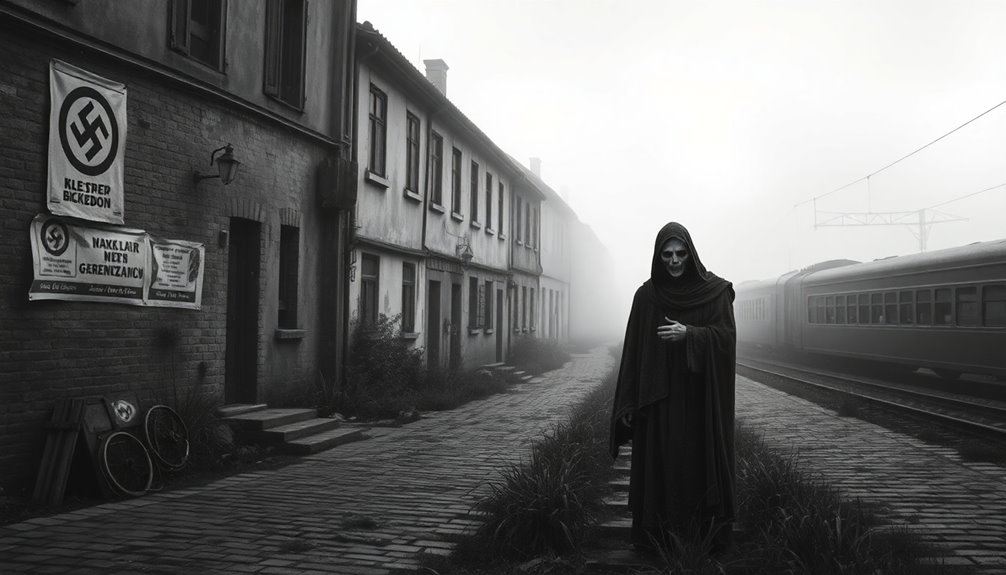
In “The Book Thief,” you find yourself in Molching, Germany, during the harrowing days of World War II, where the Nazi regime casts a long shadow over everyday life. This oppressive atmosphere shapes the characters’ experiences and relationships, revealing the constant threat they face. As you explore Liesel’s journey, you’ll see how the turmoil around her drives her to seek refuge in the power of words. The Holocaust serves as a grim reminder of the dangers of defying tyranny, enhancing the urgency of Liesel’s quest for knowledge and connection.
Historical Context of War
While traversing the harrowing landscape of Nazi Germany during World War II, readers of *The Book Thief* encounter a world steeped in fear and brutality.
The story unfolds in Molching, where Liesel’s foster family hides Max Vandenburg, a Jewish man, highlighting the moral complexities of survival.
Death narrates this poignant tale, revealing the emotional scars inflicted on individuals and families amidst the chaos.
As the narrative progresses, it captures the historical realities of the Holocaust, showcasing how ordinary citizens grapple with danger.
Yet, in this dark setting, the human spirit shines through resilience.
The book serves as a powerful reminder of the strength that can emerge, even when faced with the horrors of war and oppression.
Life Under Nazi Regime
The oppressive atmosphere of Nazi Germany profoundly shapes the lives of its citizens, impacting every aspect of daily existence. You witness Liesel Meminger maneuvering a world filled with fear and oppression, where even the simplest joys are tainted by the regime’s brutality.
- The constant dread of discovery as Hans Hubermann hides Max Vandenburg, a Jewish man, in their basement.
- The chilling silence in classrooms where censorship flattens creativity and stifles children’s experiences.
- The moral complexities faced by families torn between survival and their beliefs.
Through the narrative voice, you feel the weight of human existence under such tyranny, as Liesel and her loved ones confront the harsh realities of life in Nazi Germany.
Impact on Characters’ Lives
As the oppressive shadows of Nazi Germany loom large, characters like Liesel, Hans, and Max confront the harsh realities that shape their lives and decisions.
Liesel’s journey is marked by the death of her brother, a loss that haunts her and deepens her emotional connection to books. In a world where survival often demands difficult choices, Hans and Max navigate moral dilemmas, risking their safety to help others.
The pervasive atmosphere of death influences their actions, as seen in Michael Holtzapfel’s tragic suicide, driven by survivor’s guilt. For Liesel, stealing books becomes a rebellious escape, a lifeline amidst the chaos.
Each character’s life intertwines with the impact of the regime, ultimately shaping their identities and destinies.
Exploring the Themes of Mortality and Humanity

In the haunting narrative of *The Book Thief*, Death acts as an impartial observer, offering insights into mortality that challenge you to confront both the beauty and brutality of human existence.
As Liesel navigates the horrors of World War II, you witness the profound impact of loss on the human heart. Through her journey and stolen stories, the narrative explores the complexities of humanity, revealing the duality of good and evil.
- The delicate balance of laughter and tears amidst grief
- The piercing silence of a world consumed by war
- The transformative power of words as a lifeline
Ultimately, Death reminds you of life’s fleeting nature and the significance of each individual story within the collective experience of mortality. This narrative technique, with Death as the storyteller, prompts reflection on the fragility of life and invites critical thinking about the human experience during wartime.
Character Insights: How Does Death Shape Their Stories?
While maneuvering through the tumultuous landscape of World War II, you’ll find that Death’s role as the narrator profoundly shapes the characters’ stories.
Death offers unique insights into the human experience, revealing Liesel’s journey as she steals books—acts of defiance symbolizing hope. Through Death’s observations, you witness Hans Hubermann’s compassion, highlighting humanity amidst societal brutality.
The emotional weight of grief resonates through characters like Ilsa Hermann and Michael Holtzapfel, whose struggles with loss unfold under Death’s empathetic lens. This perspective encourages you to reflect on the complexities of human nature, as the characters navigate their relationships, fears, and moral dilemmas throughout the narrative, illustrating the profound impact of Death on their intertwined stories. Furthermore, Death’s narrative mirrors the theme of emotional expression, showcasing how characters cope with their sorrows and desires amidst the chaos of war.
The Emotional Depth of Liesel’s Journey
Death’s observations not only illuminate the struggles of those around Liesel but also reveal the profound emotional depth of her own journey.
As she navigates through loss and healing, Liesel discovers the power of words and friendship in a world filled with despair.
- The sting of her brother’s death fuels her need for connection through literature.
- The warmth of Hans’s support envelops her like a comforting blanket amidst the chaos of war.
- Rudy’s unwavering loyalty becomes a beacon of light, reminding her of innocence lost.
Through these experiences, Liesel transforms, finding solace in stolen stories and forging bonds that help her heal, proving that even in adversity, love and words can weave a path to emotional resilience. Additionally, her relationship with Max Vandenburg exemplifies the transformative power of friendship during difficult times.
The Lasting Legacy of ‘The Book Thief’
Timelessness defines the legacy of ‘The Book Thief,’ as its poignant exploration of humanity and resilience continues to resonate with readers across generations.
This book shows you how humans can be at their best amidst the ugly and their beauty, all narrated by Death. Through Liesel’s journey, you encounter powerful themes of love, loss, and the moral implications of war, which evoke deep emotional responses.
With its unique narrative perspective, the story challenges your views on mortality and the human experience. The haunting impact of Markus Zusak’s storytelling has kept ‘The Book Thief’ on the New York Times bestseller list for over a decade, proving it’s not just a book; it’s a timeless reflection of life itself. Additionally, the novel emphasizes the power of words as a means of resilience and hope in dark times.
Conclusion
In “The Book Thief,” you feel the weight of loss and resilience through Death’s eyes. Imagine this: during WWII, an estimated 6 million Jews perished, each story cut short, yet Liesel’s journey breathes life into those silenced voices. You see her strength and vulnerability, and it sticks with you long after the last page. Death isn’t just an end; it’s a reminder of the beauty found in words and the indomitable spirit of humanity amidst chaos.