

If you want to grasp the essence of power, loyalty, and morality within the mafia, Mario Puzo’s *The Godfather* is a must-read. The intricate dynamics of the Corleone family unfold with depth, revealing the complexities behind each character’s choices. Puzo’s engaging style immerses you in vivid imagery and authentic dialogue, creating emotional connections that stick with you. Discovering the novel means you’ll uncover layers of meaning and rich themes that the film adaptation only hints at.
Why Mario Puzo’s The Godfather Is a Timeless Classic

Although many stories explore themes of power and family, Mario Puzo’s “The Godfather” stands out as a timeless classic that captures the intricate dynamics of the Corleone family.
Published in 1969, this classic novel immerses you in the world of the Sicilian mafia, showcasing the struggles for power and the moral complexities that come with it.
This classic novel plunges readers into the Sicilian mafia, revealing power struggles and moral complexities.
Puzo’s compelling narrative, featuring multiple character perspectives, keeps you engaged while revealing deep family loyalties and sacrifices.
The emotional impact of his authentic writing style resonates across generations, making you reflect on justice’s duality.
With iconic quotes and unforgettable scenes, “The Godfather” continues to influence popular culture, solidifying its place as a must-read for anyone interested in powerful storytelling. The themes of ambition and rivalry echo throughout the narrative, much like the stories of Kane and Abel.
Exploring the Complex Dynamics of the Corleone Family
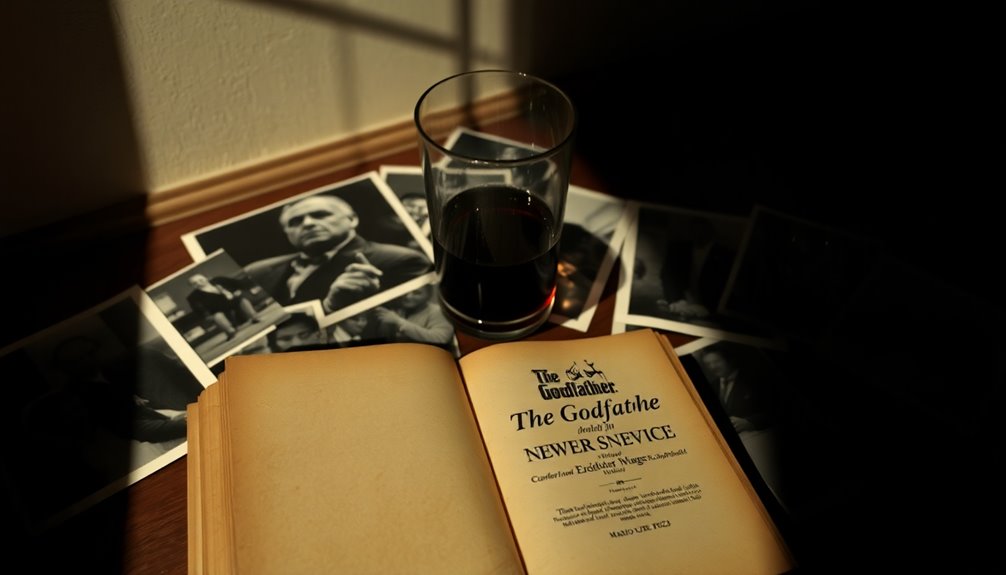
As you explore the intricate world of the Corleone family, you’ll discover how loyalty and power intertwine in the lives of its members. Led by the formidable Don Vito Corleone, the family embodies the challenges of balancing personal ethics with the weight of familial obligations.
Michael Corleone’s journey from a reluctant outsider to a pivotal player illustrates the relentless pressure of legacy. Meanwhile, characters like the impulsive Sonny and the calculating Tom Hagen respond to loyalty in their distinct ways, showcasing the consequences of their choices.
The family’s adherence to Sicilian values, including honor and reciprocity, shapes their interactions. As they navigate their evolving identities, the tension between traditional roles and moral ambiguity remains palpable throughout their criminal endeavors. This juxtaposition of Sicilian Honor vs. Brutality highlights the moral complexities that define their characters and decisions.
The Themes of Power, Loyalty, and Morality in The Godfather

The intricate world of the Corleone family reveals profound themes of power, loyalty, and morality that resonate throughout the narrative.
Power shifts seamlessly from Vito Corleone to his son Michael, illustrating the complex dynamics of authority in organized crime. You’ll see how loyalty binds family members, often forcing them into moral quandaries that lead to violence and betrayal.
The transition of power from Vito to Michael Corleone reveals the intricate ties of loyalty and the moral dilemmas within organized crime.
Characters grapple with the blurred lines between legal and illegal means of success, as Don Vito’s refusal to engage in the drug trade highlights his ethical standards.
Morality is multifaceted here; you’ll witness choices that pit familial loyalty against societal laws and personal integrity, emphasizing the sacrifices made for family and the deep-rooted values that govern their actions. Additionally, the theme of systemic racism in literature mirrors the ethical dilemmas faced by the Corleones, showcasing how societal structures influence personal choices.
How Puzo’s Writing Style Engages Readers
Mario Puzo’s writing style in “The Godfather” captivates readers with its engaging readability and immersive storytelling. His ability to weave multiple perspectives allows you to explore deep into the complex lives and motivations of the characters.
You’ll find yourself invested in their moral dilemmas, as Puzo paints vivid imagery and provides detailed backstories that keep you turning pages late into the night. The authentic dialogue reflects real speech patterns, making the characters relatable and their conflicts resonate emotionally.
This connection draws you deeper into the narrative, provoking thought about loyalty, power, and morality. Puzo’s masterful writing not only entertains but also encourages meaningful discussions, making your reading experience truly enriching. Moreover, the themes of systemic oppression in literature echo the moral complexities Puzo explores, enhancing the depth of character interactions and societal commentary.
Key Characters and Their Development Throughout the Novel
Key characters in “The Godfather” undergo profound transformations that drive the narrative’s emotional weight and thematic depth.
Don Vito Corleone stands as a wise patriarch, committed to his moral code, even when tempted by the drug trade.
In contrast, Michael Corleone evolves from a reluctant outsider to a ruthless leader, shaped by loyalty and the stark realities of family obligations.
Sonny Corleone’s impulsiveness and fierce loyalty ultimately lead to his tragic downfall, serving as a cautionary tale.
Meanwhile, Kay Adams grapples with the complexities of the Corleone family, embodying the outsider’s perspective.
Tom Hagen, the adopted son and consigliere, expertly navigates organized crime, balancing pragmatism and loyalty, highlighting the intricate relationships within the mafia hierarchy.
The emotional journeys of these characters echo the themes of systemic racism found in Richard Wright’s *Native Son*, illustrating how societal pressures can shape individual destinies.
The Cultural Impact of The Godfather on Society
Cultural phenomena often shape our understanding of various communities, and “The Godfather” is no exception. This iconic story has left an indelible mark on society, influencing how we view family loyalty and organized crime.
Here are some key impacts:
- It reshaped perceptions of Italian-American culture, complicating stereotypes.
- The novel and film sparked conversations about morality and justice in crime.
- Memorable quotes and scenes became cultural touchstones, appearing in diverse media.
- Its themes resonate across generations, keeping discussions about family loyalty alive.
- The story’s exploration of power and loyalty in organized crime continues to resonate with audiences today.
Comparing the Novel and Film: What’s Different?
While the film adaptation of “The Godfather” is widely regarded as a masterpiece, the original novel offers a richer and more nuanced exploration of its characters and themes.
The book probes deeper into the backstories of key figures, like Michael Corleone, allowing you to understand his motivations and struggles more fully. For instance, Michael’s time in Sicily and his relationship with Apollonia receive much more detail in the novel, enhancing the emotional weight of his choices.
Additionally, subplots like Johnny Fontaine’s battle with fame and the intricate family dynamics are less emphasized in the film.
The novel’s structure also presents events from various perspectives, creating a more complex narrative than the film’s streamlined approach. Moreover, the intricate plot and iconic twist ending showcase Puzo’s masterful storytelling, similar to the techniques used in Agatha Christie’s “And Then There Were None.”
The Importance of Character Perspectives in the Story
The novel’s structure plays a vital role in shaping the reader’s understanding of character perspectives, which adds layers to the story. By presenting multiple viewpoints, you gain insight into the complexities of the Corleone family.
Here are four reasons why these character perspectives matter:
- Motivations Revealed: You’ll see why characters make certain choices, enhancing your empathy for them.
- Complex Relationships: The narrative showcases the intricate ties between loyalty and betrayal within the family.
- Michael’s Evolution: Observing Michael as an outsider allows you to appreciate his transformation amidst the criminal world.
- Moral Ambiguity: The varying perspectives challenge your understanding of right and wrong in a morally gray universe.
Additionally, the exploration of redemption and dignity in character arcs deepens the emotional connection, making the story resonate on many levels.
How The Godfather Reflects Italian-American Culture
In “The Godfather,” you see how family dynamics and loyalty shape the Italian-American experience. The characters embody cultural values and traditions that highlight the importance of honor and respect within their communities. You’ll also notice how masculinity is portrayed, reflecting the pressure on men to uphold family legacies while pursuing personal success. This narrative resonates with themes of power dynamics that challenge societal norms and explore deeper layers of personal identity.
Family Dynamics and Loyalty
Exploring the intricate relationships within the Corleone family reveals how deeply loyalty and honor resonate in Italian-American culture. Puzo intricately weaves family dynamics that demonstrate the weight of these values, often leading characters to make tough choices.
Here are four key elements that highlight these themes:
- Omertà: The unspoken code of silence that governs family loyalty.
- Connie’s Wedding: A pivotal event that emphasizes the importance of family gatherings.
- Don Vito and Michael: Their struggles between ambition and loyalty showcase internal family conflicts.
- Sacrifice: Characters frequently make morally ambiguous choices for the sake of family honor.
These elements not only drive the narrative but also reflect the broader Italian-American experience.
Cultural Values and Traditions
Cultural values and traditions pulse through the pages of “The Godfather,” offering a vivid portrayal of Italian-American life. The narrative intricately weaves family loyalty, respect, and honor, showcasing how these principles shape the characters’ actions and decisions.
The Corleone family’s dynamics highlight the importance of “omertà,” the code of silence that defines their world. You see how loyalty to family often eclipses personal morality, illustrating the weight of familial bonds.
Rituals, such as Connie Corleone’s wedding, serve as powerful reminders of communal ties and shared heritage. Characters like Don Vito Corleone embody traditional patriarchal roles, reflecting the gender expectations within Italian-American families, making the novel a rich exploration of cultural values that resonate deeply.
Representation of Masculinity
Masculinity in “The Godfather” serves as a powerful lens through which you can examine Italian-American culture, revealing deep-rooted values of strength and authority. The portrayal of masculinity is multifaceted, reflecting both honor and violence within the family structure.
Here are key aspects to contemplate:
- Don Vito Corleone embodies traditional masculine traits—strength and authority—as the family protector.
- Michael Corleone’s evolution illustrates the pressure to conform to expectations of masculinity and leadership.
- Defined gender roles show men holding power while women navigate a patriarchal society, often sidelined.
- Violence and loyalty highlight darker aspects of masculinity, as characters like Sonny Corleone act impulsively to defend family honor.
These elements collectively illustrate the complexities of masculinity in Italian-American culture.
The Role of Violence and Justice in the Narrative
While traversing the treacherous waters of organized crime, you’ll find that violence in “The Godfather” is more than just a means to an end; it’s a fundamental aspect of the mafia’s code.
Characters like Don Vito Corleone often blur the lines between justice and morality, using lethal actions to protect family honor.
Michael Corleone’s violent choices against Sollozzo and McClusky ignite a cycle of vengeance, escalating tensions within the Corleone family and their rivals.
Michael Corleone’s brutal decisions spark a relentless cycle of vengeance, intensifying conflicts within the Corleone family and their adversaries.
This portrayal of violence exposes themes of loyalty and betrayal, forcing characters to choose between personal morals and familial allegiance.
Ultimately, the narrative suggests that traditional notions of justice are subverted, replaced by a ruthless code prioritizing power and loyalty over law and order. Additionally, much like Richard Wright’s *Native Son*, the consequences of systemic oppression and societal neglect are reflected in the characters’ actions and motivations, highlighting the impact of a social environment on individual choices.
Insights Into the Mafia’s Code of Conduct
In “The Godfather,” loyalty among family members is a cornerstone that shapes every decision the characters make.
You’ll see how respect and fear create a delicate balance within the mafia’s hierarchy, influencing their relationships and actions.
These dynamics reveal the complexities of the code that governs their lives, making the story all the more compelling.
Loyalty Among Family Members
Loyalty among family members stands as a cornerstone of the mafia’s intricate code of conduct, shaping not only personal relationships but also the very fabric of their criminal enterprise. In “The Godfather,” you see how loyalty is paramount, influencing actions and decisions.
Here are some key insights:
- Prioritization: Family loyalty supersedes personal desires and morality.
- Honor and Ethics: Don Vito Corleone’s stance against the drug trade highlights family honor over profit.
- Reciprocity: Favors within the family are sacred, reinforcing loyalty and bonds.
- Consequences of Betrayal: Betrayal isn’t taken lightly; it’s met with severe repercussions, emphasizing loyalty’s enforcement.
These elements illustrate that loyalty isn’t just an expectation—it’s a crucial part of mafia life that shapes everything.
Respect and Fear Dynamics
Family loyalty lays the groundwork for understanding how respect and fear operate within the mafia’s code of conduct.
In this world, respect is everything; it’s the glue that binds the family and guarantees survival. When you show loyalty and adhere to the rules, you gain respect, which often leads to favors.
However, fear plays an important role too. Mafia leaders, like Don Vito Corleone, wield fear strategically, securing obedience through the threat of retribution.
Attacks on women and children remain taboo, highlighting the importance of family honor.
The intricate dance between respect and fear creates a unique dynamic; while respect fosters camaraderie, fear reinforces order, making both essential for maintaining control in the criminal underworld.
The Novel’s Exploration of Gender Roles and Relationships
While delving into the world of *The Godfather*, you quickly notice how the novel explores rigid gender roles that shape the lives of its characters. Here are some key aspects to reflect upon:
- Power Dynamics: Men dominate the criminal underworld, while women, like Kay Adams, often find themselves in supportive roles.
- Protection vs. Objectification: Mafia culture protects women and children yet simultaneously objectifies them, creating a complex relationship.
- Kay Adams’ Perspective: As Michael Corleone’s girlfriend, she grapples with the moral implications of his family’s actions, longing for a conventional life.
- Contrasting Relationships: Johnny Fontane’s flaws reveal societal attitudes, contrasting with Don Corleone’s values of loyalty and respect towards women.
This exploration of gender roles deepens your understanding of the characters and their relationships.
Reader Experiences: Emotional Connections to The Godfather
Emotional resonance defines the experience of reading *The Godfather*, drawing readers into its intricate world of loyalty, power, and sacrifice. Many readers, like Jerry Locke, have connected with the story during pivotal life moments, such as military service, making the emotional connections even more profound.
Barbara Winters Kottmeier highlights her appreciation for both the book and film, underscoring the universal appeal of its themes. John Slavin finds that the deeper context in the novel amplifies the emotional impact of the characters.
As you explore the complex family dynamics in *The Godfather*, you’re likely to reflect on your experiences, feeling a strong sense of nostalgia and familiarity with the themes of family loyalty and sacrifice that resonate throughout the narrative.
Why Should You Read the Novel Before Watching the Film?
Reading Mario Puzo’s novel before watching the film gives you a deeper understanding of the characters and their motivations.
You’ll encounter unique narrative perspectives and richer thematic explorations that the movie just can’t capture.
Enhanced Character Development
To fully grasp the intricate dynamics of the Corleone family, diving into the original novel of “The Godfather” is essential.
Mario Puzo’s work goes beyond the film by offering:
- In-depth backstories: Understand the motivations of Michael and Don Vito Corleone.
- Multiple perspectives: Gain insight into relationships and conflicts within the family.
- Rich character development: Experience significant transformations that the film simplifies or omits.
- Emotional connections: Engage with subplots that enhance your attachment to the characters.
Reading the “Godfather” by Mario allows you to appreciate Michael’s complex evolution from outsider to key player, making your viewing of the film all the more impactful.
Don’t miss out on this deeper exploration of character development!
Deeper Thematic Exploration
While the film adaptation of “The Godfather” is certainly a classic, the original novel provides a deeper thematic exploration that enriches your understanding of the story.
Puzo dives into complex thematic elements like family loyalty, power dynamics, and moral ambiguity, giving you a richer context for the characters’ motivations. You’ll uncover significant backstories, especially Michael Corleone’s transformation, which adds emotional depth.
The novel also captures the intricacies of Sicilian culture, offering a nuanced view of organized crime that the film simplifies.
Unique Narrative Perspectives
Diving into the novel “The Godfather” before watching the film reveals a tapestry of unique narrative perspectives that enrich your understanding of the characters and their motivations. Here’s why it’s essential:
- Multiple Viewpoints: Experience the story through various characters, deepening your grasp of their emotions and choices.
- Richer Backstories: Gain insights into Michael and Sonny Corleone’s backgrounds, enhancing your appreciation of their character development.
- Family Dynamics: Explore the intricate relationships within the Corleone family, highlighting their moral complexities.
- Nuanced Themes: Investigate themes of loyalty and ethics that the film glosses over, providing a fuller picture of personal conflicts.
Conclusion
To sum up, reading Mario Puzo’s The Godfather deepens your understanding of the intricate world of the Corleone family and the moral dilemmas they face. Did you know that over 21 million copies of the novel have been sold worldwide? This statistic highlights its enduring popularity and impact on culture. By diving into the book before seeing the film, you’ll appreciate the rich character development and themes that make Puzo’s work a timeless classic.