

In Laura Esquivel’s *Like Water for Chocolate*, passion truly comes alive on a plate. Tita, the main character, channels her emotions into cooking, using food as a powerful medium to express longing and desire. Each dish she prepares tells a story, blending magical realism with personal struggle. Torn between family duty and love, Tita’s culinary artistry becomes her rebellion. This tale intertwines themes of longing, tradition, and empowerment, inviting you to uncover the deeper layers of her journey.
The Essence of Magical Realism in Like Water for Chocolate

In “Like Water for Chocolate,” the essence of magical realism unfolds as everyday life seamlessly intertwines with fantastical elements, creating a rich tapestry of emotions and cultural significance.
You’ll notice how food becomes a powerful conduit for expressing feelings; Tita’s dishes evoke intense emotions and even supernatural reactions in those who eat them.
The backdrop of the Mexican Revolution adds depth, merging personal struggles with societal upheaval, all through the lens of magical realism.
Extraordinary events, like Tita’s tears turning a wedding cake sorrowful, illustrate the blend of the mundane and the magical.
Laura Esquivel masterfully employs magical realism to amplify themes of love, tradition, and rebellion, inviting you to explore complex emotional landscapes within a culturally vibrant framework. This narrative not only highlights traditional Mexican culinary practices but also showcases how food serves as a metaphor for emotional expression.
Meet Tita: The Heart and Soul of the Story
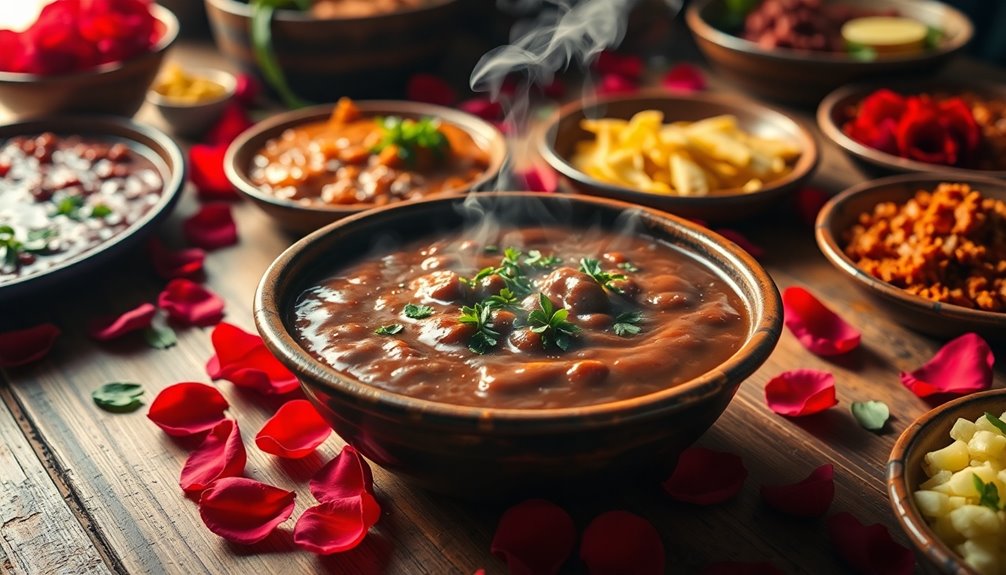
Tita stands as the heart and soul of “Like Water for Chocolate,” embodying the struggles and passions that define her world.
As the youngest daughter of Mama Elena, she faces the suffocating weight of family tradition, bound to care for her mother and forbidden to marry. Her intense, unfulfilled passion for Pedro complicates her existence, especially when he marries her sister Rosaura just to stay close to her. This choice reflects Tita’s internal conflict between love and duty.
Her unique gift for cooking becomes her voice, allowing her to express emotions and desires that words cannot. Through each dish, Tita navigates the complexities of love and tradition, ultimately illustrating her resilience in a patriarchal society. This connection to cultural identity and tradition serves as a powerful reminder of how food can reflect one’s heritage and personal struggles.
The Role of Food as Emotional Expression

Food becomes a profound vessel for emotional expression in “Like Water for Chocolate,” allowing Tita to channel her unspoken feelings into every dish she creates. Each meal symbolizes a significant moment in her life, revealing her longing and passion.
Take the Quail in Rose Petal Sauce, for example; it evokes desire and nostalgia in those who taste it. Tita’s culinary art reflects her inner turmoil and rebellious spirit, turning the kitchen into a battleground for her unfulfilled desires.
Cooking becomes her voice, transcending words, as she conveys love, sorrow, and defiance through flavors and aromas. Food is intricately tied to memory and identity, showing how Tita’s emotional state directly influences her meals and the reactions of those who partake. This connection between food and emotional states underscores the magical realism that permeates the narrative, enriching Tita’s journey.
Passionate Love vs. Companionate Love: A Dual Perspective
In “Like Water for Chocolate,” you see how Tita grapples with the intensity of passionate love for Pedro, which fuels her creativity but also leads her to despair. Meanwhile, Dr. John Brown offers her the stability of companionate love, highlighting the struggle between desire and security. This tension reveals the complexities of Tita’s love dilemma and the need for balance in our own relationships. Ultimately, Tita’s journey illustrates the powerful interplay between forbidden love and societal expectations, emphasizing the importance of self-discovery amidst emotional turmoil.
Passionate Love’s Intensity
While passionate love often ignites a fervent fire within us, it can also lead to emotional chaos, as vividly illustrated in “Like Water for Chocolate.”
Tita’s intense longing for Pedro serves as a powerful reminder of how unfulfilled desires can spiral into self-destructive behavior, overshadowing the potential for happiness.
Consider the intensity of passionate love and its impact:
- It drives you to act impulsively, often against your better judgment.
- It creates emotional turmoil that can cloud your future.
- It heightens your desires, making you crave what you can’t have.
- It highlights the stark contrast between longing and fulfillment.
Esquivel’s portrayal emphasizes that while passionate love enriches life, it can also lead to chaos if left unchecked.
Companionate Love’s Stability
Although Tita’s heart yearns for the fiery passion she shares with Pedro, the stability offered by companionate love, especially through John, presents a compelling alternative.
John’s selfless nature and calm demeanor provide Tita with a sense of security that her relationship with Pedro lacks. With John, she sees the potential for a family and a future, emphasizing the long-term benefits of companionate love.
Tita’s internal struggle highlights her desire for passionate love, but her consideration of John reveals a growing appreciation for the emotional peace found in companionate connections.
This juxtaposition underscores the necessity of both passionate and companionate love, suggesting that a balanced relationship often requires embracing the stability that comes from companionship alongside the thrill of passion.
Tita’s Love Dilemma
Tita finds herself caught in a whirlwind of emotions as she navigates her love for Pedro and John, each representing a distinct path in her life.
Tita’s love dilemma centers on the balance between passionate love and companionate love, leading to emotional turmoil as she grapples with her feelings.
Consider these key points:
- Passion for Pedro brings intense longing but also self-sabotage and despair.
- Companionate love with John offers stability, emotional support, and a hopeful future.
- Family tradition complicates her feelings, binding her to expectations.
- The duality of her loves highlights the need for balance between passion and companionship for a fulfilling life.
Ultimately, Tita’s journey teaches you that both forms of love are essential.
Tita and Pedro: A Love Defined by Yearning
Tita and Pedro’s love is steeped in unfulfilled desire, marked by a yearning that shapes their every interaction.
You can’t help but feel the weight of their passion, which not only fuels their connection but also leads to heart-wrenching consequences.
As Tita pours her emotions into her cooking, the bittersweet essence of their love story unfolds, revealing the profound complexities of longing within societal constraints. This exploration of forbidden love illustrates how deeply personal relationships can be affected by the oppressive nature of tradition.
Unfulfilled Desire and Longing
In a world where familial duty overshadows personal desire, Tita’s love for Pedro becomes a poignant symbol of unfulfilled yearning. Her intense longing is magnified by several factors:
- Tita’s binding tradition prevents her from marrying Pedro, intensifying her emotional struggles.
- Pedro’s marriage to her sister Rosaura serves as a constant reminder of Tita’s heartache.
- Each dish Tita prepares becomes an expression of her repressed feelings, reflecting her unfulfilled desire.
- Tita’s unreciprocated love leads to self-destructive behaviors, emphasizing the pain of passionate love that can’t flourish.
Through Tita’s journey, Esquivel illustrates the complexities of love and the harsh realities of societal constraints that stifle personal desires, leaving a lasting impact on the heart.
Passionate Love’s Consequences
While societal constraints bind Tita, her passionate love for Pedro becomes both a source of strength and a catalyst for her emotional turmoil.
This intense longing leads to self-destructive behavior, as Tita pours her unfulfilled desire into her cooking. Each dish she prepares, like the quail in rose petal sauce, evokes powerful emotions in others, revealing the bittersweet nature of her love for Pedro.
Yet, this passion brings both energy and despair, highlighting the paradox of love that can energize and devastate simultaneously.
Ultimately, Tita’s yearning for Pedro exemplifies passionate love’s consequences, leaving her with a sense of numbness and hopelessness, as she grapples with the reality that her love remains unfulfilled and unattainable.
John Brown: The Stability of Companionate Love
Stability often feels elusive in matters of the heart, yet John Brown embodies the essence of companionate love in Tita’s life.
Unlike her tumultuous passion for Pedro, John’s steady affection offers her a much-needed anchor. You can see how companionate love manifests through:
- Support: John consistently provides emotional and physical care.
- Calmness: His love is characterized by tranquility, a stark contrast to the chaos of Tita’s feelings for Pedro.
- Selflessness: He prioritizes Tita’s well-being above his desires.
- Long-term Commitment: John’s intentions signal a nurturing future, unlike the fleeting nature of passion.
Ultimately, John’s stable love reveals that companionate love can bring peace, highlighting the balance between passion and stability in relationships. Furthermore, Tita’s journey towards independence mirrors the struggle for self-discovery that many face in the pursuit of true love.
Familial Expectations and Their Impact on Relationships
In “Like Water for Chocolate,” you see how Tita’s love for Pedro clashes with her family’s rigid expectations. As tradition weighs heavily on her, you can’t help but feel the tension between her personal desires and the obligations she faces. This struggle highlights the profound consequences of rebellion against familial duty, shaping not just Tita’s fate but also the dynamics of love and relationships around her. Tita’s journey reflects the theme of forbidden love as she navigates the complexities of emotional bonds amidst societal constraints.
Love and Familial Duty
Familial duty often clashes with personal desires, leading to profound emotional turmoil, as seen in “Like Water for Chocolate.” Tita’s obligation to care for her mother, Mama Elena, prevents her from pursuing her true love, Pedro. This tragic conflict illustrates how familial expectations can stifle individual happiness.
Here are four ways familial duty impacts love:
- Tita is bound by tradition, unable to marry Pedro.
- Her sister Rosaura marries Pedro, complicating Tita’s feelings.
- Tita channels her unfulfilled love into her cooking.
- The struggle highlights the sorrow of sacrificing personal desires for family loyalty.
Ultimately, Tita’s journey reflects the heavy burden of familial duty on romantic relationships, revealing the complex interplay between love and obligation.
Tradition Versus Personal Desire
While Tita’s heart yearns for Pedro, the weight of tradition suffocates her personal desires, creating a poignant struggle central to “Like Water for Chocolate.”
Her mother’s unwavering adherence to family expectations traps Tita in a role that prioritizes duty over happiness, forcing her to sacrifice her dreams. As the youngest daughter, Tita’s obligation to care for Mama Elena curtails her pursuit of true love.
The fact that Pedro ends up marrying her sister Rosaura serves as a painful reminder of how societal obligations can crush individual desires.
Tita’s cooking becomes her only form of rebellion against these oppressive traditions, allowing her to express her emotions in a world that demands silence.
Ultimately, Tita’s internal conflict highlights tradition’s detrimental impact on personal relationships.
Consequences of Rebellion
As Tita rebels against her family’s oppressive traditions, she discovers both the exhilarating highs and devastating lows of pursuing her desires.
Her journey reveals that rebellion can lead to:
- Emotional fulfillment through her passionate cooking, expressing her true self.
- A deep internal conflict, torn between love for Pedro and duty to Mama Elena.
- A contrast between her passionate yet tumultuous relationship with Pedro and the stability offered by John.
- Self-destructive behaviors born from unfulfilled passion, resulting in emotional numbness.
Ultimately, Tita’s rebellion highlights how familial expectations can stifle individual desires, complicating her pursuit of happiness.
This exploration of love and autonomy illustrates the heavy price of challenging tradition, revealing the complexities within her relationships.
The Symbolism of Key Dishes in the Narrative
In “Like Water for Chocolate,” the key dishes Tita prepares serve as powerful symbols of her emotional journey and experiences. Each food creation reflects her inner turmoil and significant moments in her life.
For instance, the Quail in Rose Petal Sauce embodies forbidden love and longing for Pedro, while the Christmas Rolls evoke overwhelming sadness in guests, infused with Tita’s emotions.
Her Mole, made for Rosaura and Pedro’s wedding, channels her heartbreak, leaving diners intoxicated by her anguish.
Additionally, the Chiles in Walnut Sauce symbolize her struggle for independence, representing her desire to break free from oppressive traditions.
Through these culinary expressions, Tita’s food becomes a poignant reflection of her desires and complexities of love. Furthermore, the interplay of food and emotion highlights Tita’s struggle for autonomy and self-expression in a society that seeks to suppress her identity.
How Cooking Becomes an Act of Rebellion
Cooking becomes Tita’s form of rebellion, allowing her to assert her identity and challenge the oppressive traditions that bind her. Through her culinary skills, she transforms the kitchen into a space of defiance and emotional expression.
This act of cooking enables her to:
- Infuse dishes with her unfulfilled desires, like the passionate quail in rose petal sauce.
- Evoke intense emotions in those who consume her creations, creating connections beyond words.
- Reclaim her agency against societal norms that confine her to domestic roles.
- Challenge familial expectations, turning meals into powerful symbols of resistance.
In this way, Tita not only finds personal freedom but also illustrates cooking as a profound medium for rebellion and emotional connection. Additionally, her cooking embodies the concept of magical realism, where emotions are woven into the culinary creations, enhancing both the flavors and the experiences of those who partake in them.
The Influence of the Mexican Revolution on Tita’s Journey
Tita’s journey unfolds against the backdrop of the Mexican Revolution, which amplifies her struggle for personal freedom and self-expression. The revolutionary climate heightens Tita’s conflicts with love and duty, mirroring the broader fight for individual rights in Mexico.
As she grapples with her desires amidst societal upheaval, Tita embodies the yearning for change. The characters in her life, especially Mama Elena, represent the old guard resisting transformation, while Tita seeks passion and autonomy.
This tension reflects the tumult of the revolution, illustrating how both the nation and Tita undergo profound shifts. The intertwining of magical realism with historical events underscores how the revolution deeply influences Tita’s emotional journey, propelling her quest for liberation. Additionally, Tita’s struggle for self-acceptance parallels the broader themes of justice and redemption found in literature, emphasizing the importance of recognizing one’s intrinsic worth amidst societal challenges.
The Transformation of Tita Through Culinary Artistry
While steering through her tumultuous emotions, Tita finds solace and empowerment in the kitchen, where culinary artistry becomes her voice. Through cooking, she channels her passion and pain, transforming her inner turmoil into exquisite dishes that resonate deeply with others.
Her journey of transformation includes:
- Expressing Love: Each recipe conveys her feelings, allowing her to communicate what words can’t.
- Symbolizing Events: Dishes like quail in rose petal sauce reflect pivotal moments in her life.
- Reclaiming Identity: Cooking empowers Tita to assert her autonomy against familial expectations.
- Magical Realism: Her creations transcend mere food, embodying her deepest longings and desires.
In this way, Tita’s culinary artistry becomes a powerful tool for self-discovery and emotional expression.
The Adaptation of Like Water for Chocolate Into Ballet
Culinary artistry isn’t the only medium through which Tita’s story resonates; it also finds expression in the world of ballet. The ballet adaptation, choreographed by Christopher Wheeldon, premiered at the Royal Opera House in June 2022.
With music composed by Joby Talbot, specific instruments are assigned to characters, enhancing their emotional expression. The set design, inspired by architect Luis Barragán, captures the oppressive environment of the De la Garza household, using six beams that transform shape throughout the performance.
The American Ballet Theatre showcased this ballet adaptation in March 2023, proving its widespread appeal. Blending magical realism with dance, music, and visual storytelling, the adaptation conveys the rich themes of love and familial duty found in Laura Esquivel’s novel.
Themes of Feminism and Empowerment in Esquivel’s Work
In “Like Water for Chocolate,” you’ll see Tita’s rebellion against strict family traditions that stifle her freedom.
Her cooking becomes a powerful tool for empowerment, allowing her to express her emotions and challenge societal norms.
As you explore these themes, consider how Tita’s journey reflects the broader fight for women’s autonomy and self-discovery.
Tita’s Rebellion Against Tradition
Tita boldly defies the oppressive traditions that bind her, showcasing a powerful rebellion against the expectations of her family and society. By rejecting the dictate that keeps her from marrying, she carves her own path.
Tita’s sister embodies the constraints of tradition, but Tita’s journey reveals her empowerment through:
- Culinary Expression: Cooking becomes her voice, allowing her to channel emotions and assert her identity.
- Love for Pedro: Her relationship challenges societal norms, emphasizing personal choice over duty.
- Acts of Defiance: Each rebel act showcases her quest for autonomy in a patriarchal world.
- Self-Discovery: Tita’s growth highlights the importance of women asserting their desires in restrictive environments.
Through Tita, Esquivel critiques tradition and champions female empowerment.
Food as Empowerment Tool
Food acts as a powerful tool for empowerment in “Like Water for Chocolate,” allowing Tita to express her innermost feelings and reclaim her identity within a repressive environment. Each dish she prepares reflects her struggles and defiance against oppressive family traditions.
Through her cooking, Tita doesn’t just nourish; she influences the emotions of those around her, transforming meals into acts of rebellion. Her culinary creations grant her agency, showcasing the profound connection between food and femininity.
As Tita navigates her identity, her skills in the kitchen empower her in a patriarchal society. Esquivel’s magical realism amplifies this theme, illustrating how Tita’s passion for cooking fosters solidarity among women, turning food into a source of strength and communal support.
Breaking Familial Expectations
While maneuvering the oppressive expectations of her family, Tita embodies the struggle for self-empowerment in Laura Esquivel’s “Like Water for Chocolate.”
Faced with the demands that confine her to a life of servitude, she challenges these norms by asserting her autonomy through acts of rebellion. Tita’s journey showcases the importance of breaking familial expectations, revealing how women can reclaim their identities.
- Tita defies traditional roles through her cooking, expressing her emotions and asserting her desires.
- Her rebellion symbolizes women’s liberation from societal constraints.
- Sisterhood with Nacha and Gertrudis highlights the power of female solidarity.
- Tita’s love story transcends duty, emphasizing the importance of self-fulfillment in family dynamics.
Reflections on Desire, Tradition, and Personal Freedom
In a world where familial expectations often overshadow personal desires, the struggle for individual freedom becomes a poignant theme in “Like Water for Chocolate.”
As you explore Tita’s journey, you see how deeply entrenched traditions dictate her life choices, forcing her to sacrifice her own happiness for the sake of duty. Tita’s desire for love and fulfillment clashes with her family’s expectations, particularly her obligation to care for her mother.
Her cooking serves as a powerful expression of this inner turmoil, reflecting her unfulfilled passion, especially seen in the quail in rose petal sauce.
Ultimately, Tita’s choice to embrace her desires advocates for personal freedom, highlighting the transformative power of love and the need to rebel against oppressive traditions.
Conclusion
In “Like Water for Chocolate,” the kitchen becomes a sacred space where Tita’s emotions simmer and release, much like the boiling chocolate that symbolizes her passion. Through her culinary creations, you see the intertwining of love, pain, and liberation, each dish telling a story of desire and defiance. As Tita stirs her pot, she stirs your heart, reminding you that true empowerment often brews in the warmth of tradition, yet yearns for the freedom to savor one’s own flavor of life.