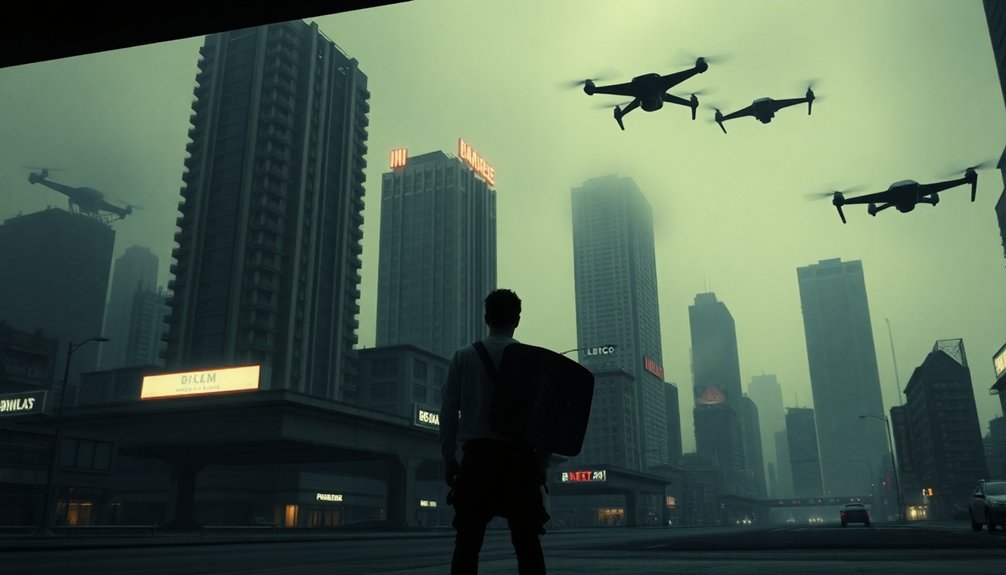
Dystopian fiction mirrors our realities more closely than you might think. Themes like oppression, wealth inequality, and technological surveillance are evident in today’s world, making the warnings of novels like “1984” and “The Hunger Games” eerily relevant. As societal structures fray under economic and environmental pressures, you can see parallels to these fictional landscapes. It’s essential to confront these issues and understand their implications; the lessons are pressing and crucial for our future.
The Rise of Dystopian Fiction in Popular Culture
As societal anxieties grow, dystopian fiction has surged in popularity, especially among young adults.
You’ll find that these dystopian novels often tackle pressing themes like poverty, oppression, and climate change, making them relatable in today’s world. Works like “The Hunger Games” and “1984” have become cultural touchstones, highlighting the divide between the rich and poor and the dangers of totalitarian regimes. This genre encourages you to critically examine current events and their potential consequences. Notably, there’s a shift toward alternative-world speculative fiction, suggesting evolving reader preferences and perhaps an oversaturation of traditional dystopian themes.
Ultimately, these novels offer not just entertainment but a reflective lens on contemporary societal dynamics, prompting you to engage with your own reality. Additionally, they often serve as cautionary tales, warning against the fragility of individual freedom and the importance of resisting authoritarianism.
Real-World Parallels: A Disturbing Reflection
Dystopian fiction doesn’t just entertain; it mirrors unsettling realities that many face today. You might notice how systemic oppression and wealth inequality echo in current events, just as they do in dystopian visions.
The COVID-19 pandemic brought scenarios of quarantining and isolation to life, reflecting the societal breakdowns found in novels. Ongoing crises like climate change and antibiotic resistance also paint a grim picture of resource scarcity, much like the fictional worlds authors warn us about.
Recent political movements, with increasing restrictions on personal freedoms, evoke chilling themes of totalitarianism. Additionally, the rise of surveillance and misinformation in your everyday life recalls the control mechanisms of classics like Orwell’s “1984,” making you question how far we’ve strayed from fiction into reality. In this context, the exploration of systemic racism in Ta-Nehisi Coates’ work serves as a powerful reminder of the real-world implications of these dystopian narratives.
Themes of Oppression and Marginalization
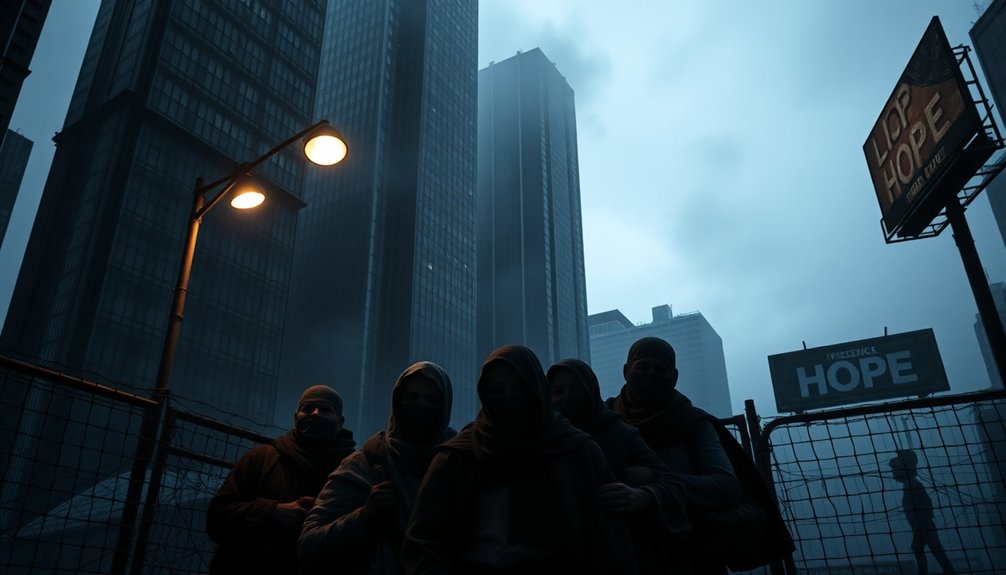
In dystopian fiction, you see how systemic inequality and injustice shape the lives of marginalized groups, mirroring harsh realities today. The voices of these oppressed individuals often echo your own experiences with discrimination and unequal treatment. Recognizing these themes can spark important conversations about the need for social justice and change in our world. Such narratives, like that of Bigger Thomas, highlight the complexities of power dynamics and the devastating impact of systemic oppression.
Systemic Inequality and Injustice
While exploring systemic inequality and injustice, you’ll often find the themes of oppression and marginalization resonate deeply in both dystopian fiction and reality.
Narratives like “The Hunger Games” starkly illustrate how systemic inequality creates a chasm between the affluent and the impoverished. In real life, marginalized communities, particularly people of color, endure higher rates of police violence and incarceration, mirroring the broken systems found in dystopian tales.
The widening wealth gap signifies a small elite hoarding resources, neglecting social welfare, akin to ruling classes in dystopian literature. Current crises, such as homelessness and food insecurity, disproportionately impact these groups, emphasizing the urgent need for awareness and activism against systemic oppression.
Dystopian fiction compels us to confront these uncomfortable truths.
Voices of the Marginalized
The experiences of marginalized groups often take center stage in both dystopian fiction and our reality, highlighting the pervasive themes of oppression and marginalization.
In these narratives, you see how marginalized voices confront authority figures who should protect them but instead perpetuate fear and mistrust. Wealth and resources concentrate in the hands of a privileged elite, reflecting real-world disparities faced by communities of color and low-income individuals.
These fictional struggles resonate deeply, showcasing the disproportionate violence and neglect they endure. Dystopian stories serve as cautionary tales, reminding us of the dire consequences when society ignores the voices of the marginalized.
As activism rises in fiction, it contrasts sharply with the challenges real movements face, emphasizing the urgent need for genuine support and engagement.
The Role of Technology in Dystopian Narratives
Technology often serves as a double-edged sword in dystopian narratives, revealing both the potential for societal advancement and the threat of oppression.
Technology embodies a dual nature in dystopian tales, highlighting both its promise for progress and the peril of subjugation.
In George Orwell’s “1984,” telescreens invade privacy, reminding you that constant surveillance can strip away individuality. Aldous Huxley’s “Brave New World” showcases how advanced reproductive technologies and conditioning can manipulate human behavior, raising ethical concerns about such innovations.
Today, issues like data surveillance and artificial intelligence reflect these fictional themes, alarming you about civil liberties erosion. Rapid advancements in facial recognition and biometric tracking mirror the surveillance systems of fiction, blurring the line between convenience and authoritarianism. As you navigate modern life, consider Huxley’s warning about technology fostering distraction, leading to a desensitized society. Furthermore, the symbolism of survival in these narratives encourages an examination of our own ethical frameworks as we confront the implications of technology in our daily lives.
Societal Breakdown: Fiction vs. Reality
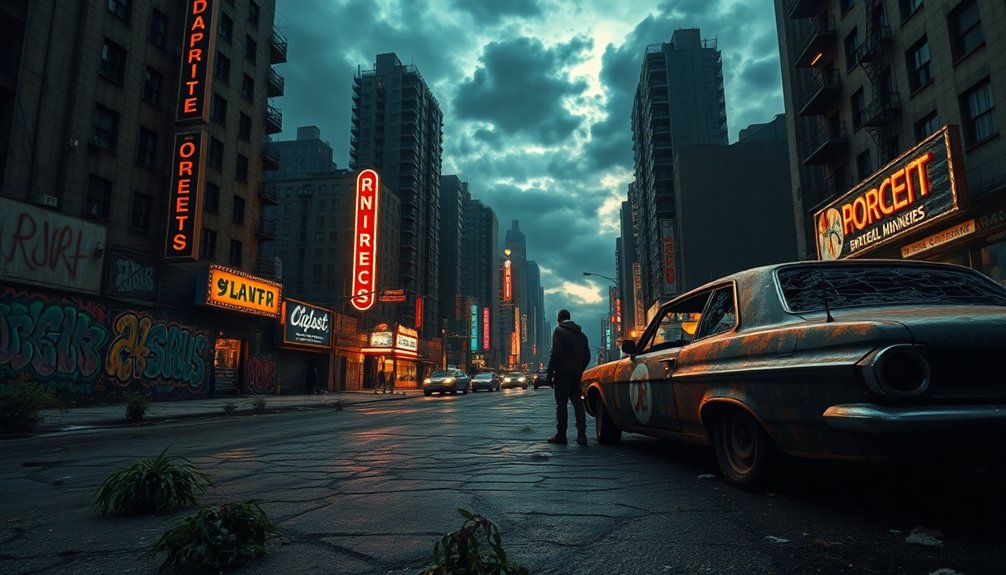
As societal structures fray under pressure from environmental crises and political strife, the stark realities depicted in dystopian fiction become increasingly relevant.
You can’t help but notice the chilling parallels between these narratives and our world. Resource scarcity, environmental collapse, and authoritarianism are no longer just themes in books; they’re unfolding before us.
- Families torn apart by generational conflict
- Vulnerable populations grappling with isolation
- Basic needs of marginalized communities threatened
- Personal freedoms under siege by oppressive governance
With each passing day, you see how the warnings in dystopian fiction echo the challenges we face, from climate change to political instability, urging you to reflect on the fragile state of society. Collective action during times of crisis can be a powerful tool to combat these emerging threats.
The Impact of Privilege on Perception
In a world where societal breakdown feels increasingly tangible, the role of privilege becomes glaringly evident. You might notice that privileged individuals often remain unaware of the systemic struggles faced by marginalized groups, allowing them to distance themselves from the harsh realities depicted in dystopian fiction.
This detachment mirrors the apathy real-life privileged groups exhibit towards social injustices, reinforcing a disconnect from the oppressive experiences of lower classes. Dystopian narratives reveal the consequences of concentrated wealth and power, highlighting real-world issues of inequality. In this context, education as empowerment plays a crucial role in reshaping communities and addressing these disparities.
While consuming these stories, you might feel a sense of relief, yet this voyeuristic engagement can diminish empathy for actual protests and struggles. Critical reflection on your socio-economic status can deepen your understanding of these essential social issues.
Viewer Detachment and Empathy Deficit
While you might find dystopian fiction compelling, it often creates a barrier between you and the real struggles faced by marginalized groups. Viewer detachment becomes prevalent as you consume these narratives passively, fostering apathy toward actual injustices.
- The sanitized portrayal of oppression can numb your empathy.
- Engaging with fictional revolutions feels safe, unlike real protests.
- Privileged perspectives may lead to voyeuristic tendencies, reducing urgency.
- Dystopian scenarios seem distant, making you overlook current issues.
As you immerse yourself in these stories, remember that the discomfort of real-life struggles demands your attention. The stark contrast between fiction and reality can dull your awareness, urging you to bridge that gap with genuine understanding and connection. In times of oppression, acts of defiance can inspire real-world courage and resilience, urging you to take action against injustice.
The Urgency of Real-Life Engagement
You can’t ignore the parallels between dystopian fiction and our reality; they both highlight urgent issues that demand your attention. Engaging in real activism is essential, as it transforms awareness into action and mobilizes change in your community. Furthermore, the escalation of global conflicts underscores the necessity for informed global action to address the complex challenges we face today.
Fiction vs. Real Activism
How often do we find ourselves captivated by the heroic journeys of protagonists in dystopian fiction, only to feel a disconnect when faced with the complexities of real-life activism?
Unlike the straightforward victories in those narratives, real activism is messy and often met with indifference. The urgency of engagement can’t be overstated, especially when societal issues depicted in dystopian tales mirror our reality.
- Protests met with apathy from the privileged
- The discomfort of recognizing systemic oppression
- The false security of fictional narratives
- The necessity for collective solidarity
In this world, it’s essential to step beyond the pages of fiction and actively participate in fighting injustice, supporting those who face real struggles every day.
Mobilizing for Change
As fictional narratives compel us to confront dystopian realities, they also highlight the pressing need for real-life engagement in social justice movements.
Mobilizing for change means stepping out of the comfort of passive viewing and actively participating in activism. Real-world protests, like those in Ferguson, disrupt daily comforts and expose the urgency of addressing systemic injustices.
While dystopian protagonists may rally others to action, real-life movements often struggle against resistance from privileged individuals and even their own ranks.
In a world where totalitarian governments threaten freedoms, critical engagement with media can inspire you to take action.
Don’t let social distancing become a barrier; instead, let it drive you to connect and mobilize for meaningful change in your community.
Lessons From Dystopian Fiction for Today
While many might view dystopian fiction as mere entertainment, it offers essential lessons that resonate with today’s pressing societal issues.
Dystopian fiction transcends entertainment, providing crucial insights into contemporary societal challenges we must confront.
These narratives serve as cautionary tales, urging you to confront real-world challenges:
- The threat of surveillance technology mirrors the oppressive control seen in Orwell’s “1984.”
- Themes of systemic oppression highlight the importance of advocating for social justice.
- The normalization of casual relationships, reminiscent of Huxley’s “Brave New World,” raises concerns about genuine human connections.
- Dystopian fiction invites you to reflect on how complacency can erode freedoms and individual rights.
- The fragility of moral order in these stories reflects the potential for chaos when societal norms break down.
The Path Forward: Activism Inspired by Fiction
Dystopian fiction not only reflects our current struggles but also ignites a spark for change. These narratives often serve as a catalyst for real-world activism, motivating you to engage with social justice issues.
Protagonists in stories like “The Hunger Games” showcase the power of collective action, encouraging you to rally support for important causes. As you immerse yourself in these fictional worlds, you’ll find yourself questioning authority and examining your role in society.
The emotional impact of these tales resonates deeply, empowering you to act against systemic oppression. By engaging with dystopian fiction, you cultivate a sense of responsibility to uplift real-life leaders and activists who tirelessly fight for justice, making your voice an essential part of the movement. Additionally, the stories of resilience and strength in real-life situations encourage you to draw inspiration from those who have overcome adversity, further fueling your commitment to activism.
Conclusion
As you close the book on dystopian fiction, remember that these cautionary tales are more than just stories; they’re mirrors reflecting our world. Think of the way “The Handmaid’s Tale” sparked conversations about women’s rights—proving that fiction can ignite real change. You can’t afford to look away. The future’s not just a plot twist waiting to happen; it’s a path you can help shape. Engage, act, and let the lessons from these narratives guide you toward a better reality.