
The mastermind behind “Dracula” is Bram Stoker, an Irish author born in 1847. He studied at Trinity College Dublin and worked as a theatre manager before publishing his groundbreaking novel in 1897. Stoker’s innovative use of the epistolary format and exploration of themes like obsession and morality reshaped vampire literature. His character, Count Dracula, is steeped in historical and folkloric influences. By exploring these facets, you can discover even more about Stoker’s fascinating legacy.
The Life of Bram Stoker
Bram Stoker, born on November 8, 1847, in Dublin, Ireland, grew up as the third of seven siblings in a bustling household. His education at Trinity College Dublin sparked a passion for literature and art, leading to a BA in 1870 and an MA in 1875.
Before becoming the business manager of Henry Irving’s Lyceum Theatre, Stoker worked as a civil servant and drama critic. His most famous work, the novel *Dracula*, published in 1897, revolutionized vampire literature.
Stoker expertly used an epistolary format, weaving diary entries and letters throughout the narrative. His extensive research into folklore and vampires, influenced by figures like Ármin Vámbéry, played an essential role in crafting the chilling character of Count Dracula and the novel’s haunting themes. The themes of collective action and resistance in his work resonate with the enduring spirit of hope and resilience found in historical movements.
The Inspiration Behind Dracula
When you think about the inspiration behind “Dracula,” it’s clear that Bram Stoker drew heavily from historical figures like Vlad the Impaler.
His research into Eastern European folklore and connections with literary figures shaped Count Dracula’s character and abilities.
Stoker’s fascination with the supernatural and societal fears of his time also played a vital role in crafting this iconic vampire. Additionally, the dark, atmospheric streets of Victorian London provided a rich backdrop for Stoker’s exploration of fear and desire.
Historical Figures Influence
Although many vampire tales have emerged throughout history, the character of Count Dracula stands out, primarily influenced by the real-life figure of Vlad III, also known as Vlad the Impaler.
This 15th-century ruler of Wallachia was notorious for his brutal execution methods, especially impalement, which shaped the dark persona Bram Stoker adopted. The name “Dracula,” meaning “son of Dracul,” reflects Vlad III’s lineage and ties to the Order of the Dragon.
Stoker’s extensive research into Eastern European folklore and figures like Ármin Vámbéry infused supernatural elements into Dracula’s character. Vlad III’s complex legacy as both a national hero and a ruthless tyrant mirrors the dual identity of Stoker’s Count Dracula, blending aristocracy with monstrous traits deeply rooted in Romanian history.
Literary Connections Explored
While exploring the literary connections behind *Dracula*, it’s essential to recognize how Bram Stoker wove various influences into his iconic character.
Stoker drew inspiration from Vlad III, the notorious Vlad the Impaler, whose horrific legacy shaped the dark persona of Count Dracula. His extensive research into folklore and vampire tales, particularly through works like *Carmilla*, added depth to his narrative.
Consider these connections:
- The name “Dracula” links to the devil, evoking dread.
- Stoker’s portrayal reflects Victorian anxieties about sexuality and immigration.
- The epistolary format enhances realism, pulling readers into the horror.
- Stoker’s fusion of history and fiction creates a lasting impact on the genre.
These elements make Dracula a masterpiece of literary horror.
Research and Folklore Elements
Bram Stoker’s *Dracula* draws heavily from Eastern European folklore, particularly the haunting legends of vampires and the infamous Vlad III, known as Vlad the Impaler.
Stoker’s extensive research into European folklore, influenced by figures like Ármin Vámbéry, shaped the novel’s rich supernatural elements. You’ll notice that Count Dracula embodies a blend of charm and menace, reflecting Victorian fears about sexuality and the unknown.
This contrast between civilized society and primal instincts heightens the narrative’s psychological depth. Stoker’s use of an epistolary format—letters, diary entries, and newspaper clippings—grounds the supernatural in believable experiences.
Ultimately, the novel presents Dracula as both a nobleman and a predator, serving as a commentary on the dualities of human nature and societal anxieties of the time.
Exploring Count Dracula’s Characteristics
Count Dracula embodies a fascinating blend of charm and menace that captivates and terrifies. Bram Stoker’s creation showcases a complex personality, oscillating between regal allure and primal fury. You’re drawn to his striking appearance—thin, pale features and a haunting scar—while also sensing the danger lurking beneath.
- His superhuman strength and shapeshifting abilities make him formidable.
- The thrill of drinking blood fuels his dark existence.
- He can turn you into a vampire with a single bite, perpetuating a terrifying cycle.
- His cunning manipulation reveals a predatory nature that’s both magnetic and repulsive.
You can’t help but feel an unsettling mix of attraction and dread as you explore the depths of Count Dracula’s character. This complex portrayal echoes the themes of obsession and power dynamics found in contemporary narratives, illustrating the fine line between allure and danger.
The Narrative Structure of Dracula
In *Dracula*, the use of an epistolary format pulls you into the story, allowing you to piece together events through diary entries, letters, and newspaper articles.
This structure enhances the tension, as multiple narrators share their perspectives, making you feel the characters’ fears and emotions firsthand.
You’ll find that this approach not only builds suspense but also deepens your connection to the unfolding horror. The intricacies of this narrative style echo the themes of bravery found in various literary genres, showcasing how characters confront their fears and uncertainties.
Epistolary Format Significance
- You feel the tension rise through fragmented accounts.
- Each narrator brings unique insights and emotional depth.
- The suspense builds as you piece together the horror.
- The format contrasts with linear storytelling, emphasizing themes of isolation and the unknown.
In this way, the epistolary format transforms your reading experience into a gripping exploration of fear.
Multiple Narrators’ Perspectives
The epistolary format of *Dracula* not only heightens the sense of suspense but also enriches the narrative through the use of multiple narrators.
Stoker’s novel shifts between characters like Jonathan Harker, Mina Murray, and Dr. John Seward, giving you varied perspectives on the unfolding chaos. This technique creates an immersive sense of realism, as each voice adds depth and urgency to the story.
Through their diary entries and letters, you experience the terror and confusion surrounding Count Dracula firsthand. The fragmented storytelling emphasizes the struggle between the modernity of Victorian England and the ancient, supernatural threat.
Ultimately, these multiple narrators enhance the narrative’s complexity, making it a compelling exploration of fear and the unknown.
Powers and Weaknesses of Dracula
How does Count Dracula maintain his terrifying dominance in both the human and supernatural domains? His powers are formidable, including superhuman strength and agility that allow him to overpower adversaries and escape peril.
He can shapeshift into creatures like bats and wolves, enhancing his stealth. Yet, he also commands animals and manipulates the weather, making him even more menacing.
However, Dracula’s vulnerabilities can’t be ignored:
- Repulsion by garlic and sacred items
- The need for an invitation into homes
- Diminished strength in daylight
- Susceptibility to capture during the day
These weaknesses remind us that even the most powerful beings have their limits, exposing Count Dracula’s dark duality. Moreover, his character embodies themes of moral ambiguity that challenge our understanding of good and evil.
Cultural Impact and Adaptations
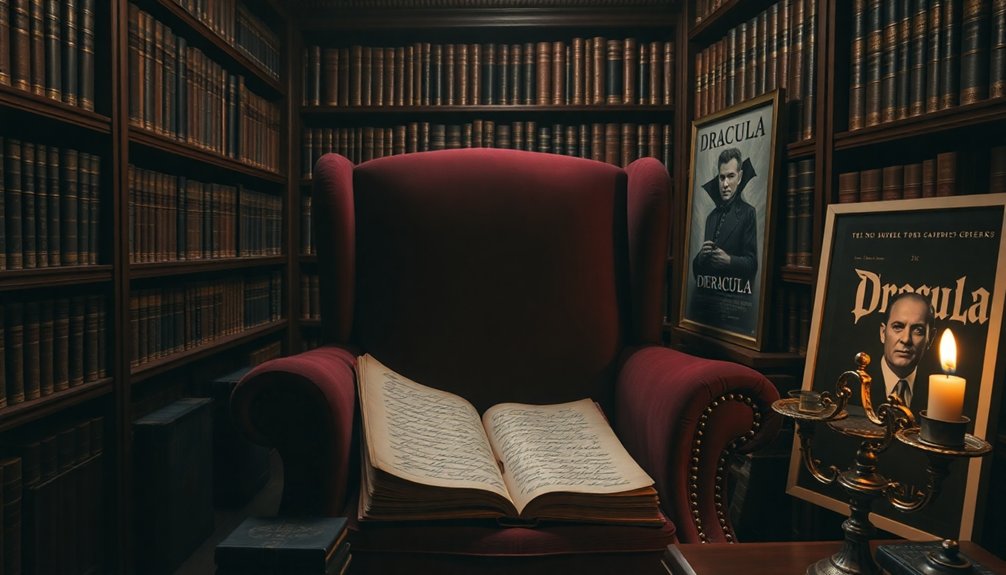
Count Dracula’s complex nature and compelling story have sparked a vast cultural phenomenon since Bram Stoker’s novel *Dracula* was published in 1897.
This landmark work in vampire literature has inspired over 700 adaptations across various media, including film, theater, and literature. You can see notable portrayals of Count Dracula by actors like Bela Lugosi and Gary Oldman, each reshaping the character for modern audiences.
The cultural impact of Dracula extends beyond the page, influencing Halloween costumes and prompting reinterpretations of themes like sexuality and power dynamics.
The annual Bram Stoker Festival in Dublin celebrates this legacy, drawing fans from around the world to honor Bram Stoker and explore the enduring fascination with vampires in today’s society. Additionally, the character of Dracula embodies moral ambiguity that challenges traditional notions of good and evil.
Modern Analyses of Dracula
Consider these emotional themes:
- Power struggles and control
- The fear of the “other”
- The fluidity of cultural identity
- The tragic anti-hero versus monstrous villain
These interpretations show how Dracula’s story resonates with contemporary audiences, adapting to societal changes and cultural narratives. Stoker’s blending of folklore and history adds depth, allowing for ongoing debates about the character’s significance in modern contexts. Furthermore, the story serves as a cautionary tale about the dangers of totalitarian regimes and control, inspiring discussions on the importance of individual freedoms.
The Legacy of Bram Stoker
Bram Stoker’s influence on literature and popular culture is undeniable, especially through his iconic creation, *Dracula*. His groundbreaking 1897 novel not only redefined vampire lore but also established a legacy that resonates today. You can see how the character of Count Dracula draws from Victorian fears and folklore, embodying the era’s complexities. Stoker’s innovative epistolary format adds depth and suspense, making his work a cornerstone of horror literature. The annual Bram Stoker Festival in Dublin celebrates his contributions, while over 700 adaptations of *Dracula* in various media guarantee his story remains alive. Additionally, Stoker’s exploration of obsession and jealousy parallels themes found in other Gothic literature, further solidifying his impact.
Conclusion
In wrapping up, it’s clear that Bram Stoker wasn’t just a writer; he was a master architect of horror. His life experiences and the characters he created shaped “Dracula” into a timeless tale that still captivates readers today. So, isn’t it fascinating how one man’s imagination can influence countless adaptations and interpretations over the years? Stoker’s legacy continues to thrive, reminding us that the power of storytelling knows no bounds.