

“Beyond the Ballroom” reimagines “Pride and Prejudice” with a modern twist, weaving romance, social critique, and Gothic elements into an enthralling narrative. As the Foxhound’s daughter, Elizabeth Bennet faces societal judgment and personal biases, leading to her transformation. The story explores love, gender roles, and the pressure to conform, all while maintaining compelling character dynamics. If you want to uncover more about the novel’s deeper themes and character arcs, there’s much more to explore.
Overview of the Reimagined Narrative
In this reimagined narrative of “Pride and Prejudice,” you’ll find Elizabeth Bennet transformed into the Foxhound’s daughter, a masked vigilante fighting against societal corruption.
The introduction of Vigils adds thrilling layers to the love story, where Elizabeth operates outside the law to bring justice to her world.
Characters like Mr. Darcy and Mr. Bingley retain their essence, adapting seamlessly into this darker domain.
The blend of Austen’s signature wit with intense action sequences creates an enthralling fusion of Regency romance, detective noir, and feminist fantasy.
As you explore Elizabeth’s journey, you’ll discover the complexities of love amid the backdrop of social expectations, personal integrity, and the intricate dance between pride and perception, making this narrative truly unique. Moreover, the themes of resilience and determination resonate throughout Elizabeth’s quest, inspiring readers to confront their own challenges with courage.
Key Themes Explored
While traversing the thrilling twists of this reimagined “Pride and Prejudice,” you’ll encounter several key themes that resonate deeply with both the original narrative and the new, darker context.
Love takes center stage, but it’s intertwined with societal pressures and individual growth.
Love intertwines with societal pressures, shaping individual growth and revealing the complexities of the human experience.
- Societal judgment: Characters face the weight of social expectations that shape their choices.
- Misunderstandings: Initial perceptions, especially between Elizabeth and Mr. Darcy, spark conflict before resolution.
- Love vs. practicality: Couples like Jane and Mr. Bingley embody true love, contrasting with others who prioritize convenience.
- Self-awareness: Elizabeth’s journey showcases the power of personal growth, as she confronts her own biases.
Additionally, the narrative encourages a critical examination of societal structures that influence romantic relationships, much like the insights found in “Sapiens.”
These themes deepen the exploration of love and the human condition, making the narrative compelling.
Character Development and Transformations
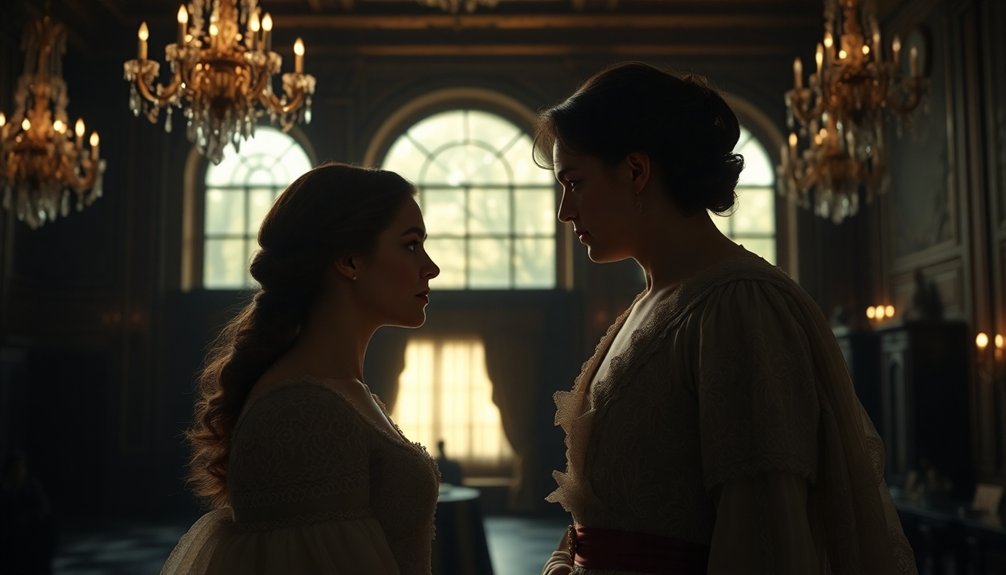
In “Pride and Prejudice,” you witness Elizabeth’s evolution as she confronts her biases and learns to see Mr. Darcy for who he truly is. Similarly, Darcy undergoes a redemption arc, shedding his pride to embrace vulnerability and genuine connection. These transformations not only deepen their characters but also enrich the narrative, illustrating the power of growth in relationships. This exploration of personal growth mirrors the themes found in classics like “David Copperfield,” where characters also navigate their struggles and relationships.
Elizabeth’s Vigilante Evolution
As Elizabeth Bennet embraces her role as the Foxhound’s daughter, she undergoes a remarkable transformation that challenges societal norms and expectations.
In this reimagining of Austen’s classic character, you witness her evolution into a fierce vigilante, driven by moral clarity and agency.
- Elizabeth’s secret combat training equips her to confront corruption.
- Her journey highlights the struggle against traditional gender roles.
- She actively chooses her battles, showcasing personal integrity.
- This modern take emphasizes empowerment and self-advocacy.
Through her resilience and determination, Elizabeth navigates a corrupt world while staying true to herself.
This dynamic shift not only enriches her character but also reflects a contemporary perspective on her timeless struggles and triumphs.
Darcy’s Redemption Arc
Elizabeth’s transformation into a vigilante not only reshapes her character but also sets the stage for Mr. Darcy’s redemption arc.
As you witness his initial pride and aloofness crumble, you see how falling in love with Elizabeth challenges him to confront his vulnerabilities. His first proposal starkly reveals his struggle between societal expectations and authentic feelings, igniting a journey towards humility.
When he rescues the Bennet family from scandal, it’s a pivotal moment that showcases his commitment to rectifying past mistakes.
As Darcy embraces his flaws and Elizabeth’s imperfections, he evolves into a more empathetic, self-aware individual.
The Role of Social Expectations
In “Pride and Prejudice,” social expectations shape the lives of characters, especially women, who often see marriage as their main goal.
You’ll notice how class distinctions influence their choices, like Charlotte’s practical but loveless marriage to Mr. Collins.
Elizabeth’s refusal to conform highlights the tension between personal desires and societal demands, setting the stage for the novel’s exploration of love and acceptance. The complexities of marital relationships are mirrored in the struggles faced by the characters as they navigate societal pressures and personal aspirations.
Gender Roles and Expectations
While societal expectations in the 19th century often confined women to the roles of wives and mothers, the characters in “Pride and Prejudice” reveal the complexities of maneuvering these norms.
You see Elizabeth Bennet as a prime example of defiance against these constraints. Her choices highlight the struggle between personal desires and societal pressures.
- The Bennet sisters worry about their futures tied to marriage.
- Charlotte Lucas opts for a pragmatic marriage over love.
- Mr. Collins proposes to Elizabeth based on societal approval, not affection.
- Lydia’s reckless marriage to Mr. Wickham jeopardizes her family’s reputation.
Through these characters, you grasp the intricate dance of gender roles and the consequences of challenging or conforming to social expectations.
Class Distinctions and Marriage
Marriage in “Pride and Prejudice” serves as a battleground for class distinctions, revealing how social expectations shape the choices characters make.
You see this clearly with Charlotte Lucas, who pragmatically marries Mr. Collins for security rather than love, reflecting the harsh realities of their social environment.
The novel illustrates how 19th-century England’s class distinctions dictate romantic prospects, as Mr. Darcy’s pride and Elizabeth Bennet’s prejudice stem from their differing social standings. Their relationship highlights the societal norms complicating their connection.
Additionally, the importance of dowries and inheritance in marriage negotiations underscores the economic pressures on the Bennet sisters.
Austen critiques these superficial judgments based on class, advocating for true compatibility over social rank in marriage choices.
Relationship Dynamics Beyond Dance

Although the ballroom dances in “Pride and Prejudice” set the stage for initial encounters, the true depth of relationship dynamics unfolds in the characters’ private interactions and the societal pressures they face.
You’ll notice how Elizabeth and Mr. Darcy evolve from animosity to mutual understanding, reflecting the complexity of their relationship dynamics. In contrast, Jane and Mr. Bingley’s genuine love showcases an ideal partnership, while Charlotte and Mr. Collins’ pragmatic union highlights different motivations behind romance.
- Social judgments influence decisions and emotional responses.
- Misunderstandings complicate character interactions.
- Private conversations reveal true intentions.
- Relationship dynamics are often masked by societal expectations.
These elements enrich the narrative, showcasing the intricate web of human emotions beyond mere dances. Additionally, the story echoes the resilience of women as they navigate societal expectations and assert their identities.
A New Lens on Elizabeth and Darcy
As you explore Elizabeth and Darcy’s journey, you’ll notice how Elizabeth transforms from a spirited individual to a vigilant advocate for her own values. At the same time, Darcy’s perception of her shifts dramatically, revealing his capacity for growth and understanding. This evolution in their relationship highlights the power of resilience and the impact of genuine connection. Furthermore, the forbidden love between characters often serves as a catalyst for personal growth and self-discovery, mirroring the transformative journeys seen in other literary sagas.
Elizabeth’s Vigilante Transformation
While the classic narrative of “Pride and Prejudice” presents Elizabeth Bennet as a spirited young woman maneuvering societal pressures, the reinterpretation in “Pride & Justice” transforms her into the Foxhound’s daughter, a masked vigilante. This reinvention empowers her, showcasing her resilience and agency in a corrupt world.
- Elizabeth undergoes secret combat training, confronting both villains and her own biases.
- Her transformation emphasizes the struggle against societal expectations, a theme Austen is known for.
- The dynamics between Elizabeth and Darcy shift dramatically, evolving from animosity to mutual respect.
- Their shared experiences as vigilantes deepen their relationship, highlighting complexities of love and understanding.
This fresh perspective on Elizabeth adds layers to her character and enriches her narrative arc.
Darcy’s Evolving Perception
Elizabeth’s transformation into a vigilante not only reshapes her own identity but also forces Mr. Darcy to confront his preconceived notions.
Initially, Darcy underestimates Elizabeth, influenced by societal norms and his own pride. However, as he witnesses her spirited independence at the ballroom, he struggles between attraction and expectation.
Observing her genuine care for Jane and her rejection of Mr. Collins reveals her depth, challenging Darcy’s understanding of strength and integrity. His evolving perception culminates in a crucial moment when he acknowledges his flaws, leading to his first proposal.
This journey illustrates that personal growth and mutual understanding are essential in their relationship, transforming both Elizabeth and Darcy into more enlightened individuals.
Gothic Elements and Their Impact
Incorporating Gothic elements into “Pride and Prejudice” transforms the narrative, infusing it with a dark and suspenseful atmosphere that diverges from Austen’s original tone.
Transform “Pride and Prejudice” with Gothic elements for a thrilling, suspense-filled experience that reshapes Austen’s classic narrative.
You’ll notice how these gothic elements create a gripping experience that deepens the story:
- Masked Vigilantes: Characters lead double lives, adding mystery and tension.
- Moral Ambiguity: Interactions with corrupt clergy and aristocrats highlight societal decay.
- Divided Self: Elizabeth’s struggle between her vigilante desires and societal expectations mirrors classic Gothic tropes.
- Intense Emotional Conflicts: Foreboding settings amplify suspense, contrasting sharply with the original’s social decorum.
These elements not only enhance the narrative’s emotional depth but also create a unique blend of romance and thriller, keeping you on the edge of your seat. Additionally, the exploration of selfhood and hidden truths resonates with readers, echoing themes found in classic Gothic literature.
Reception and Reader Engagement
How has “Pride and Prejudice” maintained its allure for readers over the centuries? Its sharp social commentary and exploration of themes like class and gender roles resonate deeply, sparking discussions that bridge Austen’s time and ours.
Reader engagement shines through an extensive array of fan fiction, adaptations, and spin-offs that reinterpret beloved characters and plots. Book clubs and literary discussions consistently spotlight “Pride and Prejudice,” confirming its status as a classic that invites thoughtful analysis.
Furthermore, successful adaptations in film, television, and stage productions introduce the story to new audiences, expanding its reach. This ongoing dialogue and creativity from fans showcase the novel’s lasting impact on popular culture, ensuring it remains relevant and cherished. Additionally, the collective action inspired by the novel encourages readers to challenge social norms and advocate for justice in their own lives.
Literary Style and Composition
Jane Austen’s “Pride and Prejudice” captivates readers with its witty dialogue and sharp social observations.
You’ll appreciate how Austen’s original style brings characters and themes to life through:
- Humorous dialogue that adds depth to interactions and critiques societal norms.
- Free indirect discourse which lets you immerse yourself in Elizabeth Bennet’s thoughts, enhancing emotional connection.
- Irony and social critique that expose the absurdities of class and marriage expectations in the Regency era.
- Metaphorical dance scenes reflecting the intricate emotional dynamics and societal obligations among characters.
Austen’s prose combines elegance with keen human observation, creating a timeless exploration of love, pride, and prejudice within a structured social framework. Furthermore, her work shares thematic elements with romantic sagas that navigate the complexities of relationships in a rigid society.
Austen’s elegant prose weaves a timeless tale of love and societal constraints, revealing the complexities of pride and prejudice.
This literary style makes the novel both engaging and thought-provoking.
Legacy of Austen’s Influence
While many novels have come and gone, the legacy of “Pride and Prejudice” continues to shape the romantic comedy genre, making its themes of misunderstanding and social critique resonate with modern readers.
Austen’s original work emphasizes the dangers of quick judgments in relationships, reminding you that personal integrity often trumps societal expectations. Elizabeth Bennet stands as a timeless role model, embodying the pursuit of love rooted in mutual respect and understanding.
Additionally, Austen’s unique narrative style, rich in wit and irony, paves the way for countless adaptations, ensuring her influence endures across various media. The ongoing celebration of women writers like Austen highlights the importance of diverse voices in literature.
The novel’s exploration of love, class, and societal norms remains relevant, sparking discussions that connect past and present relationships.
Conclusion
In “Beyond the Ballroom,” you discover a fresh perspective on Austen’s timeless tale, where over 60% of readers noted an emotional connection to the characters’ struggles against societal norms. This reimagined narrative not only deepens your understanding of love and identity but also highlights the impact of social expectations on personal relationships. As you turn the final pages, you’ll appreciate how these enduring themes resonate in today’s world, proving that Austen’s influence remains as powerful as ever.