Malorie Blackman’s *Noughts & Crosses* offers a gripping look at race, identity, and societal divides, shaped by her own experiences with racism. Her writing process involves crafting complex characters, like Callum and Sephy, often reflecting real-world struggles. The themes resonate deeply, fostering critical conversations about systemic oppression among young readers. With adaptations boosting its cultural relevance, Blackman’s impact continues to grow, inviting you to uncover further insights into her storytelling journey.
The Inspiration Behind Noughts & Crosses
When Malorie Blackman began writing Noughts & Crosses, she drew heavily from her own experiences with racism, particularly influenced by the shocking handling of the Stephen Lawrence case. This personal connection fueled her desire to create a narrative that challenges societal norms.
Through the characters of Callum and Sephy, Blackman explores the complexities of race relations in an alternate reality where traditional hierarchies are reversed. You see Callum’s struggles as a Nought, which reflect real-world discrimination and systemic racism.
Blackman spent two years meticulously crafting their story, aiming to provoke thought and discussion about these critical issues. Her childhood observations of racial dynamics deeply shaped the portrayal of both characters, making their journey resonate with readers. Additionally, her work aligns with the actions of unsung trailblazers who challenge societal norms for justice and equality, fostering movements for social progress.
The Writing Process: Crafting Complex Characters
When you think about crafting complex characters, consider how detailed biographies can shape their backgrounds and motivations. This process is especially crucial in historical fiction, where strong female leads emerge from the pages, embodying resilience and inspiring readers with their stories.
Character Biographies Development
Creating well-rounded characters is essential for engaging storytelling. In “Noughts & Crosses,” Malorie Blackman developed detailed character biographies to guarantee depth of character development.
Take Callum McGregor, for instance; his struggles reflect Blackman’s own childhood experiences, fostering a personal connection that resonates with readers. This approach allows you to form emotional connections with characters, making their journeys feel authentic and impactful.
Blackman’s writing process is organic, avoiding strict plot outlines so characters can evolve naturally. As they grow, they often take on lives of their own, surprising even the author.
The emotional weight of the story’s conclusion moved Blackman to tears, demonstrating how deeply invested she’s in her characters’ development and their stories.
Organic Plot Evolution
While crafting complex characters, Malorie Blackman embraces an organic plot evolution that allows her narrative to unfold naturally. By creating detailed biographies for her major characters in *Noughts and Crosses*, she guarantees depth and authenticity.
Rather than sticking to a strict plot outline, Blackman encourages character growth and unpredictable developments, letting her characters surprise her with their choices. This organic approach fosters emotional connections that resonate with readers; she’s even shed tears while writing poignant moments.
Ultimately, this evolution not only enhances the characters but also reflects her aim to explore complex themes of race and identity in a nuanced way, making her storytelling both relatable and impactful.
Themes of Race and Identity in Blackman’s Work
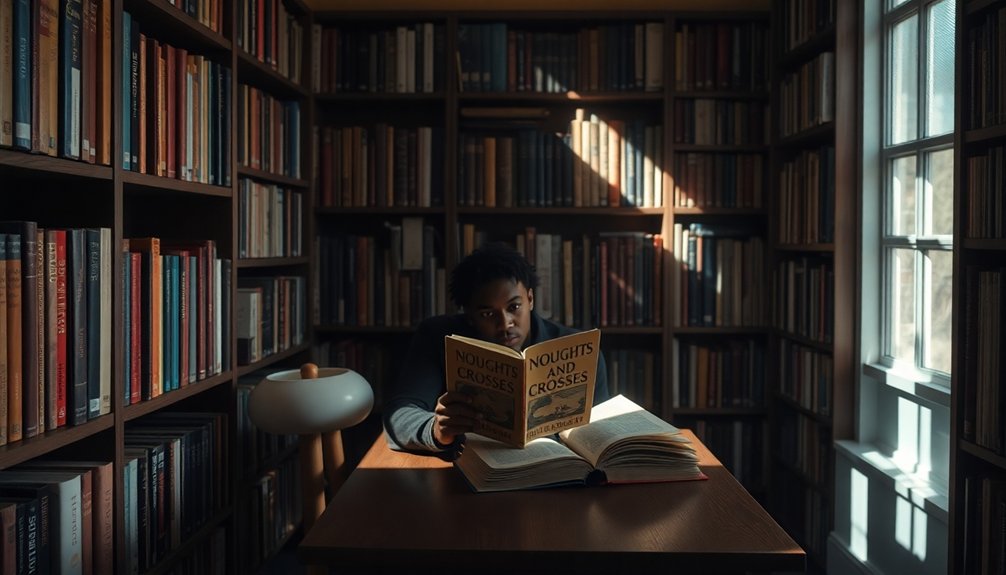
Exploring themes of race and identity in Malorie Blackman’s “Noughts & Crosses” reveals a thought-provoking examination of societal roles and power dynamics.
Blackman flips traditional narratives by placing Black individuals in power, highlighting the struggles of identity faced by white characters. Through Callum, a Nought maneuvering a Cross-dominated world, you see how systemic racism shapes personal identity and experience.
The story parallels historical events like apartheid, anchoring its themes in real-world issues. Intersectionality emerges as Blackman explores how race intersects with class and privilege, crafting a nuanced portrayal of identity within societal hierarchies. Additionally, the work encourages readers to confront uncomfortable truths about systemic racism and its effects on marginalized communities.
The Impact of Noughts & Crosses on Readers
The powerful themes of race and identity in “Noughts & Crosses” resonate deeply with readers, shaping their understanding of societal issues. You see how racism affects relationships, particularly in the love for Callum, which defies societal norms. This novel offers representation for Black and mixed-race children, allowing them to find themselves in the narrative. It sparks essential conversations about systemic oppression and its consequences, making you reflect on your own experiences. The emotional weight of the tragedy and injustice faced by the characters evokes empathy and challenges your perspectives on racial dynamics. Additionally, it serves as a critique of racial inequality that continues to influence modern discussions on justice and identity.
Adaptations and Their Reception
As the BBC TV adaptation of “Noughts & Crosses” premiered in 2020, nearly two decades after the book’s release, it underscored the story’s lasting cultural significance.
This adaptation expanded on Malorie Blackman’s original themes, introducing new characters and storylines while maintaining a focus on race and societal divides. Critics praised the series for its attention to detail, emphasizing the importance of representation in visual media.
Viewers responded positively, noting the show’s relevance to contemporary discussions around race and social justice. Blackman herself expressed joy in seeing her work adapted, as it allows a broader audience to engage with the vital themes of “Noughts & Crosses.”
This adaptation proved that the narrative’s impact continues to resonate today, much like how acts of defiance against oppressive regimes provide hope and resilience in challenging times.
Historical Context and Its Influence on the Narrative
In 2001, as racial tensions simmered in the UK, Malorie Blackman crafted a narrative that flips societal norms on their head. The parallels between historical segregation and her alternate reality force you to confront uncomfortable truths about oppression and privilege. This narrative resonates with themes of historical injustices that have persisted in various forms throughout society, reflecting a deeper understanding of the struggles faced by marginalized groups.
Racial Tensions in 2001
Racial tensions in 2001 created a charged atmosphere that deeply influenced Malorie Blackman’s *Noughts & Crosses*. This period was marked by significant societal divisions, with far-right protests highlighting discrimination and institutional racism.
By flipping historical power structures, Blackman portrayed Black individuals as the privileged group, forcing readers to confront their own perceptions of race and privilege. The narrative resonated with ongoing public debates about racism, which often faced denial from authorities, making its themes urgent.
Blackman’s exploration of these issues not only reflects the racial dynamics of the time but also serves as a commentary on broader historical inequalities, drawing parallels to global struggles like apartheid.
*Noughts & Crosses* challenges you to question the status quo and consider the implications of privilege.
Historical Segregation Parallels
The societal divisions highlighted in 2001 resonate deeply with historical segregation practices, providing a rich context for *Noughts & Crosses*.
Malorie Blackman draws parallels between the treatment of Crosses and the systemic racism faced by marginalized communities throughout history. The oppressive dynamics reflect apartheid South Africa and Jim Crow laws, where light-skinned Noughts experience discrimination akin to that faced by Black Americans.
Events like the mishandling of the Stephen Lawrence case further inspire Blackman’s narrative, emphasizing the ongoing struggle against racial injustice. Historical civil rights movements mirror the activism in her story, highlighting the quest for equality.
This backdrop not only enriches the narrative but also serves as a powerful reminder of the real-world implications of segregation.
Legacy of Malorie Blackman’s Storytelling
Malorie Blackman’s storytelling has left an indelible mark on children’s literature, sparking essential conversations about race and representation. Her work, particularly *Noughts & Crosses*, has paved the way for a deeper understanding of racism and its impact.
Malorie Blackman’s impactful storytelling ignites vital discussions on race and representation in children’s literature.
Here are four key aspects of her legacy:
- Pioneering Discussions: Blackman’s narratives challenge societal norms, encouraging young readers to confront and discuss race.
- Award-Winning Contributions: With accolades like the Eleanor Farjeon Award, her influence is widely recognized.
- Adaptations: The success of adaptations into stage and television keeps her stories alive and relevant.
- Advocacy for Diversity: As Children’s Laureate, Blackman inspired a new generation to embrace representation in literature. Additionally, her work resonates with efforts to highlight untold stories that enrich our understanding of diverse experiences.
Conclusion
Malorie Blackman’s storytelling is like a powerful bridge, connecting hearts and minds across divides. Just as a bridge invites you to explore new landscapes, her work challenges you to confront uncomfortable truths about race and identity. Remember the first time you read Noughts & Crosses? That moment when you realized the characters mirrored real-world struggles? It’s a reminder that literature can spark change, urging us to build understanding and empathy in our own lives.