
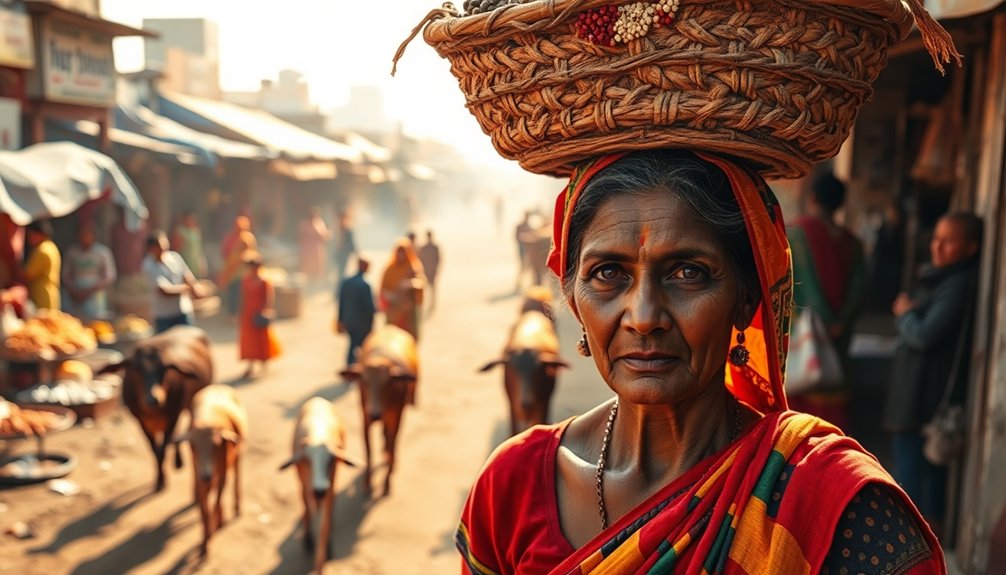
In “A Fine Balance,” you witness the heart-wrenching lives of marginalized individuals in India during the Emergency from 1975 to 1984. Ishvar and Omprakash, lower-caste tailors, face systemic oppression while seeking solace with Dina, a determined Parsi widow. Their intertwined struggles highlight the harsh realities of social injustice and the fragility of hope. As they navigate trauma and resilience, you’ll discover how their fates intertwine amidst a society grappling with despair.
Overview of the Novel
In “A Fine Balance,” Rohinton Mistry immerses you in a turbulent period of Indian history, specifically the Emergency from 1975 to 1984.
The novel centers around the lives of Ishvar and Omprakash Darji, two tailors from a lower caste, who seek a better life. They encounter Dina Dalal, a determined woman pursuing independence, and Maneck Kohlah, a young man grappling with his identity.
As their stories intertwine, you witness the harsh realities of caste and class struggles in a society marked by systemic inequities. Mistry expertly weaves themes of tragedy and resilience throughout the narrative, emphasizing the significance of human connections amid adversity. This powerful exploration leaves you reflecting on the fragility of hope and the enduring spirit of humanity, reminiscent of the triumph of the human spirit seen in historical survival stories.
Main Characters
“A Fine Balance” features a rich tapestry of characters, each embodying the struggles and aspirations of a diverse society.
Ishvar and Omprakash, lower-caste tailors from the Chamaar community, face severe hardships after fleeing their village due to violence.
Omprakash’s trauma deepens when he becomes a victim of forced sterilization.
Dina Dalal, a determined Parsi widow, seeks independence by running her own tailoring business, all while dealing with her worsening eyesight and the looming threat of eviction.
Maneck Kohlah, the disillusioned son of a wealthy businessman, grapples with despair, ultimately leading to his tragic end.
Together, these characters reflect the harsh realities of life in India, each fighting for balance amidst chaos and adversity. Their struggles echo the themes of generational poverty and resilience found in other narratives, highlighting the universal desire for a better future.
Themes and Societal Commentary
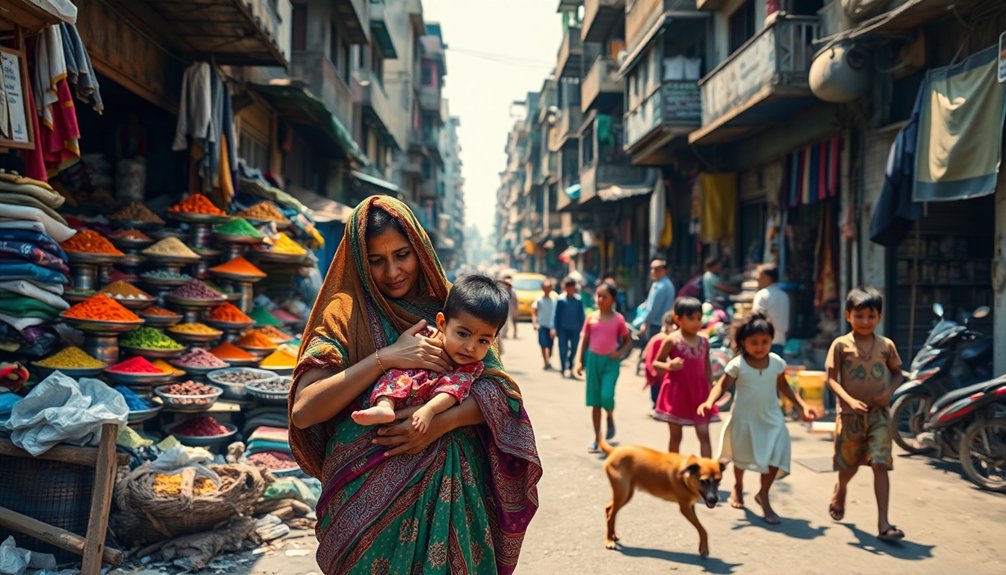
Struggle permeates the pages of “A Fine Balance,” as it explores the socio-political landscape of India during the Emergency. The novel uncovers themes of social injustice and the harsh realities faced by marginalized communities, particularly the lower-caste individuals like Ishvar and Omprakash. You see how caste dynamics dictate their lives, subjecting them to systemic discrimination and poverty. Mistry emphasizes the importance of human connections, highlighting how characters form bonds amidst their shared suffering. Through Dina, you witness the challenges women face in a patriarchal society, especially under economic hardship. Ultimately, the narrative serves as a poignant reminder of ongoing social inequalities in India, urging you to reflect on the broader implications of class and caste within society. The resilience of characters in the face of systemic discrimination underscores the need for compassion and social change.
Synopsis of Key Plot Elements
In “A Fine Balance,” you witness the harrowing journeys of Ishvar and Omprakash as they escape their tragic past only to face new challenges in the city.
The backdrop of India’s Emergency amplifies their struggles, emphasizing the harsh realities of social injustice and poverty.
Through their resilience and the glimmers of hope in their lives, the story reveals how even in despair, the human spirit fights to endure. This narrative resonates with themes of systemic racism and the broader implications of oppression, similar to the experiences highlighted in Coates’ work.
Character Journeys and Struggles
Fleeing their village after a violent attack, Ishvar and Omprakash, lower-caste tailors, set out on a harrowing journey toward the city, hoping for a better life.
They find employment with Dina Dalal, a widow fighting for independence amid her own struggles, including failing eyesight and financial insecurity.
As their lives intertwine, tragedy strikes when a police raid leads to Ishvar and Omprakash being captured and sold into a labor camp, facing forced sterilization and trauma.
Meanwhile, Maneck Kohlah, a disillusioned college student from a wealthier background, wrestles with despair as he witnesses the rampant social injustice surrounding them.
Ultimately, Ishvar and Omprakash, now homeless, seek solace in their shared experiences, while Dina’s situation worsens, emphasizing their collective struggles.
Impact of The Emergency
As the Emergency unfolds in India, the lives of the characters in “A Fine Balance” are irrevocably altered, revealing the harsh realities of political oppression.
Ishvar and Omprakash, fleeing violence in their village, find themselves trapped in a labor camp, victims of the government’s brutal tactics. The slum demolition initiative leaves them homeless, as their makeshift hut is destroyed without compensation, further deepening their despair.
Dina Dalal struggles against her landlord’s threats of eviction, trying to maintain her independence while maneuvering the oppressive climate.
Forced sterilizations highlight the draconian policies targeting marginalized communities, underscoring how the Emergency exacerbates their suffering.
Each character’s journey reflects the profound impact of political unrest on their lives and dreams.
Themes of Resilience and Hope
Resilience emerges as a powerful theme in “A Fine Balance,” showcasing how characters adapt and forge connections despite overwhelming adversity.
Ishvar and Omprakash represent this resilience as they shift from their violent village to the struggles of urban life, determined to find dignity as tailors.
Dina Dalal embodies hope, aiming for independence while supporting her hired tailors amidst oppressive circumstances.
Maneck’s internal battle highlights the fragility of hope, as he grapples with societal pressures and personal aspirations.
The tragic outcomes for characters, like the forced sterilizations and Maneck’s suicide, starkly illustrate systemic oppression.
Yet, through moments of shared meals and laughter, the story reveals the enduring spirit of community, reminding us that even in despair, hope persists.
Effects of the Emergency
The Emergency in India drastically reshaped lives, showcasing the harsh reality of government oppression and control.
You see characters like Ishvar and Omprakash suffer through forced sterilizations and homelessness, reflecting the social displacement faced by many.
As the struggle for independence unfolds, Dina’s fight against eviction highlights the deep injustices during this tumultuous period. Resilience and strength are essential themes that echo the experiences of those enduring similar hardships in various contexts.
Government Oppression and Control
While many citizens hoped for progress, the Emergency in India marked a dark chapter of government oppression and control. Prime Minister Indira Gandhi’s declaration in 1975 led to severe restrictions on civil liberties and a pervasive culture of fear.
You’d witness firsthand the devastating effects, including:
- Widespread censorship and imprisonment of political opponents
- Forced sterilizations targeting marginalized communities
- Demolition of homes under the guise of beautification
- Police raids resulting in forced labor camps
In this oppressive environment, individuals like Ishvar and Omprakash faced exploitation and vulnerability.
The Emergency stripped away basic rights and freedoms, leaving many grappling with uncertainty and despair. The lasting impacts of this period still resonate in the collective memory of the nation.
Social Displacement and Injustice
Amidst the turmoil of the Emergency, social displacement became a harsh reality for countless individuals, particularly those from marginalized communities.
You witness the devastating impact on groups like the Chamaar caste, who endure systemic violence and brutal caste-based oppression. Ishvar and Omprakash’s harrowing escape from their village, following the violent murder of their family by an upper-caste Thakur, illustrates this nightmare.
Forced slum demolitions leave them homeless, stripped of their lives and dignity. Caught in a police raid, they’re sold into labor camps, suffering further injustices like forced sterilization.
After the Emergency, when Maneck returns to a city plagued by riots, he faces the enduring scars of social injustice, revealing a grim struggle for survival among marginalized individuals.
Character Fates and Resilience
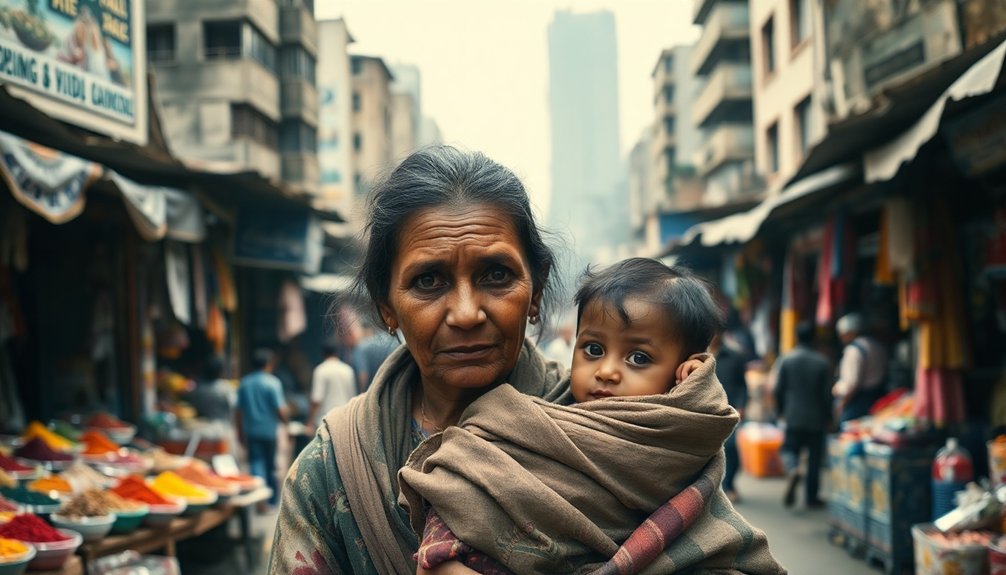
Character fates in “A Fine Balance” illustrate the profound impact of societal pressures and personal struggles, revealing the resilience of individuals facing seemingly insurmountable challenges.
- Ishvar and Omprakash endure brutal hardships in the city, from forced sterilization to homelessness.
- Dina’s quest for independence crumbles as she returns to her controlling brother after eviction.
- Maneck’s battle with family expectations leads to despair and tragedy in a chaotic city.
- Despite their tragic outcomes, the trio’s resilience shines through as they support one another.
Through their intertwined fates, Ishvar, Omprakash, and Dina embody the strength found in community, showcasing how resilience can emerge even in the darkest of circumstances. Their journey reflects the search for identity that many endure amidst the harsh realities of life, highlighting the universal quest for stability.
Reader Reactions and Engagement
The powerful themes of resilience and hardship in “A Fine Balance” resonate deeply with readers, sparking vibrant discussions and varied reactions.
With 32 comments in the book group, the engagement is clear. Many, like Dana Conover and Brenda McGinn, praised the book’s quality, despite its brutality.
However, some members found the content challenging, revealing the diverse sensitivities to its harsh themes. This contrast in reader reactions prompted deeper conversations about the societal commentary embedded in the novel.
Some readers grappled with the challenging content, sparking rich discussions on the novel’s societal commentary.
The community aspect of the group allowed for critical thinking, encouraging you to explore different perspectives. Ultimately, these discussions highlight how literature can provoke thought and foster connections among readers, making “A Fine Balance” a truly impactful experience. Additionally, the exploration of the transformative power of storytelling reinforces the idea that literature can be a source of healing and resilience.
Conclusion
In “A Fine Balance,” you experience the stark realities of life in India, where hope flickers like a candle in a storm. The resilience of the characters, despite their harrowing struggles, leaves you reflecting on the power of human spirit. As you turn the last page, their stories linger, reminding you of the fragility of balance in both life and society. This novel doesn’t just tell a story; it pulls you into a world that’s both heartbreaking and inspiring.