
Oscar Wilde’s *The Picture of Dorian Gray* reveals the complexities of his life as a queer artist in Victorian England. Inspired by his encounters and facing censorship, Wilde crafted a tale that explores themes like hedonism and morality. Through characters like Dorian, Basil, and Lord Henry, he critiques societal norms and the consequences of vanity. Wilde’s journey and the novel’s evolution reflect the interplay of personal experience and artistic ambition, leading to many fascinating insights to discover.
Origins of The Picture of Dorian Gray
Oscar Wilde’s *The Picture of Dorian Gray* emerged from a blend of personal experience and artistic ambition, capturing the imagination of readers since its debut in 1890.
The novel’s origins trace back to Wilde’s interaction with artist Frances Richards in 1882, where he humorously wished for his portrait to age instead of him.
Wilde’s whimsical desire for his portrait to age instead of himself sparked the timeless tale of *The Picture of Dorian Gray*.
When *The Picture of Dorian Gray* was first published in *Lippincott’s Monthly Magazine*, concerns over indecency led to cuts in the manuscript, particularly regarding themes of homosexuality, which were sensitive topics in Victorian England.
The expanded edition released in 1891 introduced new characters like James Vane, deepening the exploration of socio-economic themes and moral implications, ultimately enriching Dorian’s complex journey. The novel also reflects the symbolism of scapegoats, illustrating how characters bear the burdens of societal expectations and personal sins.
Publication History and Versions
Although the initial publication of *The Picture of Dorian Gray* in *Lippincott’s Monthly Magazine* in July 1890 was met with significant cuts, the novel’s journey didn’t end there.
Wilde’s manuscript originally contained around 500 words that were removed due to indecency concerns. The full novel, released in April 1891, expanded the narrative from thirteen to twenty chapters, altering dialogues and introducing new characters like James Vane to clarify moral implications.
Later, a 2011 edition by Belknap Press restored the deleted content, deepening character emotions and addressing earlier criticisms. The evolution of the text mirrors the social realities faced by characters in other classic literature, such as those in Charles Dickens’ works, emphasizing the importance of context in understanding literary themes.
These various versions raise questions about authority and interpretation, showing that no single version is definitive; instead, they collectively enhance your understanding of the narrative.
Major Themes Explored
- Hedonism: Dorian’s pursuit of pleasure under Lord Henry’s influence.
- Morality: The impact of societal values and their hypocrisy.
- Vanity: Dorian’s obsession with youth and beauty, resulting in devastating consequences.
- Redemption: Dorian’s struggle with guilt and the burden of his actions.
- Consequences: The tragic events stemming from his choices, including Sibyl Vane’s death.
The themes intertwine, creating a rich narrative that challenges your understanding of ethics and self, reflecting the fragile nature of societal norms in the face of temptation and desire.
Character Analysis: Dorian Gray
Transformation lies at the heart of Dorian Gray’s character, showcasing his journey from innocence to moral decay. Influenced by Lord Henry Wotton’s hedonistic philosophies, Dorian initially seeks beauty and pleasure, leading him to prioritize superficial desires over genuine connections.
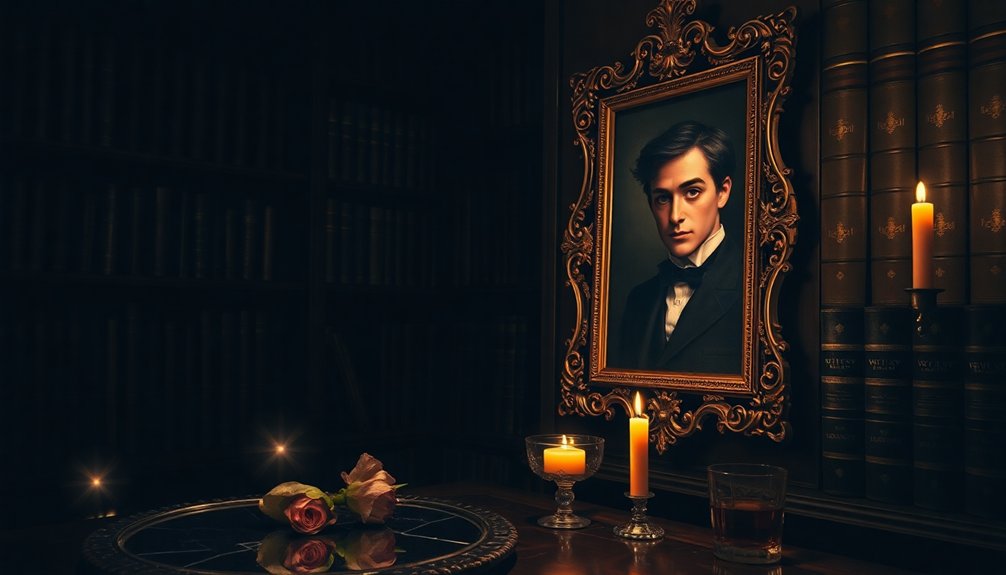
His desire for eternal youth becomes a powerful symbol of his corruption, as his portrait bears the marks of his sins while he remains youthful. Dorian’s relationship with Sibyl Vane highlights his increasing objectification of others, reflecting his descent into vanity and moral ambiguity.
Ultimately, his tragic fate, marked by a violent confrontation with his own portrait, underscores the inevitable consequences of pursuing aesthetic pleasure without accountability, revealing the darkness that lies beneath his once-innocent facade. This transformation echoes the consequences of manipulation found in the toxic relationships explored in modern narratives.
The Role of Basil Hallward and Lord Henry Wotton

As Dorian Gray sets out on his journey of moral decline, the contrasting influences of Basil Hallward and Lord Henry Wotton shape his fate. Basil, enamored by Dorian’s beauty and youth, represents the ethical implications of art, while Lord Henry serves as a catalyst for Dorian’s hedonism, pushing him toward moral corruption.
Their dynamic explores the tension between aesthetic pleasure and ethical responsibility.
- Basil’s infatuation reflects the struggle between art and societal corruption.
- Lord Henry’s seductive rhetoric challenges Victorian norms.
- Dorian’s choices reveal the dangers of prioritizing beauty and pleasure.
- Basil’s confrontation with Dorian highlights the consequences of vanity.
- Lord Henry embodies nihilism, leading Dorian toward his ultimate downfall.
- This moral decline echoes the themes of power and corruption explored in historical mysteries like “The Daughters of Night.”
Wilde’s Reflections on Aesthetics and Morality
In *The Picture of Dorian Gray*, you’ll see Oscar Wilde grappling with the clash between beauty and ethics.
Through Dorian’s journey, he raises questions about whether the pursuit of aesthetic pleasure justifies moral compromise.
As you explore this tension, you’ll uncover the complexities of aestheticism and the personal conflicts it creates. This struggle mirrors the themes of ambition and rivalry found in other literary works, as characters navigate the consequences of their desires.
Art and Ethical Values
While pursuing beauty, Dorian Gray’s journey reveals the complex interplay between art and ethics in Oscar Wilde’s *The Picture of Dorian Gray*.
Wilde suggests that art transcends ethical considerations, yet the consequences of hedonism are profound. As you explore Dorian’s world, consider the following:
- Lord Henry Wotton’s influence on Dorian exemplifies the allure of pleasure over morality.
- Basil Hallward’s obsession highlights the dangerous impulses art can invoke.
- The duality of human nature critiques Victorian societal norms.
- Dorian’s vanity illustrates the corrupting power of aestheticism.
- Ultimately, the story serves as a cautionary tale about the importance of moral responsibility.
Wilde’s reflections challenge you to contemplate how art and ethical values intertwine in your own life.
Aestheticism and Personal Conflict
Though Dorian Gray’s pursuit of beauty captivates, it also ignites an internal struggle between aesthetic ideals and moral integrity.
Oscar Wilde’s exploration of aestheticism reveals how Dorian, influenced by Lord Henry Wotton, embraces hedonism at the cost of his ethical values. This relationship showcases a seductive allure that leads Dorian down a path of corruption, highlighting the consequences of a life focused solely on pleasure.
Wilde critiques Victorian society’s superficial values, illustrating how obsession with beauty can yield profound personal and societal consequences. His own conflicts with societal norms and censorship mirror Dorian’s turmoil, emphasizing the tension between the pursuit of art and the expectations of morality.
Ultimately, Wilde’s narrative challenges you to reflect on the balance between aesthetics and ethics.
Societal Context and Censorship
In Victorian England, strict moral standards shaped how *The Picture of Dorian Gray* was received and edited. You can see how censorship impacted the narrative, particularly regarding themes of queerness and the portrayal of relationships. This reflects a broader disillusionment with societal norms that authors like Richard Yates also explored in their works.
Victorian Moral Standards
- The Criminal Law Amendment Act of 1885 heightened societal conservatism.
- Wilde’s exploration of queerness was largely suppressed in revised editions.
- Public perception of Wilde was heavily influenced by these moral standards.
- Themes in Dorian Gray were used against Wilde in his trials.
- The backlash against the novella highlighted the conflict between art and morality during this era.
Censorship and Publication Impact
While censorship shaped the landscape of literature in the late Victorian era, Oscar Wilde’s *The Picture of Dorian Gray* serves as a striking example of how societal pressures influenced artistic expression.
The novel’s initial publication in Lippincott’s Monthly Magazine faced significant censorship, with around 500 words cut due to fears of indecency and homoerotic themes. The 1885 Criminal Law Amendment Act intensified this atmosphere, branding the work as immoral.
Wilde diluted the original portrayal of relationships in the 1891 edition to avoid backlash. Despite these efforts, the novel received 216 negative reviews in its first month, revealing the moral panic that surrounded its content.
Tragically, Wilde’s legal troubles linked directly to the themes of *Dorian Gray*, underscoring the impact of censorship.
Themes of Queerness
- Censorship stripped away romantic nuances between Dorian Gray and Basil Hallward.
- The Criminal Law Amendment Act of 1885 criminalized homoerotic expression.
- Wilde’s personal relationships influenced the novel’s themes and character dynamics.
- The 1891 edition reflects Wilde’s struggle against societal expectations of masculinity.
- Dorian’s journey illustrates the tension between desire and the fear of societal repercussions.
Wilde’s work serves as a bold critique of the limitations imposed by a repressive society, making it a timeless exploration of queerness.
Reactions to the Novel Over Time
Since its initial publication in 1890, Oscar Wilde’s *The Picture of Dorian Gray* has elicited a wide range of reactions, reflecting changing societal values and attitudes toward art and morality.
Initially, the novel faced backlash, with 216 negative reviews pointing to its perceived immorality and themes of hedonism. Wilde defended Dorian Gray against these accusations, famously stating that “there is no such thing as a moral or an immoral book.”
The 1891 expanded edition attempted to clarify Dorian’s character, but criticism continued. Complicated by its role in Wilde’s 1895 trial for homosexuality, the novel’s reception shifted.
From the 1980s onward, *The Picture of Dorian Gray* gained popularity, solidifying its status as a classic in literature. The evolution of its reception parallels the changing views on literary themes of morality and the complexities of societal norms over time.
Legacy and Cultural Impact
When you explore the legacy of *The Picture of Dorian Gray*, you’ll find a rich tapestry of adaptations that reflect its timeless themes. This novel not only critiques societal norms but also sparks conversations about morality in art, making it a staple in literary discussions. Its enduring presence across various media showcases how relevant Wilde’s insights remain in today’s cultural landscape. Notably, the allure of dark academia in literature continues to resonate, as seen in works like *The Secret History* by Donna Tartt.
Adaptations Through the Years
- The 1945 film directed by Albert Lewin received three Academy Award nominations.
- The 2004 film Dorian Gray offers a modern reinterpretation.
- A 2011 edition restored deleted content, enhancing character motivations.
- Scholarly interest persists, emphasizing LGBTQ representation in literature.
- Discussions around vanity and ethics continue to thrive.
These adaptations guarantee that Dorian Gray remains a powerful symbol of the consequences of a life devoid of accountability.
Societal Reflections and Critiques
Although *The Picture of Dorian Gray* faced intense backlash upon its release, its legacy reflects profound societal critiques that continue to resonate today.
Wilde’s exploration of hedonism and immorality shocked Victorian society, challenging societal attitudes toward sexuality and morality. The character of Dorian Gray embodies the conflict between aestheticism and the moral consequences of indulgence, prompting readers to question superficial values.
Initially met with harsh criticism, the novel’s reputation transformed in the 1980s, solidifying its status as a classic.
Wilde’s assertion that “there is no such thing as a moral or an immoral book” emphasizes this critique, allowing *Dorian Gray* to inspire ongoing discussions about art, identity, and the complexities of human nature in contemporary culture.
Enduring Themes in Literature
- The allure of beauty and its consequences
- The exploration of aestheticism and hedonism
- The stark portrayal of moral decay
- Its role as a foundational text in LGBTQ literature
- The ongoing debates about art and morality
Wilde’s insights on vanity and self-awareness continue to spark conversations about ethics.
As Dorian Gray gains renewed attention, it reflects our evolving understanding of human nature, showing how literature can challenge societal norms and provoke thought.
The novel’s legacy is as relevant now as it was at its publication in 1890.
Adaptations and Modern Interpretations
As Oscar Wilde’s *The Picture of Dorian Gray* continues to resonate with audiences, its myriad adaptations and modern interpretations showcase its timeless themes. You’ll find numerous stage productions, films, and even operas that reflect its enduring relevance in popular culture.
The 1945 film adaptation, directed by Albert Lewin, received three Academy Award nominations, proving its appeal to cinematic viewers. In 2004, *Dorian Gray*, starring Ben Barnes and Colin Firth, reimagined the story, highlighting themes of vanity and moral decay for contemporary audiences.
Recent interpretations explore identity and morality, mirroring ongoing societal discussions about beauty and youth. This versatility across different mediums keeps Wilde’s profound messages alive, encouraging you to reflect on the consequences of hedonism in today’s world. Additionally, the influence of Victorian society during Wilde’s time adds layers of complexity to Dorian Gray’s character and choices.
Conclusion
As you close the book on “The Picture of Dorian Gray,” imagine Dorian’s portrait hidden away, a haunting reminder of lost innocence and the weight of choices. Wilde’s tale, like a delicate rose with thorns, blooms beautifully yet warns of decay beneath the surface. It invites you to reflect on your own life’s canvas—how vibrant it appears and what shadows linger just out of sight. In the end, it’s a timeless mirror reflecting both beauty and truth.