

Charles Dickens, the author of “Great Expectations,” shaped literature through his vivid storytelling and profound social commentary. His difficult upbringing fueled his empathy for the marginalized, inspiring characters that resonate today. Dickens tackled social justice, critiquing inequality and advocating for reforms, particularly in child labor laws. His influence stretches beyond his time, impacting future writers and society’s perception of social issues. There’s much more to discover about his legacy and its significance in today’s world.
Early Life and Influences
Charles Dickens’ early life was marked by hardship and resilience, shaping him into one of literature’s most powerful voices. Born into a working-class family in 1812, you can see how poverty profoundly impacted his worldview.
When his father was imprisoned for debt, Dickens had to leave school at just 12, working in a blacking factory. These early experiences ignited his empathy for the marginalized and fueled his desire for social reform.
Influenced by literary giants like Shakespeare and Swift, he found solace in reading and self-education. As he began his literary career as a parliamentary reporter, he gained firsthand insights into societal injustices, which later became central themes in his novels, including *Great Expectations*. His writings often critique the rigid class structures that defined Victorian society, reflecting his deep understanding of social inequality.
The Rise of a Literary Icon
Although he faced significant challenges in his youth, Dickens quickly emerged as a leading voice of the Victorian era, engaging readers with his compelling narratives.
Charles Dickens’s early experiences with poverty shaped his commitment to social reform, which became a hallmark of his work. His first major success, *The Pickwick Papers*, marked the beginning of his rise, utilizing serialized novels to draw in readers.
Dickens’s struggles with poverty fueled his passion for social reform, evident in his early work, *The Pickwick Papers*.
This method created suspense and anticipation, evident in later classics like *Oliver Twist* and *Great Expectations*. By the time he published *Great Expectations* in 1861, Dickens was renowned for his rich character development and sharp social commentary. His works often reflect the social realities of 19th-century England, emphasizing themes of class struggles and human resilience.
His ability to weave humor with serious themes solidified his enduring legacy as one of the greatest novelists in English literature.
Major Works and Their Significance
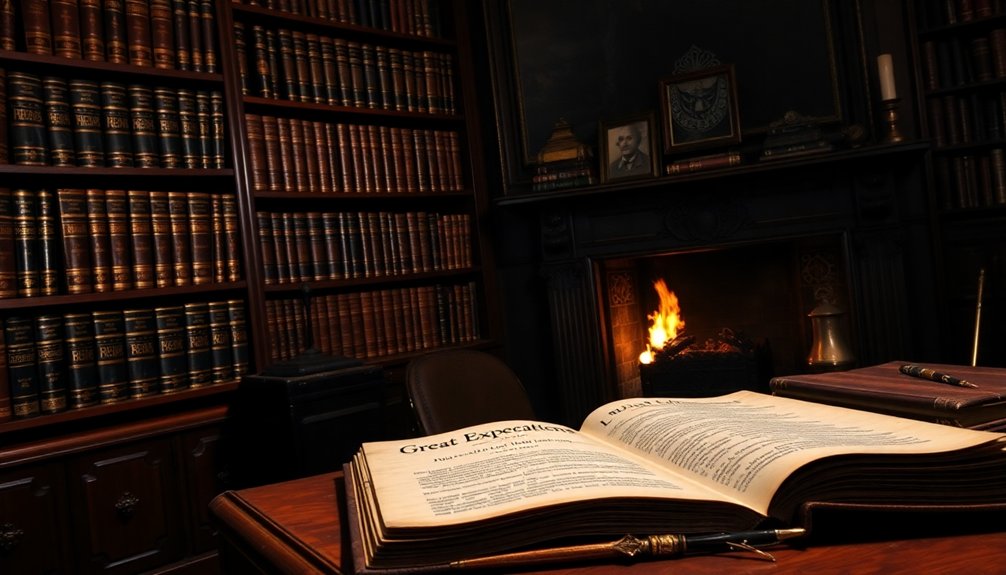
- Complex Characters: Pip, Miss Havisham, and Estella embody the struggles against societal expectations and the search for self-identity.
- Serialized Format: Dickens’ unique approach allowed him to engage readers directly, adapting the narrative based on their feedback, which enhanced relatability.
- Cultural Impact: The numerous adaptations across various media reinforce its status in literary history, proving its relevance across generations. Pip’s journey illustrates the complexities of social class, inviting readers to reflect on their own ambitions and identities.
*Great Expectations* remains a cornerstone of English literature, inviting readers to reflect on their own ambitions and identities.
Themes of Social Justice in Dickens’ Writing
Dickens’ storytelling goes beyond complex characters and engaging narratives; it boldly confronts social injustices that plagued Victorian society. His works, like *Oliver Twist*, highlight themes of social justice, vividly portraying the harsh realities of poverty and child labor.
Through characters like Oliver, Pip, and Scrooge, Dickens emphasizes the importance of empathy and compassion for those suffering from social inequality. He critiques institutional corruption, urging readers to reflect on their responsibilities towards the marginalized.
Dickens’s narratives inspire public discourse and advocate for reforms, contributing to significant changes in laws about child labor and education. The enduring relevance of his themes continues to resonate today, encouraging you to confront and address ongoing societal inequalities. His exploration of social class and its impact on individuals further reinforces the need for compassion and understanding in our society.
The Impact of Great Expectations on Literature

- Complex Character Development: Pip’s transformation invites readers to empathize with his moral dilemmas and aspirations.
- Vivid Descriptions: Dickens’s rich imagery, from the marshes of Kent to Satis House, enhances emotional depth, making social class a palpable barrier.
- Shaping Public Discourse: The serialized format engaged audiences, sparking conversations about class and ambition that remain relevant.
Through its enduring power, *Great Expectations* continues to influence literature, inspiring countless adaptations and discussions around empathy and compassion. Additionally, the novel’s exploration of social class offers a critical lens on Victorian society that resonates with modern readers.
Character Development and Storytelling Techniques
In *Great Expectations*, you’ll notice how Dickens brings characters to life with vivid descriptions and distinct traits that reflect their roles in society.
His intricate plotting keeps you engaged, as various storylines intertwine and reveal the complexities of human relationships. Additionally, the exploration of generational poverty in Dickens’ characters mirrors the struggles of those in early 20th-century Brooklyn.
Vivid Characterization Techniques
Vivid characterization techniques breathe life into Dickens’s narratives, allowing readers to forge deep emotional connections with his characters. You’ll find that his vivid characters often embody the complexities of social class distinctions, enriching the narrative depth.
Here are three key techniques he employs:
- Detailed Backstories: Dickens creates multi-dimensional characters, like Pip, whose transformation reflects struggles and aspirations.
- Distinct Dialogue: Unique speech patterns highlight class differences, making figures like Estella and Joe Gargery relatable and memorable.
- Eccentric Foils: Characters such as Fagin and Mr. Micawber blend humor with serious themes, emphasizing moral lessons while maintaining reader engagement through serialized storytelling, building anticipation for character development.
These techniques guarantee you remain invested in their journeys.
Plot Development Strategies
Building on the rich characterizations in Dickens’s works, his plot development strategies play a significant role in shaping the narrative. He employs intricate character development, showcasing multi-dimensional protagonists like Pip, who navigate relatable struggles and moral growth.
Dickens’s storytelling techniques, often presented in serialized formats, create suspense and keep you invested in character arcs, as seen in *Oliver Twist* and *The Pickwick Papers*. By intertwining plotlines and secondary characters, he enhances narrative complexity, illustrating various social injustices.
Vivid emotional connections emerge from his characters’ experiences, allowing you to empathize with figures like the orphaned Oliver. Dickens masterfully balances humor with serious themes, enriching your understanding of the characters’ journeys while addressing deeper societal issues.
Dickens’ Relevance in Contemporary Society
Dickens’ exploration of social justice issues speaks to you today as you witness similar inequalities in your own society. Characters like Pip remind you of the ongoing journey of self-discovery and moral complexity individuals face now. His works resonate with the ideals of collective action, emphasizing the importance of unity in the pursuit of justice and equality.
Social Justice Themes
While examining the social injustices depicted in “Great Expectations,” you can’t help but see the parallels to today’s society.
Dickens highlights critical issues that still resonate, urging us to confront the realities of social justice.
Consider these themes:
- Poverty and Inequality: Dickens exposes the harsh realities of class disparity, prompting reflection on economic divides today.
- Systemic Failures: His critique of institutional corruption in education and social services mirrors contemporary systemic issues, urging reform.
- Empathy and Compassion: Through Pip’s journey, Dickens encourages you to cultivate empathy for marginalized individuals, emphasizing the importance of compassion in addressing the human condition.
Empathy Through Storytelling
Empathy emerges as a powerful tool through storytelling, and Charles Dickens masterfully wields it in his narratives. His storytelling techniques, such as vivid character development, allow you to connect emotionally with marginalized characters like Pip and Oliver.
As you immerse yourself in their struggles against social injustices like child labor and poverty, you’re prompted to reflect on your own responsibilities toward the underprivileged. Dickens’ emphasis on empathy and the human experience cultivates compassion, encouraging you to confront inequalities in contemporary society.
His enduring legacy continues to resonate, as adaptations keep his themes alive, inviting new generations to engage with social justice issues. Through Dickens, you gain insights into the ongoing challenges faced by vulnerable members of society today.
The Legacy of Charles Dickens
Charles Dickens revolutionized literature by merging social criticism with compelling narratives that still resonate today. His legacy is a powerful reminder of the enduring nature of his themes and the impact he’d on society.
Here are three key aspects of his legacy:
- Social Reforms: Dickens’s advocacy for issues like child labor and poverty sparked empathy and awareness, influencing public policy in 19th-century England.
- Timeless Relevance: His exploration of human nature and social inequality continues to connect with contemporary readers, proving that his work transcends time.
- Literary Influence: Dickens’s unique storytelling techniques paved the way for modern popular fiction, inspiring future writers to blend social issues with engaging narratives. Additionally, his work encourages readers to reflect on the complexities of history, as it often reveals the struggles of marginalized individuals in society.
In these ways, Charles Dickens’s contributions remain essential to literature and society.
Inspiration for Future Generations of Writers
Inspiration flows from the pages of Dickens’ work, offering a rich tapestry for aspiring writers to explore. His masterful character development and narrative techniques create relatable figures that resonate deeply with readers.
By weaving humor into serious themes, Dickens encourages you to tackle societal issues in your own writing, making your stories both entertaining and thought-provoking. His commitment to social justice and empathy fosters a sense of responsibility to address contemporary challenges.
The serialized format of his novels captivates audiences, serving as a blueprint for modern narratives. Dickens’ enduring legacy influences future generations, inspiring writers like George Orwell and J.D. Salinger to investigate the human condition and social inequality, reminding you of the power of storytelling in shaping understanding. His work echoes the themes of social justice and empathy that resonate strongly in the narratives of historical figures like Louis Zamperini and Henrietta Lacks.
Conclusion
In the grand tapestry of literature, Dickens doesn’t just leave a mark; he leaves a blazing comet trail that lights up the night sky! His tales of hope, struggle, and social justice echo through the ages, inspiring legions of writers and readers alike. When you immerse yourself in “Great Expectations,” you’re not just reading a story; you’re stepping into a world where every character breathes life and every word dances with meaning. Dickens’ legacy is an unstoppable force that’ll keep igniting imaginations forever!