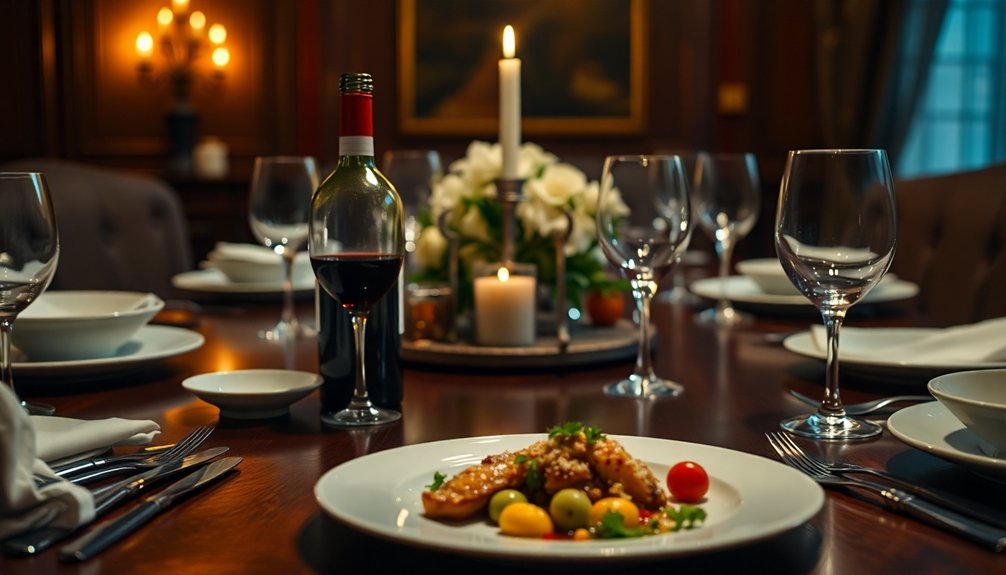
In Herman Koch’s “The Dinner,” you explore a tense evening at a lavish Amsterdam restaurant where a five-course meal reveals dark family secrets. The story unfolds through the perspectives of two couples grappling with a horrific act committed by their sons, prompting moral dilemmas and tensions to rise. As food mirrors their relationships, the elegant setting contrasts sharply with the moral decay they face. Stay with us to uncover the complexities behind this controversial narrative.
Overview of the Novel
In “The Dinner,” Herman Koch invites you into a tense evening at a gourmet restaurant in Amsterdam, where the complexities of family dynamics unfold over a five-course meal.
You find yourself with two couples: Paul and Claire, along with Serge and Babette, as they navigate a night filled with rising tension. Each course reveals deeper layers of their relationships, exposing hidden resentments and moral dilemmas.
Two couples navigate a tense evening, uncovering hidden resentments and moral dilemmas with each exquisite course.
As the characters confront a horrific act committed by their sons, issues of mental illness and parental instincts come to the forefront. The night becomes a battlefield of conflicting values and unsettling truths, leaving you questioning the lengths to which you’ll go to protect your family. This exploration of systemic oppression highlights the moral complexities faced by individuals in dire situations.
The novel’s dark themes resonate long after the last course is served.
Narrative Style and Structure
Herman Koch’s “The Dinner” captivates with its unique narrative style, primarily through the eyes of Paul Lohman, whose personal and often unsettling commentary invites you into his psyche.
The structure cleverly mirrors a meal, with each chapter named after a dinner course, creating a rhythmic progression that builds tension around the dinner table. As Paul navigates the complexities of family dynamics, particularly with his brother, the claustrophobic atmosphere of the restaurant enhances the drama.
Flashbacks enrich the narrative, offering insights into character motivations and relationships, while the initial dark comedy gradually transforms into a more serious tone. This layered storytelling keeps you engaged, revealing the unsettling truths lurking beneath the surface of their seemingly ordinary evening. Ultimately, the novel prompts reflection on the impact of past actions, emphasizing how choices shape personal narratives and relationships.
Themes Explored
In “The Dinner,” you see how parental responsibility creates intense dilemmas, forcing characters to choose between protecting their children and confronting harsh realities.
The moral ambiguity in families unfolds as you witness the unsettling consequences of their actions.
Koch lays bare dark truths, leaving you to grapple with the implications of choices that come with no easy answers. The exploration of class struggles resonates with readers, reflecting the complexities faced in both Koch’s narrative and Dickens’ “David Copperfield.”
Parental Responsibility Dilemmas
How far would you go to protect your child from the consequences of their actions?
“The Dinner” masterfully explores the moral dilemmas that arise when parents face the heinous acts committed by their offspring. Throughout the dinner, the characters’ actions reveal the complexities of parental responsibility and the instinctual drive to shield their children.
Paul Lohman, the protagonist, wrestles with the balance between parental love and moral accountability, reflecting on the implications of his son’s behavior. As tensions escalate, you witness the lengths to which parents will go to avoid facing harsh truths.
The novel raises unsettling questions about the nature of parenting, challenging your understanding of right and wrong and the moral compromises one makes for family.
Moral Ambiguity in Families
While maneuvering through the complexities of family dynamics, “The Dinner” exposes the moral ambiguity that often lies beneath the surface.
As you explore the narrative, you witness how parental instincts drive the characters to confront the horrific actions of their sons. The tension mounts as these largely unlikable and unreliable characters grapple with their ethical dilemmas, making it hard to distinguish right from wrong.
Koch skillfully highlights the stark contrast between the facade of normalcy in families and the hidden darkness that can simmer beneath. As they navigate their complicity and responsibility, the characters reveal how societal values can distort personal ethics, ultimately presenting a world where no one finds redemption, underscoring the pervasive nature of moral failure in familial relationships.
Dark Truths and Consequences
As the dinner unfolds, dark truths emerge that force the characters to confront the unsettling realities of their actions and choices.
The narrative dives deep into moral dilemmas, revealing the extremes parents will go to protect their children, even when faced with horrific acts.
The tension escalates as each character grapples with their instincts and the societal expectations surrounding them.
Set against the backdrop of a gourmet restaurant, the juxtaposition of fine dining and chilling discussions amplifies the horror of their revelations.
Ultimately, the story leaves no room for redemption, compelling you to reflect on the consequences of their choices.
You’re left questioning not just their morality, but the very fabric of familial loyalty and societal values.
Character Dynamics
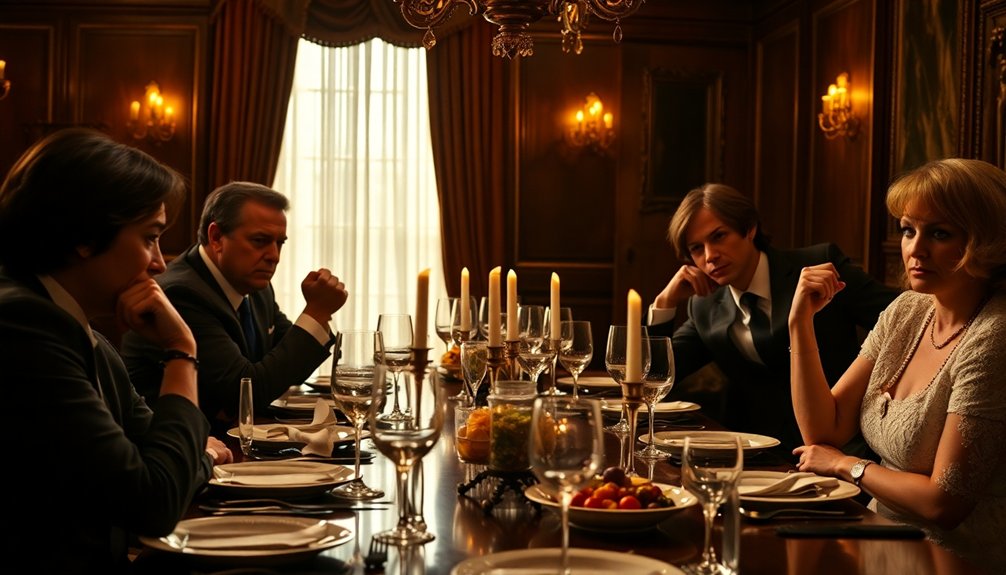
The character dynamics in “The Dinner” create a tense atmosphere that exposes the complex layers of family relationships. The interactions among the brothers, Paul and Serge, ignite significant tension, revealing deep-seated resentments and moral dilemmas.
- Paul’s unreliable narration distorts events, blurring motivations.
- Serge’s public persona as a politician contrasts with the dark truths disclosed.
- Claire and Paul’s differing parenting styles complicate their relationship.
- Unfolding secrets lead to a breakdown of civility.
- The couples’ discussions reveal uncomfortable truths that challenge their morals.
Through these dynamics, Koch masterfully illustrates how familial bonds can be strained by conflicting values and the weight of hidden realities, leaving you questioning the limits of loyalty and love. The theme of ambition and rivalry resonates throughout, highlighting how personal conflicts can spiral into broader consequences.
Reception and Critical Comparisons
Though opinions vary widely, “The Dinner” has garnered significant attention as an international bestseller, enthralling readers with its dark themes and intricate exploration of family and morality.
Critics have made critical comparisons to Gillian Flynn’s “Gone Girl,” noting the unexpected twists and unsettling character dynamics that keep you on edge. With an average rating of 3.21 from over 171,000 ratings, it’s clear that this novel has sparked divisive opinions among readers.
Janet Maslin of The New York Times praises its voyeuristic appeal, while Moira Hodgson from The Wall Street Journal highlights the book’s fast-paced, riveting nature and dramatic structure.
In this tense meeting for dinner, Koch deftly examines the complexities of human behavior, leaving you questioning what you believe. The novel’s intricate plot and psychological tension challenge perceptions of reality, making it a compelling read for fans of the genre.
Reader Reactions and Insights
Many readers have found themselves torn over the characters in “The Dinner,” grappling with their unlikable and unreliable traits. This complexity leads to varied reader reactions, as opinions shift throughout the narrative.
- The slow beginning creates initial restlessness but builds tension effectively.
- Flashbacks can feel disconnected, frustrating some readers.
- Significant plot developments later in the story reward patient readers.
- The twist ending sparks diverse interpretations, ranging from satisfying to distressing.
- Rich food descriptions serve as a potent metaphor, enhancing the overall experience.
Ultimately, these elements combine to create a reading experience that challenges you, making you think deeply about morality and family dynamics. Additionally, the moral complexities in “The Dinner” reflect themes similar to those in psychological thrillers, engaging readers on multiple levels.
The tension throughout keeps you engaged, even when the characters themselves may not.
Symbolism and Metaphors in the Story
In “The Dinner,” food isn’t just for sustenance; it reflects the complex relationships and social dynamics among the characters.
Each course not only marks the meal’s progression but also heightens the tension and moral conflicts that unfold.
The dining atmosphere, with its carefully curated dishes, underscores the claustrophobic struggles and hidden truths of high society. Additionally, the themes of healing and empowerment resonate throughout the narrative, revealing the deeper emotional layers of the characters’ interactions.
Food as Relationship Indicator
Food plays an essential role in “The Dinner,” acting as a significant indicator of the characters’ relationships and social standings. As you explore the story, you’ll notice how each meal reflects underlying tensions and conflicts among the characters.
Consider these points:
- The extravagant dishes contrast with the dark secrets being revealed.
- Each course escalates the emotional intensity of the conversations.
- Food choices symbolize the characters’ personalities and moral dilemmas.
- The meal’s progression mirrors the breakdown of social niceties.
- Paul Lohman’s observations highlight the ethical questions surrounding parental responsibility.
Through these culinary details, Koch deepens your understanding of the characters’ intertwined relationships, showcasing how food becomes a powerful metaphor for their true selves.
Meal Structure Symbolism
The five-course meal in “The Dinner” serves as a masterful structure that not only organizes the narrative but also deepens the symbolic weight of the unfolding drama.
Each course heightens the tension among the characters, with the culinary choices reflecting their moral dilemmas. You see how the elegant presentation contrasts with the dark themes discussed, creating an unsettling atmosphere.
As they navigate through their meal, the claustrophobic setting emphasizes their inability to escape the harsh truths they try to conceal.
Flashbacks throughout the dinner enrich the narrative, revealing motivations and deepening the connection between the meal structure and the complex relationships among the characters.
Ultimately, the meal becomes a powerful metaphor for their intertwined lives and moral complexities.
Dining Atmosphere Tension
While enjoying a meticulously crafted meal, you can’t help but feel the underlying tension simmering just beneath the elegant surface. The dining atmosphere in Koch’s novel serves as a powerful metaphor for the characters’ hidden secrets and moral dilemmas.
As each course unfolds, the claustrophobic setting amplifies the tension, revealing truths that disrupt the veneer of civility.
- The elegance of the meal contrasts sharply with the disturbing conversations.
- Each dish mirrors the characters’ personalities and relationships.
- The confined space heightens the discomfort, forcing confrontation.
- Secrets simmer between bites, creating an unbearable atmosphere.
- The meal becomes a stage for moral decay and privileged entitlement.
In this delicate balance, the meal transforms into a battleground of hidden truths.
Conclusion
In the end, “The Dinner” serves up a hearty dish of moral ambiguity, leaving you to ponder whether it’s a feast for thought or a recipe for disaster. Koch’s characters might as well have their own cooking show, where the main ingredient is hypocrisy, garnished with a sprinkle of familial dysfunction. So, grab your forks and dig in—just don’t be surprised if you find a few bones lodged in the narrative. Bon appétit!