In “The Wife,” Meg Wolitzer explores the intricate dynamics of marriage, focusing on Joan Castleman, who sacrifices her ambitions for her husband’s literary success. The story unfolds during a pivotal trip to Helsinki, considering themes of identity and gender inequality. As Joan wrestles with her suppressed aspirations, she ultimately seeks empowerment and liberation from her husband’s overshadowing presence. Discover how Wolitzer skillfully critiques societal expectations and unpacks the emotional toll of such sacrifices.
Overview of the Novel
In “The Wife,” Meg Wolitzer crafts a poignant narrative that explores the intricate dynamics of Joan and Joe Castleman’s 40-year marriage.
This tale unfolds during a critical trip to Helsinki, where Joan grapples with her identity as “the wife,” reflecting on the sacrifices she’s made for Joe’s literary success.
The non-linear storytelling intertwines present-day moments with flashbacks, shedding light on the emotional depth of their relationship.
Through Joan’s journey, you witness the impact of traditional gender roles and societal expectations on her personal growth.
Joan’s journey reveals the profound effects of gender roles and societal expectations on her evolution and sense of self.
Wolitzer’s exploration of identity and sacrifice prompts you to question the dynamics of marriage and the often-unseen contributions women make.
Ultimately, “The Wife” challenges you to reconsider the cost of love and support in a partnership. The narrative resonates with themes of suburban disillusionment, highlighting the struggles faced by women in their pursuit of individuality and fulfillment.
Character Analysis of Joan Castleman
Identity plays an essential role in understanding Joan Castleman, the protagonist of “The Wife.”
Initially seen as merely “the wife,” Joan embodies the sacrifices many women make for their partners. For 40 years, she supports her husband, Joe Castleman, sacrificing her own literary talents and ambitions.
As the story unfolds, you witness her internal struggle with the complexities of their marriage, shaped by Joe’s self-centeredness and infidelity. This journey leads Joan to reclaim her self-identity, transforming from a supportive partner into an assertive woman who confronts inequities.
The shocking revelation at the story’s climax reframes her experiences, exposing the moral complexities of her marriage and showcasing her vital role in Joe’s literary success. Joan’s story resonates with the courage and determination of women who navigate personal adversities, highlighting the transformative power of reclaiming one’s voice.
Themes of Sacrifice and Identity
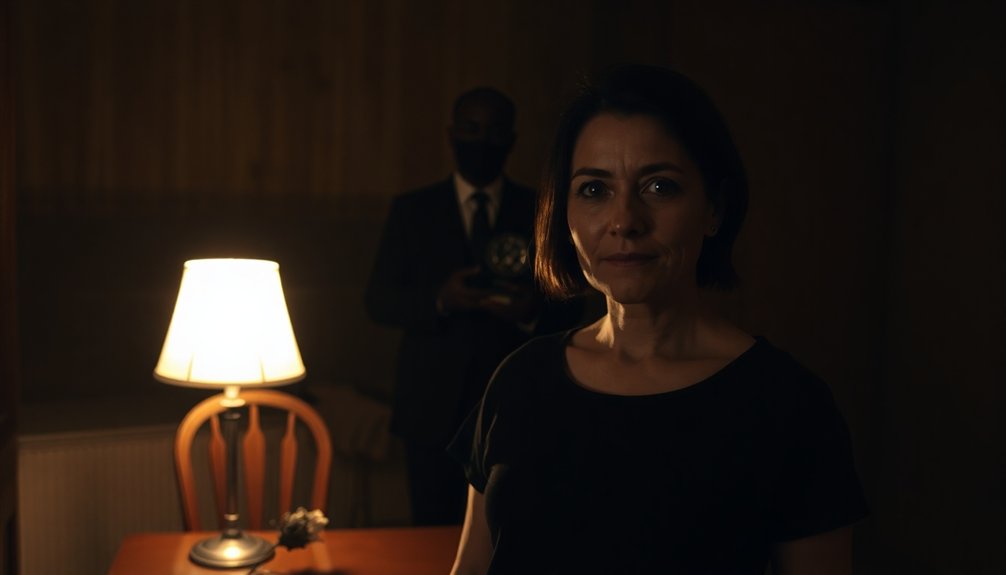
In “The Wife,” you see how sacrifice shapes marriage dynamics, particularly through Joan’s choice to put her dreams aside for Joe’s career. This raises questions about identity, as she struggles to be seen as more than just “the wife.” As you follow her journey, you can feel the tension between her personal ambitions and the expectations placed on her, ultimately leading to a pivotal moment of self-discovery. This narrative echoes the resilience of women in historical fiction, showcasing the enduring spirit of those who navigate societal challenges.
Sacrifice in Marriage Dynamics
While maneuvering through the complexities of marriage, many women often find their own aspirations overshadowed by their partners’ ambitions, as vividly illustrated in *The Wife*.
Joan Castleman’s sacrifices for Joe’s literary career reveal how gender dynamics can stifle women’s voices and identities. Over four decades, Joan suppresses her personal ambition, leading to feelings of resentment and invisibility.
The narrative uncovers her internal conflict, especially after discovering Joe’s infidelities, which act as a catalyst for her awakening. This emotional toll prompts her to reevaluate her life choices, ultimately culminating in her decision to leave him in Helsinki.
Through Joan’s journey, Wolitzer critically explores the sacrifices women make and the profound impact on their sense of self-worth and identity within marriage.
Identity Beyond Spousal Roles
As Joan Castleman grapples with her identity, it becomes clear that her role as a supportive wife has overshadowed her literary ambitions for far too long.
This internal conflict reveals the sacrifices women often make within traditional spousal roles, leading to a sense of invisibility and unfulfillment.
Joan’s journey highlights the significance of self-assertion and personal fulfillment, challenging societal gender roles that prioritize her husband’s success over her own.
Consider these key aspects:
- Joan’s sacrifices illustrate the cost of suppressing one’s identity.
- Her struggle emphasizes the need for women to reclaim their literary aspirations.
- The narrative critiques how spousal roles can diminish a woman’s sense of self.
Through Joan, we see the crucial quest for identity beyond marriage.
Reclaiming Personal Ambition
Joan Castleman’s story is a powerful reminder of the struggle many women face in reclaiming their personal ambitions after years of self-sacrifice.
In *The Wife*, you witness Joan grapple with the emotional toll of prioritizing her husband’s success over her own aspirations. Her journey highlights the societal expectations that often silence women’s voices, leaving their identities buried beneath layers of duty.
When Joan decides to leave Joe during their flight to Helsinki, it marks a significant moment of women’s liberation and empowerment. This act symbolizes her determination to reclaim her narrative and pursue her lost potential.
Ultimately, the novel critiques the sacrifices women make, urging you to reflect on the importance of personal ambitions in the fight for identity and self-fulfillment.
Gender Disparities in the Literary World
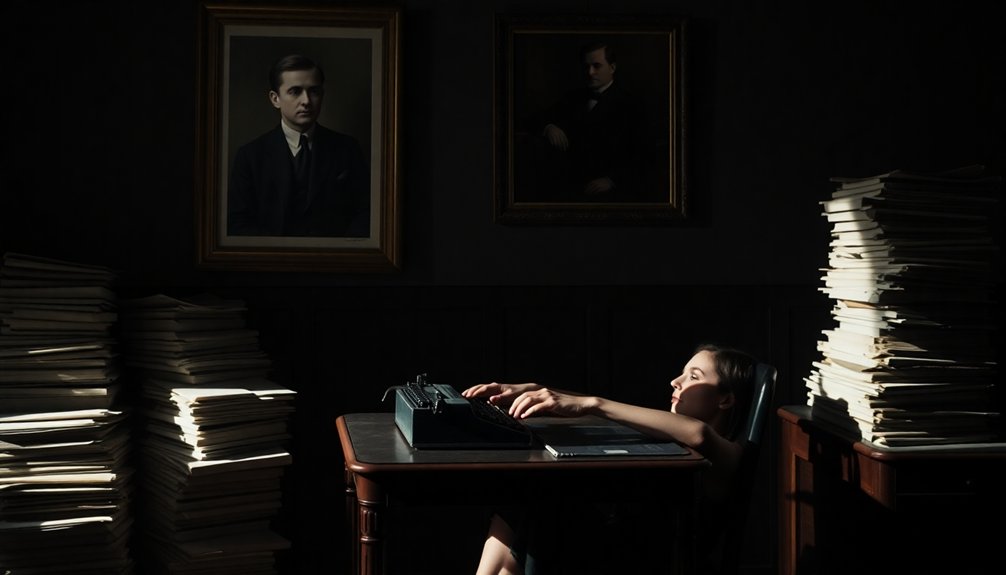
Despite the progress made in recent years, gender disparities in the literary world persist, often placing female authors at a disadvantage.
These inequities impact not just recognition but also the narrative landscape itself. Consider these points:
- Female authors frequently receive fewer literary awards, reflecting systemic biases in the publishing industry.
- Studies show that male authors garner more reviews and praise, leading to stark differences in literary visibility.
- Joan Castleman’s character in “The Wife” illustrates how women’s voices and writing talents can be overshadowed in a male-dominated arena.
Ultimately, the marginalization of women’s voices in literature underscores the ongoing challenges female authors face, demonstrating a need for greater equity and recognition in this significant cultural sphere. Furthermore, embracing inner strength can empower women to break free from limitations and foster their authentic voices in the literary world.
Reception and Critical Acclaim
While “The Wife” has sparked a range of responses from readers, its critical acclaim underscores its significance in contemporary literature.
Meg Wolitzer’s novel explores women’s lives with a feminist lens, resonating with many for its humor and incisive critique. Critics like Clare Dederer from The New York Times highlight its sharp insights into feminist realpolitik, while Publishers Weekly praises its pacing and wit.
Booklist’s Donna Seaman calls it a smart critique of the literary establishment, and Heather Grimshaw from Bookreporter notes the depth brought by the surprise ending.
With a solid rating of 3.70, “The Wife” reflects both the divergence in reception and the powerful impact it has on discussions about gender and authorship. Additionally, much like Ta-Nehisi Coates’ exploration of systemic racism in “Between the World and Me,” Wolitzer’s work challenges traditional narratives about women’s roles in society.
Adaptation to Film
The critical acclaim surrounding “The Wife” naturally paved the way for its film adaptation, which hit theaters in 2017. Directed by Björn L. Runge and featuring Glenn Close as Joan Castleman, the film explores gender dynamics and sacrifice in marriage.
Here are three significant aspects of the adaptation:
- Close’s performance earned her multiple awards, showcasing Joan’s emotional depth and the complexities of her 40-year marriage.
- The film emphasizes Joan’s role in her husband’s literary success earlier, diverging from the novel’s structure.
- Both the book and film critique the male-dominated literary world, maintaining a scathing tone toward its establishment. Additionally, the adaptation invites viewers to engage with historical injustices related to gender inequality, similar to how *The Help* addresses race relations.
Conclusion
In “The Wife,” Meg Wolitzer masterfully unravels the complexities of sacrifice and identity, shedding light on the challenges women face in the literary world. Did you know that women authors account for only 30% of published books in the U.S.? This stark statistic highlights the ongoing gender disparities that Wolitzer poignantly explores through Joan Castleman’s character. As you reflect on the novel’s themes, consider how far we’ve come and how far we still have to go.