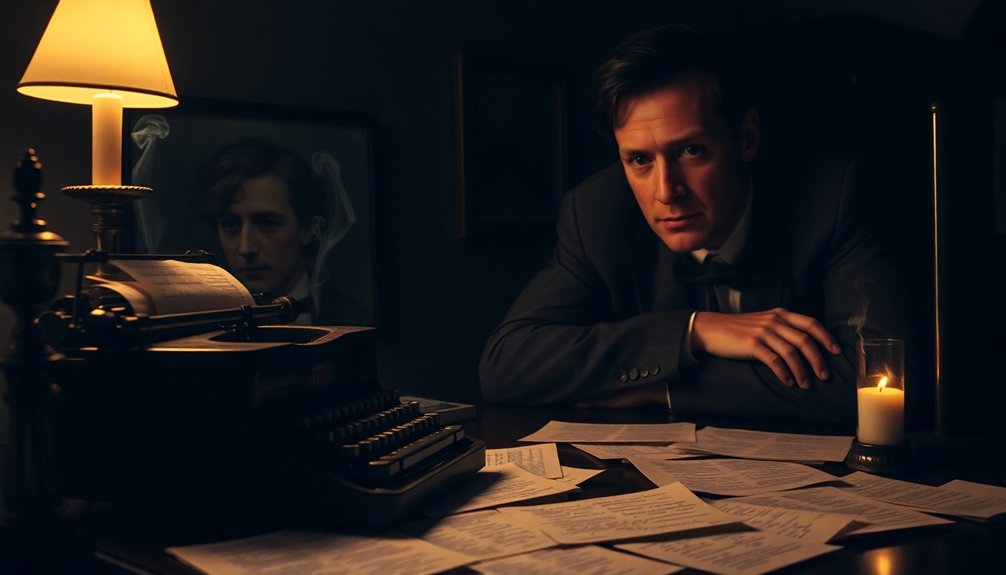

A.A. Milne’s genius shines through in his ability to capture childhood’s magic, especially in Winnie-the-Pooh. His education in mathematics at Cambridge transformed when he discovered his love for writing. Inspired by his son, Christopher Robin, Milne created enchanting tales that celebrated imagination and friendship. The beloved Pooh struck a chord with readers, becoming a cultural icon. Milne’s legacy endures through timeless stories and characters. Discover how his life influenced his extraordinary work.
Early Life and Education
A.A. Milne’s educational journey began at Henley House School, run by his father, before he moved to Westminster School.
From there, he attended Trinity College, Cambridge, where he studied mathematics but discovered his true passion for writing. At Cambridge, you’ll see him contributing to the student magazine Granta, showcasing his humor and wit.
This early exposure to writing laid the groundwork for his future career. Upon graduating in 1903, Milne moved to London and joined the satirical magazine Punch, quickly earning a reputation as a clever writer and assistant editor. His diverse education and experiences in writing set the stage for his later success, paving the way for his iconic contributions to children’s literature, including the New York Times bestseller list that many authors aspire to reach.
Transition to Children’s Literature
Milne’s journey into children’s literature began with a personal spark: the birth of his son, Christopher Robin, in 1920. Inspired by his son’s collection of stuffed animals, Milne crafted enchanting tales that would resonate with children and adults alike.
His first published work, “When We Were Very Young,” debuted in 1924, showcasing his talent for weaving simple yet profound themes of friendship. In 1926, he introduced the beloved character Winnie-the-Pooh, highlighting his ability to capture childhood innocence with gentle humor.
Milne’s writing style, characterized by simplicity and endearing relationships, struck a chord with readers. The success of “Winnie-the-Pooh” and its sequel, “The House at Pooh Corner,” solidified Milne’s legacy as a cherished figure in children’s literature. Additionally, Milne’s ability to evoke themes of friendship and adventure parallels the influence of other authors like Arthur Ransome in shaping the landscape of children’s literary traditions.
Inspiration From Christopher Robin
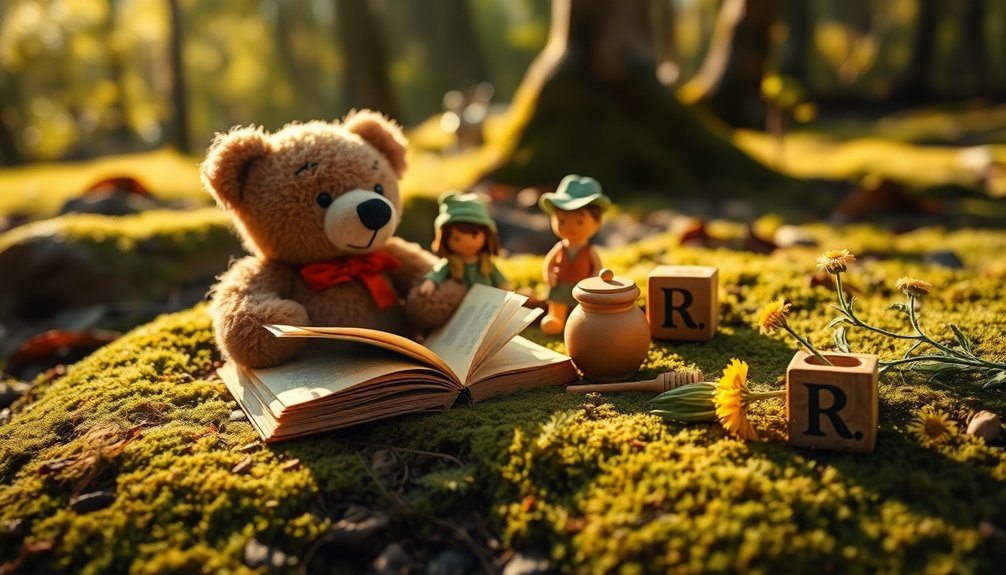
A.A. Milne’s character Christopher Robin is more than just a boy; he’s a reflection of the real-life adventures shared between father and son.
You can see how Christopher’s playful spirit inspired beloved characters like Winnie-the-Pooh and his friends, each rooted in their imaginative play.
This connection highlights the charm of childhood, filled with wonder and creativity. Furthermore, stories like Milne’s emphasize the importance of empowerment and resilience, showcasing how imaginative play can inspire strength and creativity in young minds.
Christopher’s Influence on Characters
The enchanting world of Winnie-the-Pooh springs from the heart and imagination of Christopher Robin Milne, whose cherished collection of stuffed animals became the foundation for the beloved characters.
His teddy bear, Edward, transformed into Winnie-the-Pooh, embodying the innocence and wonder of childhood. Inspired by a Canadian black bear named Winnipeg, the connection between Christopher and Pooh deepens as you explore their adventures in the Hundred Acre Wood.
Christopher Robin’s playful interactions with his toys shaped the personalities of Pooh’s friends—Piglet, Eeyore, Kanga, Roo, and Tigger—each reflecting his imaginative spirit.
A.A. Milne captured this bond in his poetry, reminding us that the characters in these stories aren’t just creations; they’re reflections of a child’s heart.
Imaginary Adventures and Playfulness
Imaginary adventures sprung from Christopher Robin‘s playful spirit, igniting a world where anything was possible. A.A. Milne captured this whimsy, showcasing the imaginative adventures of Pooh Bear and his friends in the Hundred Acre Wood.
Through Christopher Robin’s interactions with his stuffed animals, Milne illustrated the essence of childhood and the joy found in friendship. Renaming his teddy bear to “Winnie the Pooh” reflected a unique wisdom, and it’s this innocence that resonates with readers.
E.H. Shepard’s enchanting illustrations further brought these stories to life, enhancing the whimsical playfulness that defines Milne’s legacy. Together, they invite you into a world of wonder, reminding you of the magic that can be found in everyday moments and the power of imagination.
The Success of Winnie-the-Pooh
When “Winnie-the-Pooh” hit the shelves in 1926, it quickly captured the hearts of readers young and old, establishing itself as a timeless classic in children’s literature.
Milne introduced beloved characters like Pooh, Piglet, Eeyore, and Tigger, inspired by his son Christopher Robin’s stuffed animals. Illustrated by E.H. Shepard, these charming visuals enhanced the stories’ appeal.
The success of Winnie-the-Pooh paved the way for further literary contributions, including “The House at Pooh Corner” in 1928.
- Characters resonate with generations
- E.H. Shepard’s illustrations add charm
- Merchandise sales exceeded $5.9 billion by 2002
- Enduring popularity makes Pooh a cultural icon
- Milne’s ability to capture the power of imagination mirrors the resilience seen in classic literature.
Milne’s work remains a cherished part of children’s literature, showcasing the power of imagination and friendship.
Cultural Impact and Legacy

Milne’s creation of Winnie-the-Pooh not only captured the imaginations of readers but also laid the groundwork for a cultural phenomenon that spans generations and continents.
This beloved character embodies childhood innocence and friendship, resonating with audiences worldwide. Recognized as a cultural icon, Winnie-the-Pooh has been translated into numerous languages and adapted into films, television shows, and merchandise, showcasing A.A. Milne’s extensive commercial impact.
In 2002, the character was deemed the most valuable fictional character, with merchandise sales exceeding $5.9 billion.
Milne’s legacy lives on through memorials like the sculpture at London Zoo and the plaque in Ashdown Forest, celebrating the inspiration behind these timeless stories that continue to enchant new generations. The enduring appeal of timeless storytelling reflects the universal themes of love and friendship that resonate across different cultures and eras.
Reflection on Milne’s Life and Works
As A.A. Milne, you’ve crafted a world where childhood innocence flourishes. Your journey from playwright to children’s literature was inspired by your son, Christopher Robin, and his beloved stuffed animals.
Through your works, especially “Winnie-the-Pooh” and “The House at Pooh Corner,” you’ve captured the essence of childhood in the Hundred Acre Wood.
- Your characters resonate with both kids and adults.
- You’ve built a legacy that transcends generations.
- Despite your success, you felt overshadowed by Pooh.
- Your impact on children’s literature is undeniable.
- Your stories remind us of the importance of faith and forgiveness in navigating life’s challenges.
Your stories continue to enchant, reminding us of the simple joys of life and the magic of imagination.
Milne’s legacy lives on, celebrating the beauty of childhood for all.
Conclusion
In celebrating A.A. Milne, you see a man who crafted whimsical tales while grappling with his own complexities. His childhood wonder stands in stark contrast to the shadows of adulthood, yet it’s this blend that makes Winnie-the-Pooh resonate with you today. You find joy in the simplicity of Pooh’s adventures, even as you navigate life’s intricacies. Milne’s legacy reminds you that, amidst the chaos, there’s always room for a little magic and friendship.