
In Colleen McCullough’s “The Thorn Birds,” you’ll find a powerful narrative that explores love, sacrifice, and identity through Meggie Cleary and Father Ralph de Bricassart’s complex relationship. Set in the Australian Outback, their forbidden love faces societal expectations and personal struggles. The thorn bird symbolizes their pursuit of unattainable love. As you unpack this timeless saga, you’ll also discover the varied reader responses and how the novel compares to its acclaimed film adaptation.
Overview of Colleen McCullough’s Masterpiece
Colleen McCullough’s “The Thorn Birds” is an enthralling tapestry of love and sacrifice woven through the lives of the Cleary family.
This sweeping family saga spans from the Australian Outback to Rome and beyond, immersing you in a world of complex emotions and relationships.
At the heart of the story lies the theme of forbidden love, particularly between Meggie and Father Ralph de Bricassart, whose connection reflects both passion and sacrifice.
McCullough’s rich character development brings these figures to life, drawing you into their struggles and desires.
The novel’s vivid descriptions and historical context enhance its appeal, solidifying “The Thorn Birds” as a timeless classic in historical fiction.
You’ll find yourself captivated by its enduring themes and emotional depth. Additionally, the forbidden love between Meggie and Father Ralph serves as a poignant reminder of the complexities of human relationships and the sacrifices they entail.
The Complex Relationships of Meggie and Ralph
At the heart of “The Thorn Birds” lies the intricate relationship between Meggie and Father Ralph de Bricassart, which develops from innocent admiration in her childhood to a profound and tumultuous romance.
Their love story grapples with emotional neglect, as Ralph struggles between his commitment to the Catholic Church and his deep feelings for Meggie. Societal expectations weigh heavily on them, forcing Ralph to make significant sacrifices that ultimately strain their bond.
Meggie’s longing for him grows, culminating in a pivotal moment when she bears his child in secret, altering their dynamic forever.
The thorn bird symbolizes their pursuit of unattainable love, reflecting the sacrifices both characters make in the name of passion and duty, leaving an indelible mark on their lives. This theme of personal growth resonates with readers, echoing the enduring strength found in perseverance against adversity.
Themes of Love, Sacrifice, and Identity

Love, sacrifice, and identity intertwine as central themes in “The Thorn Birds,” capturing the emotional depth and complexity of Meggie’s journey.
At the heart of this love story is the tumultuous relationship between Meggie and Ralph, marked by forbidden love shaped by societal expectations. Meggie’s sacrifices for Ralph highlight her unwavering devotion, as she endures profound personal pain and loss in pursuit of love.
Yet, her identity struggles within a patriarchal society often overshadow her desires and ambitions. The symbolism of the thorn bird mirrors her sacrifices, as it sings only once at the cost of its existence, paralleling Meggie’s quest for fulfillment amidst the constraints placed upon her. This exploration of identity resonates deeply throughout her life, much like the disillusionment of suburban life portrayed in Richard Yates’ “Revolutionary Road.”
Reader Reception and Critical Analysis
Reader reception of “The Thorn Birds” reveals a complex array of opinions and emotions that echo Meggie’s turbulent journey.
While some readers appreciate its sweeping saga and emotional depth, others critique the pacing, especially in the final sections.
The character dynamics between Meggie and Father Ralph often spark discomfort, with many perceiving issues of grooming and power imbalance.
In addition, some find it hard to connect with the characters, deeming parts of the narrative trivial.
The 1983 mini-series adaptation garners praise for its concise storytelling and strong performances, particularly Richard Chamberlain’s portrayal of Father Ralph.
Discussions frequently focus on Meggie’s narrative choices, such as her decision not to inform Ralph about their child, impacting the story’s emotional resonance. The exploration of empathy in dark times enriches the understanding of character motivations and relationships throughout the narrative.
Comparing the Novel and Its Film Adaptation
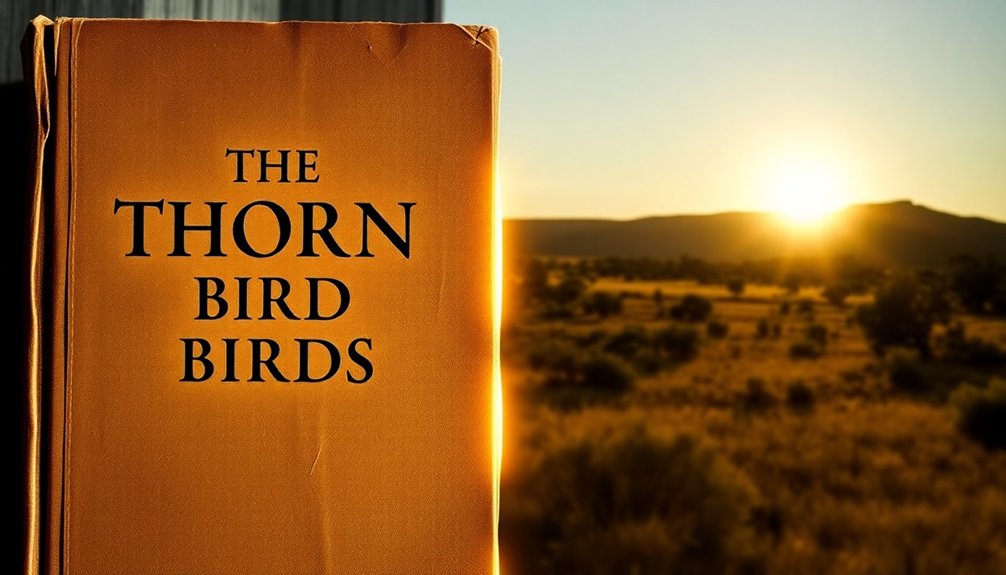
While the 1983 miniseries adaptation of “The Thorn Birds” captures the essence of Colleen McCullough’s novel, it inevitably simplifies many elements due to time constraints.
You’ll notice differences in character development and emotional depth between the two versions.
- The film condenses complex backstories, making motivations less clear.
- Richard Chamberlain’s Father Ralph is charming but lacks depth compared to the novel.
- Rachel Ward delivers a powerful performance as Meggie, yet her evolution feels rushed.
- Major themes like love versus duty are visually striking but less nuanced.
Ultimately, readers often prefer the novel for its intricate character arcs, while viewers might appreciate the dramatic storytelling found in the film adaptation. This divergence in storytelling methods reflects the broader theme of generational poverty and its impact on character development in both mediums.
Conclusion
In the end, you might find it ironic that a tale about unattainable love and sacrifice leaves you feeling so fulfilled. McCullough’s intricate web of relationships and emotional turmoil captures your heart, making you question your own desires. You plunge into Meggie’s struggles, yet emerge with a deeper understanding of your own identity. So, while you may never have a “thorn bird” of your own, you realize that the journey through love’s complexities is its own reward.